



-
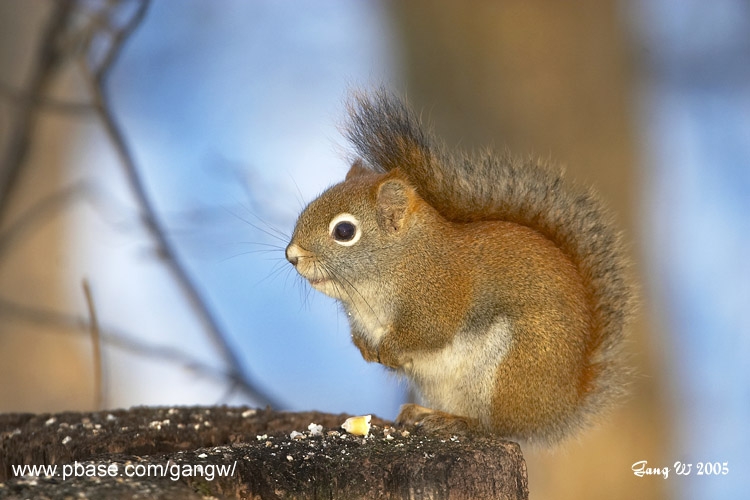 Backyard Wildlife FAQs
Backyard Wildlife FAQs
Do robins overwinter? How do I deal with unwanted wildlife in my house? Get answers and tips to some common questions about animals.
More -
 Beneficial Insects
Beneficial Insects
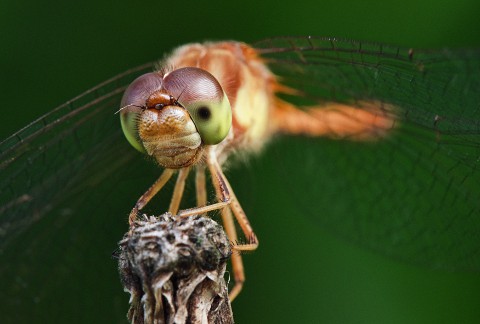
Insects perform a whole host of activities beneficial to our gardens and the environment as a whole. Find out more and how you can support them.
More -
 Pollinators
Pollinators
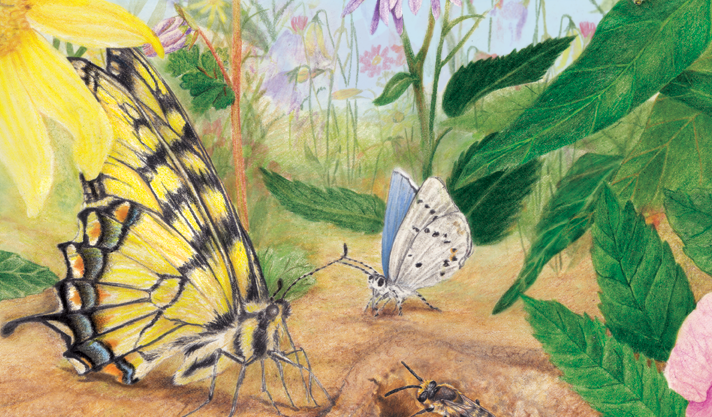
Pollination is one of the most important ecological processes on the planet. But our pollinators are in trouble due to a loss of habitat, toxic chemicals, parasites, diseases and climate change. Learn more about these remarkable animals and how you can help.
More -
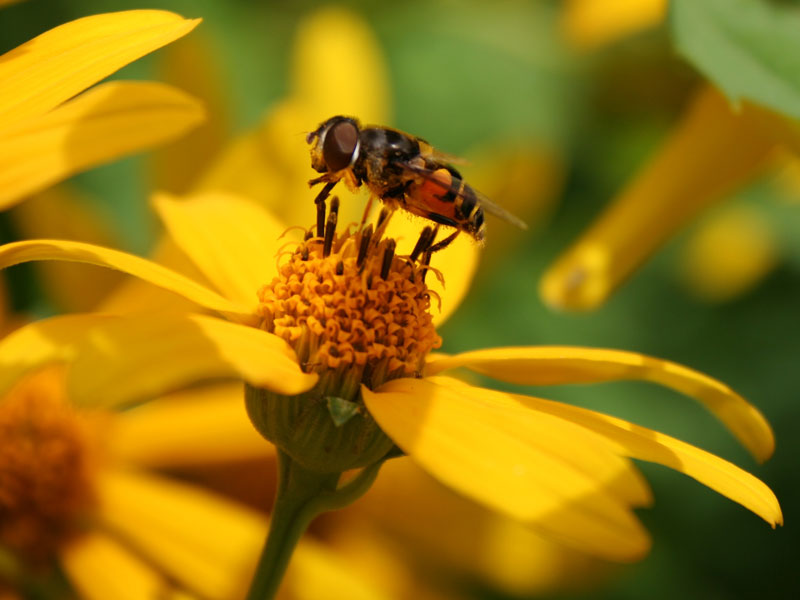 Fabulous Flies
Fabulous Flies
Flies are very important pollinators. They also help with decomposition and pest control as well as contribute to the health of some water bodies. Learn more about some of Canada’s flies here.
More
Feature Animals
-

Fireflies, Lightning Bugs
2025-12-05
Despite their name, these insects are not flies. They’re actually beetles. There are 29 species believed to be native to Canada, but there is a lot about this group of insects that is still being discovered, including the various species. Fireflies have elongated bodies and their heads have a “pronotum”, which is a cover that protects the top of their heads although, when viewed from the side, you can see their heads. Their upper pair of wings are hard and also serve as protection, similar to ladybugs, aka ladybeetles, which are in the same Coleoptera family. Their larval, or immature, form resembles a grub or millipede. Some live on land (terrestrial), some live in water (aquatic) and others are semi-aquatic.
-
-
Gray Catbird
2025-12-05
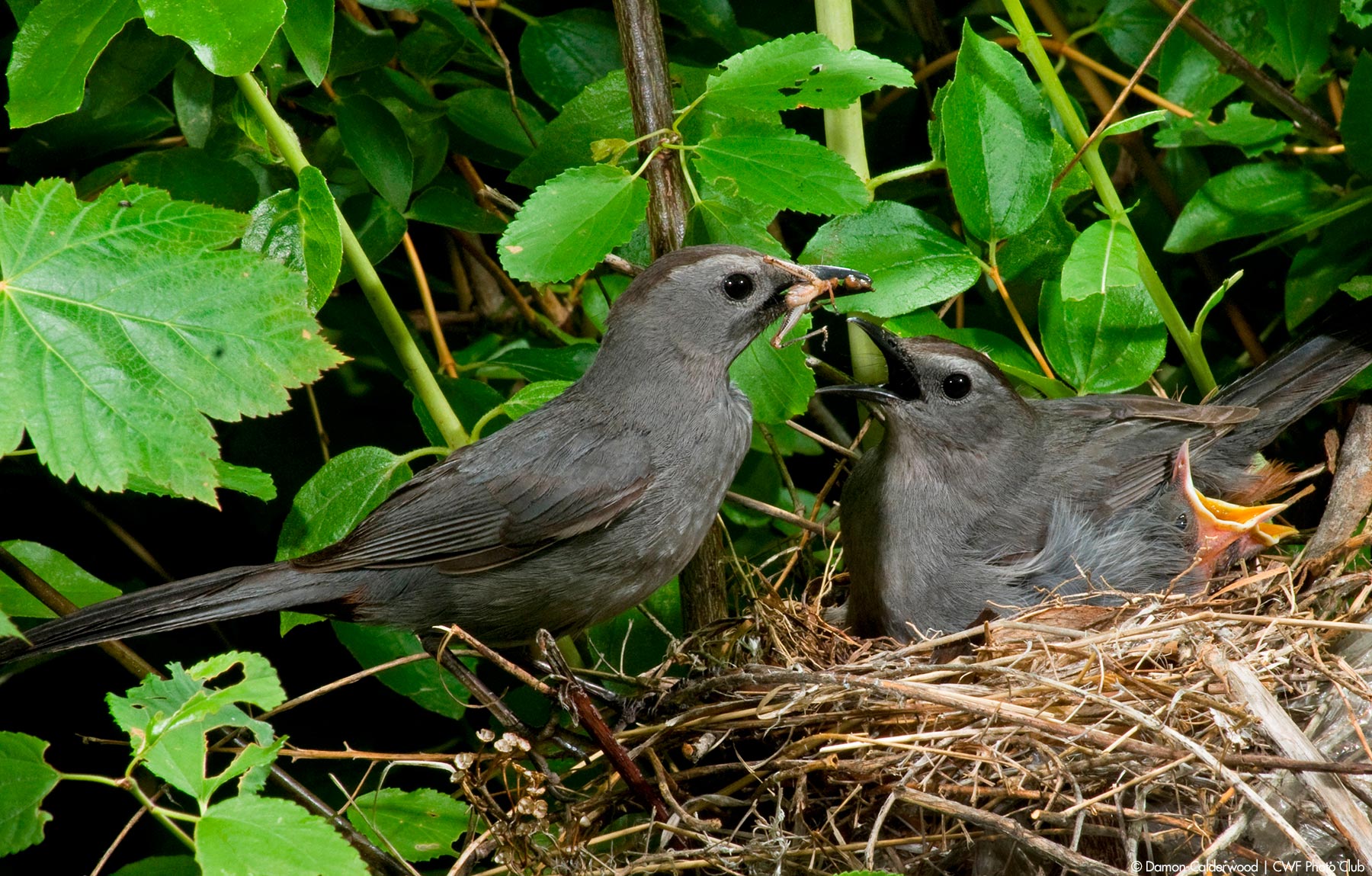
All Gray Catbirds, regardless of their age or gender, are mainly grey with black colouring on the tops of their heads and orange-brown underneath the base of their tail. Their calls are a raspy cat-like sound while their songs are highly variable and often melodic.
-
Great Horned Owl
2025-12-05
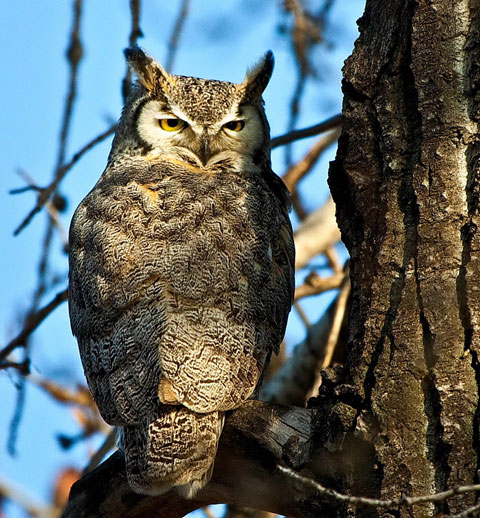
The Great Horned Owl is one of Canada’s commonest large birds of prey. The most notable physical attributes are its large size and prominent ear tufts or "horns." A predator that hunts at night, this owl has enormous yellow eyes set in a broad face, a curved beak and claws, and long fluffy feathers. Its coloration tends mainly toward brown or grey-brown, with conspicuous barring. This bird’s legendary hooting sounds like a soft yet vibrant whoo-hoo-ho-o-o.
-
Groundhog
2026-02-26
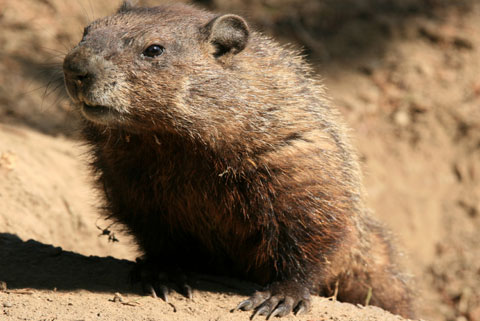
The groundhog is normally brown in colour but can be completely black or completely white. It is one of Canada’s largest true hibernators. The groundhog is the major hole-digging mammal over much of eastern North America, and in some places in the west, providing all sorts of animals with shelter. The groundhog it spends much of its time eating and sunning when not hibernating or caring for young.
-
Hover Fly
2025-12-05
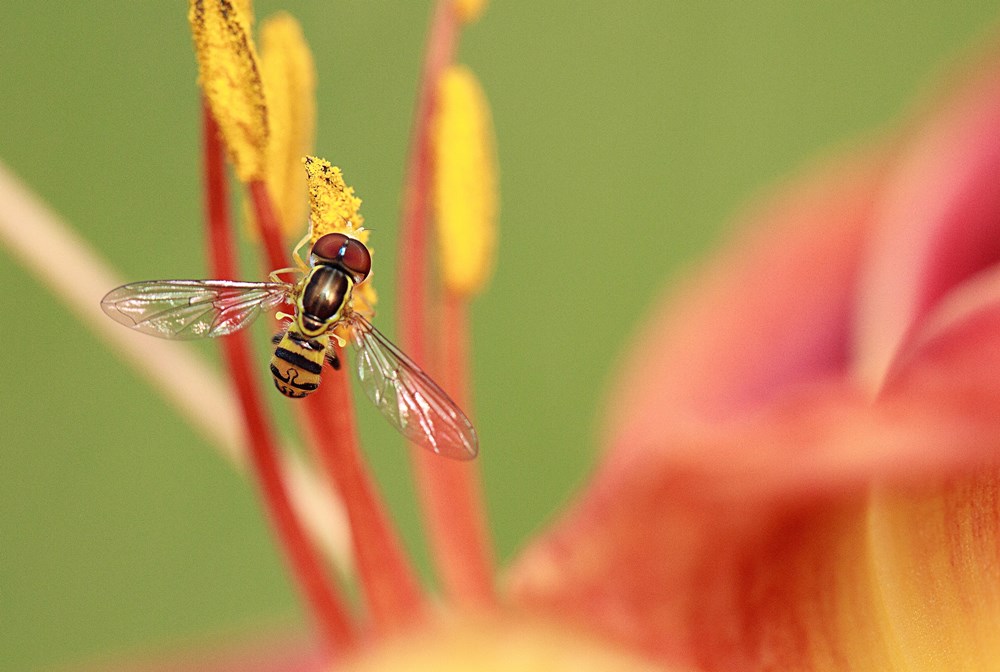
This very large family has great variation in looks. The most commonly seen ones, however, tend to be approximately 8–12 mm long with yellow and/or orange and black on the abdomen. All members of the Syrphidae family have a distinctive squiggle or false vein (spurious vein) running through the middle of the wing.
-
Hummingbird Clearwing Moth
2025-12-05
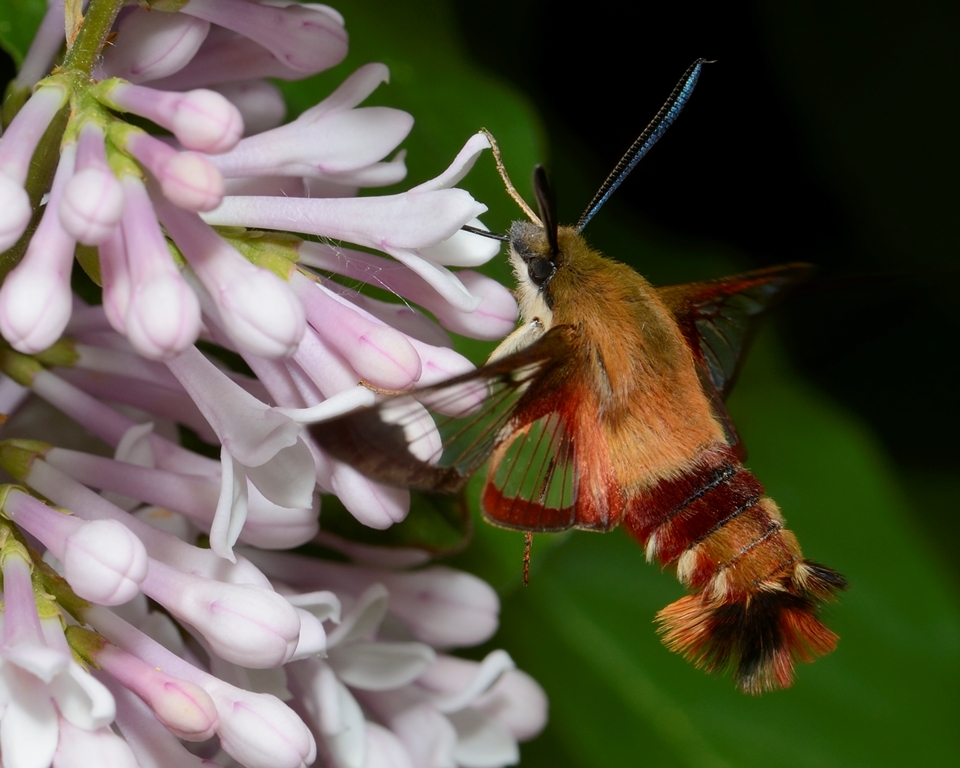
Adult wingspan is approximately 4–5.5 cm. The adult (moth’s) head and upper back area (thorax) is olive to tan, and the chest area (thorax) is cream or white. Their lower back and belly (abdomen) are dark reddish-brown or black (though the lower portion of the lower back can be lighter in colour). Their wings are clear with a reddish-brown border and veins. Young (larvae/caterpillars) are bright green with a line of white dots that end in a fleshy, pointy extension resembling a tail. There are also small reddish spots along its side.
-
Little Brown Bat
2026-02-26
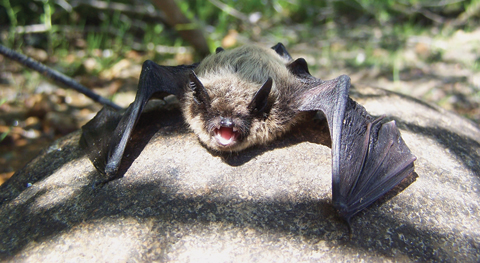
The little brown bat is the most common and widespread of Canada's nineteen species of bats. They are found across Canada to the northern edge of the boreal forest. Little brown bats weigh only seven to fourteen grams and have a wingspan of 22-27 centimetres. This species of bat is the one most closely associated with humans, as it is the most likely to take up residence in buildings.
-
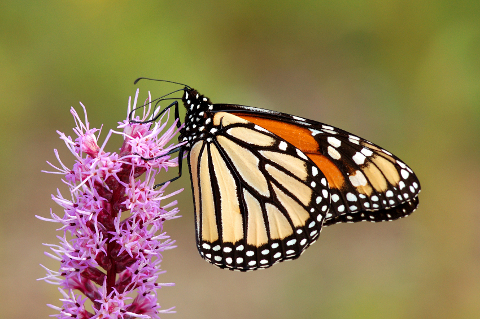
Monarch Butterfly
2025-12-05
Adult wingspan is approximately 9–10 cm. Adult (butterfly) wings are orange with black veins. The hind and forewings have a double row of white spots within a thick black border. There are pale orange and white spots near the tip of the forewing (apex). The underside is similar, though the hind wing is a paler orange. Its black body also had white spots. Newly hatched caterpillars (larvae) are pale green with a dark head. Mature caterpillars have black, white and yellow bands. They have a pair of black filaments (thin fleshy parts that resemble antennae) at the head and tail. The longer pair is at the head.
-
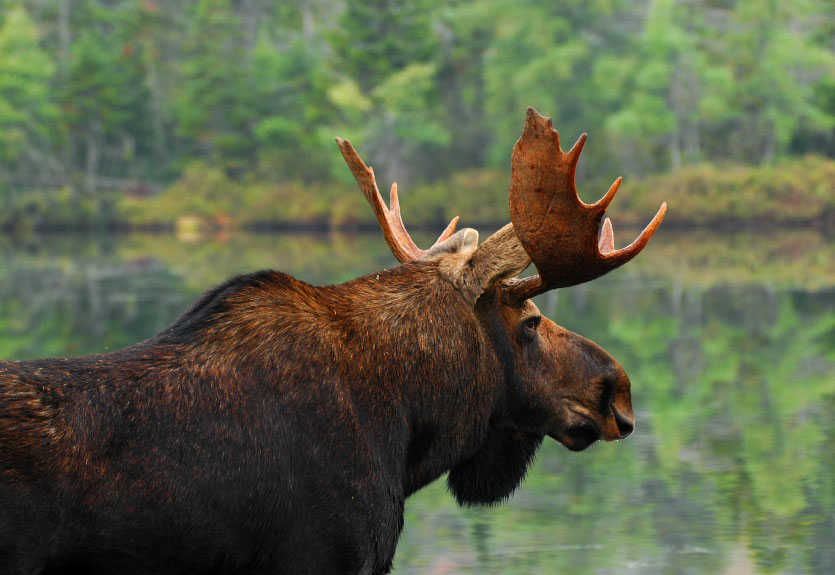
Moose
2025-12-05
Moose (Alces alces) have long, slim legs that end in cloven, or divided, hooves often more than 18 cm long. The body is deep and massively muscled at the shoulders, giving the animal a humped appearance. It is slab-sided and low-rumped, with rather slender hindquarters and a stubby, well-haired tail. The head is heavy and compact, and the nose extends in an arch terminating in a long, flexible upper lip. The ears resemble a mule’s but are not quite as long. Most moose have a pendant of fur-covered skin, about 30 cm long, called a bell, hanging from the throat. A bull moose in full spread of antlers is the most imposing beast in North America. It stands taller at the shoulder than the largest saddle horse. Big bulls weigh up to 600 kg in most of Canada. The moose is the largest member of the deer family.
-
Mosquito
2025-12-05
Mosquitoes are thin, long-legged, two-winged insects and are typically six to 12 millimetres in length. Both males and females have antennae and an elongated "beak" or proboscis three to four times longer than its head.
-
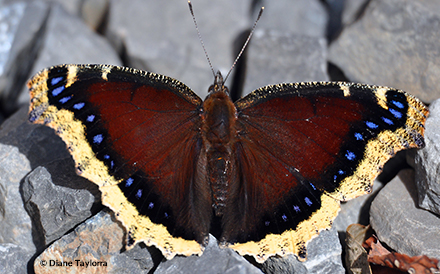
Mourning Cloak Butterfly
2025-12-05
Adults - The upper wings of the Mourning Cloak Butterfly are red-brown with a thick yellow border along the edge. On the inside edge of this border are bright blue elongated spots. The underside of their wings are dark with thin irregular lines. The border is duller than the upper side and the blue spots are more V shaped. Their wingspan can range from approximately five to ten centimeters. The more north they are found the smaller they tend to be. Caterpillars – The caterpillar is black with tiny white dots and black-branched spines. It has a row of red marks on its back between the bases of these spines.
-
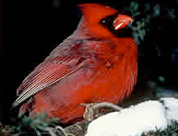
Northern Cardinal
2025-12-05
The northern cardinal is a medium-sized songbird, with males slightly larger than females. Males are bright red with a black mask around their red bill and a prominent crest on the top of their head. Females are olive brown with red on their wings, tail, and crest, and a red bill. Juveniles are similar in colour to females but have a black bill and a shorter crest. Colouring plays an important role in the lives of male northern cardinals. Males that are brighter red are more successful than their paler counterparts. They have greater reproductive success, get ranges with better food supplies, and are able to feed more frequently.
-
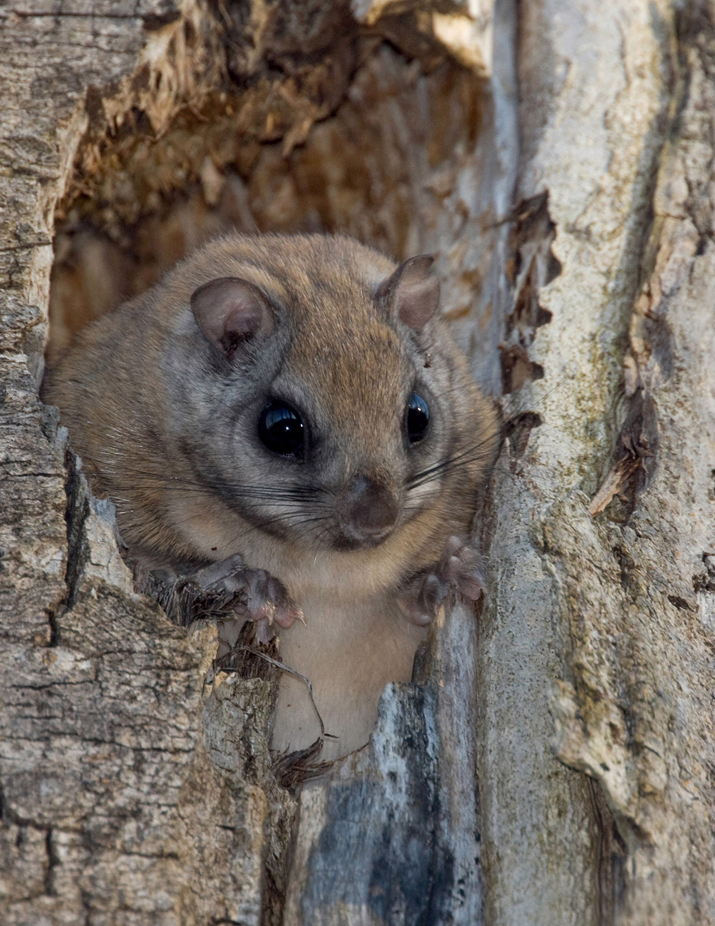
Northern Flying Squirrel
2025-12-05
Northern flying squirrels are about 30 cm in length and have broad flattened tails. The fur on their back is a cinnamon brown and they have white bellies. The large eyes of flying squirrels facilitate effective night vision. This is necessary because, unlike their more commonly seen cousins, these squirrels hide away during the day and become active about an hour after sunset.
-
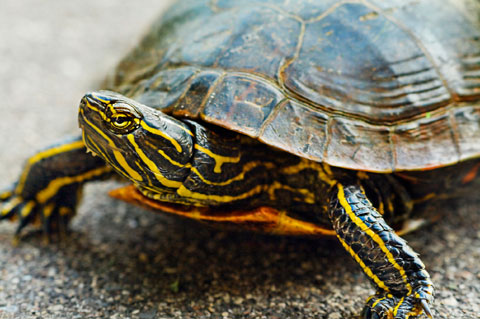
Painted Turtle
2025-12-05
The Painted Turtle has a smooth dark shell with red markings along the outside edge. Its dark skin is adorned with yellow and red strips, most prominently along the head and neck.
-
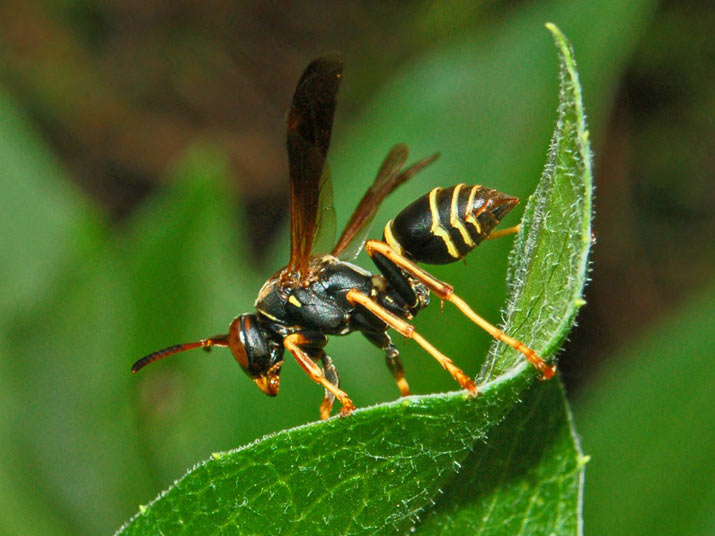
Paper Wasp
2025-12-05
Approximately 17–22 mm. Paper wasps are fairly large. They have long bodies with a broad thorax and abdomen and a tiny, constricted waist. When at rest, their wings fold lengthwise, parallel to the body. The head and thorax are black to brown in colour, while the abdomen is dark with yellow stripes, sometimes with reddish-brown to yellow colouration between the stripes.
-
Pileated Woodpecker
2025-12-05
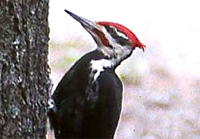
At an average 18" in length, the pileated is the largest woodpecker in Canada. These colossal birds, with their striking red crest and resemblance to prehistoric pterodactyls in flight, are thought to be the inspiration for the once popular cartoon Woody the Woodpecker. As Woody had his loud laugh, pileated woodpeckers also make noise to match their size. Their drumming, reminiscent of construction machinery, can be heard up to a kilometre away. It is fairly easy to recognize a pileated woodpecker by its large size and the red crest on its head. The body is predominantly black, with thick black and white stripes reaching from the bill to the wing and chest area. The red 'moustache' along the cheek distinguishes males from females.
-
Porcupine
2025-12-05
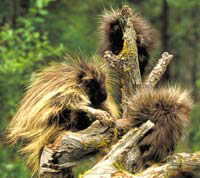
Porcupines have large, chunky bodies and short legs. This results in their slow, waddling manner. With an average weight of 5.5 kg for males and 4.5 kg for females and a total length ranging from 68 to 100 cm, porcupines are Canada's second largest rodents next to beavers. Porcupine's quills are actually modified hairs. They are longest on the back and tail, reaching lengths of 12.5 cm. Quills on the face are much shorter, approximately 1.2 cm long. Despite their prickly appearance, porcupines have soft undercoats with long guard hairs covering the quills. Their undersides, legs, and muzzles have no quills.
-
Purple Martin
2025-12-05
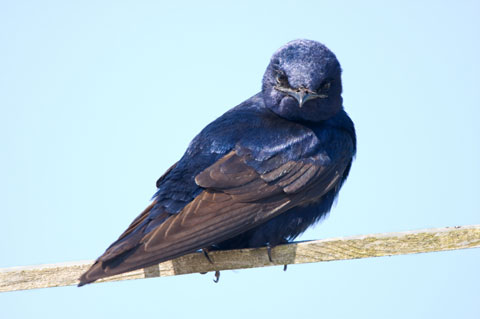
The Purple Martin, Progne subis, is a conspicuous bird in many populated areas of North America during spring and summer. Averaging 17 to 20 cm in length and a wing span of 9-41 cm, it is Canada’s largest swallow. The life span of this swallow is one to five years. The Purple Martin resembles other swallows in having a slender body, long wings, and a wide beak. Males show a shiny blue-black coloration on sunny days. Females are lighter in colour, with a pale grey throat and belly.
-
Raccoon
2025-12-05
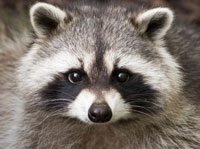
The common raccoon (Procyon lotor) is probably best known for its mischievous-looking black face mask. Raccoons are usually a grizzled grey in colour with a tail marked by five to 10 alternating black and brown rings. Body coloration can vary from albino, (white) to melanistic (black) or brown. An annual moult, or shedding, of the fur begins in the spring and lasts about three months. A raccoon is about 80 centimetres in length and weighs between 6-8 kilograms.

Learn More
- 0
- 1