



-
 Backyard Wildlife FAQs
Backyard Wildlife FAQs
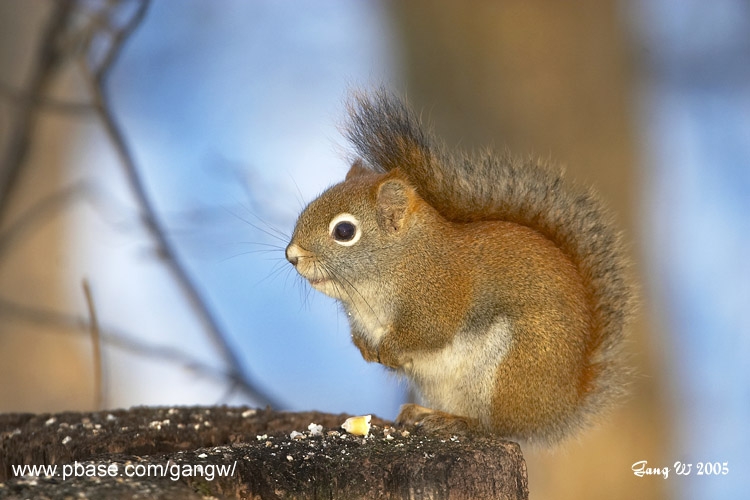
Do robins overwinter? How do I deal with unwanted wildlife in my house? Get answers and tips to some common questions about animals.
More -
 Beneficial Insects
Beneficial Insects
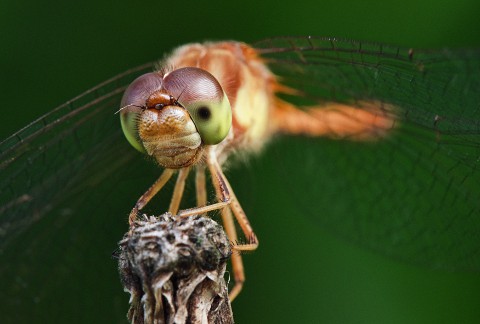
Insects perform a whole host of activities beneficial to our gardens and the environment as a whole. Find out more and how you can support them.
More -
 Pollinators
Pollinators
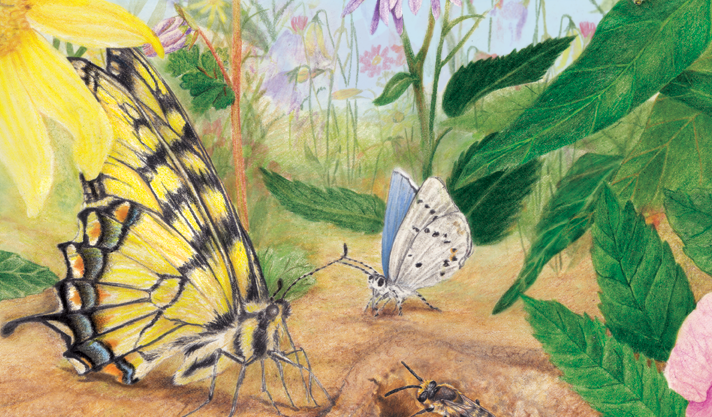
Pollination is one of the most important ecological processes on the planet. But our pollinators are in trouble due to a loss of habitat, toxic chemicals, parasites, diseases and climate change. Learn more about these remarkable animals and how you can help.
More -
 Fabulous Flies
Fabulous Flies
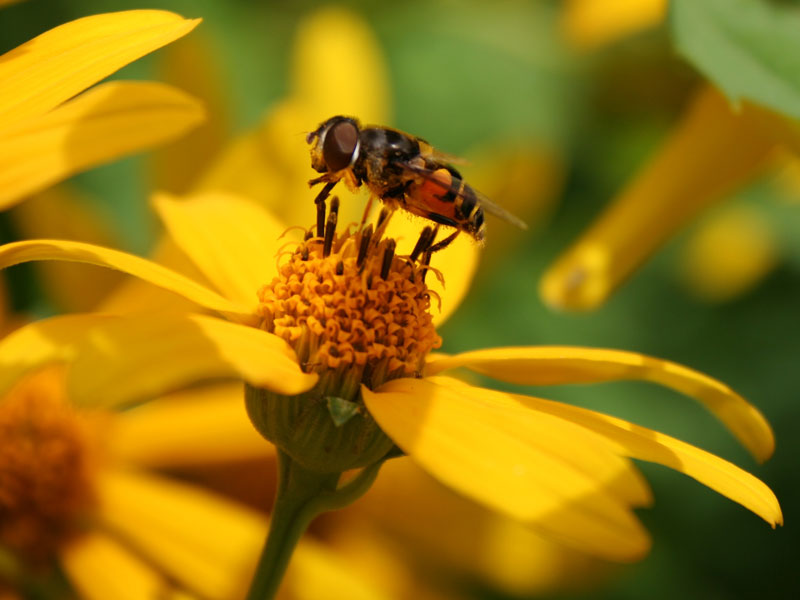
Flies are very important pollinators. They also help with decomposition and pest control as well as contribute to the health of some water bodies. Learn more about some of Canada’s flies here.
More
Feature Animals
-
Red-breasted Nuthatch
2025-12-05
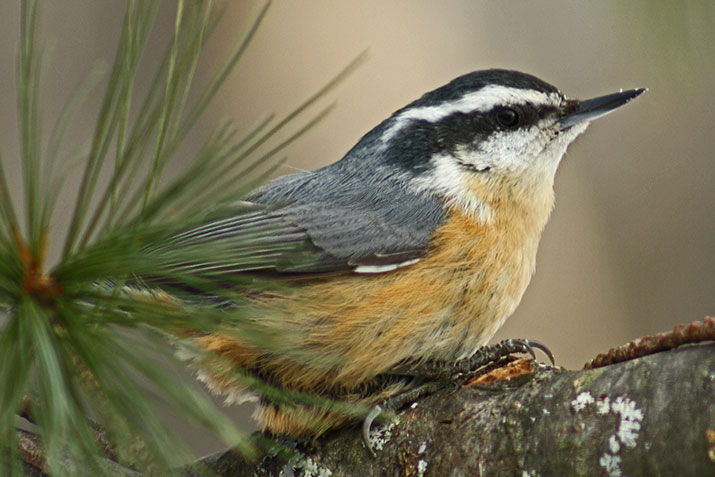
Red-breasted Nuthatches are small birds reaching about 4.5 inches in length with a thin black bill and short tail. They have a black and white striped head, white throat, grey back and rust-coloured belly.
-
Red Fox
2025-12-05
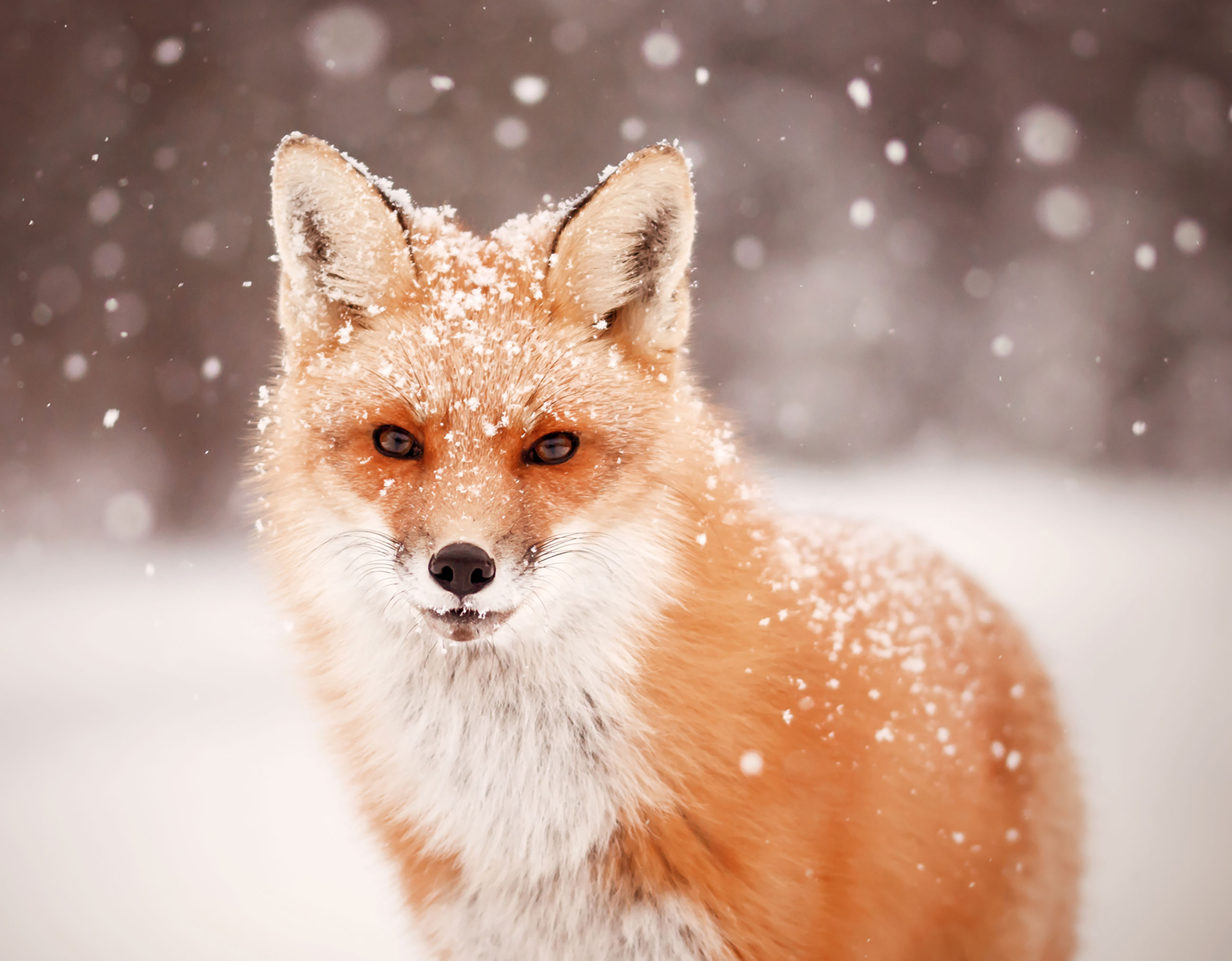
The red fox is a small, dog-like mammal, with a sharp pointed face and ears, an agile and lightly built body, a coat of lustrous long fur, and a large bushy tail. Male foxes are slightly larger than females. Sizes vary somewhat between individuals and geographic locations
-
Red-winged blackbird
2025-12-05
The red-winged blackbird is a medium-sized song bird, ranging in size from 17 to 23 centimetres, with a very distinct call. Males are a sleek black colour with bright red patches on the tops of their wings. These red patches are called epaulettes and are sometimes less visible while the bird is perched, when it only shows the slight yellow band found below the red epaulettes. Young males are often a dark brown colour and appear as if they are molted before they mature; however, they still retain the red patch on the shoulder. Females are less distinctive with their brown- and white-striped backs and white- and brown-striped abdomens. Their colouring often causes them to be mistaken for other species of blackbird or sometimes for sparrows.
-
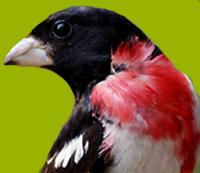
Rose-Breasted Grosbeak
2025-12-05
With most birds, males are more brightly coloured, and this holds true with the rose-breasted grosbeak. The males are the most attractive with black backs and heads, white rumps and bellies and rose triangular patches on their breasts. The females, however, are not as conspicuous. Females have brown streaking on both their pale under parts and darker backs. Rose-breasted grosbeaks are said to have one of the prettiest calls. It is comparable to that of the American robin but with a more melodic sound.
-
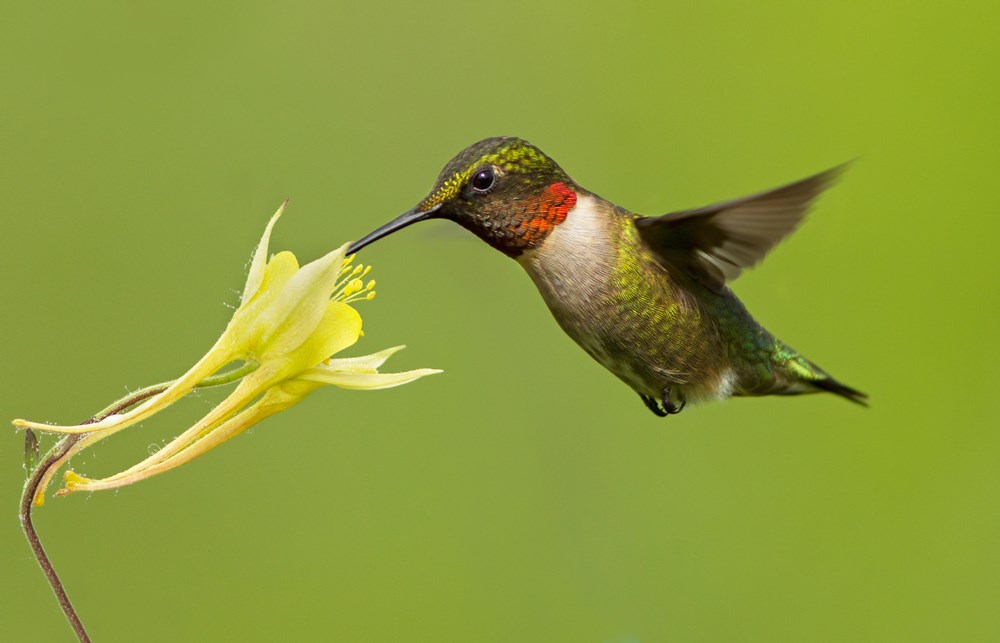
Ruby-throated Hummingbird
2025-12-05
Approximately 9–10 cm long. Adult males are metallic green on the upperparts, iridescent ruby red on the throat, white on the underparts and green along the sides. Adult females look similar to males but with a white throat, greyish belly and buff along the sides of the belly, sometimes with a little red on the throat. Immature males look similar to females but with red streaks down the throat.
-
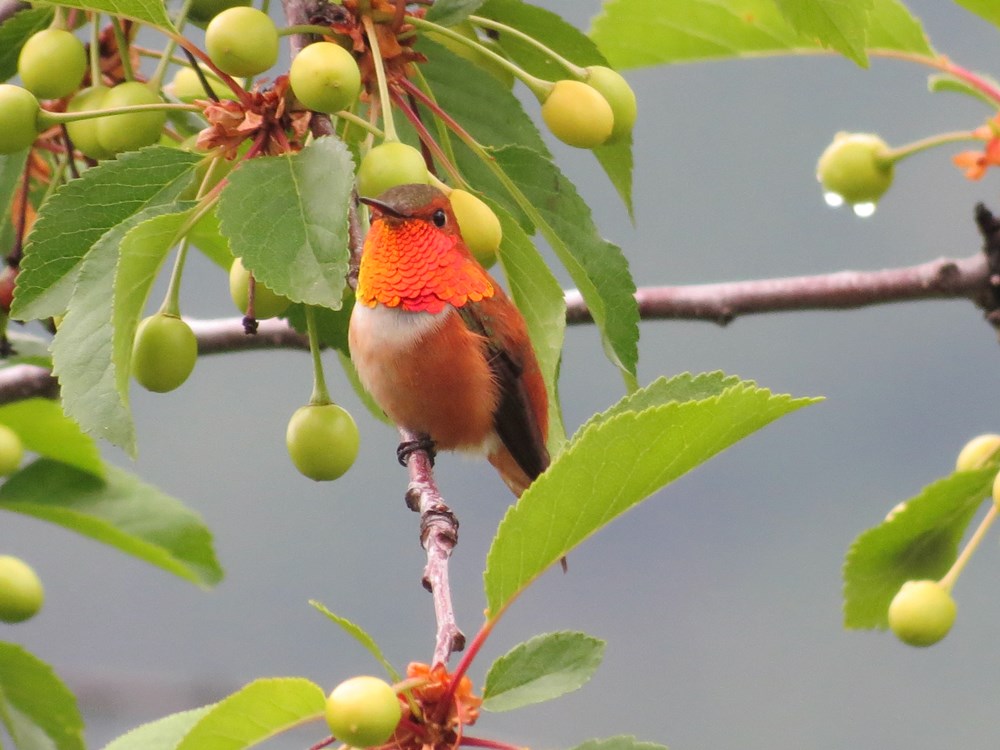
Rufous Hummingbird
2025-12-05
Approximately 9.5 cm long. Adult male upperparts are mainly reddish-brown with dull green on the top of their head and a white patch behind the eyes. Their throat is iridescent orange-red and has white at the top of their breast and parts of the belly; the rest of its underparts are reddish-brown. Adult females are similar to males but paler and greener; their throat is white with dark and/or iridescent spots of orange-red. Immature birds resemble the females, but immature males start to show reddish-brown upperparts before their throat colours develop.
-
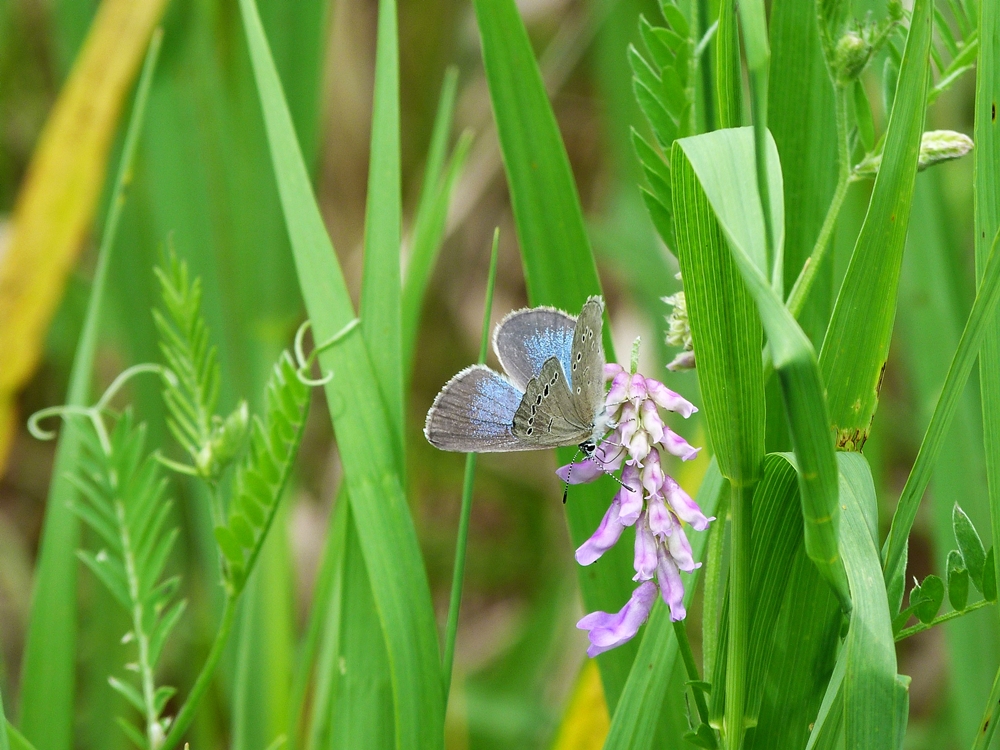
Silvery blue butterfly
2025-12-05
Adult wingspan approximately 2–3 cm. Adults (butterflies) have a light blue upperside with a thin, light grey border and a dark grey border within that. The dark grey border in the female is wider and fades into a pale blue to varying degrees. Their underside is grey with one row of black white-rimmed spots on both the forewing and hind wing.
-
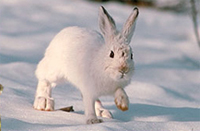
Snowshoe Hare
2025-12-05
The snowshoe hare one of our commonest forest mammals, is found only in North America. Well-adapted to its environment, the snowshoe hare travels on large, generously furred hind feet, which allow it to move easily over the snow. The snowshoe hare’s ears are smaller than most hares’. The ears contain many veins, which help to regulate body temperature. A seasonal variation in fur colour is another remarkable adaptation: from grey-brown in summer, the fur becomes almost pure white in midwinter.
-
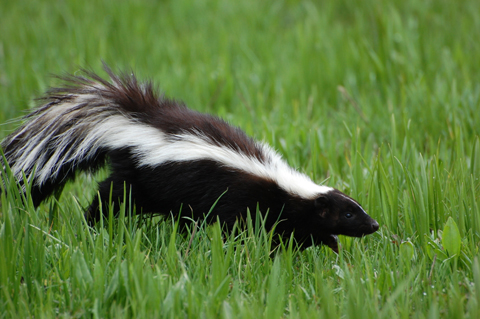
Striped Skunk
2026-01-09
The striped skunk, a member of the weasel family, is about the size of a cat, but has a stout body, small head, short legs, bushy tail and thick, black, glossy fur. The thin white stripe down the centre of the face forks at the shoulders and continues as a white stripe along each side of the back. Tail is mostly black, but stripes may extend down it, usually to a tuft of white at the tip. The skunk is one of the most useful small mammals inhabiting Canada’s mixed farmlands, grasslands and forests because it helps control pests such as mice, grubs and larvae. On average a skunk weighs 3.25 kilograms and is approximately 57.5 - 80 centimetres in length. In the wild a skunk is estimated to live 3 years but in captivity they can live up to 15 years.
-
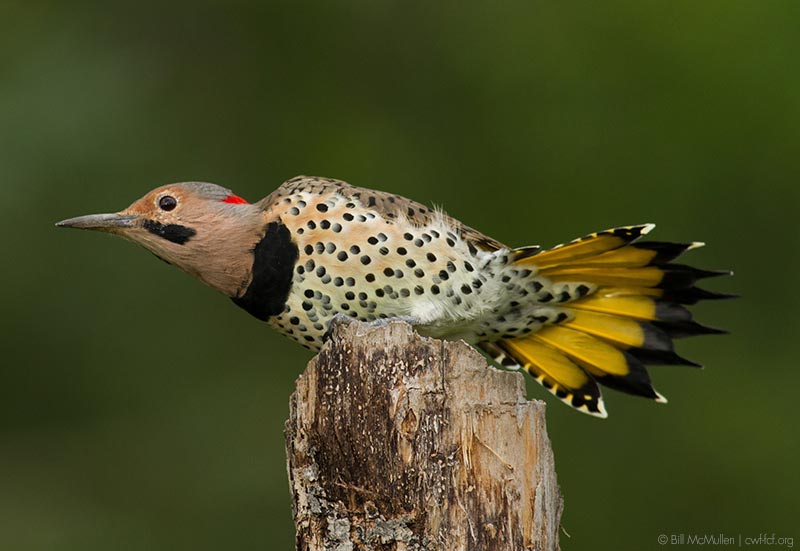
The Northern Flicker
2025-12-05
Northern Flickers are a mid-sized woodpecker reaching approximately 32 centimetres. There are two types, the more widely spread Yellow-shafted Northern Flicker and the Red-shafted found mainly in southern British Columbia. Both have a spotted breast, black breast band below the throat, black barring on their backs (lines that run across their backs from wing to wing) and white patch on their rump, visible in flight. The Yellow-shafted males have a red patch at the back of their heads, a black stripe down the side of their brown face and brilliant yellow under their wings and tail. Red-shafted males, however, lack the red patch on the back of their heads, have a red stripe down the side of their grey face and a bright orange-red colour under their wings. They also have a bit of white around the black breast patch. Females of both sub species appear the same except for the lack of the red or black stripe down the side of their face. In areas where both sub species are found close they sometime hybridize making identification tricky.
-
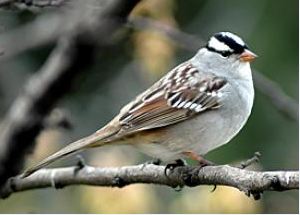
White-Crowned Sparrow
2025-12-05
The most distinctive feature of this relatively large sparrow, as reflected in its name, is the striped crown. Its grey head is crowned with conspicuous black and white stripes. The white-crowned sparrow lacks the yellow spot near each eye and the white throat of the white-throated sparrow, a close relative. This bird is approximately 17 - 19 cm in size. Loud scuffling in the bushes often signals the presence of this spirited bird. Using both of its rather large feet, it vigorously scratches among the leaf litter in search of food.

Learn More
- 0
- 1