




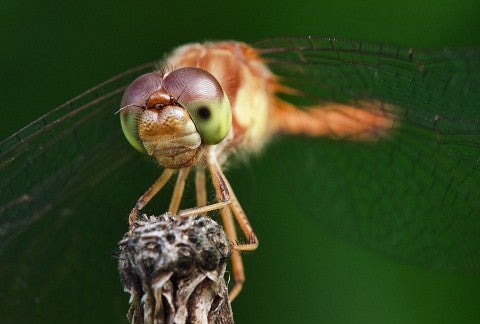
Insects perform a whole host of activities beneficial to our gardens and the environment as a whole:
- They are an important source of food for many animals, such as birds, fish, and frogs.
- They provide valuable products for us in the form of honey, beeswax, and silk.
- Insects are vital pollinators, essential to most of our food crops, flowers, and other plants.
- Many insects are important predators of pests in our gardens - see below to learn about some of them.
- They also play a critical role in the recycling of materials, eliminating waste materials, and keeping our soils healthy.
In fact, of the approximately one million species of insects, man considers only a fraction as pests. Still, insects continue to be undervalued. They are lumped together as creepy crawlies and their mere sight can send people flying to get the spray can of insecticide.
Learn to recognize the good guys, because they are essential allies in keeping the bad guys in check. Work with them in creating a well-balanced, vibrant garden.
Below are predatory insects and how to attract them to your garden. To learn more about pollinating insects, their lifecycles and their needs click here.
|
Insect
|
Benefit
|
| Ladybug
|
Eats aphids, scale |
|
Eats aphids, | |
|
Robber fly
|
Eats flying insects |
|
|
Larvae eat larvae of |
|
Eats slugs and many | |
|
Eats aphids, | |
|
Soldier beetle
|
Eats grasshopper |
|
Eats small insects, | |
|
Eats mites, scales, | |
|
Assassin bug
|
Eats caterpillars, |
|
Eats leafhoppers, | |
|
Damsel bug or damsel
|
Eats mites, aphids, |
|
Soldier bug |
Eats Mexican bean |
|
Dragonfly |
Eats mosquito larvae |
|
Parasitic wasp (most are tiny and don't sting), such as trichogramma, braconid,
|
Destroys the eggs of |
|
Predatory wasp
|
Kills flies, |
|
Both adult and larvae are fierce | |
|
The adult pirate bug and its nymphs feed |
To attract predatory insects to your garden to help with pest control:
- Don't use pesticides, which rid your garden of many of the beneficial insects necessary for a healthy garden. Instead, attract predatory insects and other animals (such as birds) to your garden and let them control any pests. Even organic pesticides can have negative impacts on beneficial insect populations.
- Plant a variety of flowering plants, especially those with small flowers rich in nectar. Although many of the larvae are predators, these will supply the nectar and pollen necessary to many of the adult forms and provide safe places for resting and laying eggs.
- Particularly attractive are herbs allowed to flower, such as coriander, fennel, dill, lavender, thyme, mint, and parsley.
- Flowers of the composite or daisy family are also appealing to beneficials. Examples include goldenrod, coneflowers, ironweed, sunflowers, coreopsis, and black-eyed Susan.
- Intercrop: mix up your plants so that those that attract beneficial insects are near those that need protection, such as vegetables.
- Place your plants close together to provide a moist, shaded environment for beneficials who dehydrate easily.
- Provide a source of water for beneficial insects by putting out a shallow dish of water with stones to give them dry places to land.
- Minimize soil disturbance to protect soil-dwelling insects and their eggs.
- Create mulched or stone pathways to provide shelter for predatory beetles.
- Allow leaf litter to remain on planting beds to provide overwintering spots
- Plant ground cover to provide shadowy, sheltered spots for spiders.
- Keep your soil healthy by adding compost to allow soil organisms to thrive.
- Attract beneficial insects to your yard rather than buying and releasing them. Releasing insects may rid your yard of naturally occurring beneficials through competition and predation (some beneficial insects, such as praying mantises, feed on both pests and other beneficial insects). In addition, some insects, such as certain ladybugs, are migratory and, once released, quickly move on to other locations.
- Invest in a good insect guide so that you can accurately identify troublemakers and beneficials.
Photo: Lu Zhang