

SCIENTIFIC NAME
Lampyridae Family
CLASSIFICATION
Kingdom: Animalia Phylum: Arthropoda Class: Insecta Order: Coleoptera Family: Lampyridae
OTHER COMMON NAMES
Fireflies, Lightning Bugs
DESCRIPTION
Despite their name, these insects are not flies. They’re actually beetles. There are 29 species believed to be native to Canada, but there is a lot about this group of insects that is still being discovered, including the various species. Fireflies have elongated bodies and their heads have a “pronotum”, which is a cover that protects the top of their heads although, when viewed from the side, you can see their heads. Their upper pair of wings are hard and also serve as protection, similar to ladybugs, aka ladybeetles, which are in the same Coleoptera family. Their larval, or immature, form resembles a grub or millipede. Some live on land (terrestrial), some live in water (aquatic) and others are semi-aquatic.
SIMILAR SPECIES
Soldier beetles (Cantharidae) are similar but lack the protective head cover, Click beetles (Elateridae) have hard bodies while Net-winged beetles (Lycidae) have little raised marks along their forewings unlike the smooth wings of fireflies.
PHOTO GALLERY
(Please note — these photos are unverified images submitted by members of the CWF Photo Club.)
RANGE
Fireflies live in the warmer regions of Canada.
HABITAT
Look for fireflies in the evening near or in woodlands and wet areas. They can also be found in open areas with surrounding habitat of trees and tall grass such as gardens, small fields and cemeteries.
DIET
Both young and adult fireflies feed on snails, slugs, worms and other soft-bodied insects including the larva of other bugs like mosquitoes. Some adults don’t feed while others eat pollen and/or nectar and are therefore considered a pollinator.
BEHAVIOUR
Most of the fireflies that flash do so after dusk. Some flash during the day, but these tend to be fireflies that live in places that are darker, such as forests and woodlands.
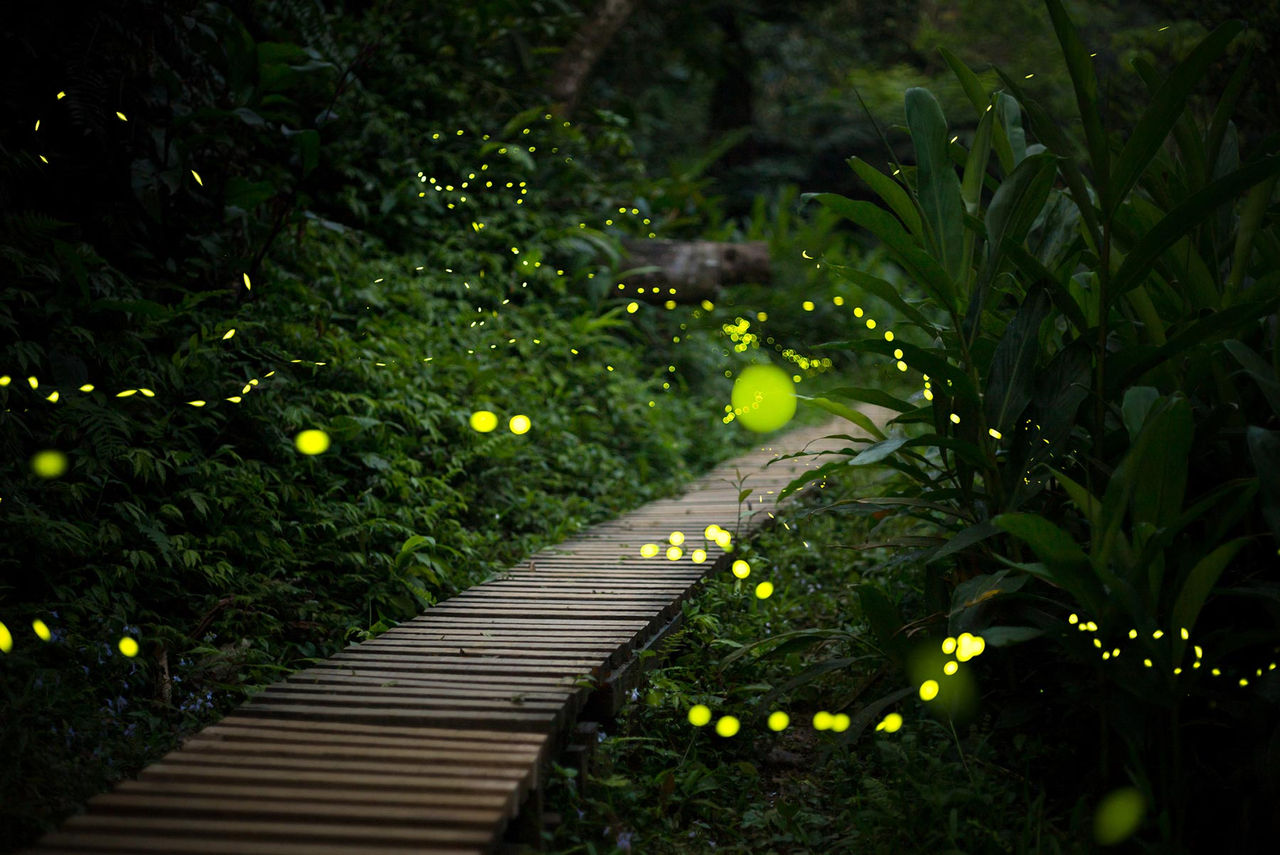
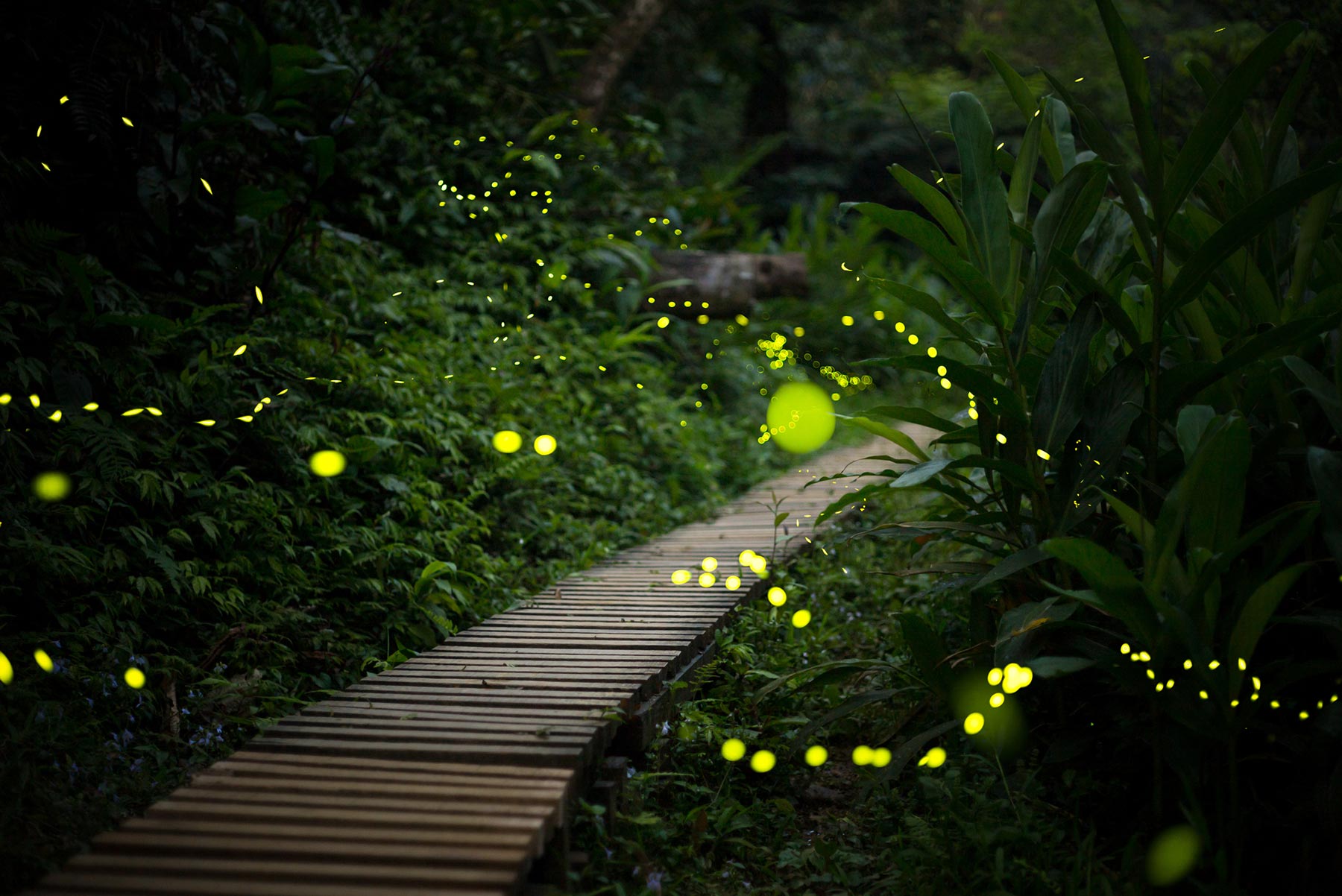
A chemical reaction causes the lower abdomen to give off a yellowish light (bioluminescence). This is used to communicate and attract a mate. It is believed that most, if not all, species have their own flash pattern. In fact, females of some species are known to mimic the pattern of other firefly species in order to lure males in and then eat them. While drawing attention to themselves can be dangerous, they contain a chemical causing them to taste bad even in the young stages. The light alerts those that have tasted them in the past to steer clear.
Some fireflies don’t flash to communicate. Instead they use pheromones, a chemical used by many animals for the same purpose.
Fireflies lay eggs in the autumn that grow into larva which remain underground for the winter (or under tree bark). Many are believed to glow in this juvenile stage as well.
THREATS AND/OR WHAT YOU CAN DO
Researchers believe fireflies are declining due to habitat loss, pesticide use and possibly light pollution. However, fireflies are still being harvested from the wild and sold to companies which extract a component called luciferase from them. Most companies now use the synthetic version which has been available for many years and is supposed to work just as well. To help these remarkable creatures, garden as safely as possible by avoiding pesticides. You will also be helping songbirds, hummingbirds and other animals who eat insects for food. You will also be helping to keep our water cleaner and safer in the long run, too. Consider adding a water feature without fish. Include plenty of aquatic and semi-aquatic vegetation to offer fireflies places to live and grow. Where possible, avoid cutting down trees on your property and include areas of tall grass and other vegetation, perhaps in the corner of your garden. Turning off as many lights as possible is thought to help fireflies communicate with one another. It also helps migrating birds who often collide with buildings, although typically high rises in cities are the bigger culprits. Many buildings, communities and homeowners are being more conscious about saving on their electricity bill as well as the impacts of light pollution.
https://cjai.biologicalsurvey.ca/lmb_16/lmb_16.pdf
https://eol.org/pages/7487
https://www.scientificamerican.com/article/how-and-why-do-fireflies/


