


SCIENTIFIC NAME
Selasphorus rufus
CLASSIFICATION
Kingdom: Animalia Phylum: Chordata Class: Aves Order: Apodiformes Family: Trochilidae Genus: Selasphorus
DESCRIPTION
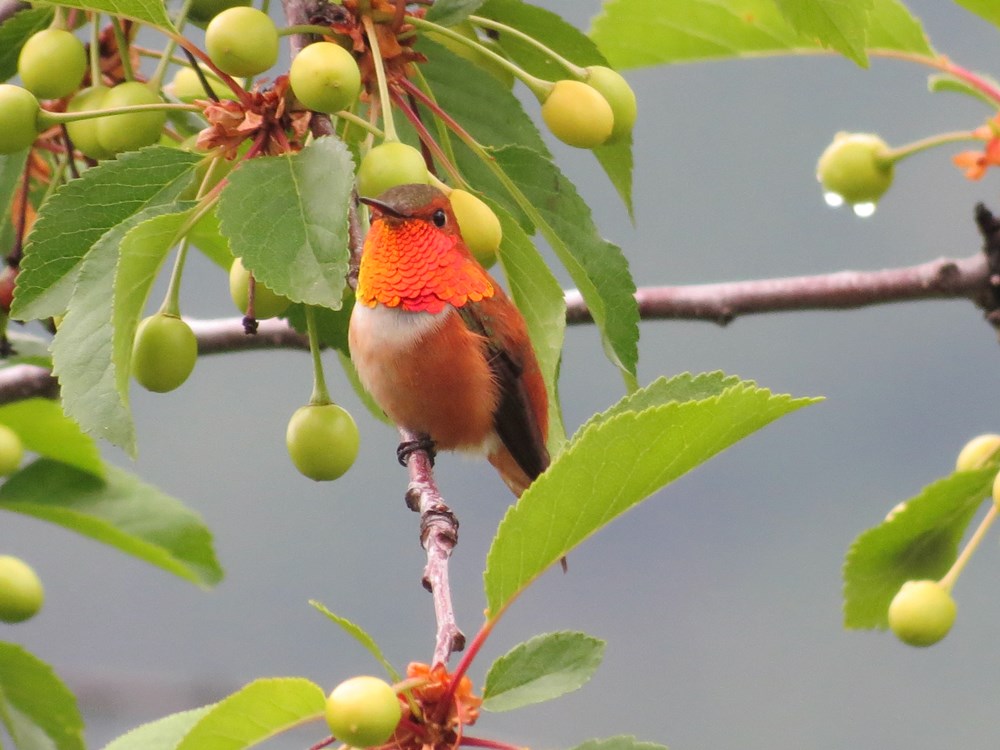
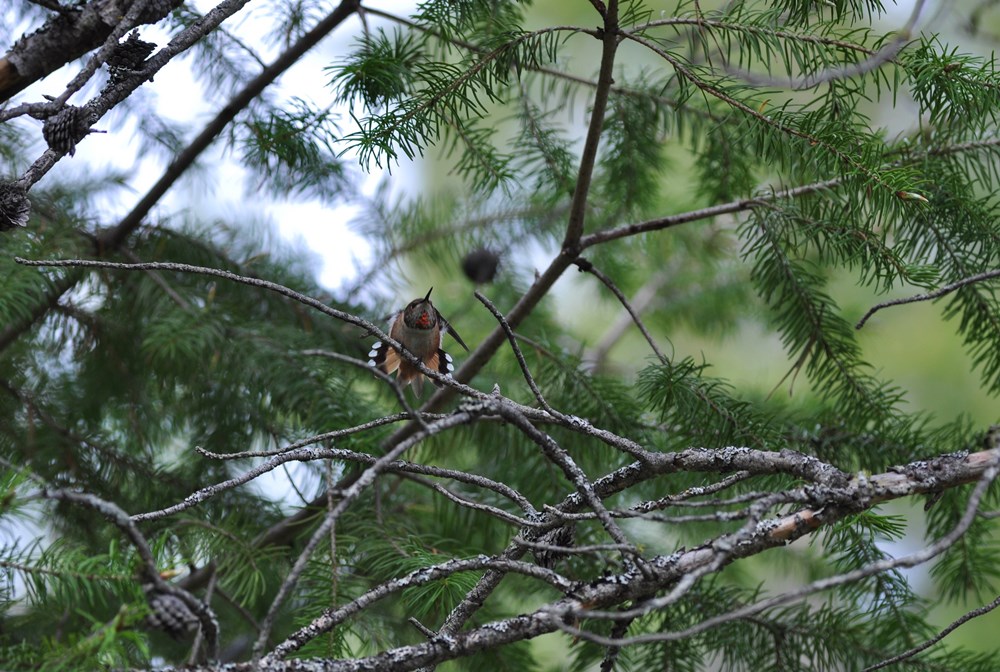
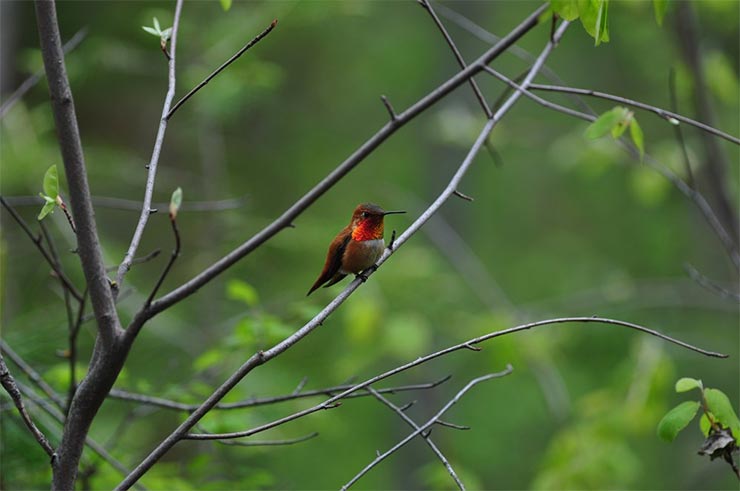
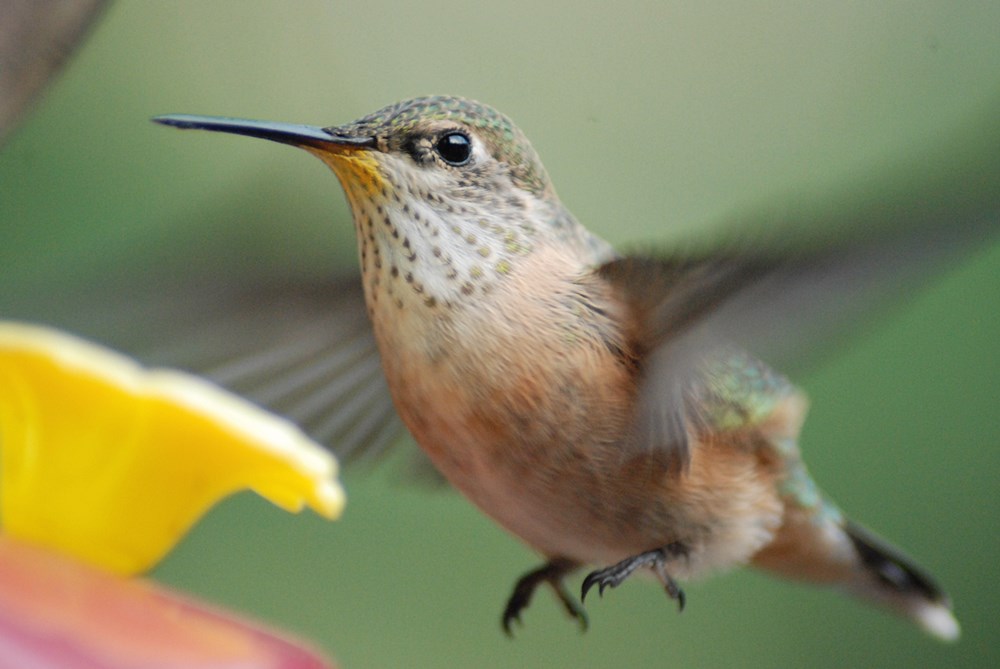
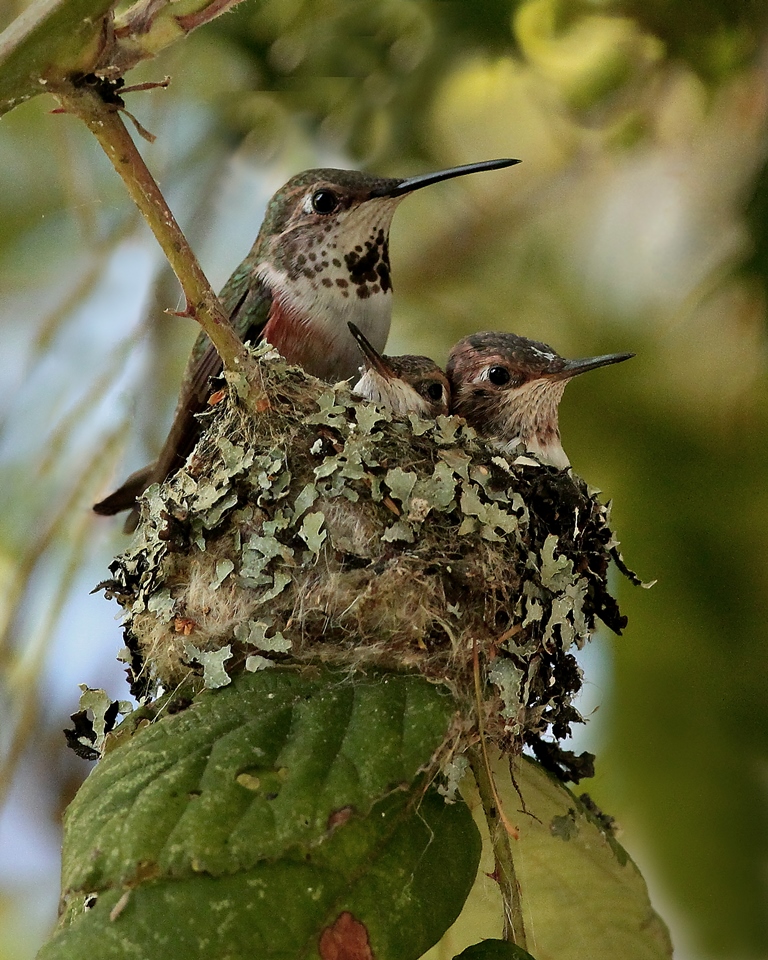
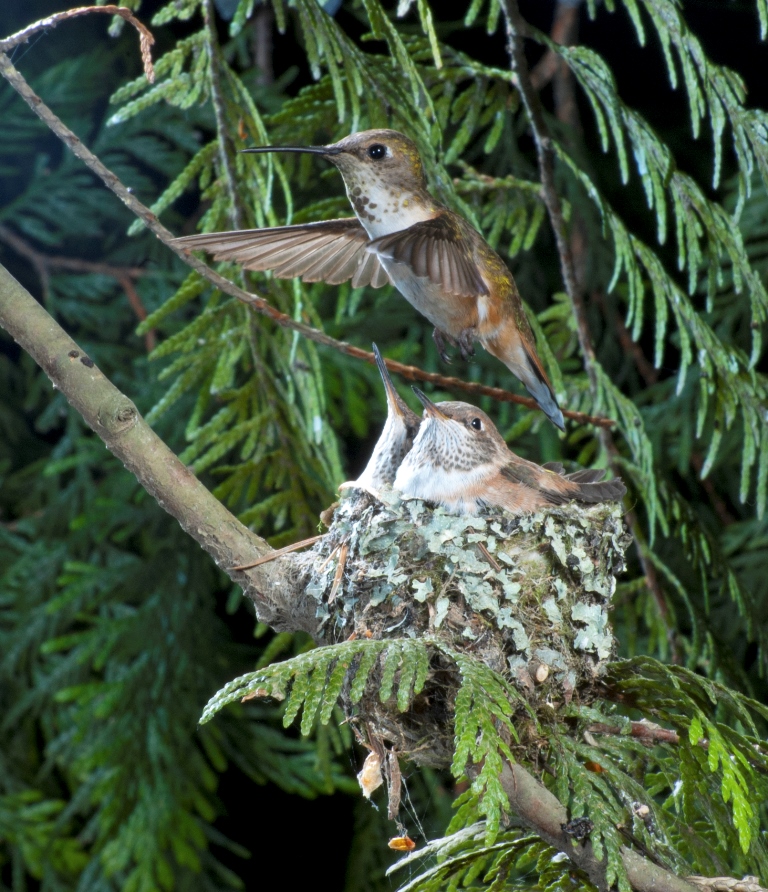
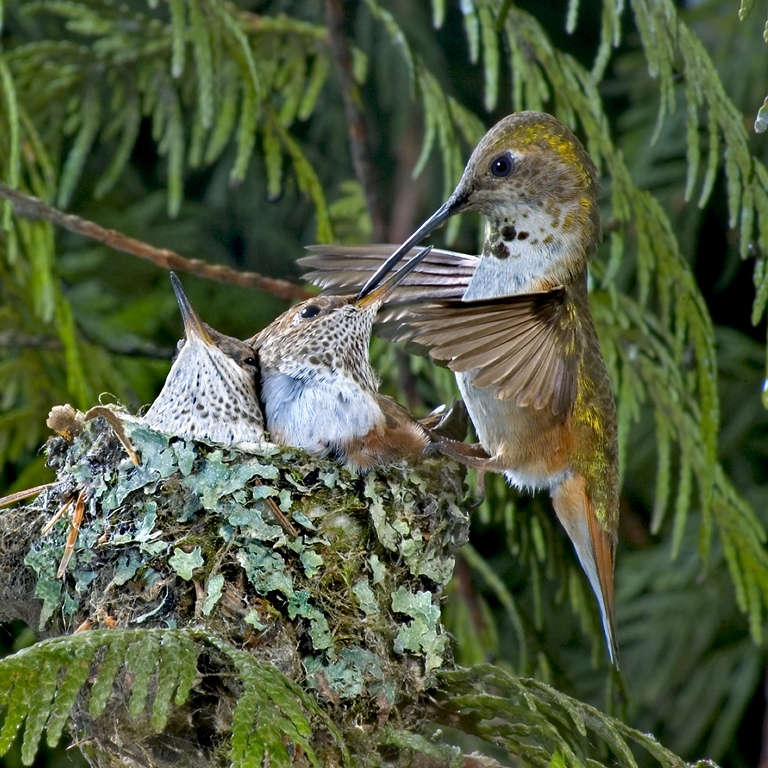
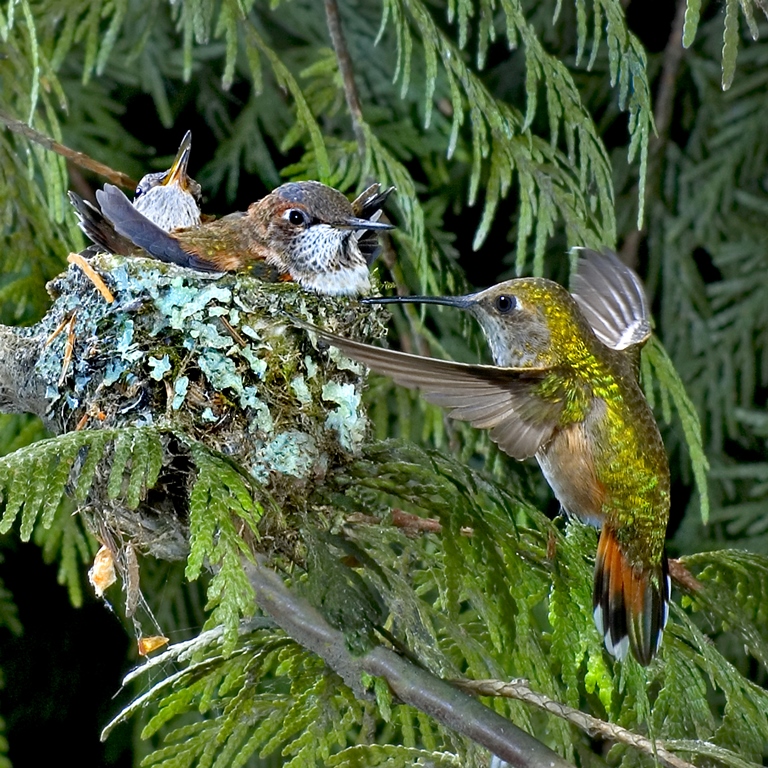
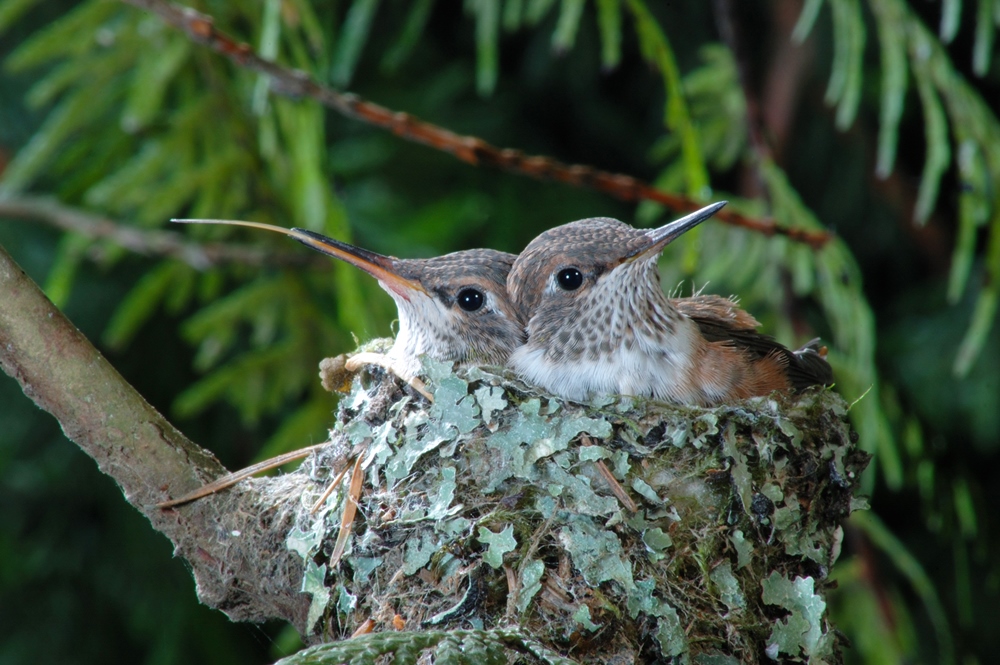
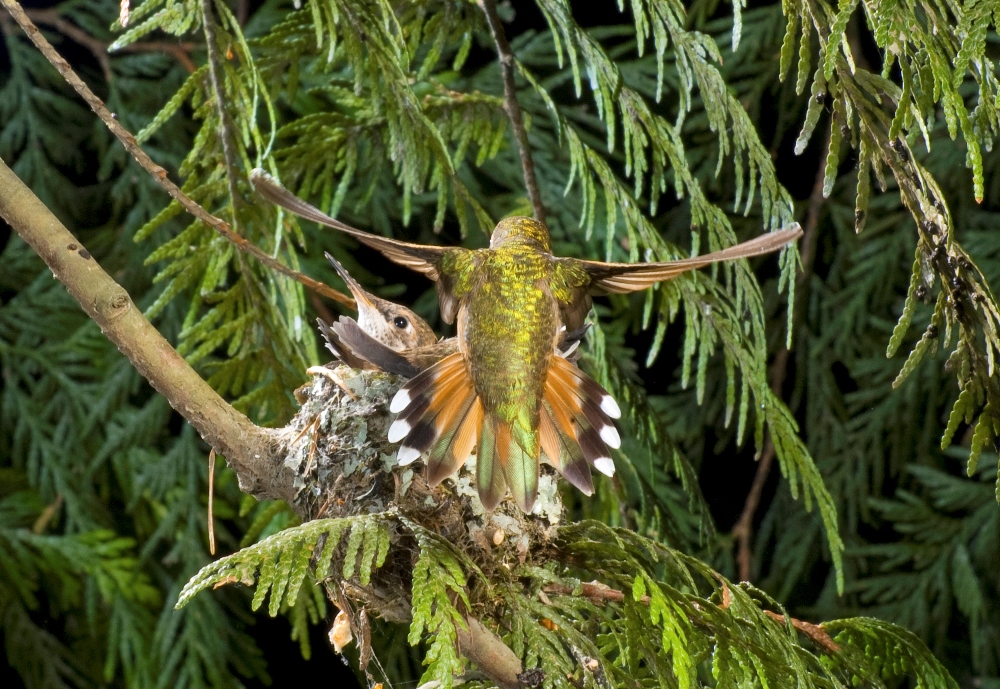
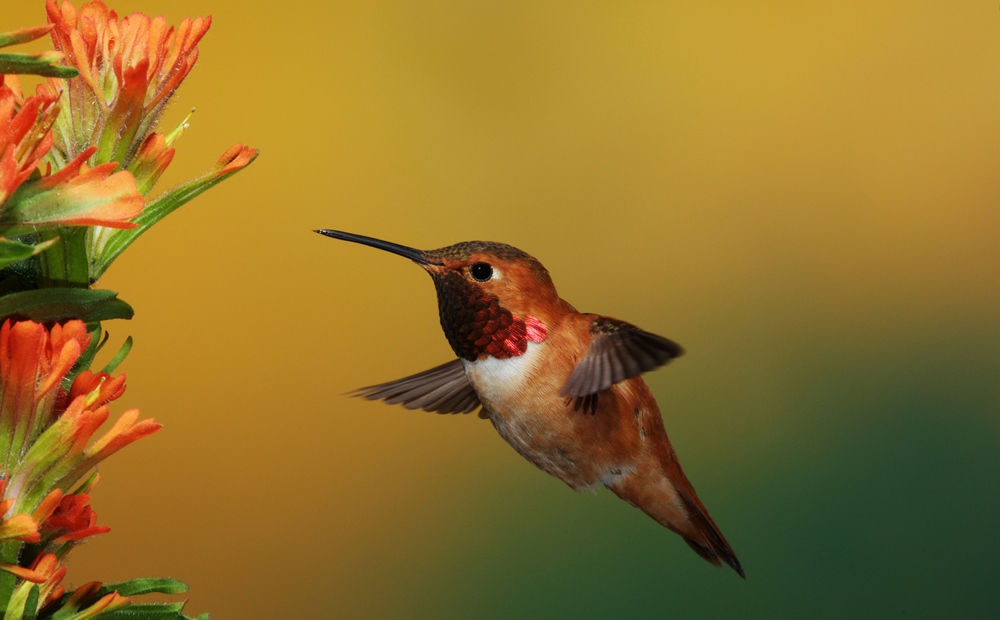
Approximately 9.5 cm long. Adult male upperparts are mainly reddish-brown with dull green on the top of their head and a white patch behind the eyes. Their throat is iridescent orange-red and has white at the top of their breast and parts of the belly; the rest of its underparts are reddish-brown. Adult females are similar to males but paler and greener; their throat is white with dark and/or iridescent spots of orange-red. Immature birds resemble the females, but immature males start to show reddish-brown upperparts before their throat colours develop.
SIMILAR SPECIES
Allen’s hummingbird (Selasphorus sasin), found in the southwestern United States.
PHOTO GALLERY
 |  |  |
|  |  |
 |  |  |
 |  |  |
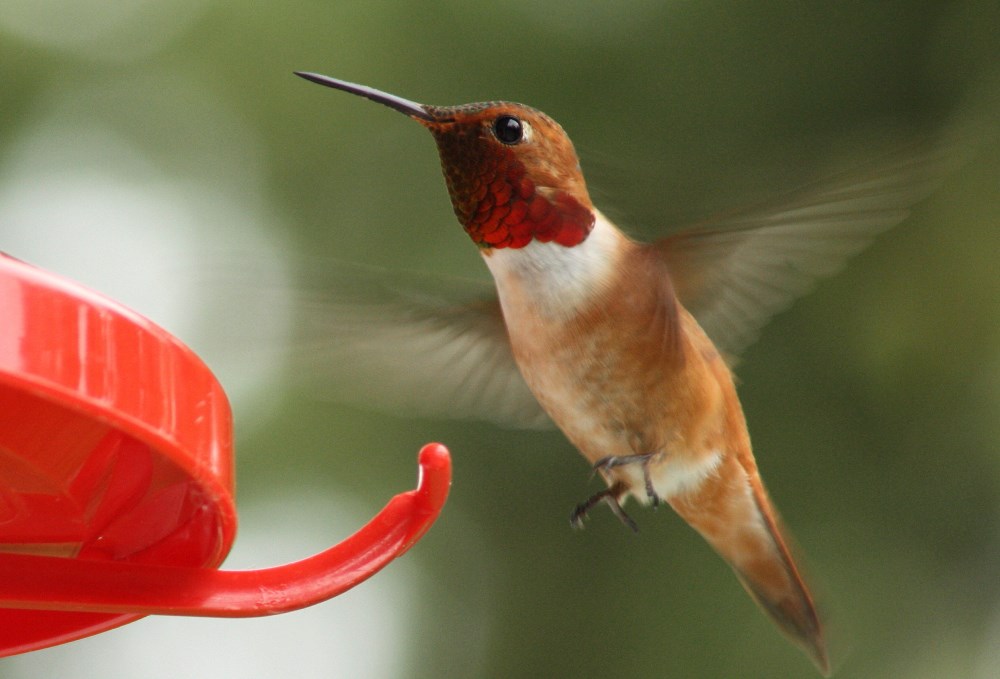 | 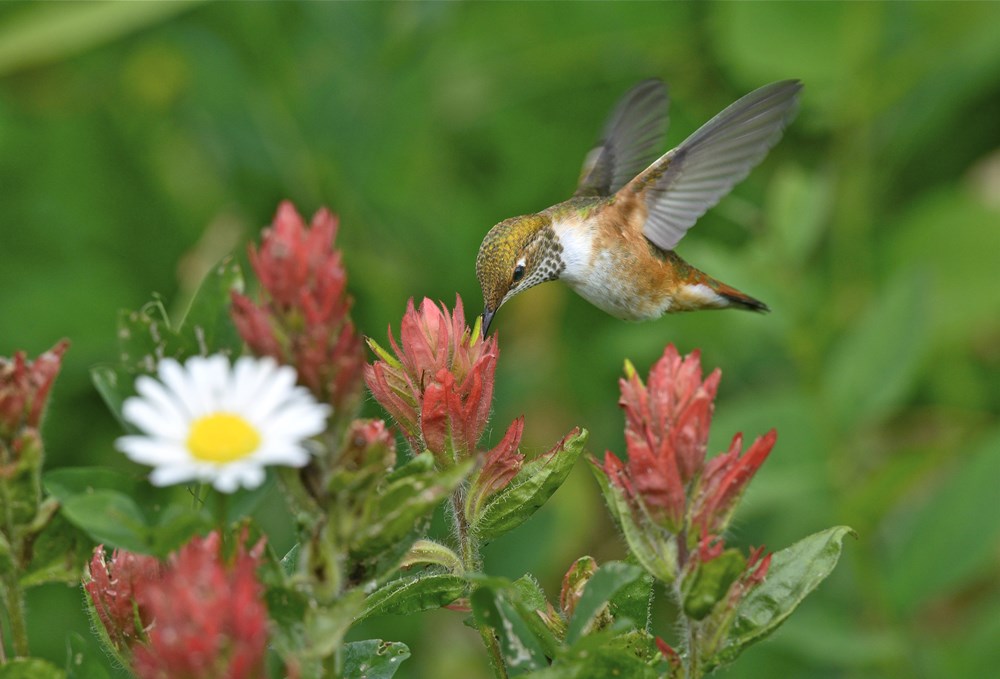 | 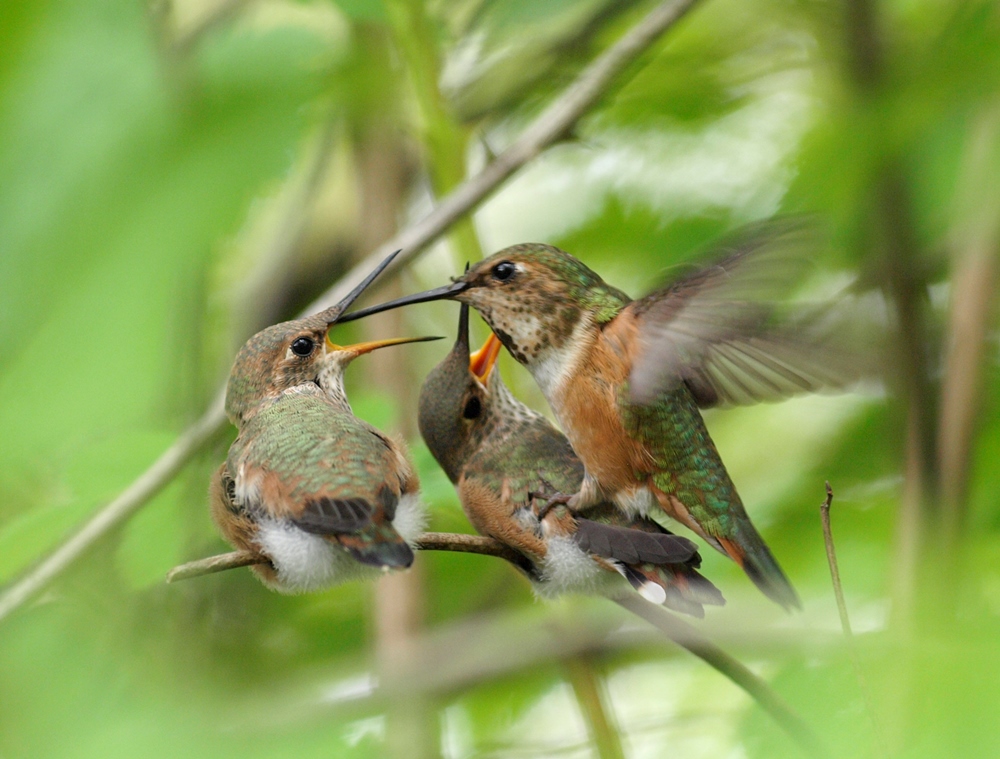 |
RANGE
British Columbia, western Alberta
HABITAT
Found in a variety of habitats including mountain meadows, forests, woodlands, edges, open shrubby areas, gardens, parks and swamps.
DIET
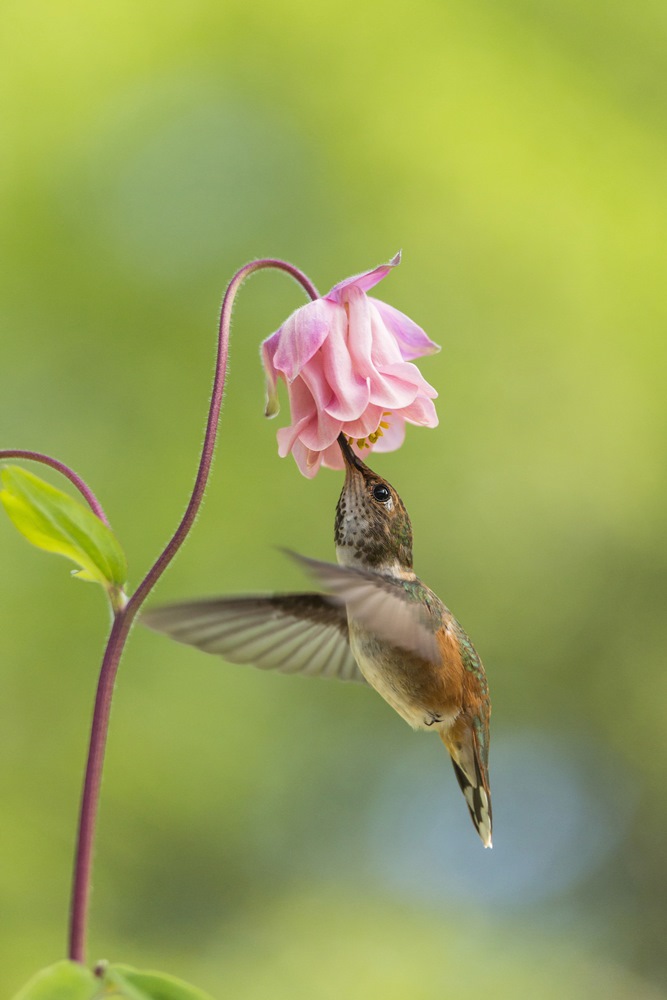
They drink floral nectar from tubular flowers such as wild columbines (Aquilegia spp.), lilies, penstemons (Penstemon spp.), fireweed (Epilobium angustifolium) and Indian paintbrush (Castilleja spp.). They also drink sap from sapsucker holes and eat insects and spiders caught in flight or foraged from leaves, tree bark or webs.
BEHAVIOUR
They are solitary birds that are known to aggressively defend their territory. Rufous hummingbirds generally migrate south to Mexico and a portion of the southern States for the winter months. They travel south along mountain meadows; however, their path when they return northwards is usually along the west coast.
PRIMARY ECOSYSTEM ROLES
- Pollinator - While they don’t eat much pollen, Canada’s hummingbirds nevertheless help transfer any that get on their upper body as they move from flower to flower.
- Insect control
STATUS
(verified February 11, 2014)
- COSEWIC – Not assessed
- NatureServe: National rank - N5B (breeding populations secure), Global rank - G5 (secure)
NOTE: While these assessment organizations do their best to stay current, the process of assigning or updating a species status may take a while to reflect real life changes.
THREATS AND/OR WHAT YOU CAN DO
While the status of this species is currently considered stable, you can help it by gardening organically to allow insects and spiders to be a healthy source of food. You can also grow a variety of native tubular flowers. If you include non-natives, avoid invasive species. Leave any mature trees where possible for them to nest or even bathe on.
NOTES
Special thanks to Michel Gosselin for his help with this species profile.
References
The Audubon Society Field Guide to North American Birds - Eastern Region. 1993. Bull, John, Farrand, John Jr.,Alfred A. Knopf.
Birds of Canada, 2004. Alsop, Fred J. III. Dorling Kindersley.
Field Guide to the Birds of North America - Second Edition, 1994. National Geographic Society
http://bna.birds.cornell.edu/bna
http://www.museevirtuel-virtualmuseum.ca/sgc-cms/expositions-exhibitions/colibri-hummingbird/En/Hummingbird/Hummingbirds-In-Canada/Rufous-Hummingbird-Selasphorus-Rufrus/index.html
http://www.allaboutbirds.org/guide/rufous_hummingbird/lifehistory
http://bna.birds.cornell.edu/bna/species/053/articles/introduction

Learn More
- 0
- 1


