

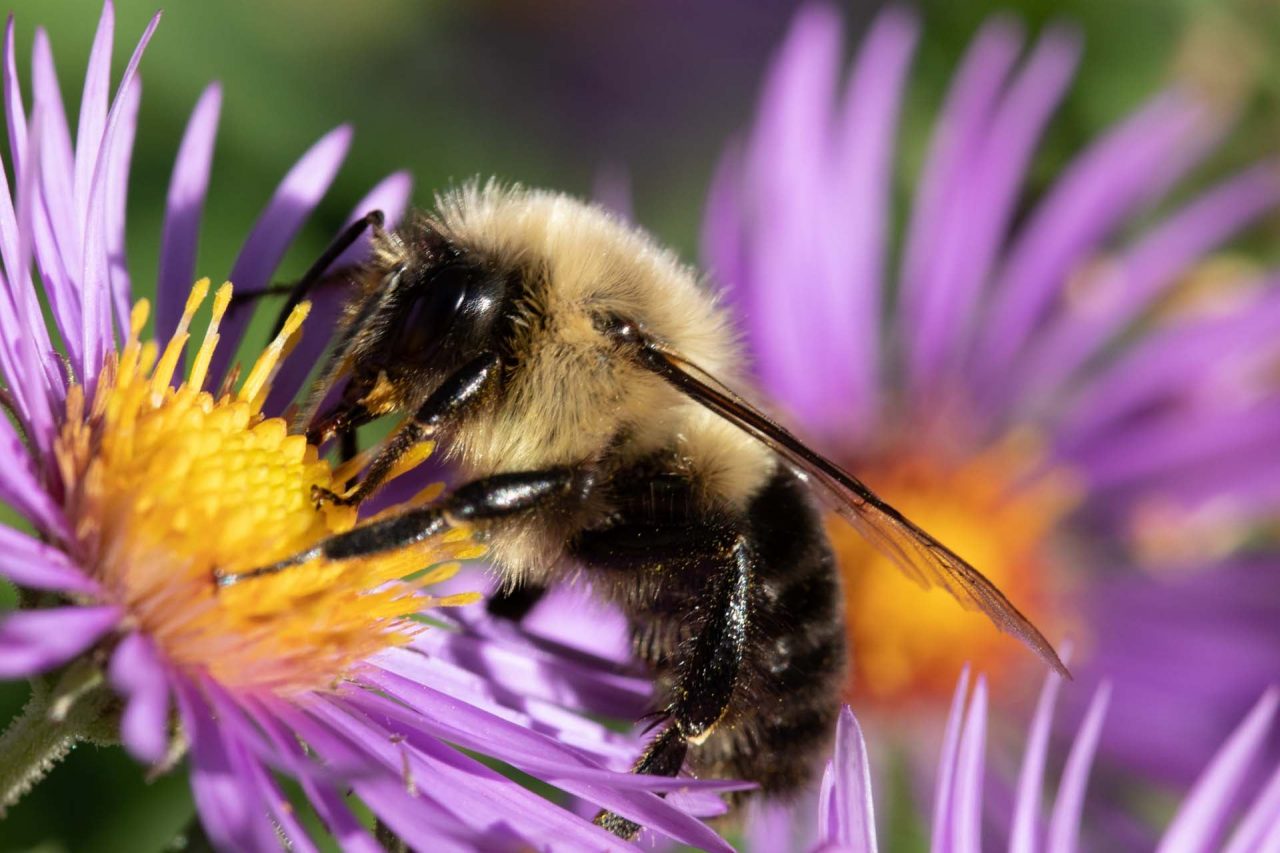


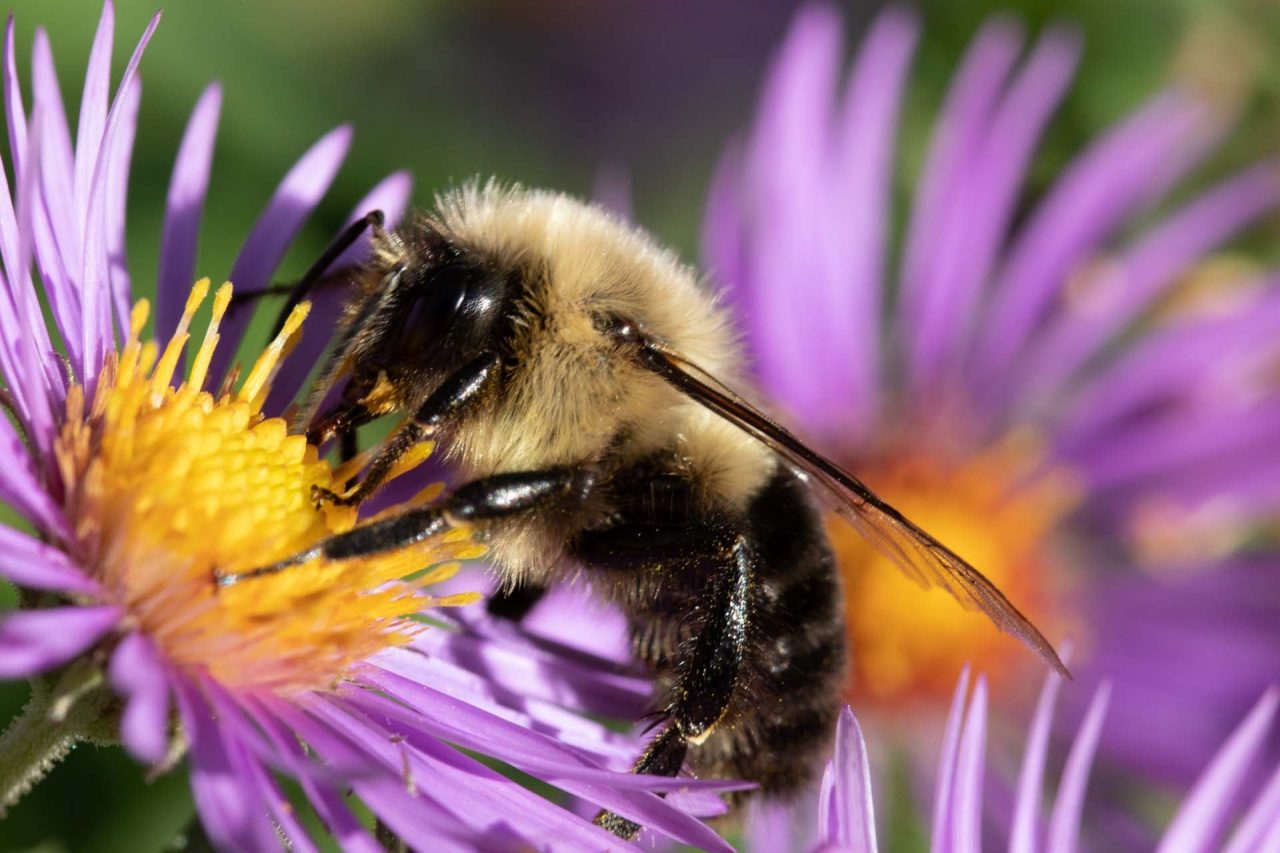
Survival of the fittest takes on new meaning when we learn about native bumble bees. Only new queens survive winter in Canada, nestled below the ground or just above it in thick plant debris after mating. Try not to bug them, as they nestle down for a long winter’s nap before taking over their important duties in the spring.
You Better Bee-Lieve It
North America has just over 50 known species of bumble bees and 42 are known to make their homes in Canada. Internationally, there are approximately 260 species of bumble bees, so that means Canada is key habitat for these important pollinators.
The Other Busy Season
When pollination season ends in the late fall, the worker bees die. The reigning queens stop producing working bees in the late summer, instead laying eggs for new queens and male drones to ensure fall fertilization. The reigning queen also dies when this work is done, leaving the newly fertilized queens to assume this important role. The male drones live for a short time after mating, but they also die naturally when the weather cools.
Mommy to Bee
The newly fertilized queen, called a Gyne, carries on her late mother’s role by bulking up on nectar and pollen in the fall and then burrowing underground or beneath leaves. This little space of her own is called a hibernaculum, and it can be five to15 cm below the surface. In this tiny cavity, the new queen enters a dormant state, called diapause, often producing a natural type of antifreeze that keeps icicles from destroying her internal organs. She is not actually carrying eggs, but she has banked what she needs from the male drone to fertilize eggs in the spring.
How to Help?
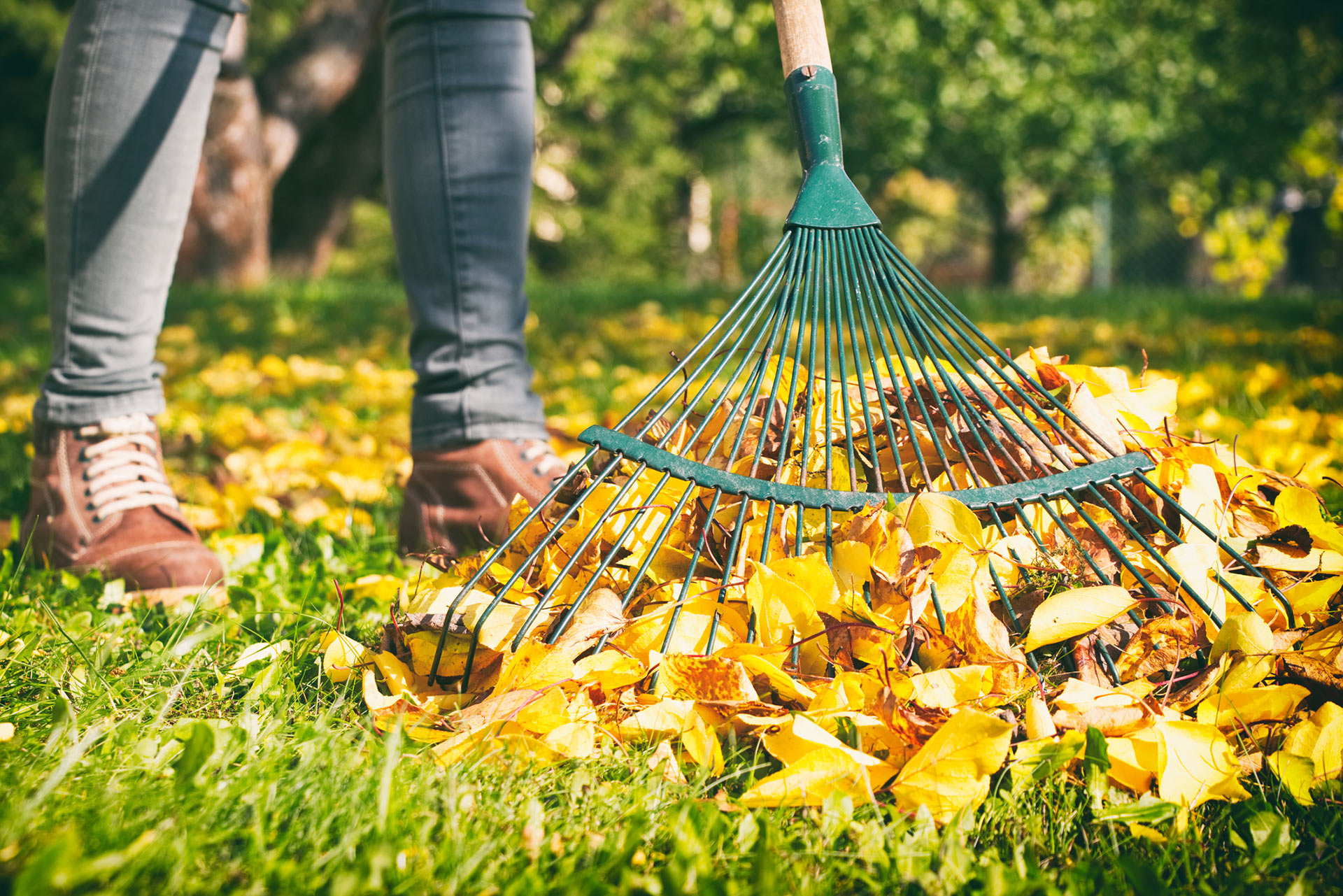
- Bee Kind: Leave some debris in your yard over winter (and in spring) in case there are Gynes under cover.
- Bee Careful: If you are shoveling your yard in the winter, or raking in the fall or spring, try not to disturb the piles you left for wildlife to find shelter.
- Bee Strong: Resist cleaning up your yard too early in the spring. Bumble bees aren’t the only critters that may be trying to survive the cold temperatures in the leaves or natural litter.
- Bee Helpful: Avoid using chemicals in your yard and try to find organic solutions. The bees and other pollinators will pay-it-forward by pollinating fruits and flowers in spring and summer.
For more information, visit GardeningforWildlife.ca. Or, read about how one of the CWF True North Conservation Award recipients helped protect bumble bees.

Learn More


- 0
- 1
- 2
- 3
- 4
- 5