




-
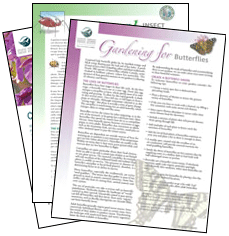 Guides, Infographics & Posters
Guides, Infographics & Posters
Take a closer look at the ways in which we’ll help you access the facts about wildlife. Whether it’s discovering the Hinterland Who’s Who animal fact sheets, or ordering our handy field guide to Canada’s prevalent shoreline species. This content is available to our CWF Supporters and online members. Please sign in to order your free materials.
More -
-
Wildlife E-cards
Wildlife E-cards
Send Dad a wildlife e-card! You cherish our wonderful wildlife and now you can send e-greetings that reflect your love of nature. We have developed a wide array of wildlife ecards for every occasion for you to share with your family and friends!
More -
 CWF Wallpapers
CWF Wallpapers
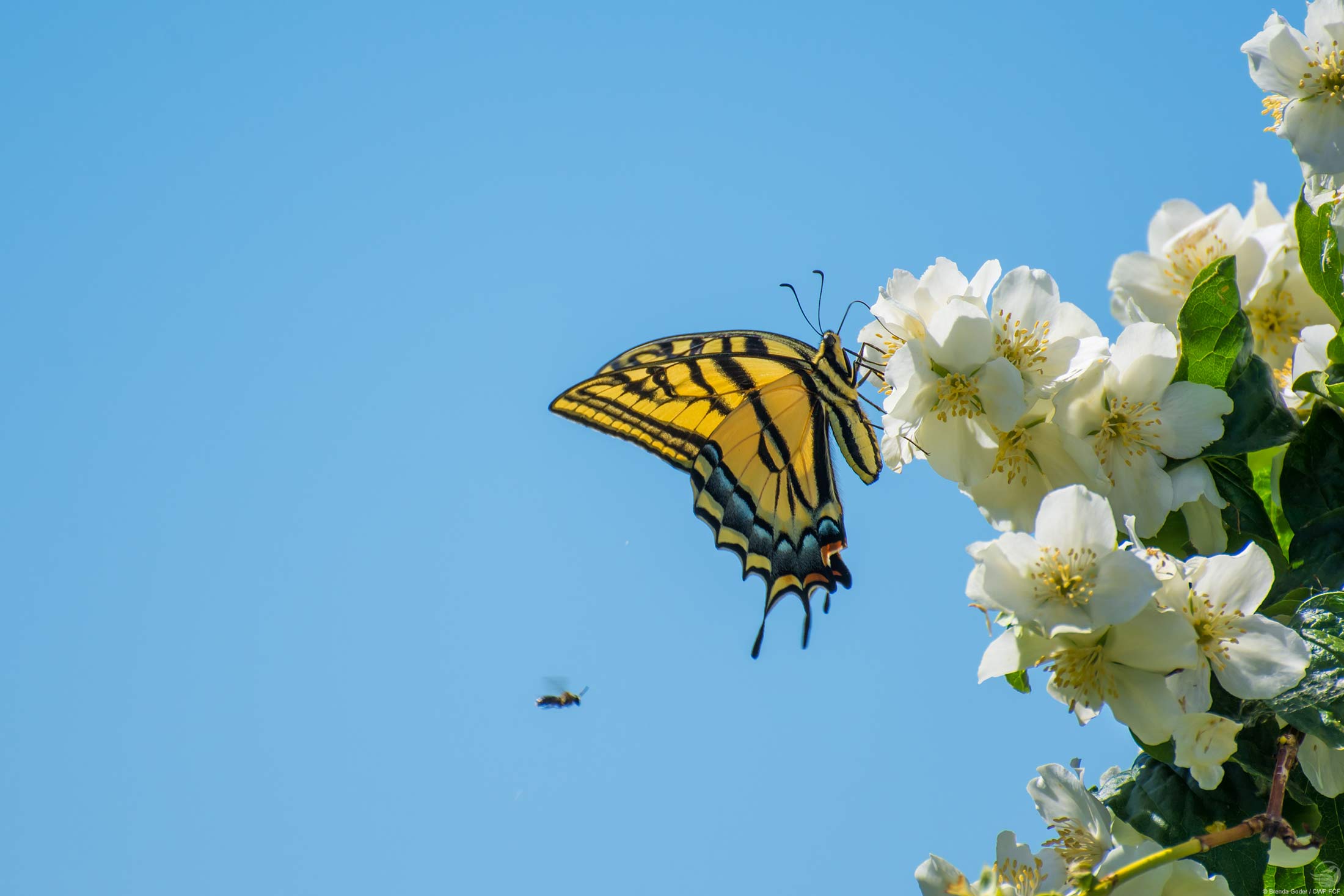
Your desktop is the perfect habitat for this wild wallpaper. Download CWF wallpapers!
More -
 WILD Webinars
WILD Webinars
With topics relating to conservation, wildlife and habitat, we provide a relevant online learning platform, typically for grades four to six but of benefit to any age.
More

From easy-to-use apps designed as tools for your citizen science projects to picturesque wallpaper images for your computer, CanadianWildlifeFederation.ca offers a variety of useful downloads for your PC and mobile devices.
Coasts & Oceans
Connecting With Nature
-
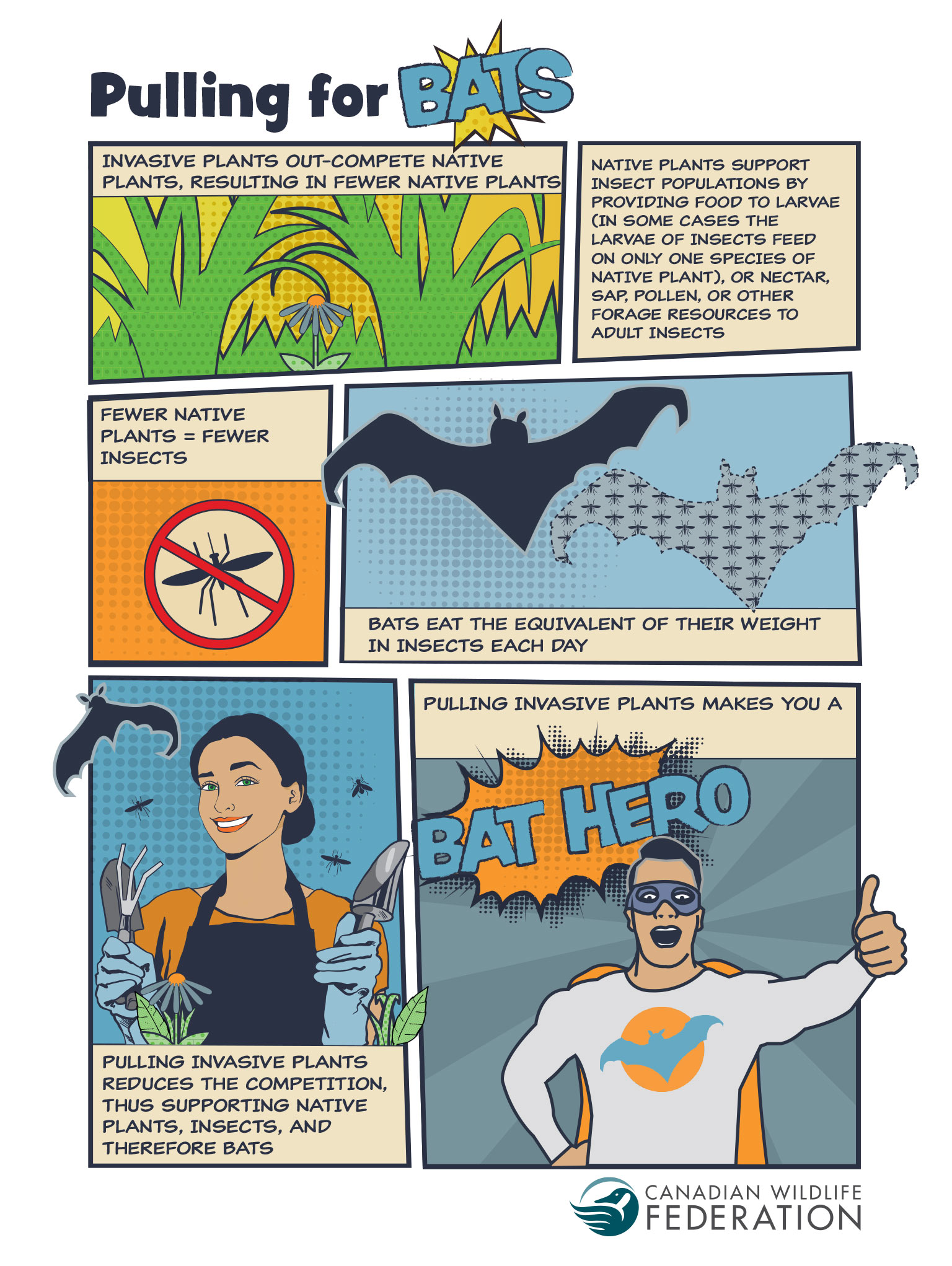
Pulling for Bats
2017-09-13
Native plants support diverse insect populations by providing food for adults and larvae. Insects will feed on nectar, pollen or leaves and some will forage on only one species of native plant!
-
-
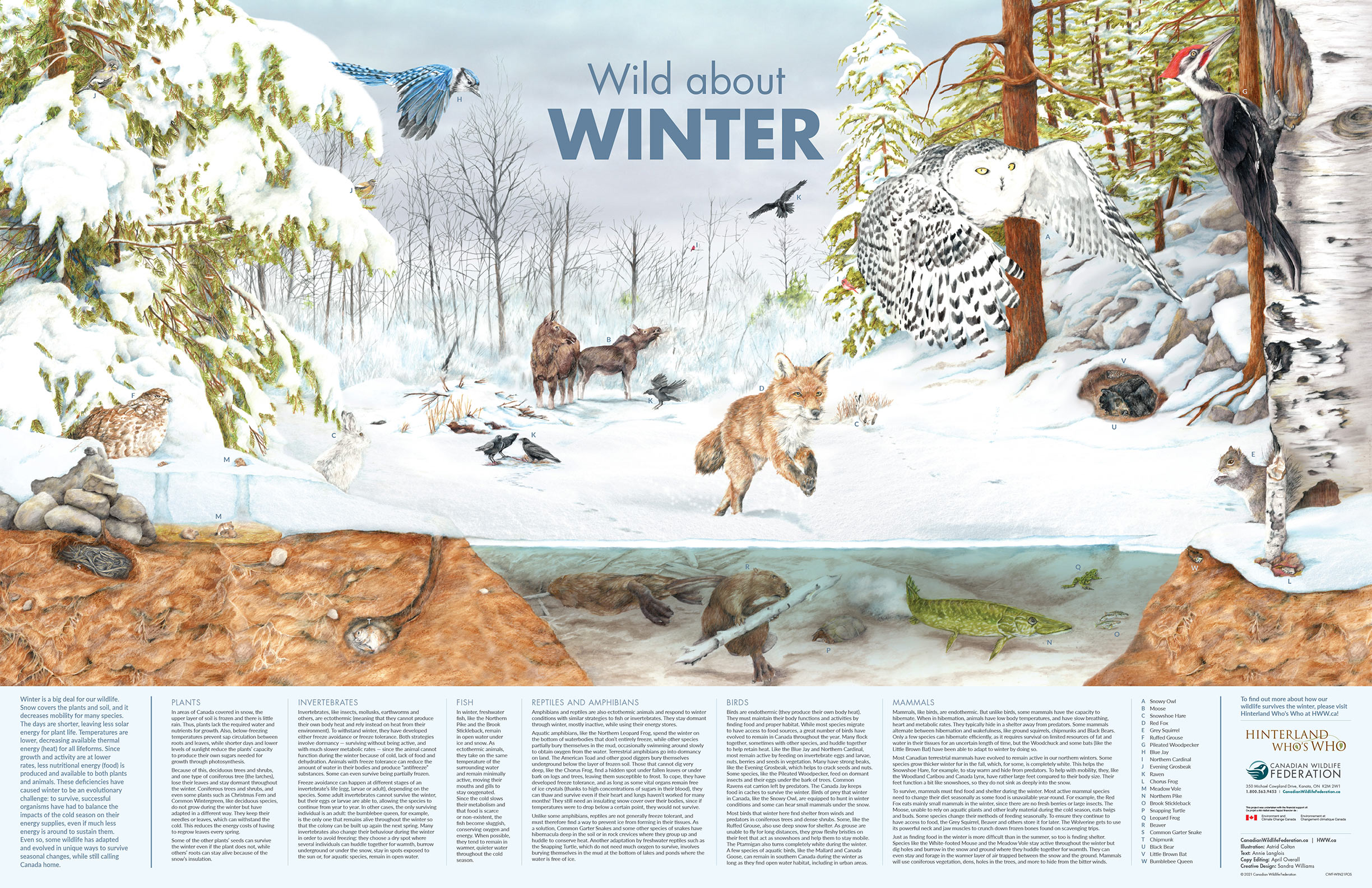
Wild About Winter Poster
2026-07-03
Winter is a big deal for our wildlife. Snow covers the plants and soil, and it decreases mobility for many species. The days are shorter, leaving less solar energy for plant life. Temperatures are lower, decreasing available thermal energy (heat) for all lifeforms. Since growth and activity are at lower rates, less nutritional energy (food) is produced and available to both plants and animals. These deficiencies have caused winter to be an evolutionary challenge: to survive, successful organisms have had to balance the impacts of the cold season on their energy supplies, even if much less energy is around to sustain them. Even so, some wildlife has adapted and evolved in unique ways to survive seasonal changes, while still calling Canada home.
-

-
Hinterland Who's Who Fact Sheets
2026-07-03
Check out the facts for amphibians and reptiles, birds, fish, mollusks, insects, pollinators and mammals! We’ve even got information specific to species at risk, the boreal forest species, and species affected by climate change! So why not learn a little bit more about these Canadian creatures
Education & Leadership
Endangered Species & Biodiversity
-

Helping Monarchs and Pollinators: Rethinking Mowing
2019-05-07
Pollinators are a priority resource concern for many conservationists and farmers. The Xerces Society conducted field trials throughout the Easter, Midwestern and Western United States to inform best practices.
-
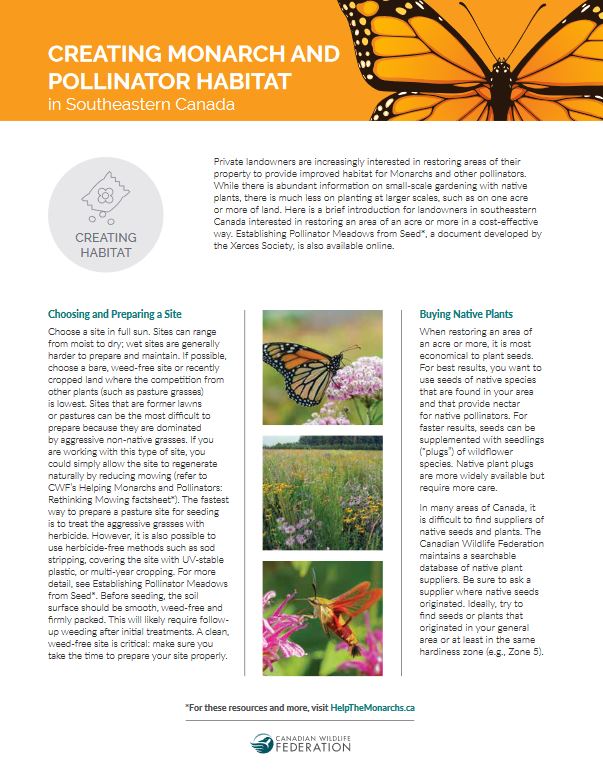
Creating Monarch and Pollinator Habitat
2026-07-03
Private landowners are increasingly interested in restoring areas of their property to provide improved habitat for Monarchs and other pollinators. While there is abundant information on small-scale gardening with native plants, there is much less on planting at larger scales, such as on one acre or more of land. Here is a brief introduction for landowners in southeastern Canada interested in restoring an area of an acre or more in a cost-effective way. Establishing Pollinator Meadows from Seed*, a document developed by the Xerces Society, is also available online
-
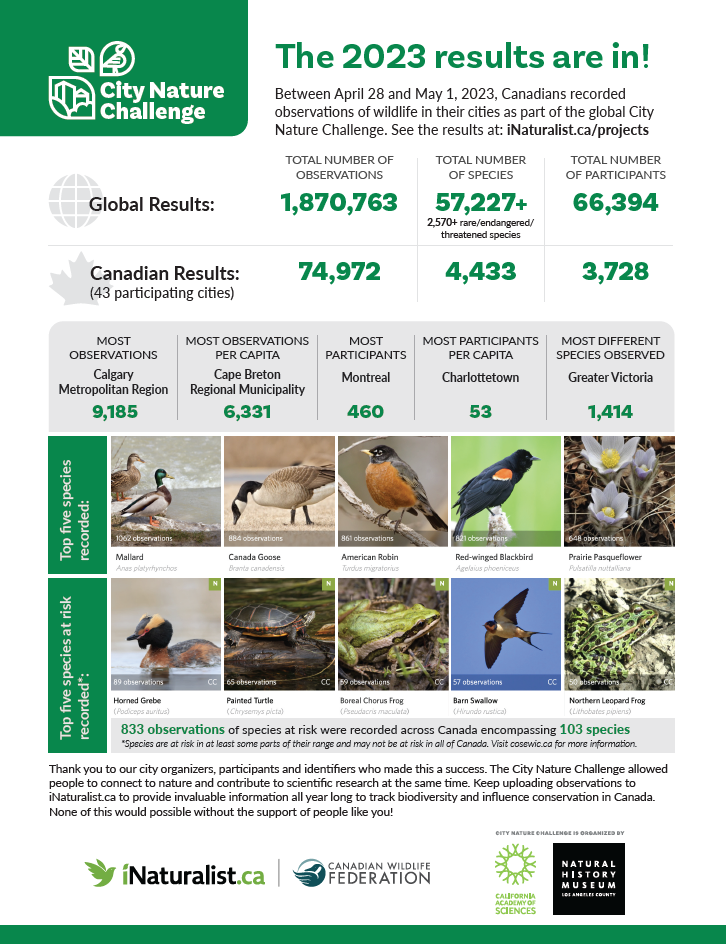
The City Nature Challenge 2023 Results
2023-05-10
Between April 28 and May 1, 2023, Canadians recorded observations of wildlife in their cities as part of the global City Nature Challenge. See the results at: iNaturalist.ca/projects
-
-
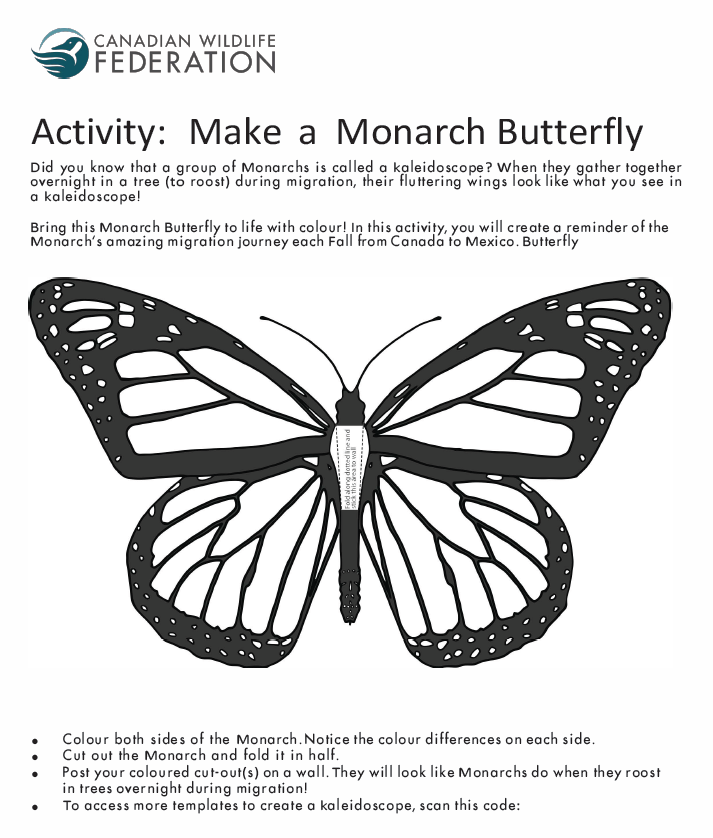
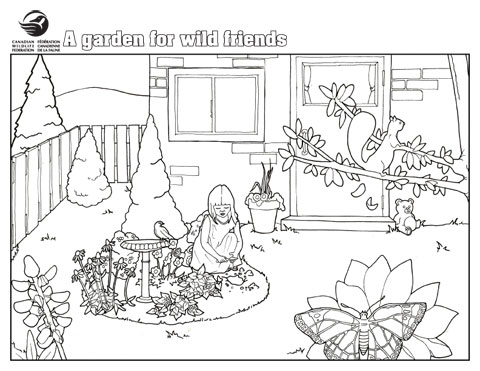
CWF Kaleidoscopes Monarch Colouring Page
2026-07-03
Forests & Fields
-
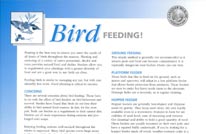
Bird Feeding handout
2026-07-03
Bird Feeding handout
-
Pulling for Bats
2017-09-13
Native plants support diverse insect populations by providing food for adults and larvae. Insects will feed on nectar, pollen or leaves and some will forage on only one species of native plant!
-
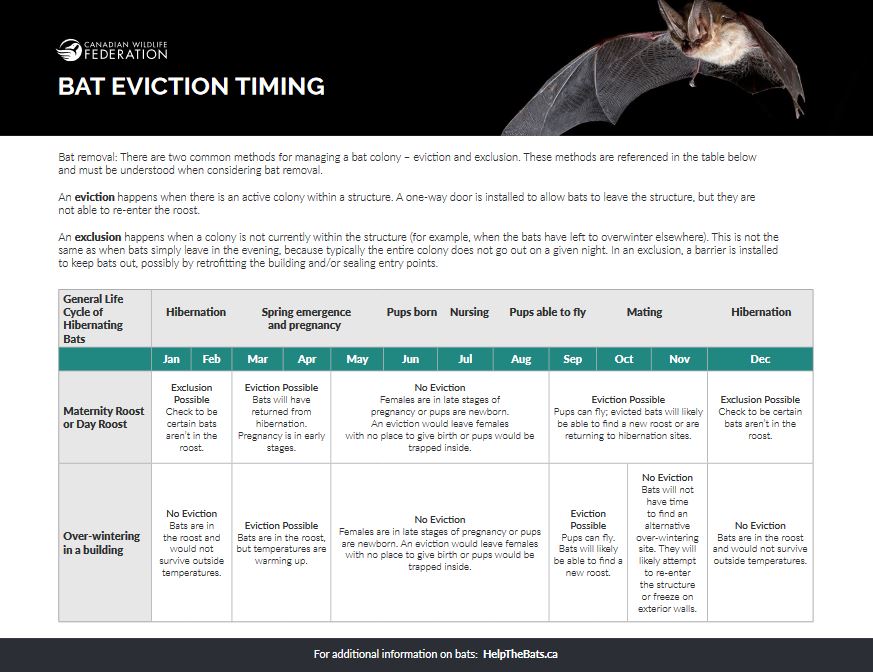
Bat Eviction Timetable
2026-07-03
An eviction happens when there is an active colony within a structure. A one-way door is installed to allow bats to leave the structure, but they are not able to re-enter the roost.
-
-

Certify Your Garden Handout
2026-07-03
Whether you are limited to a small patio or have hectares of land, CWF would like to acknoledge your efforts in welcoming wildlife to your garden.
Lakes & Rivers

Learn More

- 0
- 1
- 2
- 3