




From easy-to-use apps designed as tools for your citizen science projects to picturesque wallpaper images for your computer, CanadianWildlifeFederation.ca offers a variety of useful downloads for your PC and mobile devices.
-
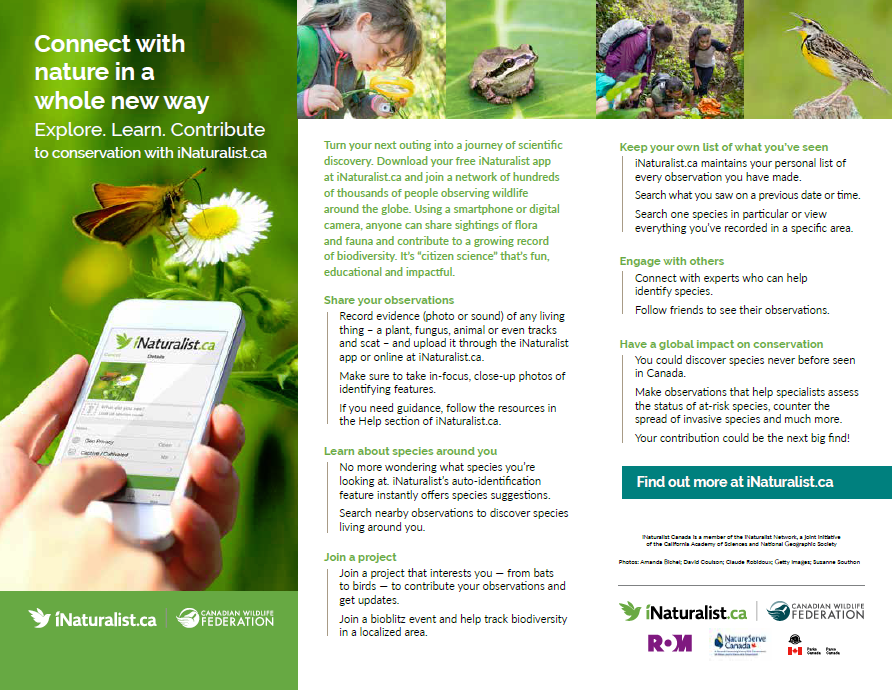
About iNaturalist.ca
2021-03-01
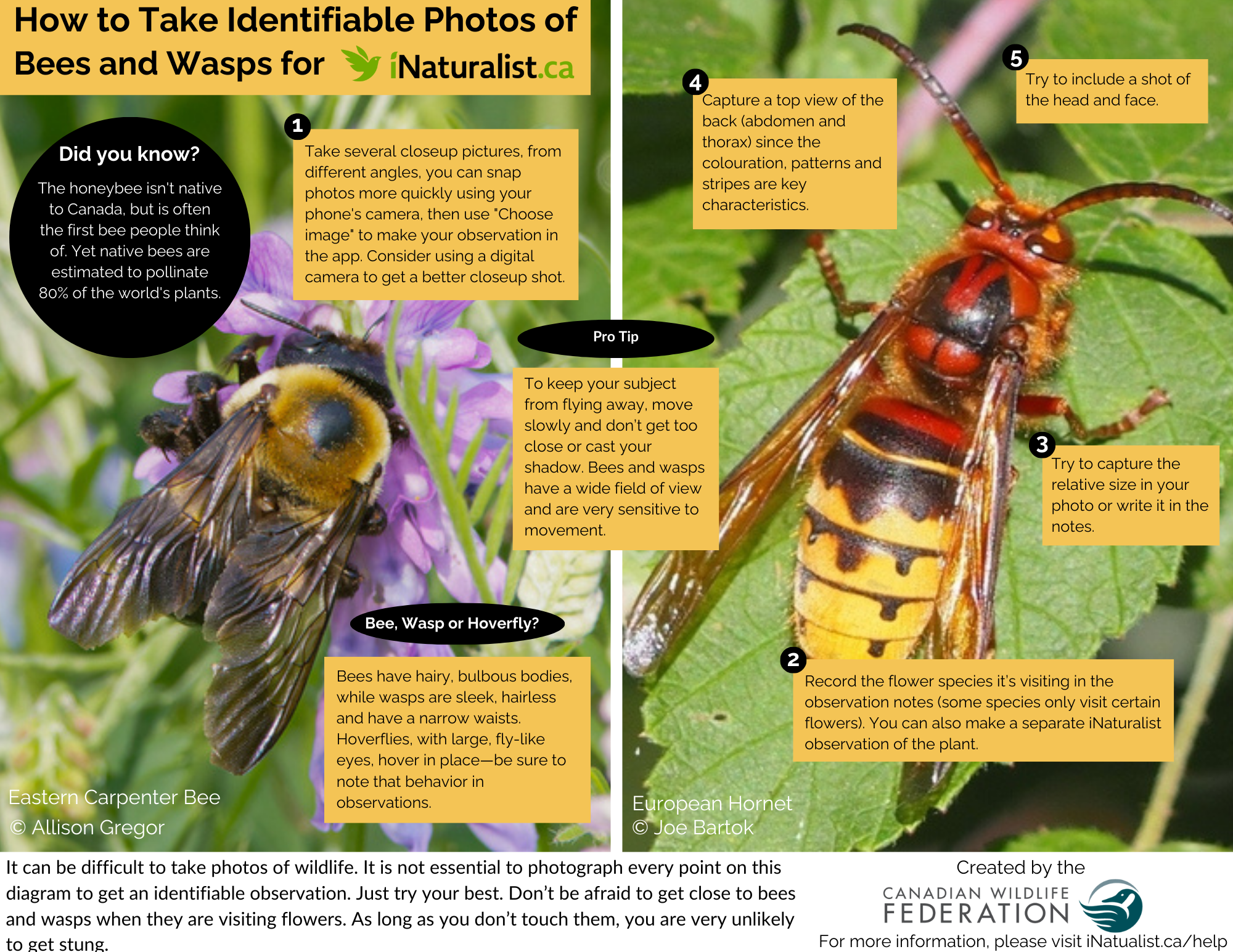
Turn your next outing into a journey of scientific discovery. Download your free iNaturalist app at iNaturalist.ca and join a network of hundreds of thousands of people observing wildlife around the globe. Using a smartphone or digital camera, anyone can share sightings of flora and fauna and contribute to a growing record of biodiversity. It’s “citizen science” that’s fun, educational and impactful.
-
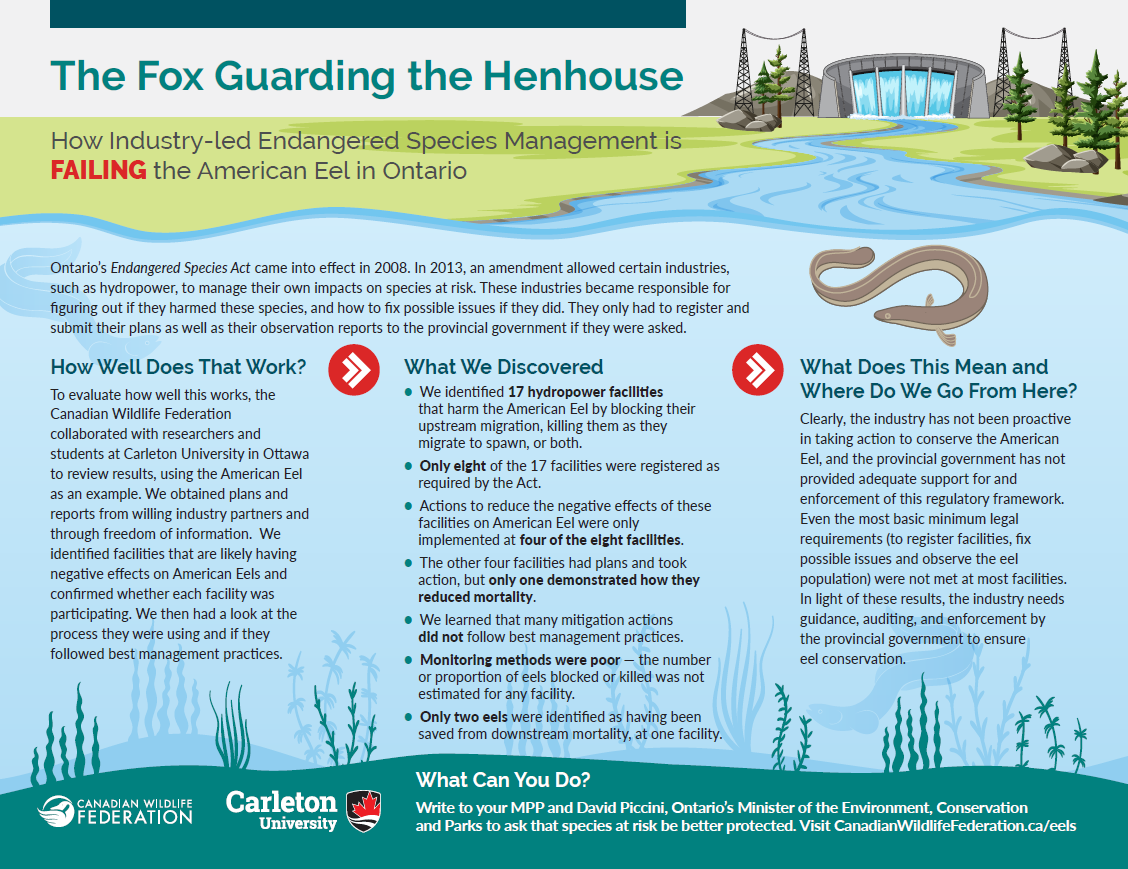
American Eel Infographic
2022-02-28
How Industry-led Endangered Species Management is FAILING the American Eel in Ontario
-
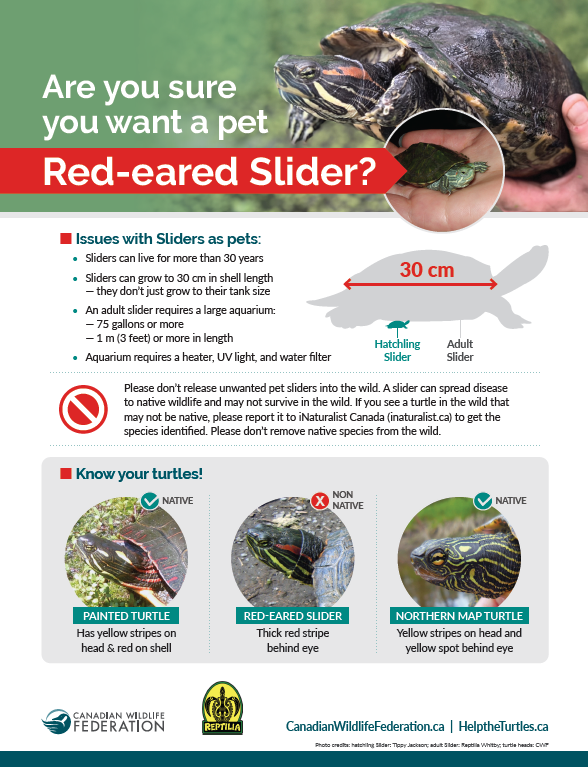
Are you sure you want a pet Red-eared Slider?
2026-07-03
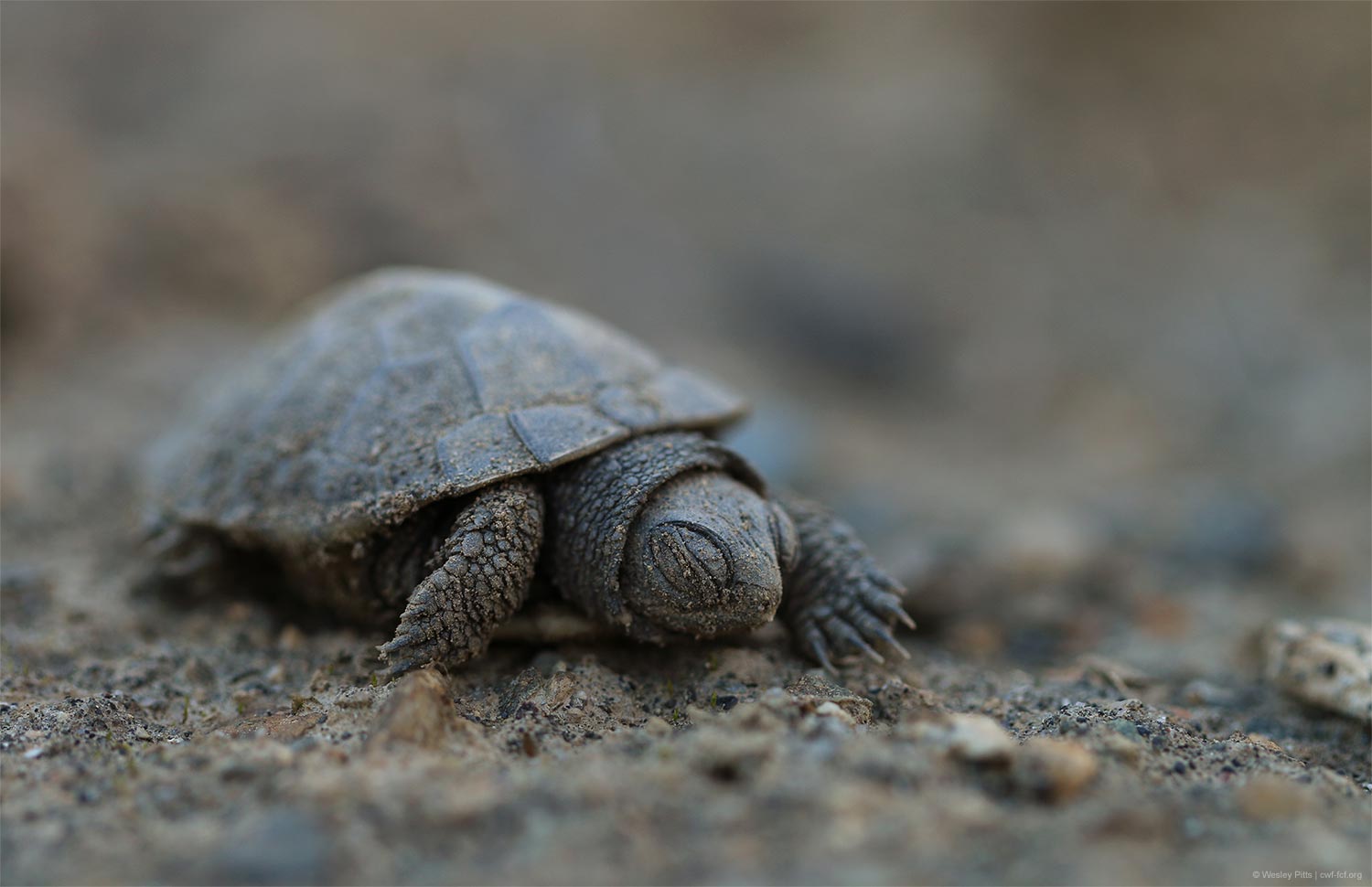
Please don’t release unwanted pet sliders into the wild. A slider can spread disease to native wildlife and may not survive in the wild. If you see a turtle in the wild that may not be native, please report it to iNaturalist Canada (inaturalist.ca) to get the species identified. Please don’t remove native species from the wild.
-
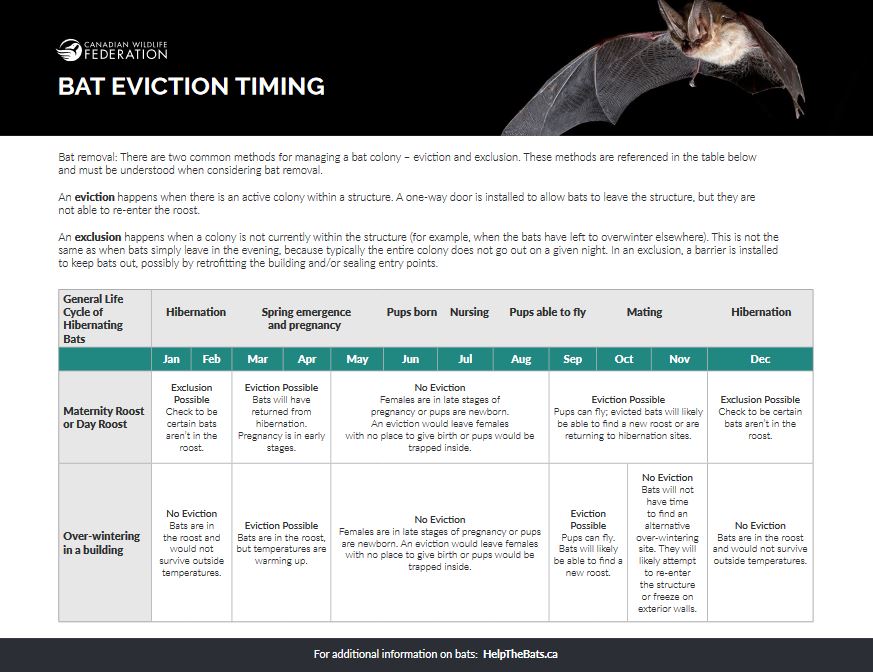
Bat Eviction Timetable
2026-07-03
An eviction happens when there is an active colony within a structure. A one-way door is installed to allow bats to leave the structure, but they are not able to re-enter the roost.
-
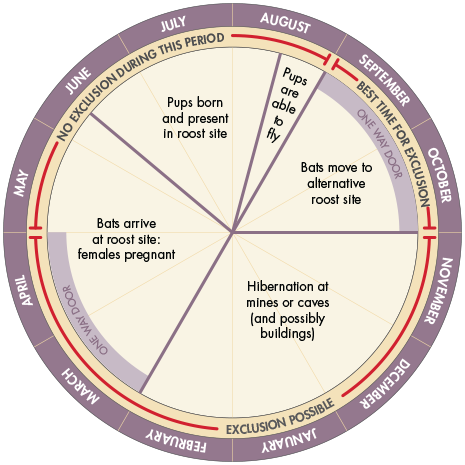
Bat Exclusion Calendar
2016-03-13
If you must exclude bats from your property, take a look at this calendar which outlines the most and least desirable times to do so.
-
-

-
-
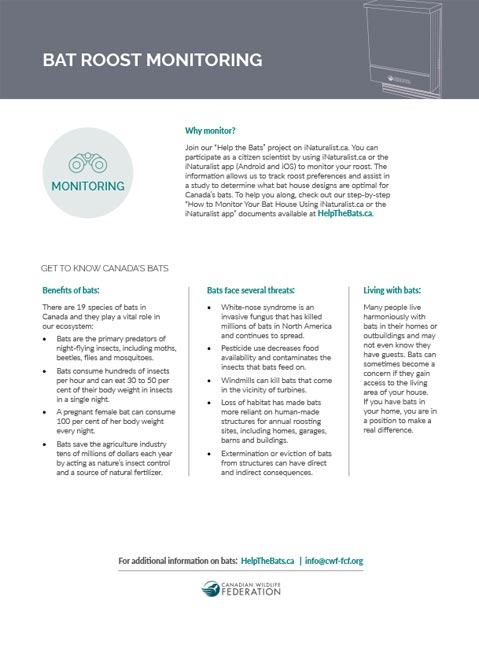
BAT ROOST MONITORING
2026-07-03
oin our “Help the Bats” project on iNaturalist.ca. You can participate as a citizen scientist by using iNaturalist.ca or the iNaturalist app (Android and iOS) to monitor your roost. The information allows us to track roost preferences and assist in a study to determine what bat house designs are optimal for Canada’s bats. To help you along, check out our step-by-step “How to Monitor Your Bat House Using iNaturalist.ca or the iNaturalist app” documents available at HelpTheBats.ca
-
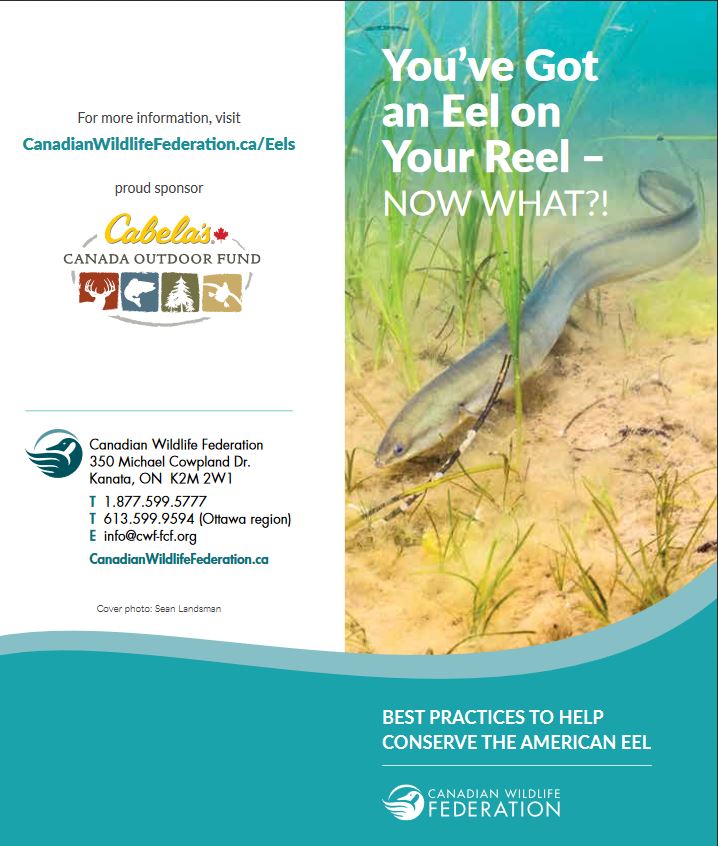
BEST PRACTICES TO HELP CONSERVE THE AMERICAN EEL
2019-05-31
You’ve Got an Eel on Your Reel – NOW WHAT?!
-

Bioblitz in a Box
2021-09-24
Bioblitz-in-a-box is a lasting legacy from the Bioblitz Canada 150 project that took place in 2017, made possible in part by the Government of Canada, as a Canada 150 Signature Project. These tips and tools for organizing a bioblitz were compiled by the Canadian Wildlife Federation based on various online bioblitz guides, and professional and personal experiences. Feel free to browse around to find something to help with your own bioblitz plans!
-
-
-
-
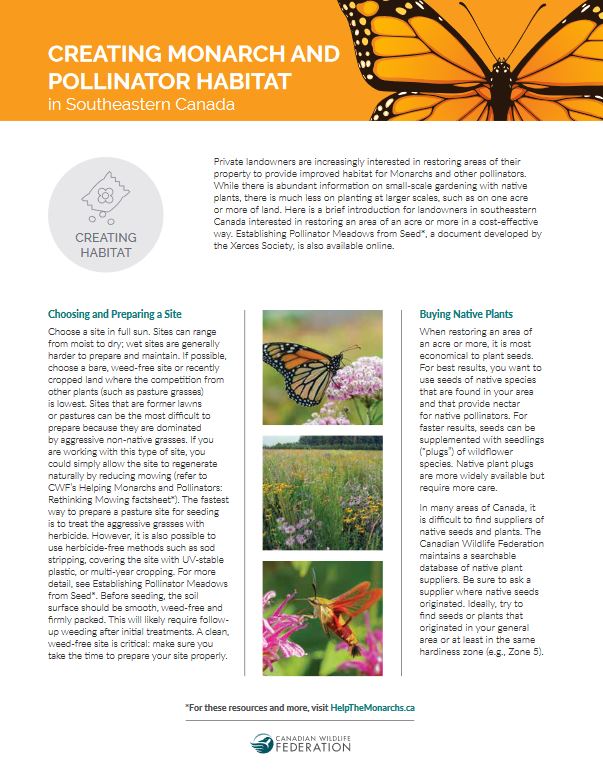
Creating Monarch and Pollinator Habitat
2026-07-03
Private landowners are increasingly interested in restoring areas of their property to provide improved habitat for Monarchs and other pollinators. While there is abundant information on small-scale gardening with native plants, there is much less on planting at larger scales, such as on one acre or more of land. Here is a brief introduction for landowners in southeastern Canada interested in restoring an area of an acre or more in a cost-effective way. Establishing Pollinator Meadows from Seed*, a document developed by the Xerces Society, is also available online
-
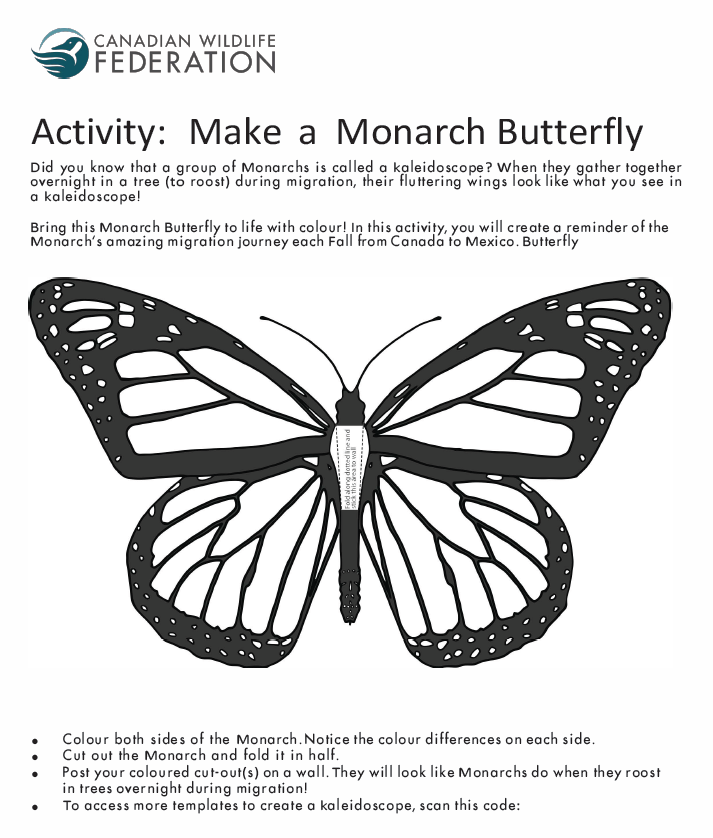
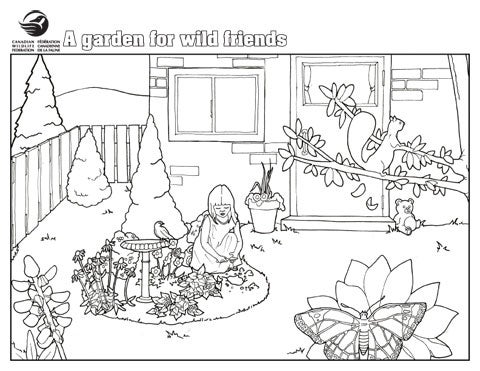
CWF Kaleidoscopes Monarch Colouring Page
2026-07-03
-
-
-

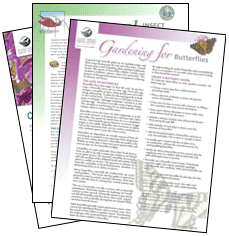
Gardening for Butterflies Handout
2026-07-03
Nearly 300 species of butterflies inhabit Canada, some cloaked in brilliant colours, others less noticeable. The presence of these graceful creatures in our gardens is a blessing of vibrancy and beauty.
-
-
-
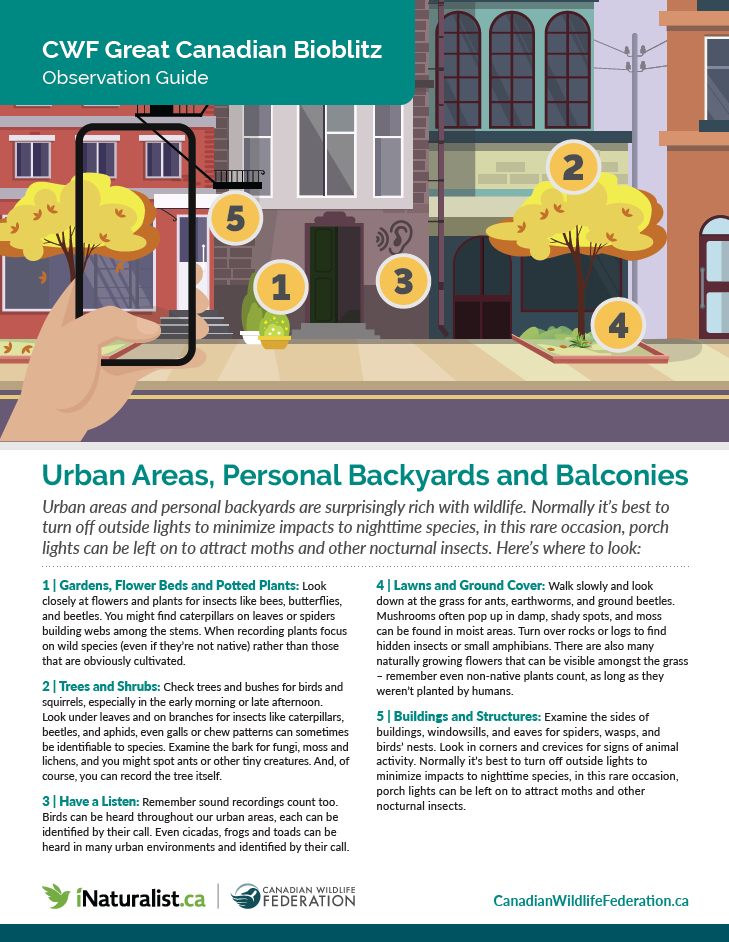
Great Canadian Bioblitz Observation Guide
2026-07-03
-
-
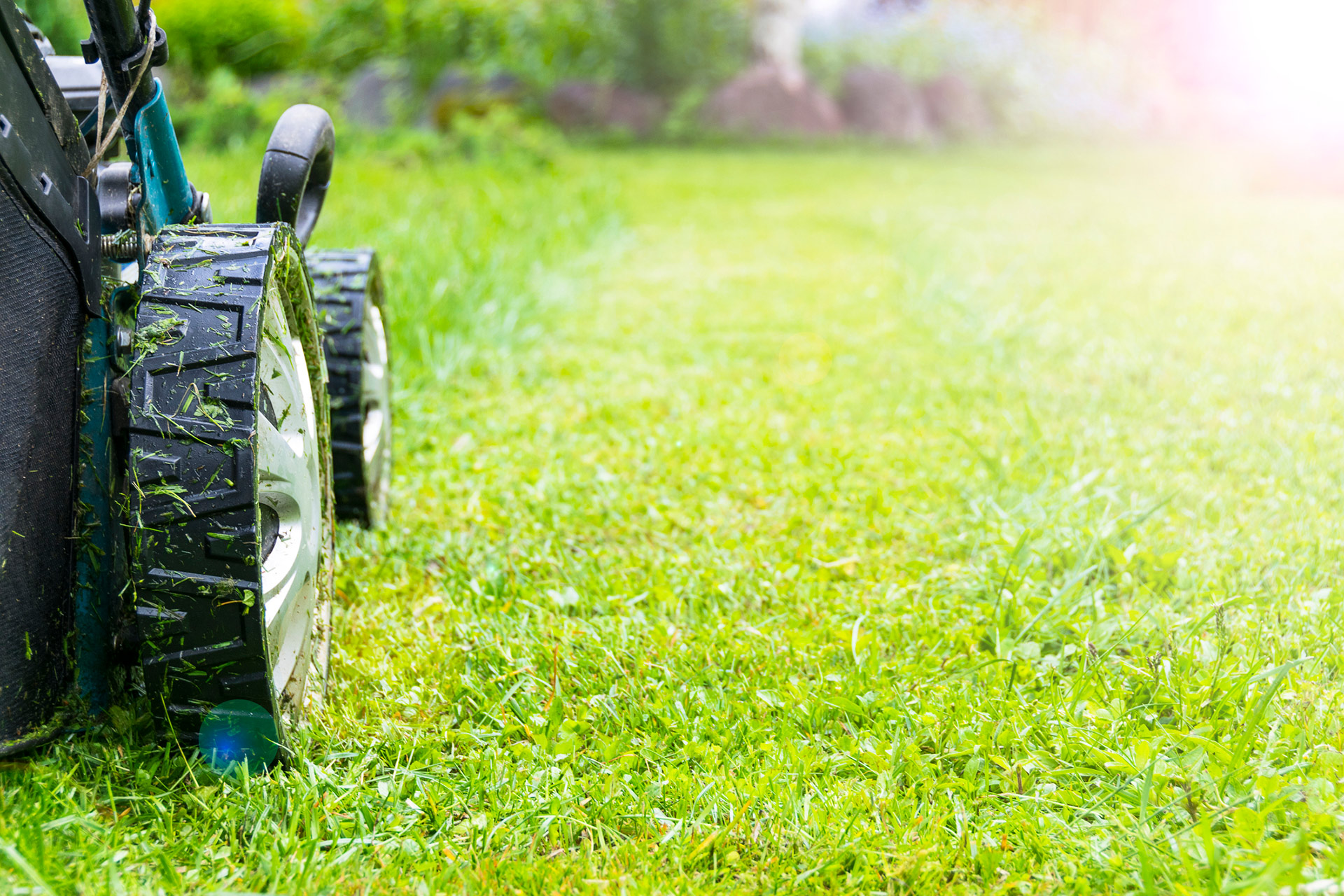
Helping Monarchs and Pollinators: Rethinking Mowing
2019-05-07
Pollinators are a priority resource concern for many conservationists and farmers. The Xerces Society conducted field trials throughout the Easter, Midwestern and Western United States to inform best practices.
-
Hinterland Who's Who Fact Sheets
2026-07-03
Check out the facts for amphibians and reptiles, birds, fish, mollusks, insects, pollinators and mammals! We’ve even got information specific to species at risk, the boreal forest species, and species affected by climate change! So why not learn a little bit more about these Canadian creatures
-

-

How To Build a Turtle Nesting Site
2026-07-03
Sometimes turtles nest in problem areas like gardens, driveways or compost piles. To encourage turtles to nest elsewhere, or to create nesting habitat if it is lacking, consider building a nesting site. Keep in mind that turtles will often return to sites where they have nested before, so it may take a few seasons before a new site is used. We also recommend having nest protectors ready to protect any nests laid.
-
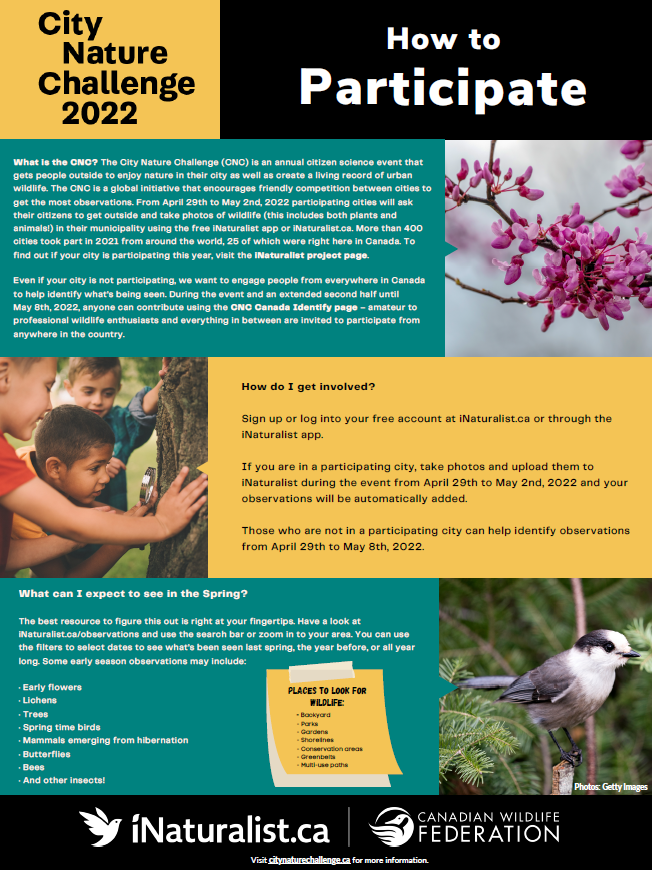
How to Participate in the City Nature Challenge
2026-07-03
What is the CNC? The City Nature Challenge (CNC) is an annual citizen science event thatgets people outside to enjoy nature in their city as well as create a living record of urbanwildlife. The CNC is a global initiative that encourages friendly competition between cities toget the most observations. From April 29th to May 2nd, 2022 participating cities will asktheir citizens to get outside and take photos of wildlife (this includes both plants andanimals!) in their municipality using the free iNaturalist app or iNaturalist.ca. More than 400cities took part in 2021 from around the world, 25 of which were right here in Canada. Tofind out if your city is participating this year, visit the iNaturalist project page .
-
-
-
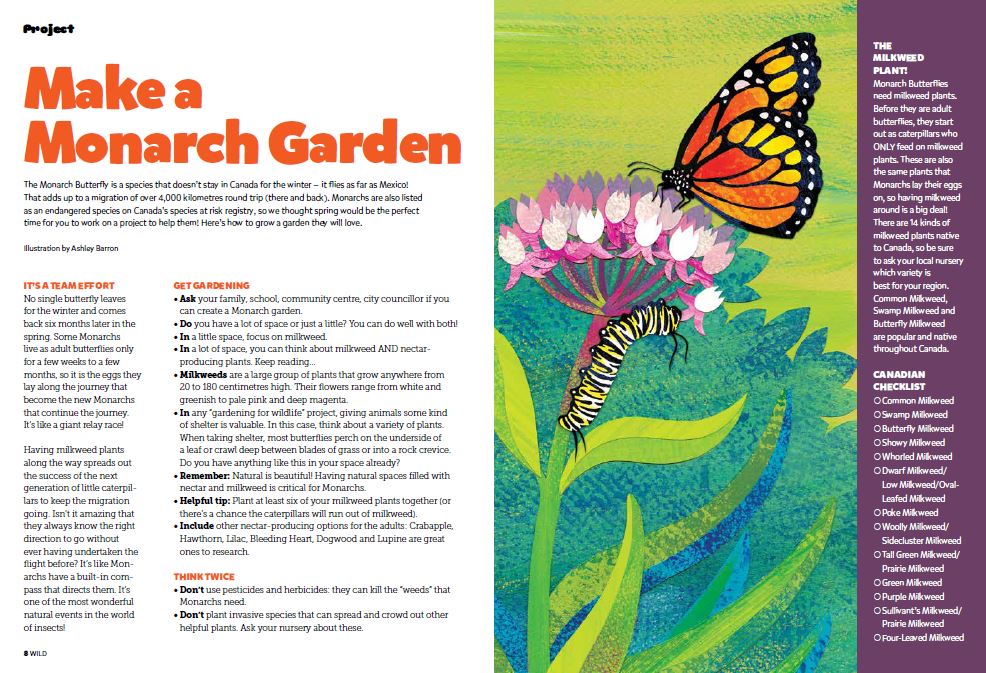
Make a Monarch Butterfly Garden
2020-04-01
The Monarch Butterfly is a species that doesn’t stay in Canada for the winter — it flies as far as Mexico! That adds up to a migration of over 4,000 kilometres round trip (there and back). Monarchs are also listed as an endangered species on Canada’s species at risk registry, so we thought spring would be the perfect time for you to work on a project to help them! Here’s how to grow a garden they will love.
-
-
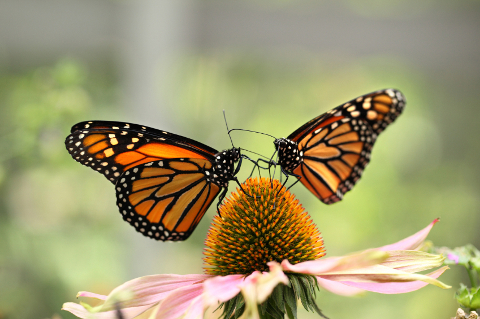
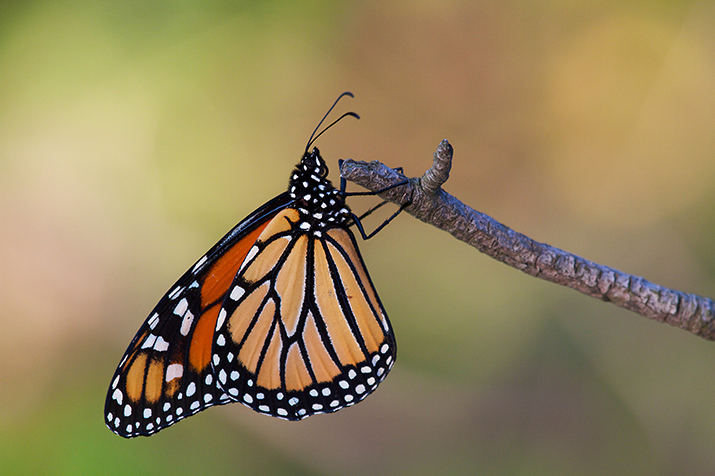
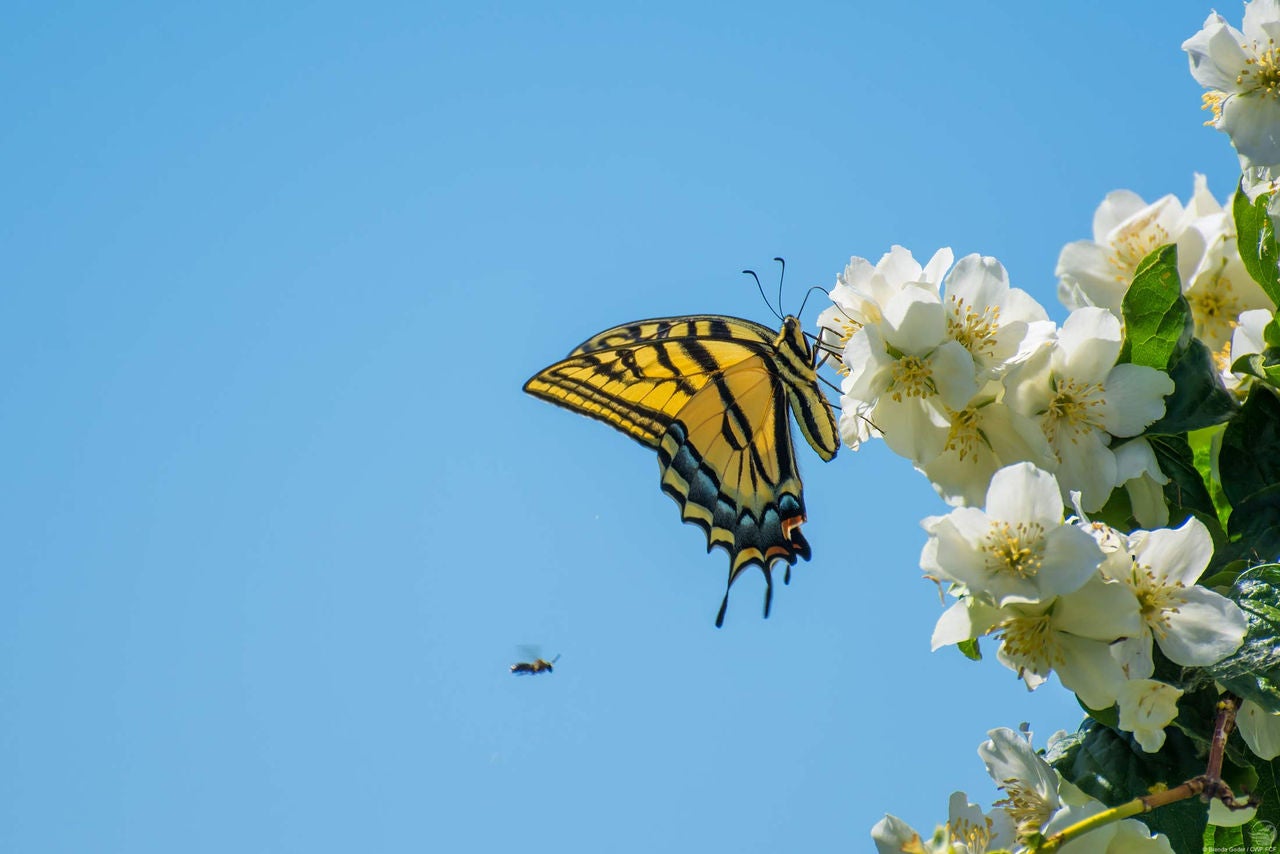
Monarch butterfly
2026-07-02
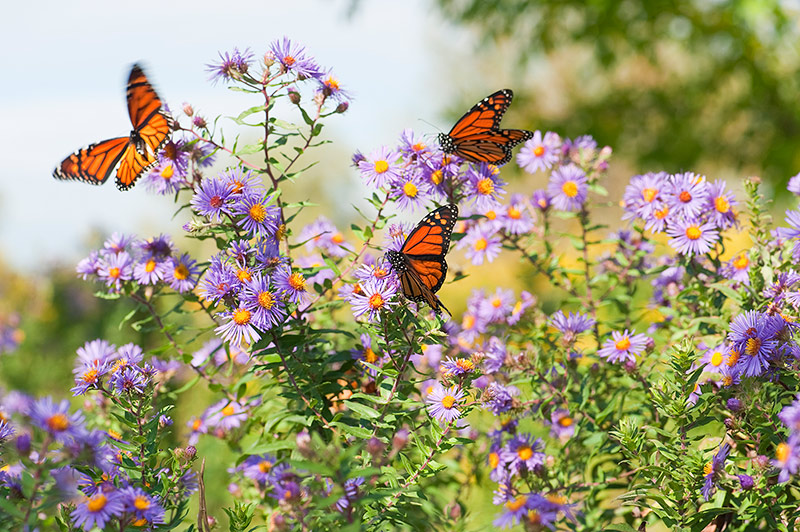
We’re featuring a monarch butterfly nabbing some nectar for a mid-afternoon snack
-
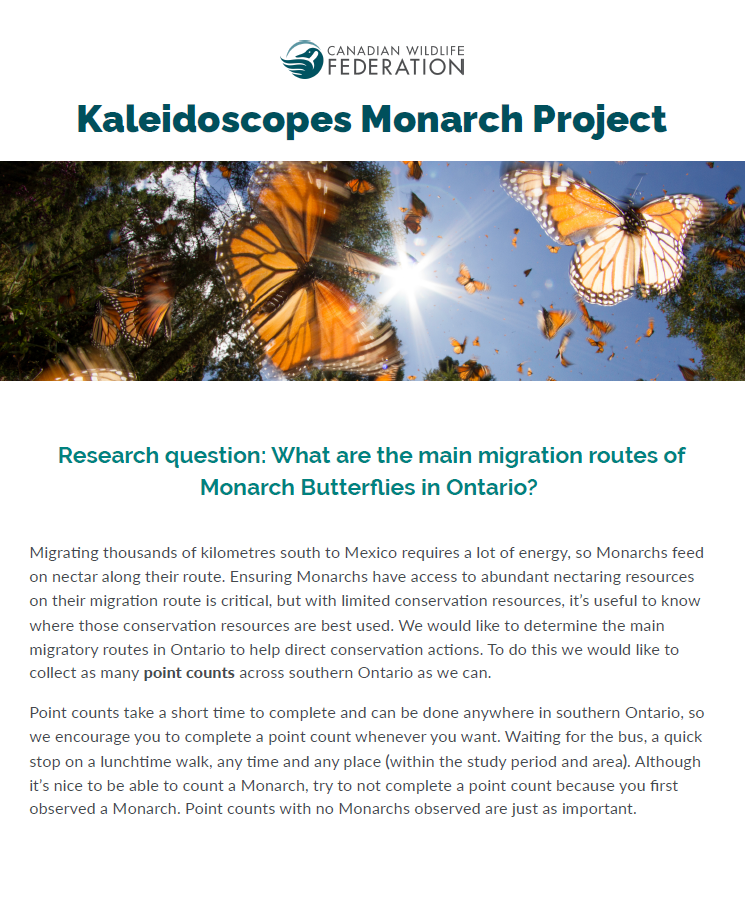
Monarch Point Count Data Guide
2026-07-03
-
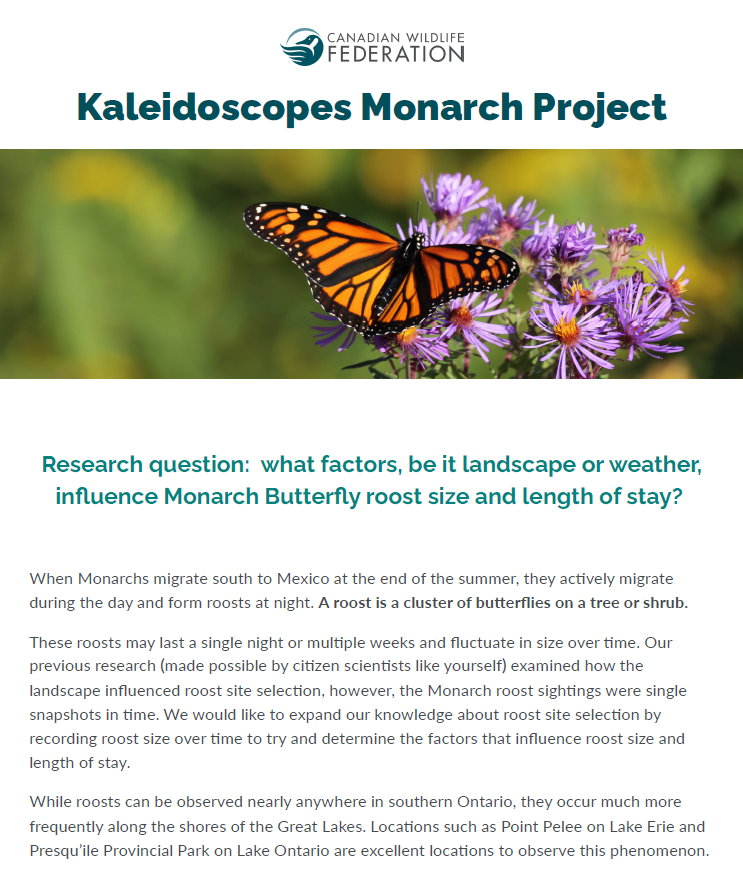
Monarch Roost Data Guide
2026-07-03
-
Natural Insect Control Handout
2026-07-03
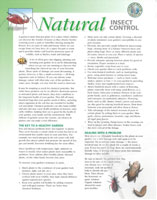
A garden is more than just plants. It may be tempting to reach for chemical pesticides. But while these products can be an effective short-term answer, they don't contribute to the long-term health of your garden.
-
-
Organic Site Preparation for Wildflower Establishment
2019-05-07
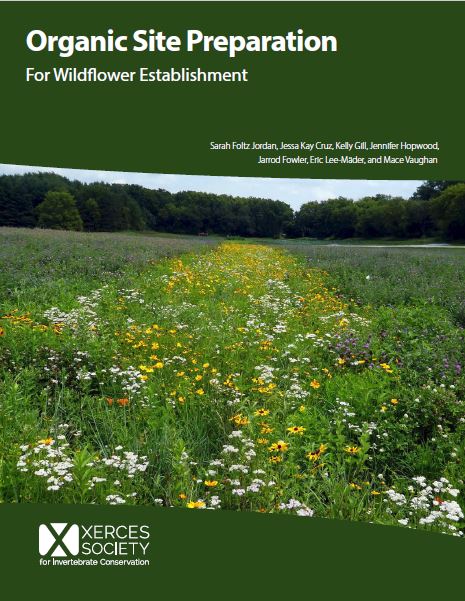
Pollinators are a priority resource concern for many conservationists and farmers. The Xerces Society conducted field trials throughout the Easter, Midwestern and Western United States to inform best practices.
-
-
-
-
Pulling for Bats
2017-09-13
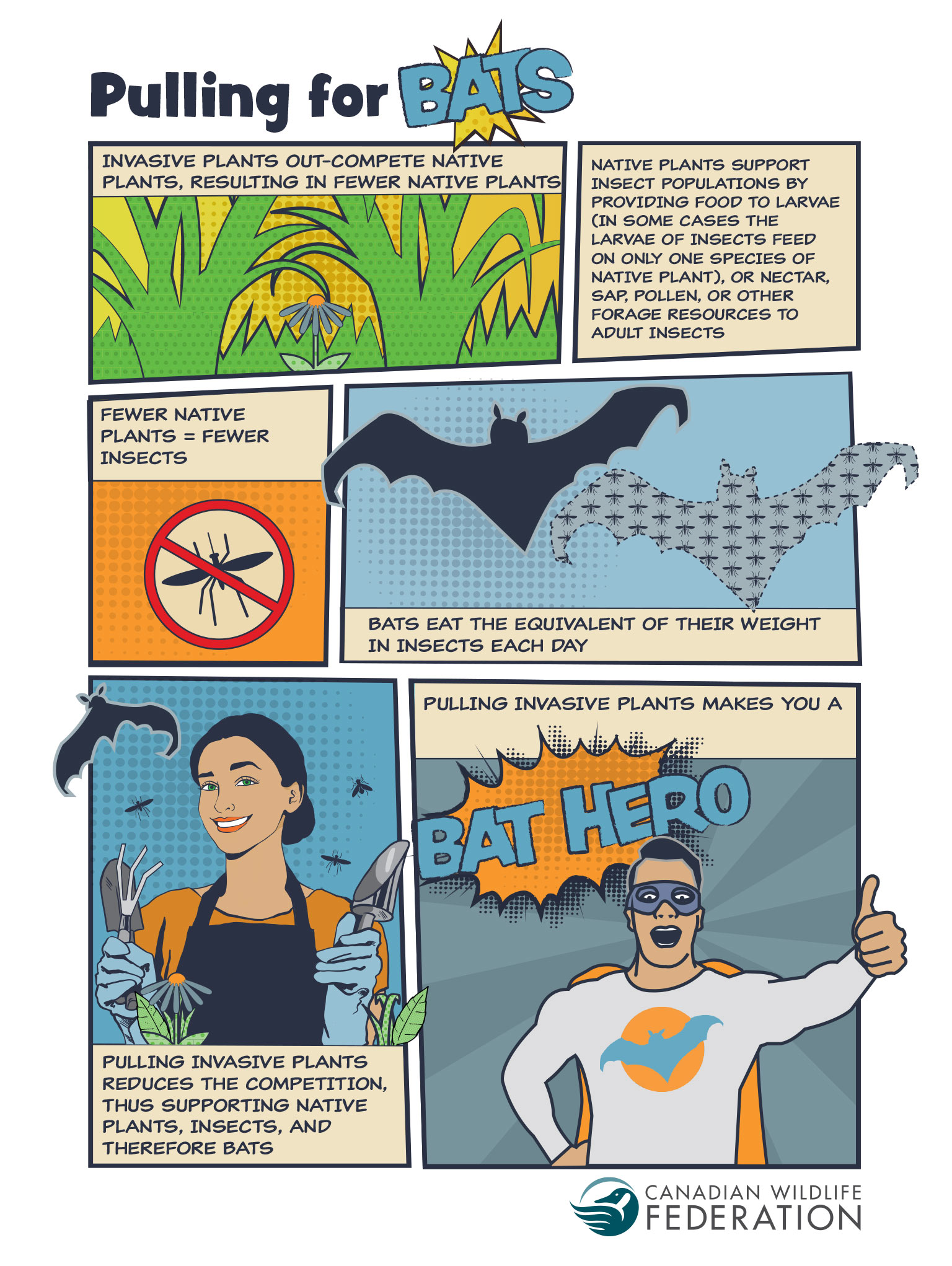
Native plants support diverse insect populations by providing food for adults and larvae. Insects will feed on nectar, pollen or leaves and some will forage on only one species of native plant!
-
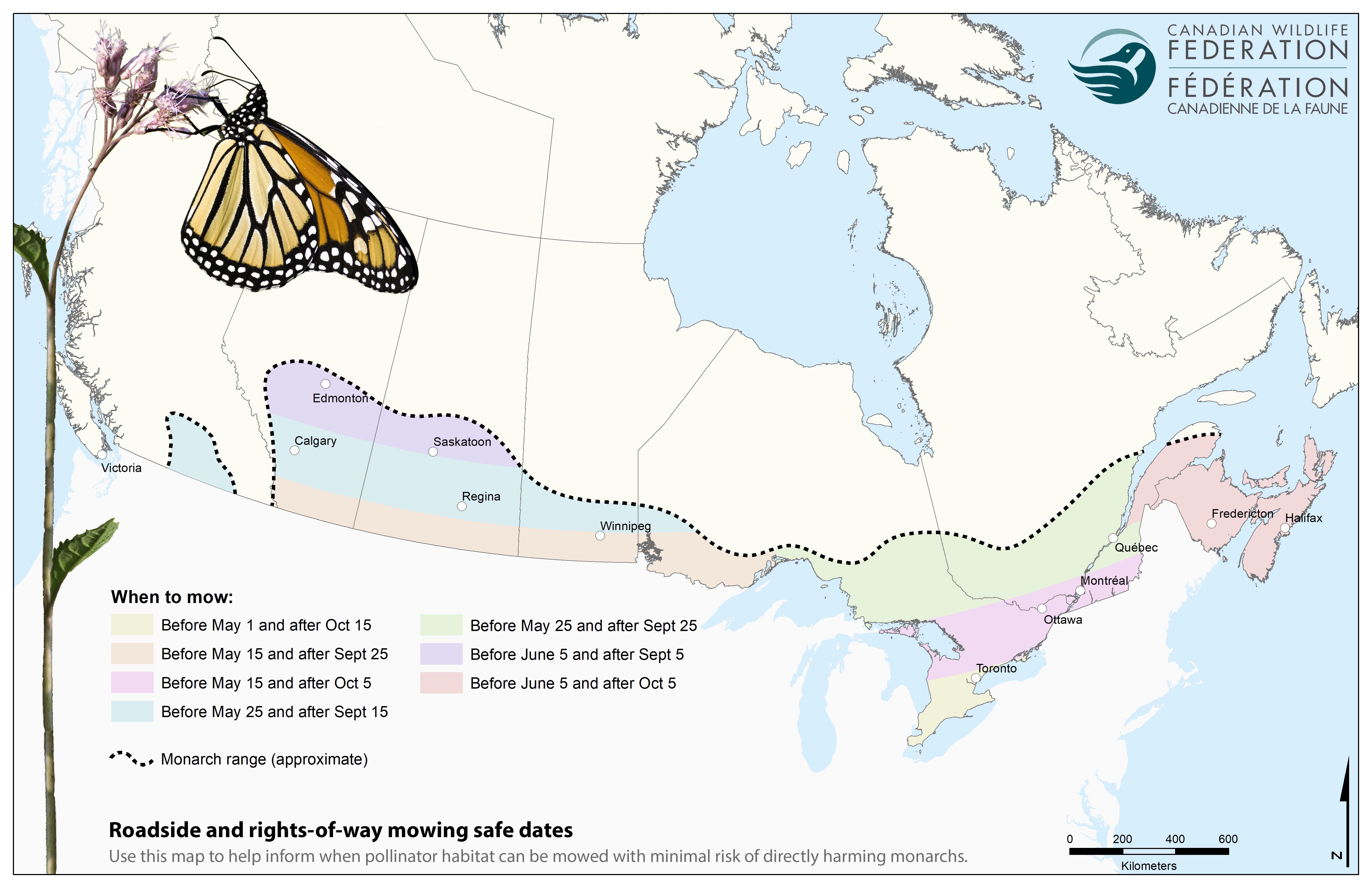
Spring Monarch Mowing Map
2022-05-01
-
-
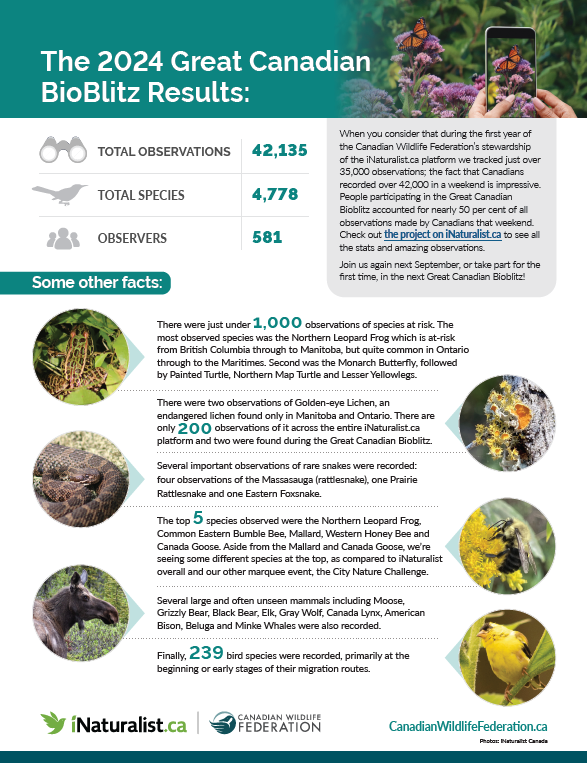
The 2024 Great Canadian Bioblitz Results
2024-10-01
-
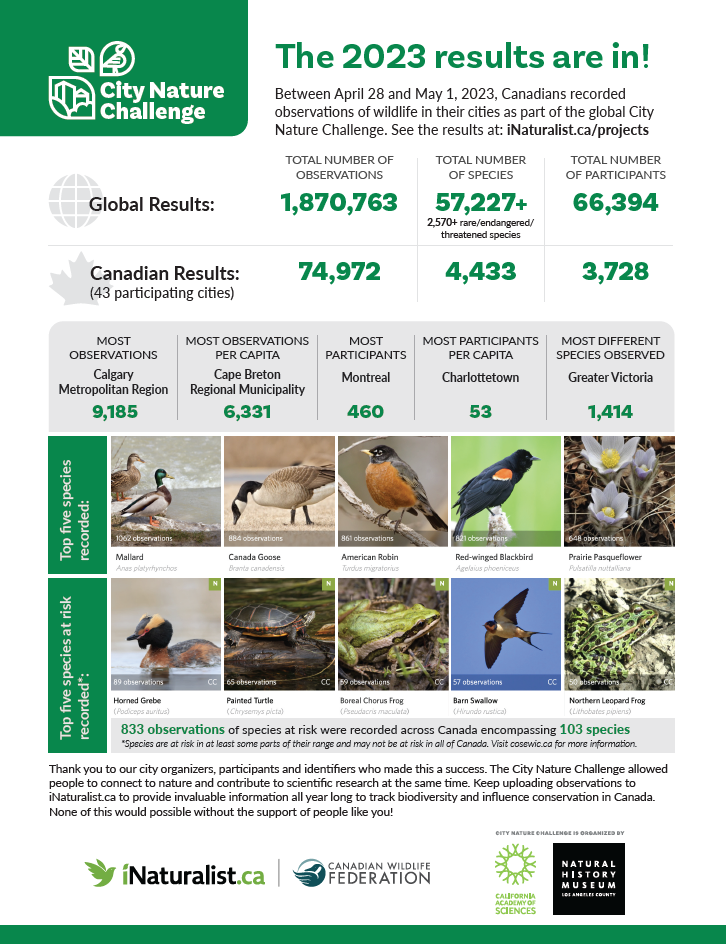
The City Nature Challenge 2023 Results
2023-05-10
Between April 28 and May 1, 2023, Canadians recorded observations of wildlife in their cities as part of the global City Nature Challenge. See the results at: iNaturalist.ca/projects
-
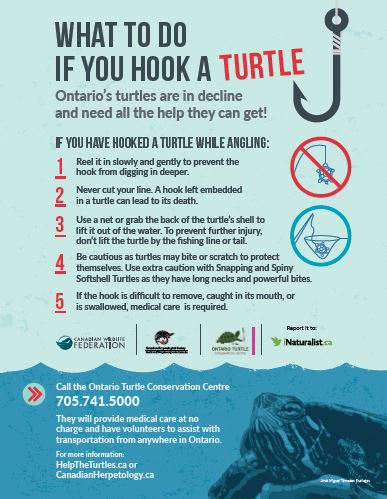
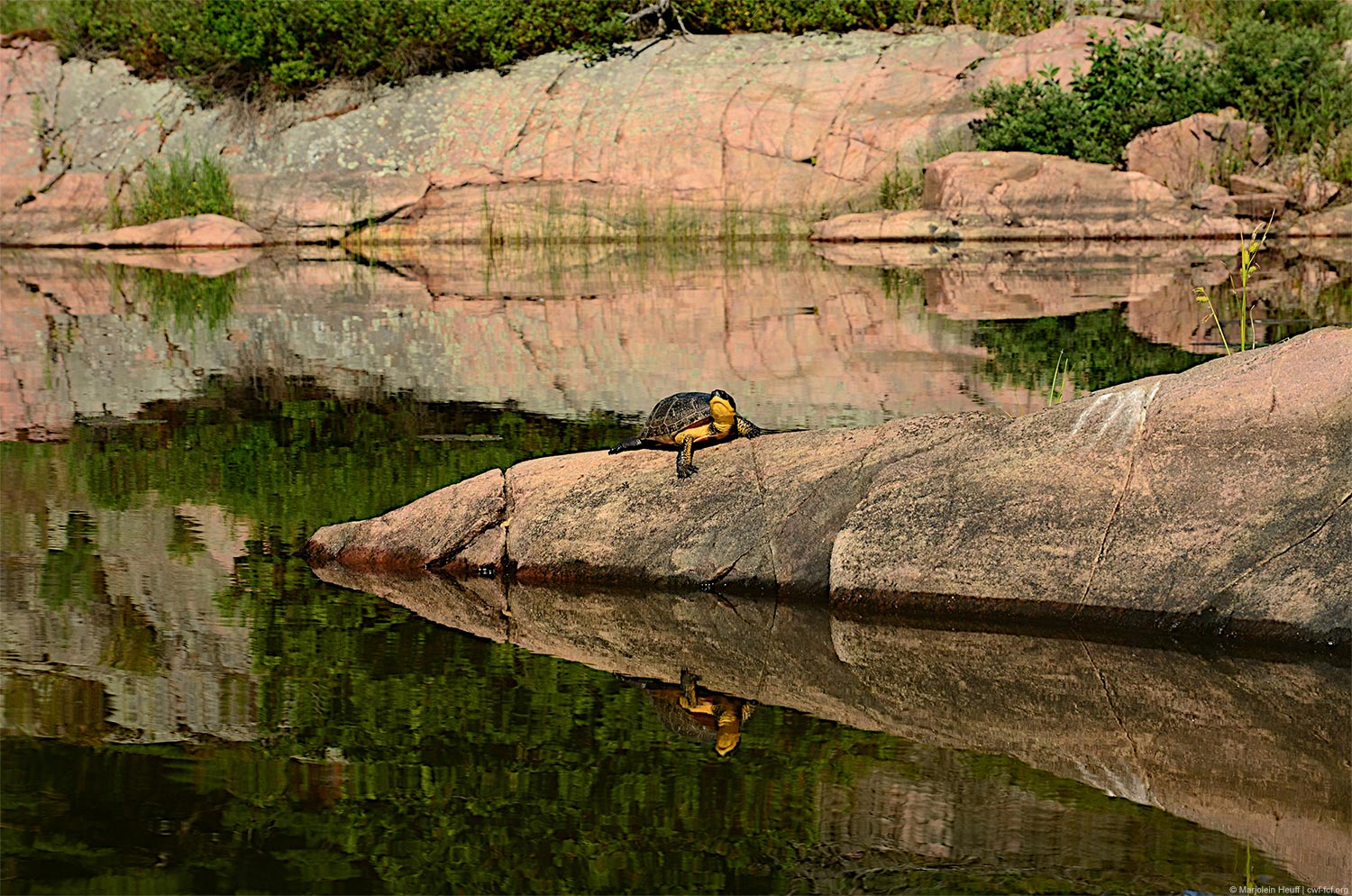
What to do if you hook a turtle
2019-05-30
Ontario’s turtles are in decline and need all the help they can get!
-
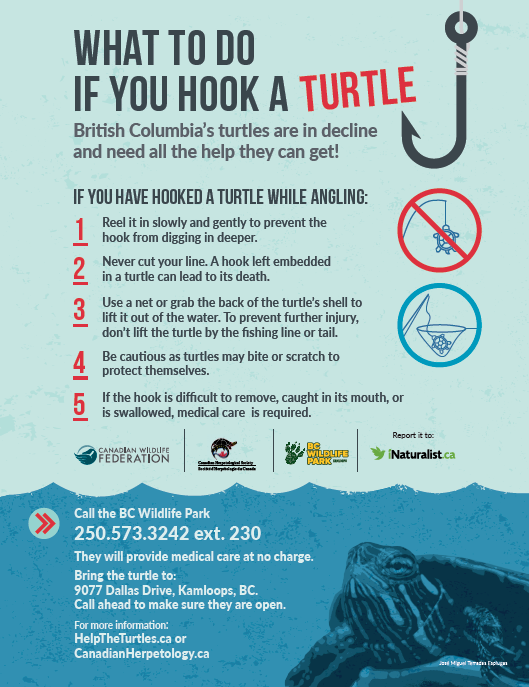
What to do if You Hook a Turtle in B.C.
2020-04-27
British Columbia’s turtles are in decline and need all the help they can get!
-
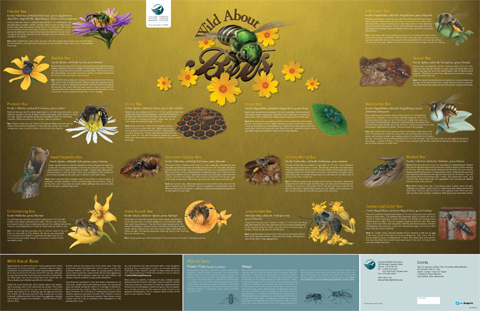
Wild About Bees Poster
2026-07-03
Approximately one-third of all human food is prepared from plants that depend on animal pollinators — and bees make the biggest contribution. The most familiar bee is the honey bee (Apis mellifera), which was introduced from Europe almost 400 years ago. Although we may first picture the honey bee when we think of pollinators, our native bees, such as the bumble bee or the mason bee, are often actually more effective and efficient pollinators. Unlike the social honey bee, which shares labour and caretak-ing of its young, most of our native bees are solitary. This means that each female prepares her own nest, provisions it with food (nectar and pollen) for her offspring, lays her eggs and provides little further care.
-
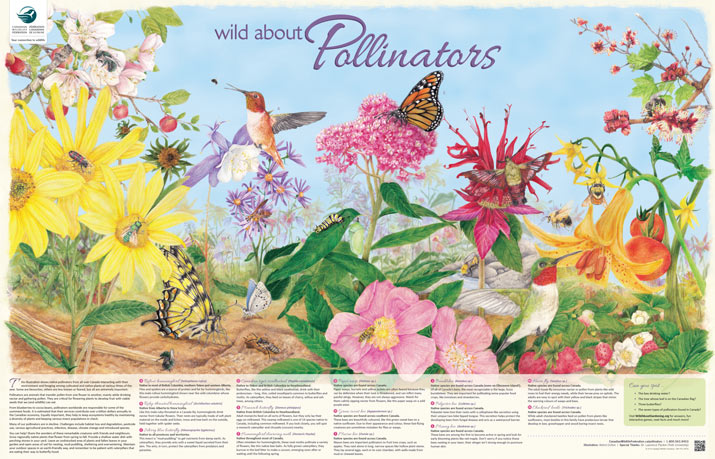
Wild About Pollinators Poster
2026-07-03
This illustration shows native pollinators from all over Canada interacting with their environment and foraging among cultivated and native plants at various times of the year. Some are favourites, others are less known or feared, but all are extremely important.Pollinators are animals that transfer pollen from one flower to another, mainly while drinking nectar and gathering pollen.
-
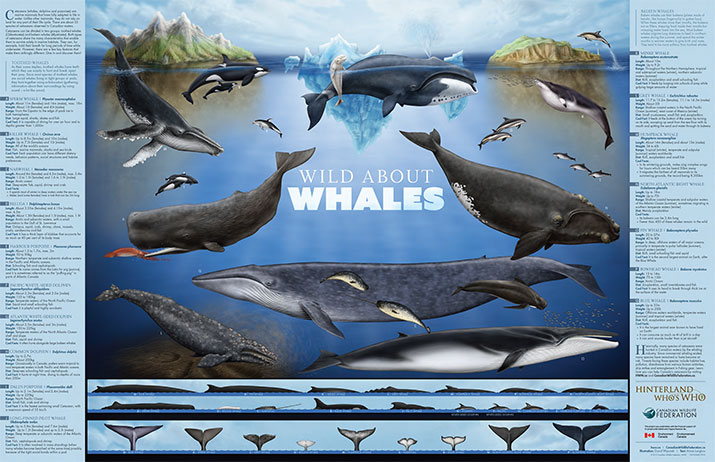
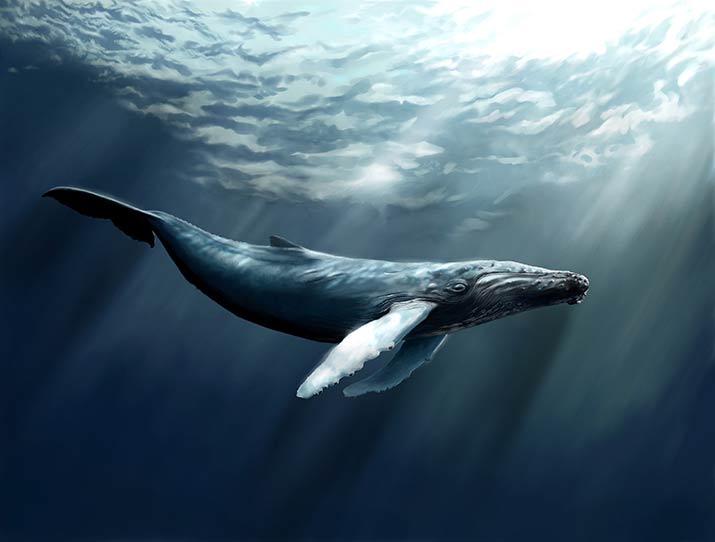
Wild About Whales Poster
2026-07-03
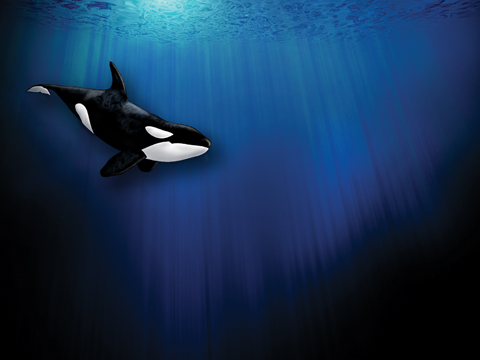
Cetaceans (whales, dolphins and porpoises) are marine mammals that have fully adapted to life in water. Unlike other mammals, they do not rely on land for any part of their life cycle. There are about 33 species of cetaceans observed in Canadian waters.Cetaceans can be divided in two groups: toothed whales (Odontocetes) and baleen whales (Mysticetes). Both types of cetaceans share the many characteristics that enable them to survive solely in marine habitats. They can, for example, hold their breath for long periods of time while underwater. However, there are a few key features that make them strikingly different. Dive in and discover them!

Learn More

- 0
- 1
- 2
- 3