


Animals At-A-Glance
Browse through a few of our Canadian species in these "At A Glance" fact sheets. Each page has basic information on some of our Canadian wildlife, with links to detailed, reputable sources such as Hinterland Who's Who and the Government of Canada. Don't see a species you need? Comments or questions? Let us know!
By Type:
Amphibians & Reptiles | Bees | Birds | Fish | Insects | Mammals | Marine Animals | Pollinators | Backyard Wildlife
-
-
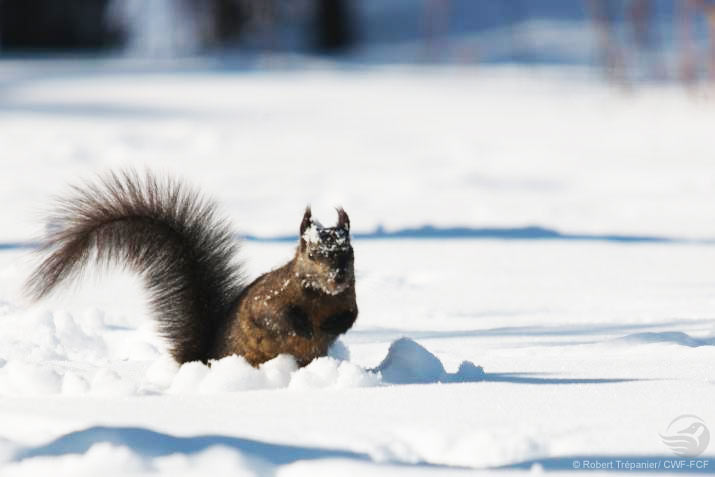
Eastern Grey Squirrel
2026-05-21
Eastern grey squirrels commonly occur in two colour phases, grey and black, which leads people to think—mistakenly—that there are two different species. The most notable physical feature of the eastern grey squirrel is its large bushy tail. The tail has many important functions. It acts as a rudder when the animal jumps from high places, as a warm covering during the winter, as a signal to other eastern grey squirrels indicating an individual’s mood.
-
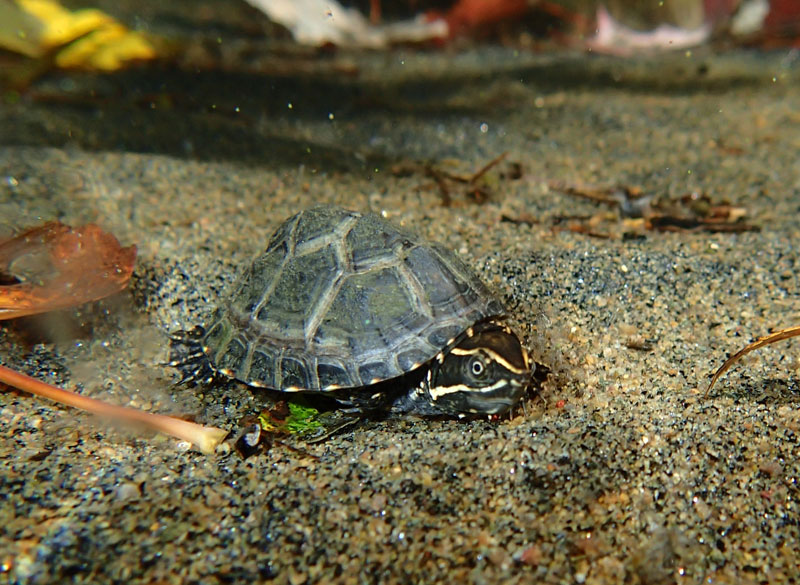
Eastern Musk Turtle
2026-05-21
The Eastern Musk Turtle has a narrow, highly arched shell. The shell and body are brownish, but usually Eastern Musk Turtles have two stripes on the side of the head, one above and one below the eye. When disturbed, the turtle can produce a musky, skunk-like scent.
-
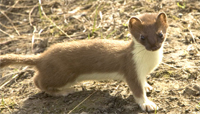
Ermine
2026-05-21
Ermines have features common to the weasel family like a long body, short legs, a long neck and a triangular-shaped head. They are a small weasel; males average 27 cm and females measure up at 24 cm with their tail adding another 7.5 cm to their length. Males are larger than females and weigh on average 80 g while females weigh an average of 54 g. Ermines change the colour of their coats seasonally. In the summer, their backs are brown, their undersides are white and their tails sport a black tip. In the winter, they are completely white except for their black tipped tail.
-
Fairy Bees
2026-05-21
This genus has some of the smallest bees in the world. These petite bees, commonly called fairy bees as well as mining bees, are about five to seven mm, flat and a wasp-lookalike. Females are usually dark; some species have yellow spots on the abdomen and males tend to show more yellow marking on their faces too. These bees are not very common in Canada as they prefer warmer climates.
-
False Map Turtle
2026-05-12
The False Map Turtle’s upper shell has a ridge or keel running down the center and has a serrated rear edge. The shell is adorned with a series of faint lines that resemble the lines on a map. The False Map Turtle differs from the native Northern Map Turtle in having hockey stick shaped “eyebrows” rather than an eye spot behind the eye.
-

Fireflies, Lightning Bugs
2026-05-21
Despite their name, these insects are not flies. They’re actually beetles. There are 29 species believed to be native to Canada, but there is a lot about this group of insects that is still being discovered, including the various species. Fireflies have elongated bodies and their heads have a “pronotum”, which is a cover that protects the top of their heads although, when viewed from the side, you can see their heads. Their upper pair of wings are hard and also serve as protection, similar to ladybugs, aka ladybeetles, which are in the same Coleoptera family. Their larval, or immature, form resembles a grub or millipede. Some live on land (terrestrial), some live in water (aquatic) and others are semi-aquatic.
-
Five-lined Skink
2026-05-21
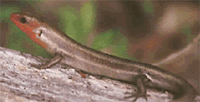
Despite their smooth-skinned appearance, skinks are actually lizards not salamanders. Lizards, which are reptiles, have scales, claws on their feet, and external ear openings, whereas salamanders, which are amphibians, have smooth, moist skin, and lack both claws and ear openings. Five-lined skinks start off life with a bright blue tail and dark body with 5 broad light-coloured stripes. As they age their tail and body fades to a more uniform brown-grey averaging about 15 - 20 cm in length.
-
-
Gray Catbird
2026-05-21
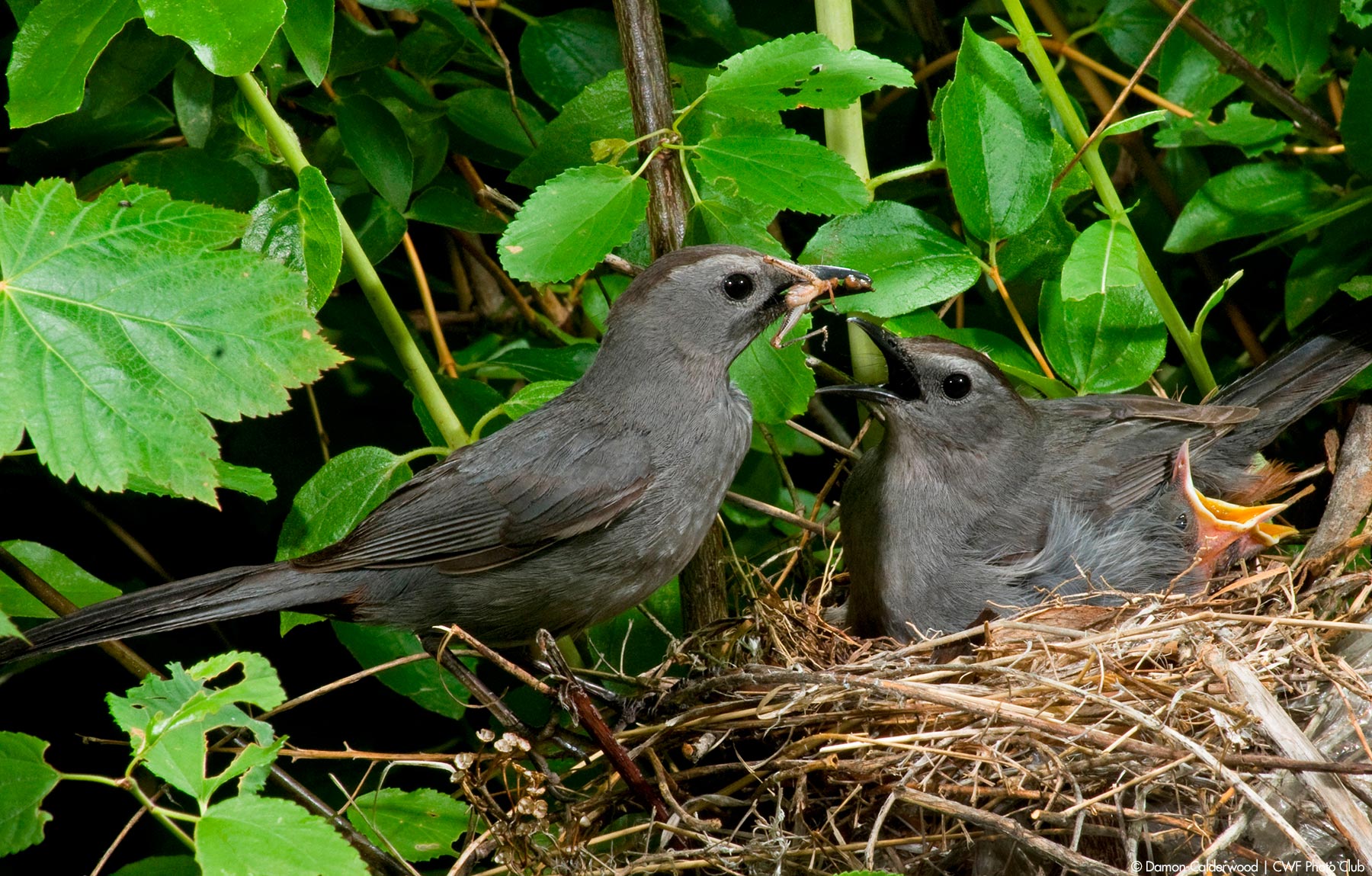
All Gray Catbirds, regardless of their age or gender, are mainly grey with black colouring on the tops of their heads and orange-brown underneath the base of their tail. Their calls are a raspy cat-like sound while their songs are highly variable and often melodic.
For more species, visit Hinterland Who's Who, a joint program of the Canadian Wildlife Federation and Environment Canada.

Learn More
- 0
- 1
- 2
- 3
- 4
- 5


