


Animals At-A-Glance
Browse through a few of our Canadian species in these "At A Glance" fact sheets. Each page has basic information on some of our Canadian wildlife, with links to detailed, reputable sources such as Hinterland Who's Who and the Government of Canada. Don't see a species you need? Comments or questions? Let us know!
By Type:
Amphibians & Reptiles | Bees | Birds | Fish | Insects | Mammals | Marine Animals | Pollinators | Backyard Wildlife
-
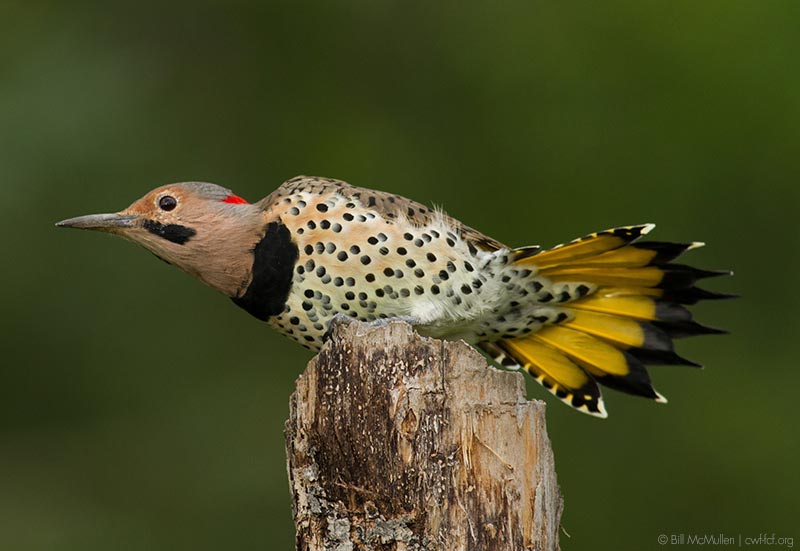
The Northern Flicker
2026-05-21
Northern Flickers are a mid-sized woodpecker reaching approximately 32 centimetres. There are two types, the more widely spread Yellow-shafted Northern Flicker and the Red-shafted found mainly in southern British Columbia. Both have a spotted breast, black breast band below the throat, black barring on their backs (lines that run across their backs from wing to wing) and white patch on their rump, visible in flight. The Yellow-shafted males have a red patch at the back of their heads, a black stripe down the side of their brown face and brilliant yellow under their wings and tail. Red-shafted males, however, lack the red patch on the back of their heads, have a red stripe down the side of their grey face and a bright orange-red colour under their wings. They also have a bit of white around the black breast patch. Females of both sub species appear the same except for the lack of the red or black stripe down the side of their face. In areas where both sub species are found close they sometime hybridize making identification tricky.
-
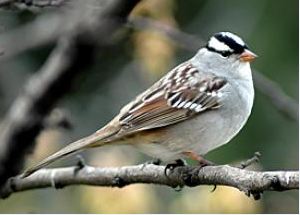
White-Crowned Sparrow
2026-05-21
The most distinctive feature of this relatively large sparrow, as reflected in its name, is the striped crown. Its grey head is crowned with conspicuous black and white stripes. The white-crowned sparrow lacks the yellow spot near each eye and the white throat of the white-throated sparrow, a close relative. This bird is approximately 17 - 19 cm in size. Loud scuffling in the bushes often signals the presence of this spirited bird. Using both of its rather large feet, it vigorously scratches among the leaf litter in search of food.
-

White Shark
2026-05-21
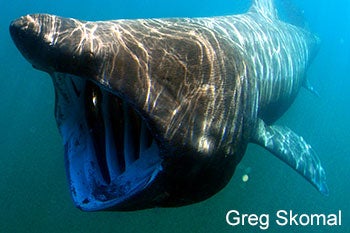
The (great) white shark is the most famed of shark species, known worldwide for its large size, predatory nature and reputation for occasionally attacking humans. It is recognizable by its immense size, conspicuously black eye and the sharp contrast between its backside and underside colouration changing from dark grey, or even black, to white. It has a heavy spindle-shaped body, a moderately long conical snout, and large triangular teeth with blade-like serrations.
-
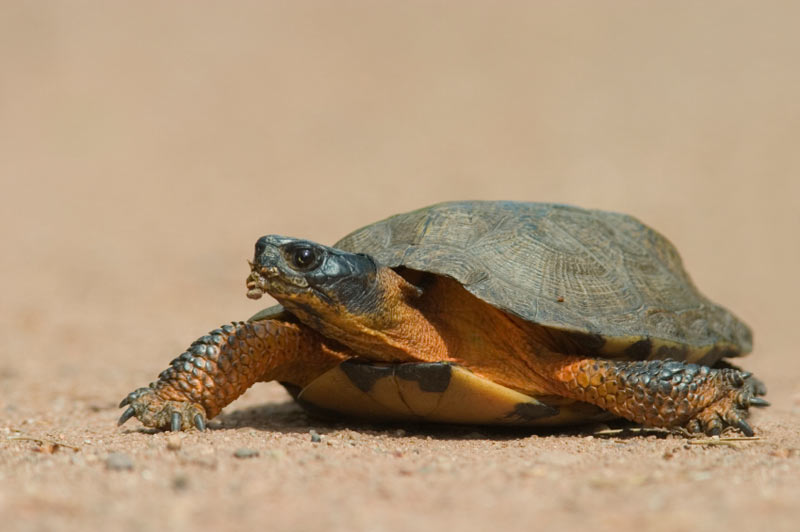
Wood Turtle
2026-05-21
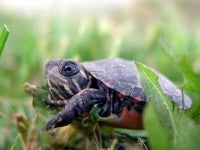
The Wood Turtle’s upper shell has raised, pyramidal shapes with visible concentric growth rings that resembles wood. There is distinct orange colouring on its neck and forelegs.
-
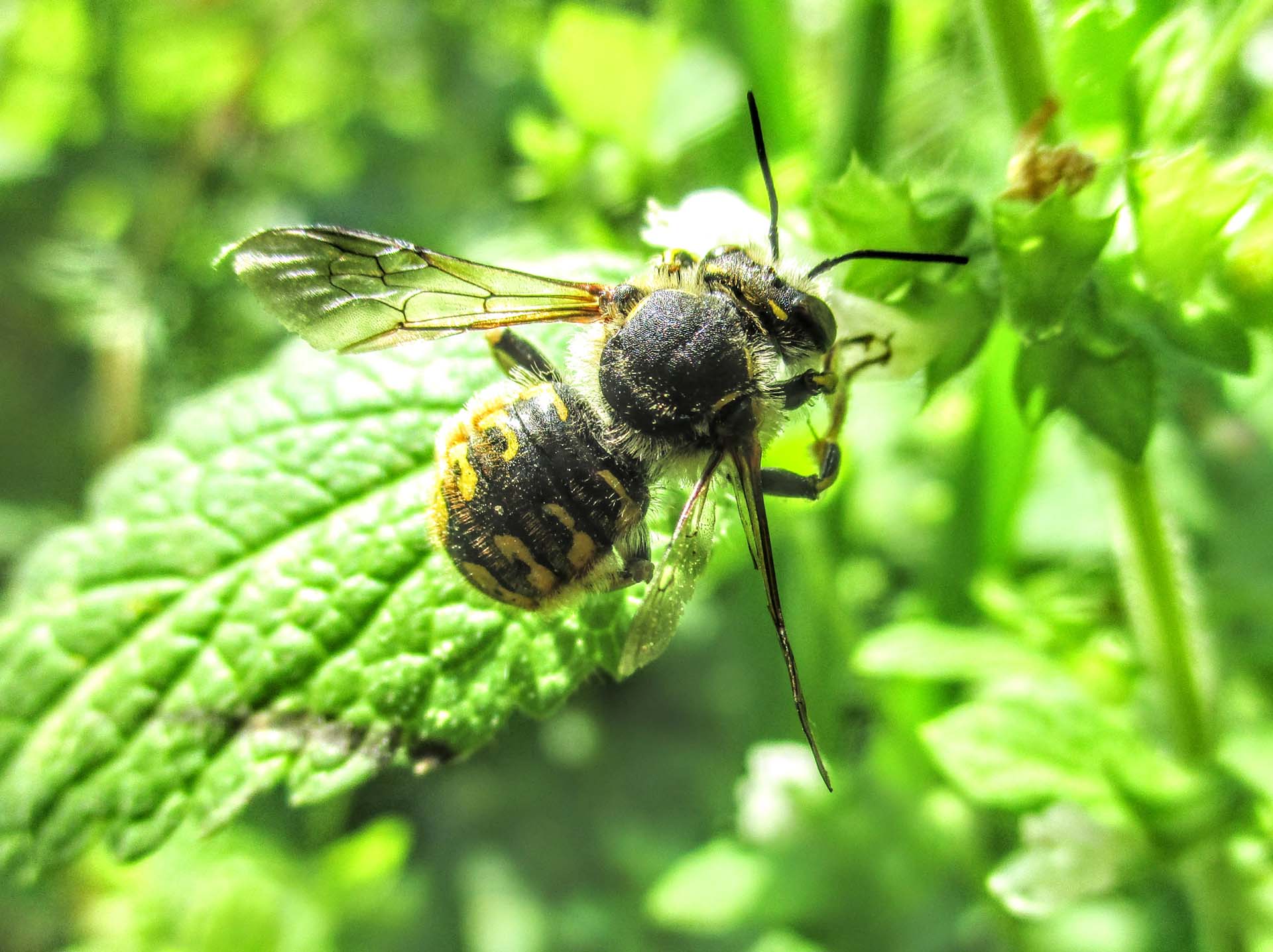
Wool carder bees
2026-05-21
Medium-sized bees (eight to 17 mm), Anthidium are robust, black-and-yellow bees. They are not very common in Canada, only five species present, of which two were recently introduced from Europe (in the last decades). Unlike most bee species, males are bigger than females. They can be observed hovering in front of flowers.
For more species, visit Hinterland Who's Who, a joint program of the Canadian Wildlife Federation and Environment Canada.

Learn More
- 0
- 1
- 2
- 3
- 4
- 5


