SCIENTIFIC NAME
Prunus virginiana
DESCRIPTION
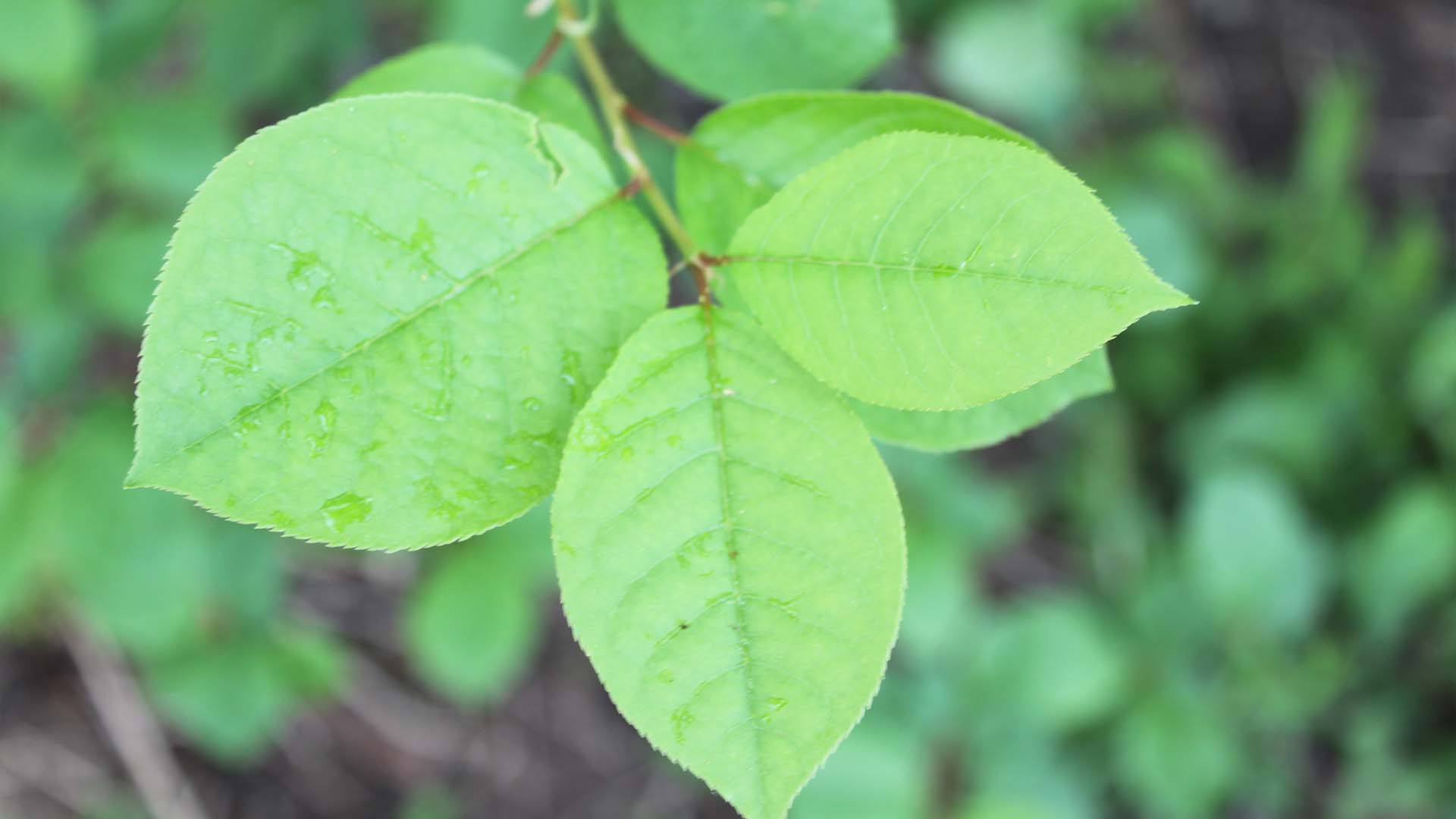
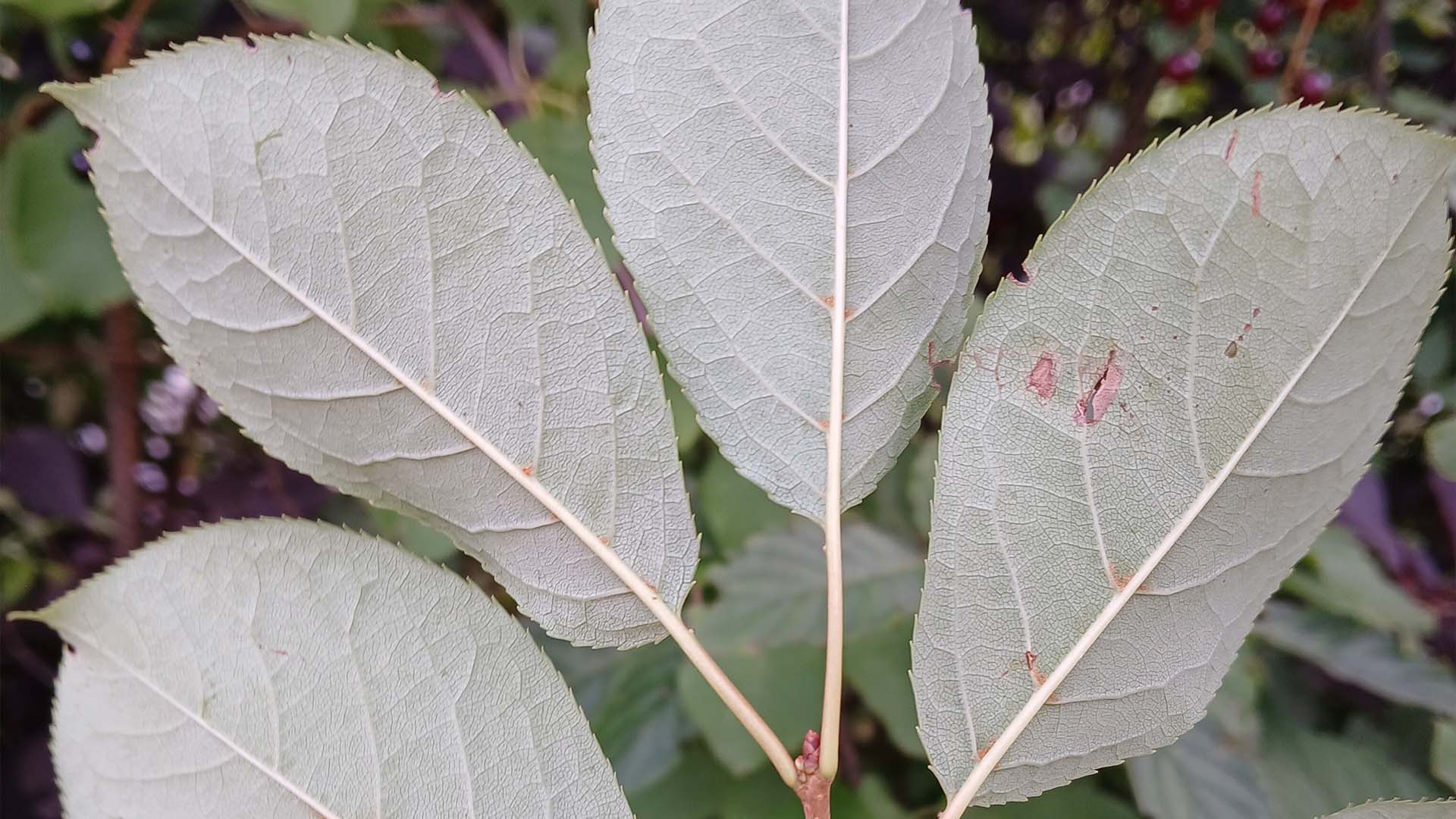
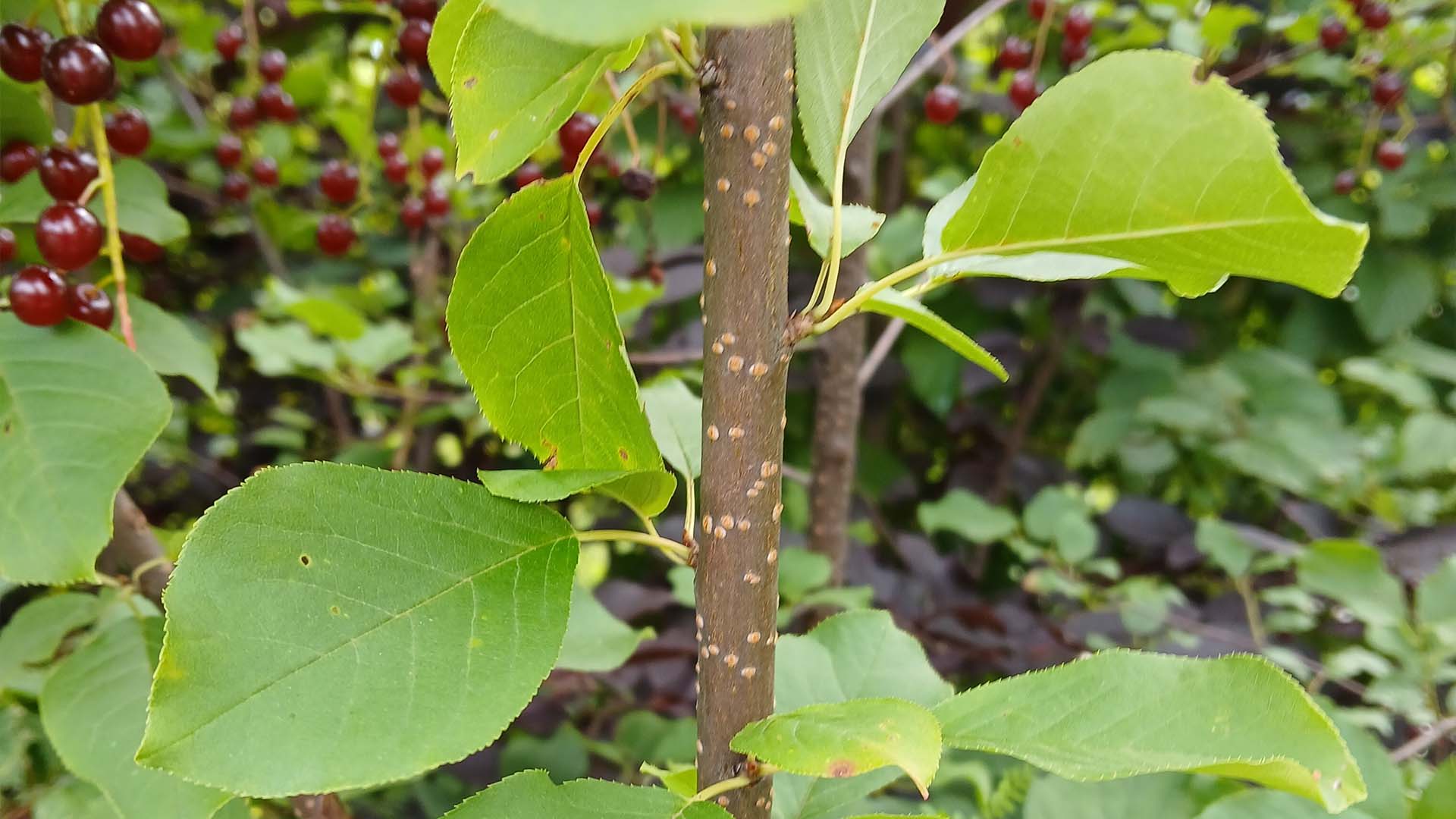
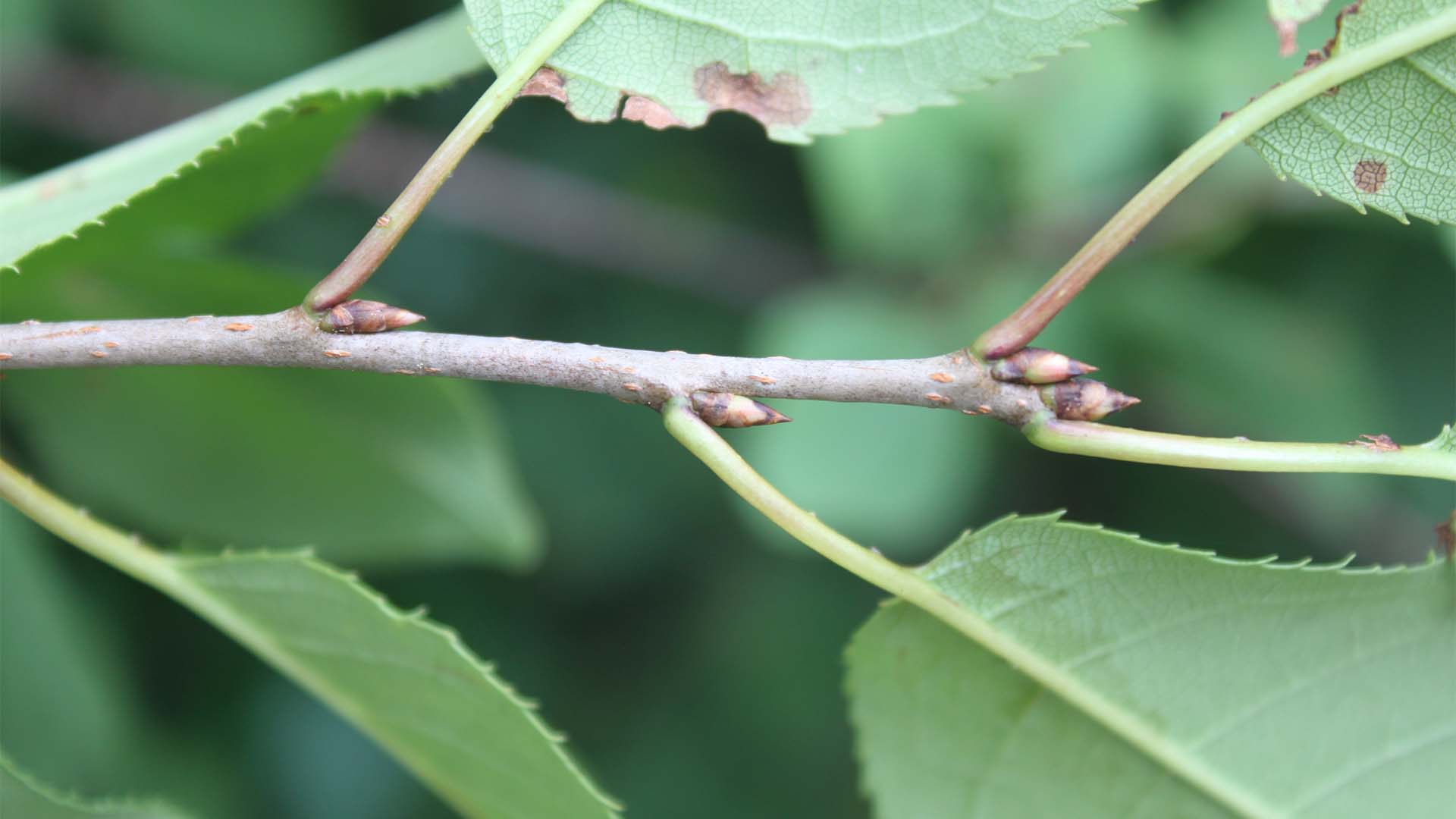
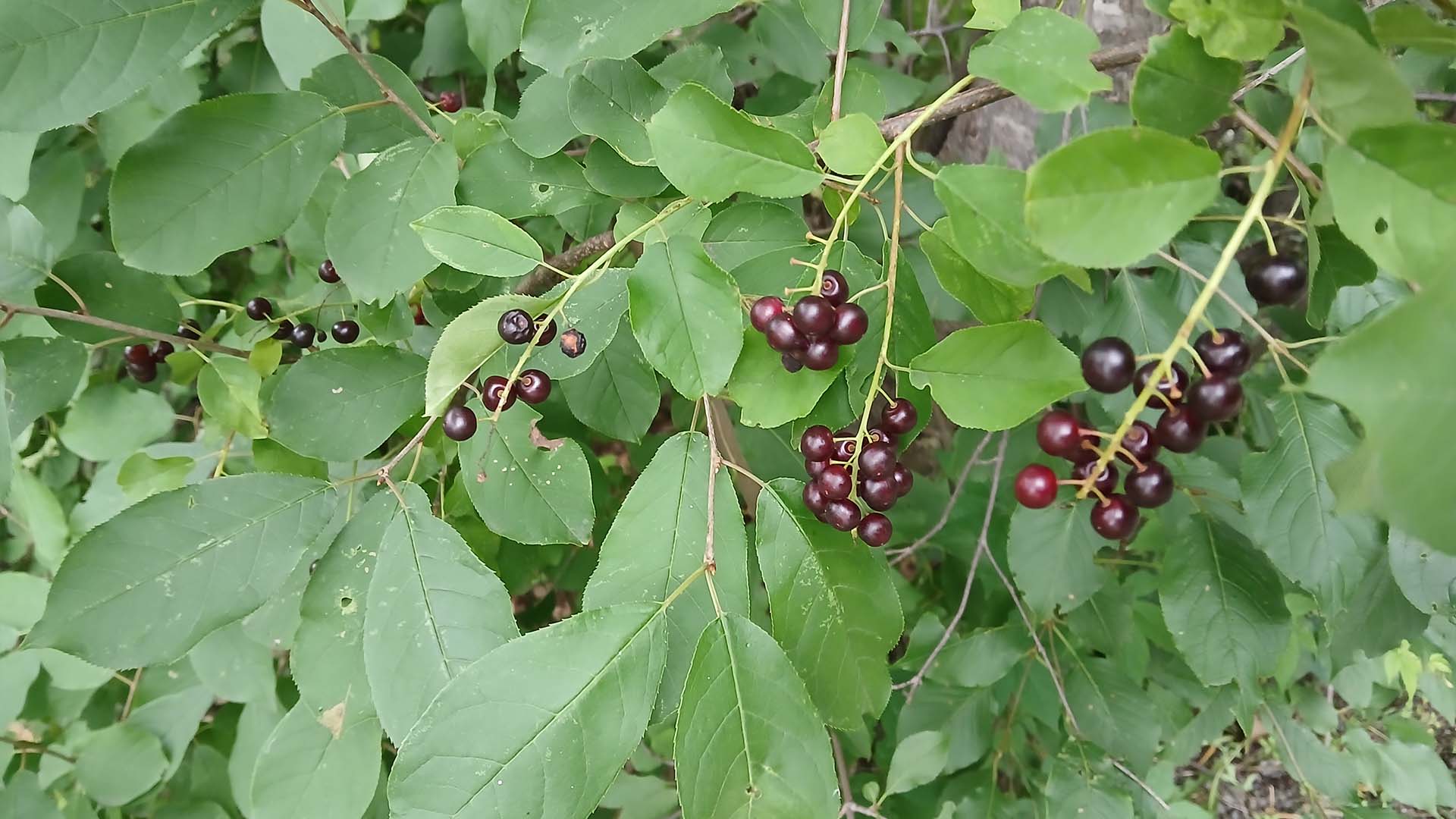
Chokecherry is a shrub that grows anywhere from four to nine metres. Its leaves are widest above the middle, have fine teeth along the edge and are pointed at the tip. The upper side of the leaves are darker while the underside is pale with a prominent midvein running from the stalk to the tip. There are glands on the leaf stalk.
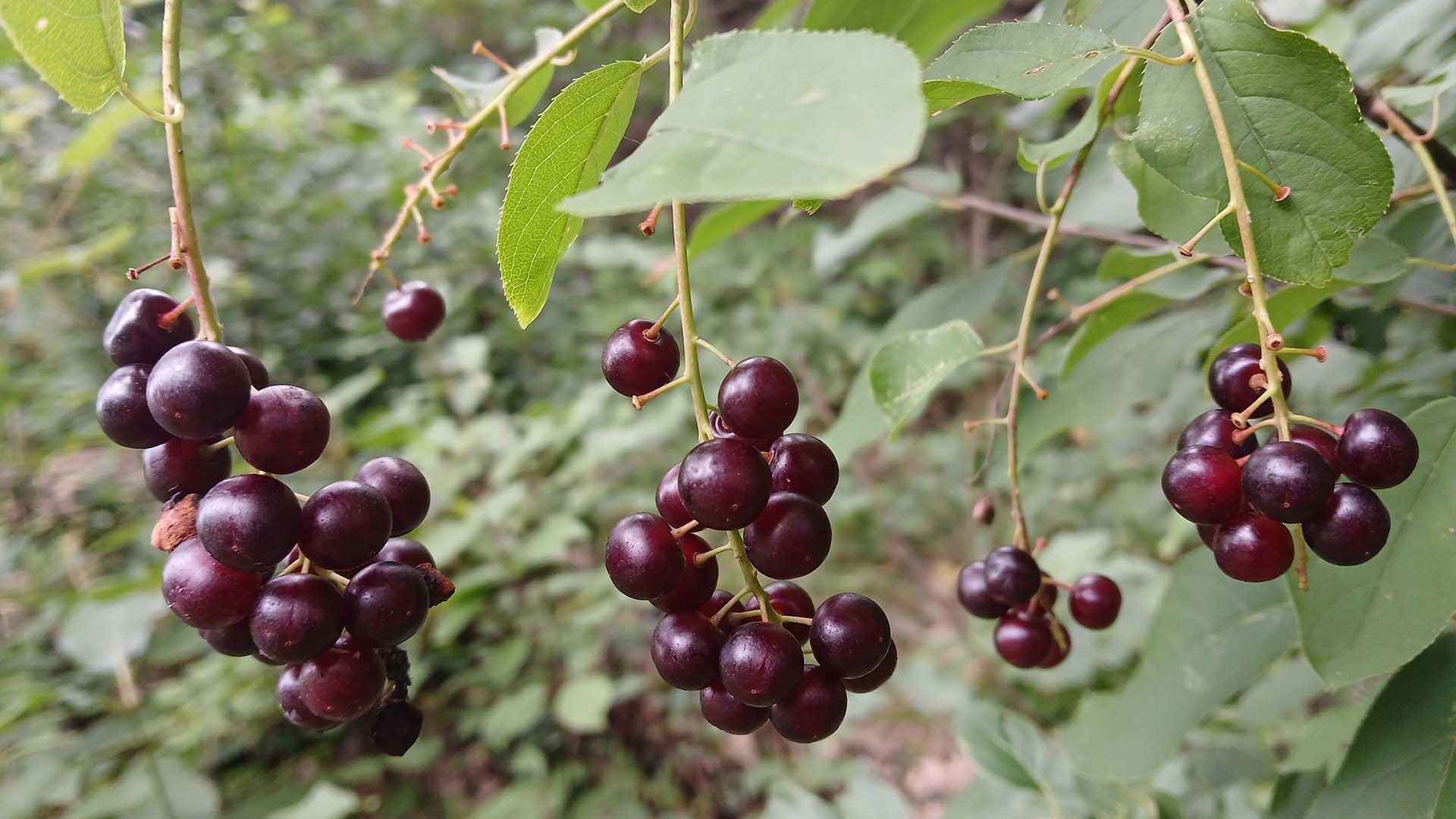
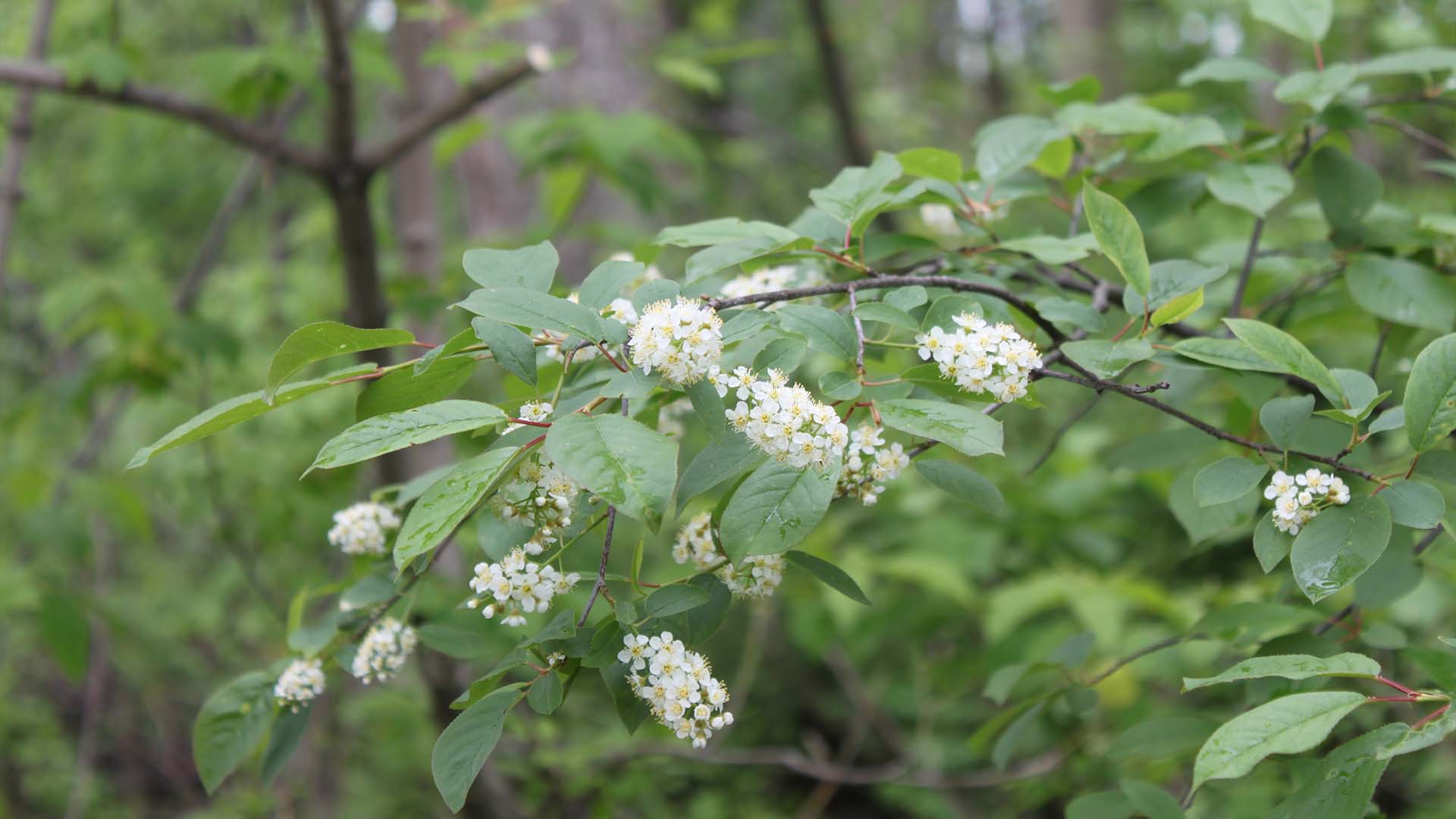
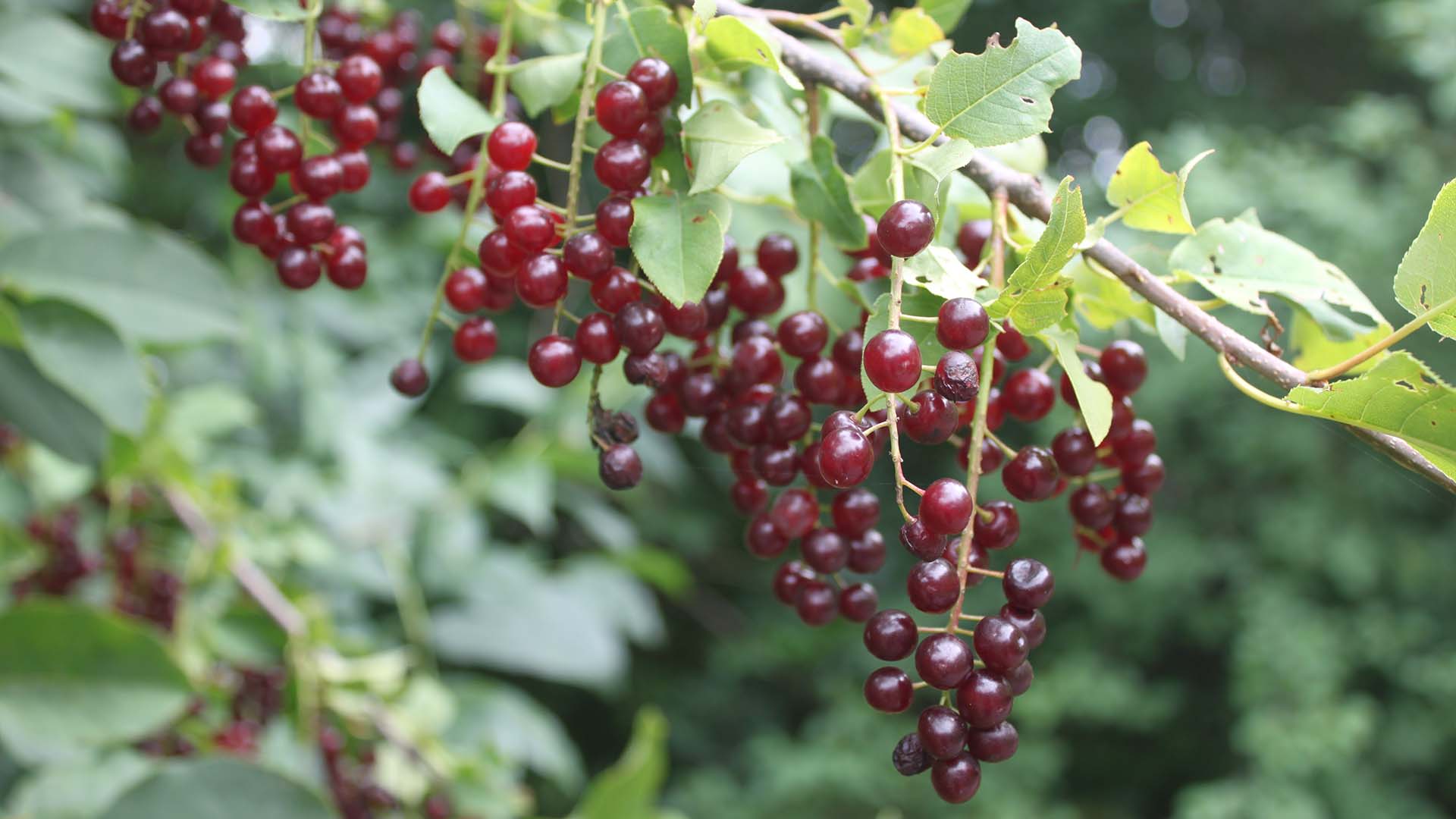
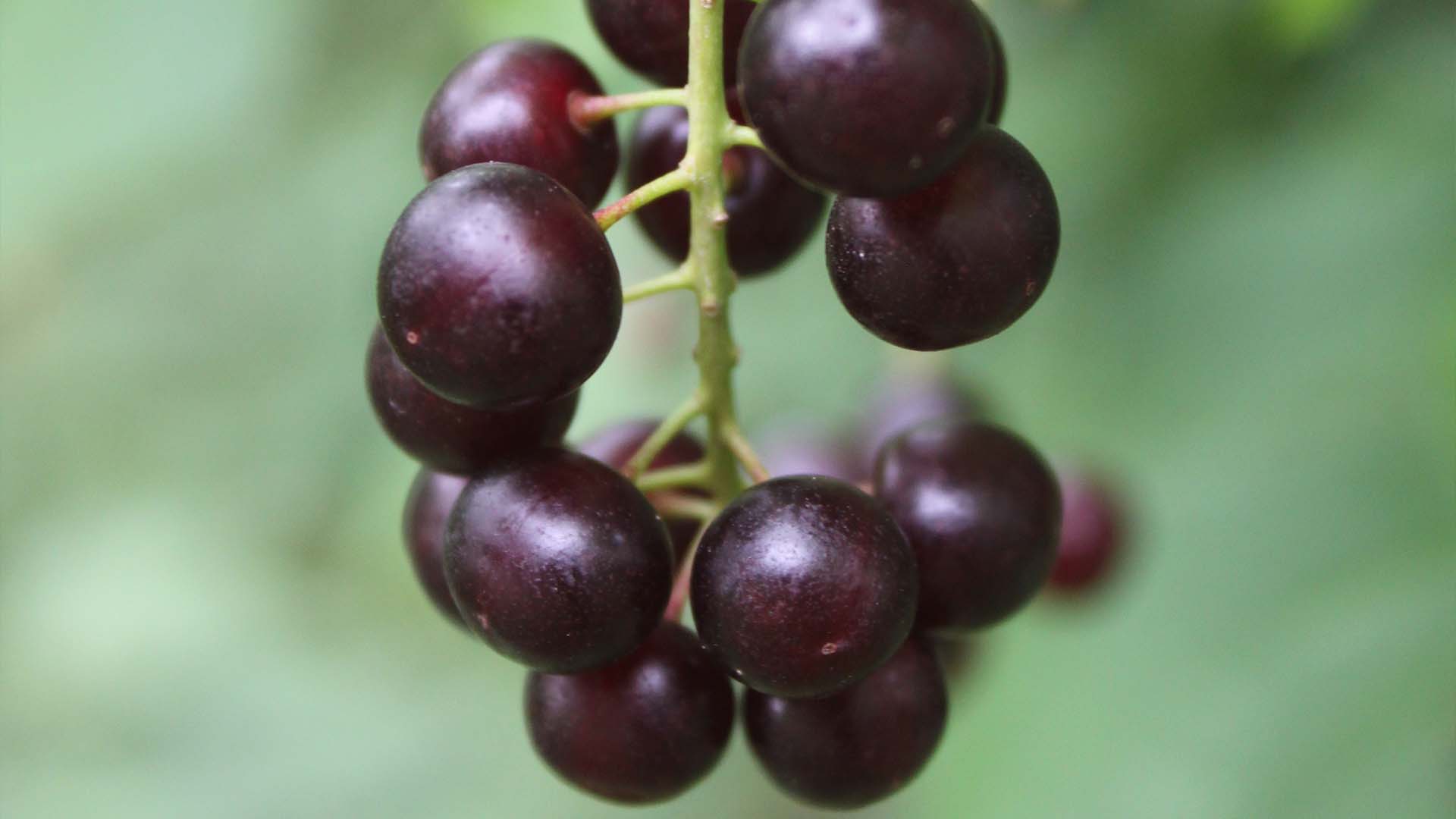
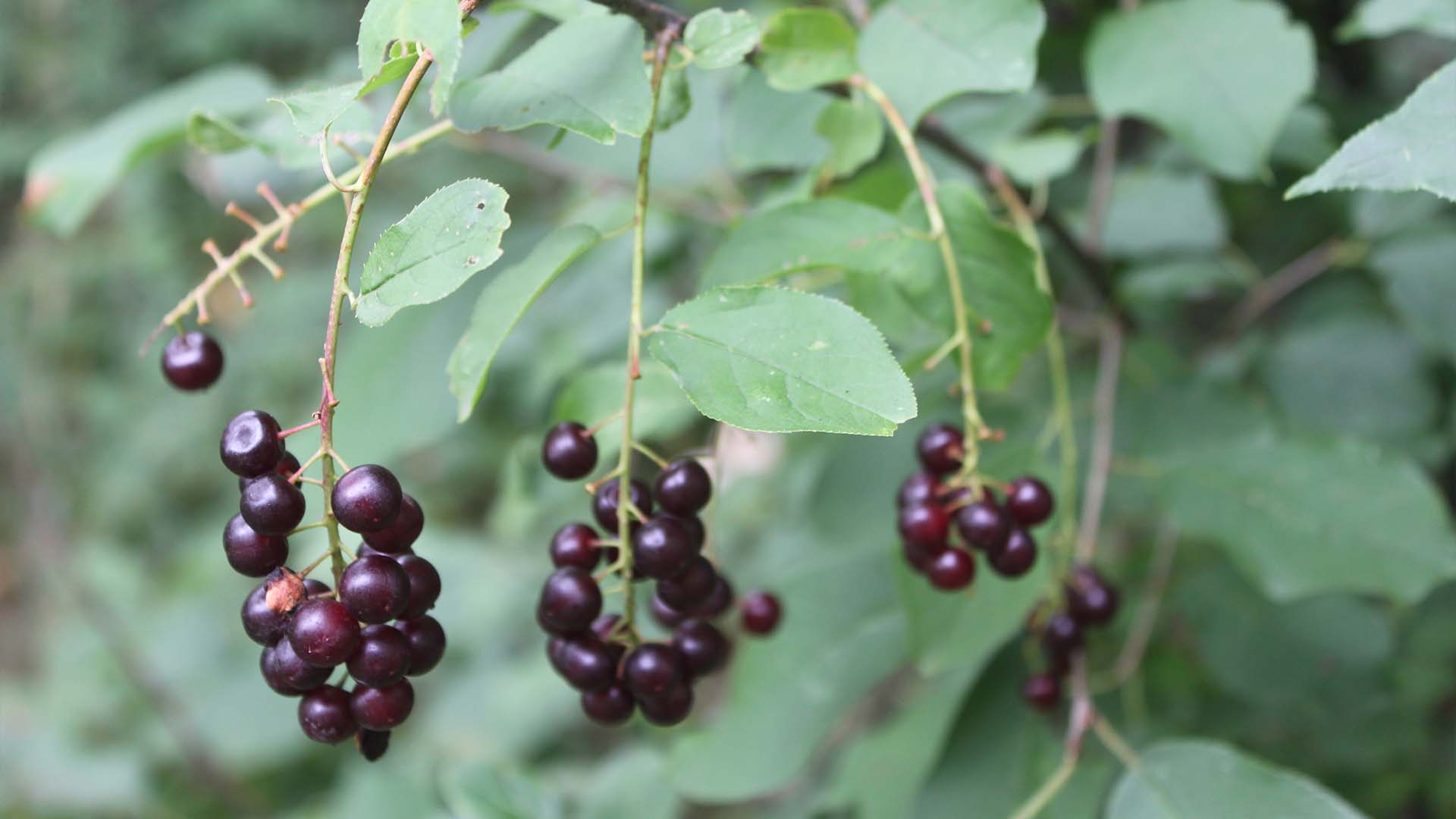
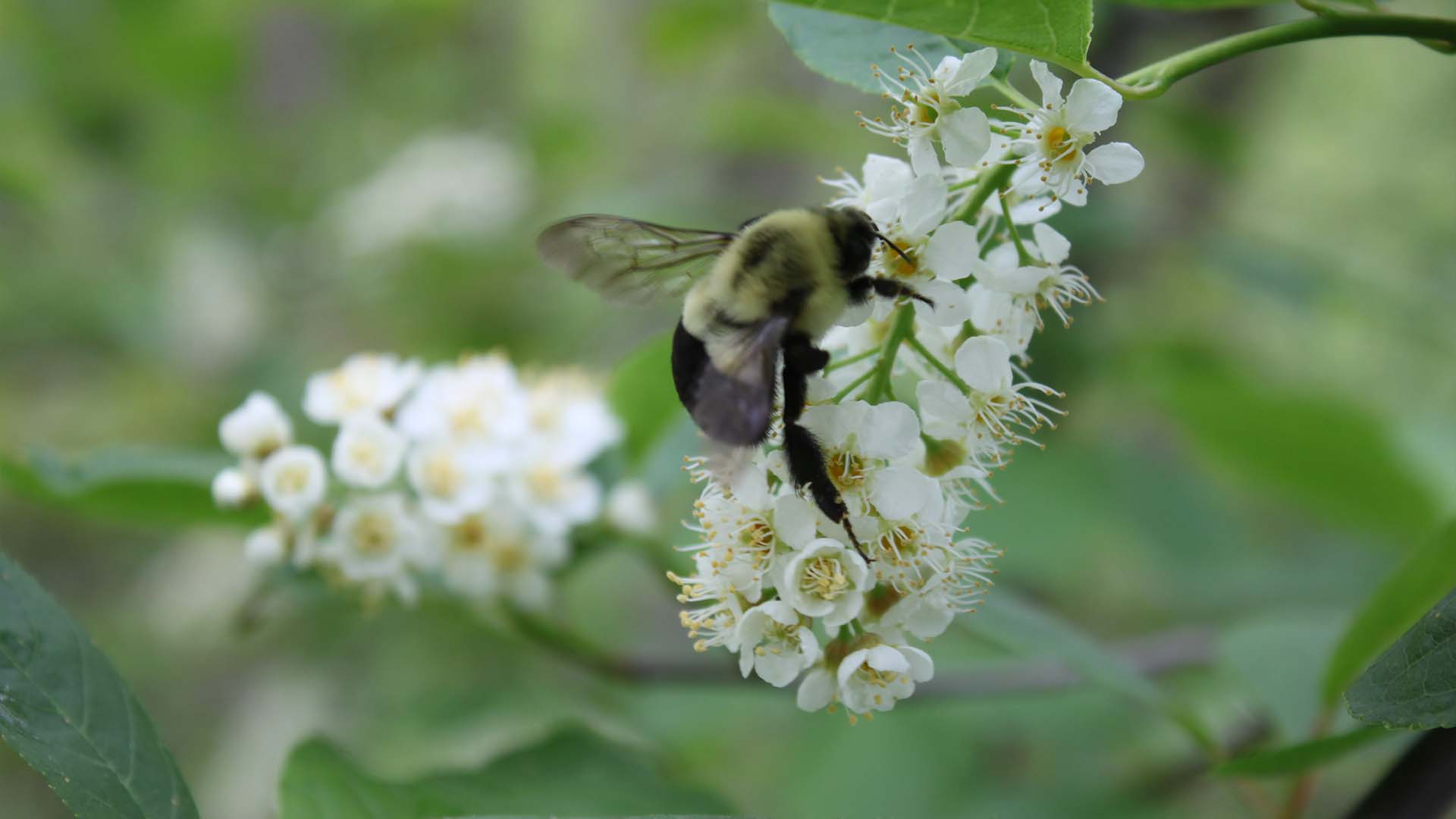
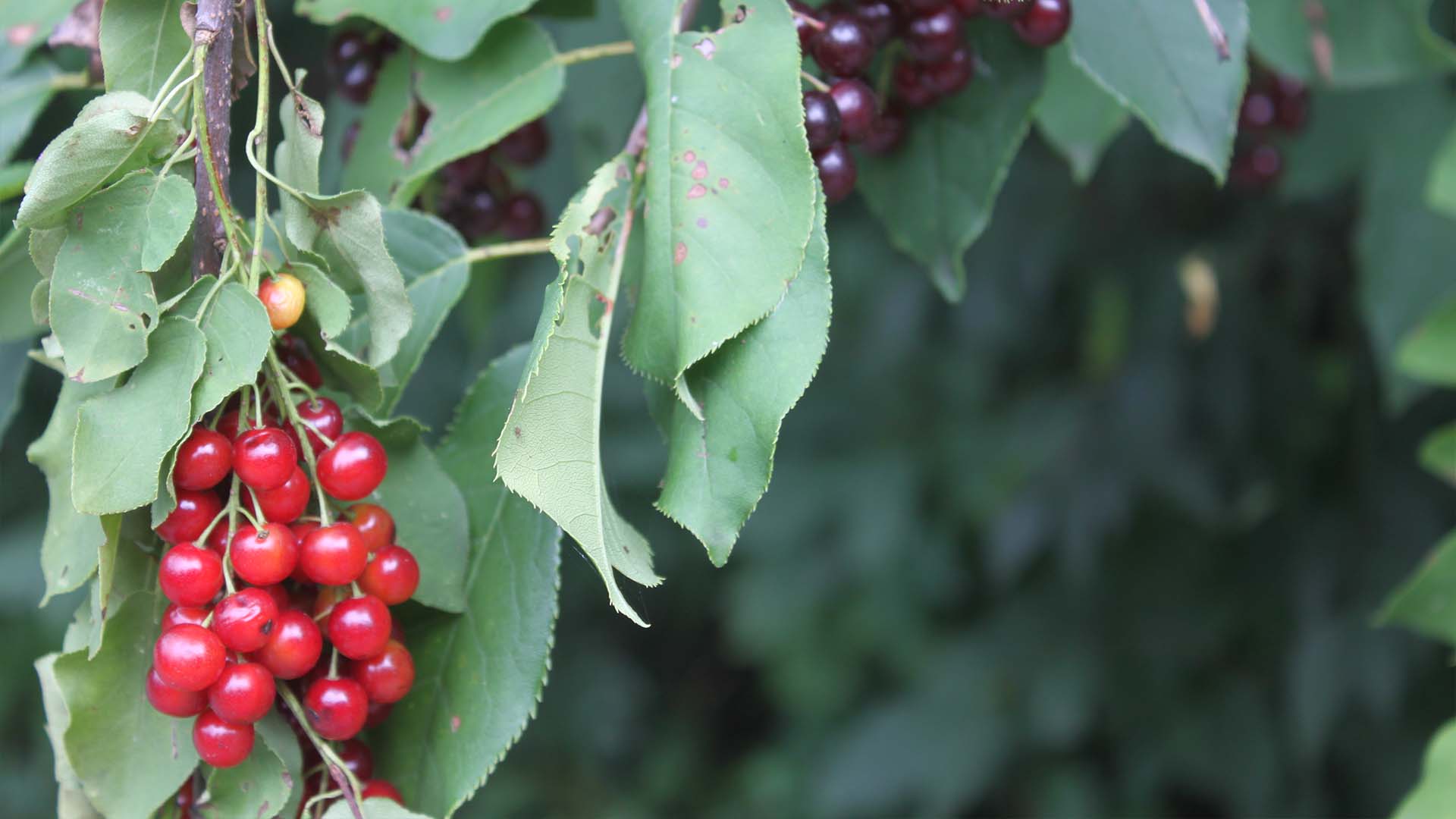
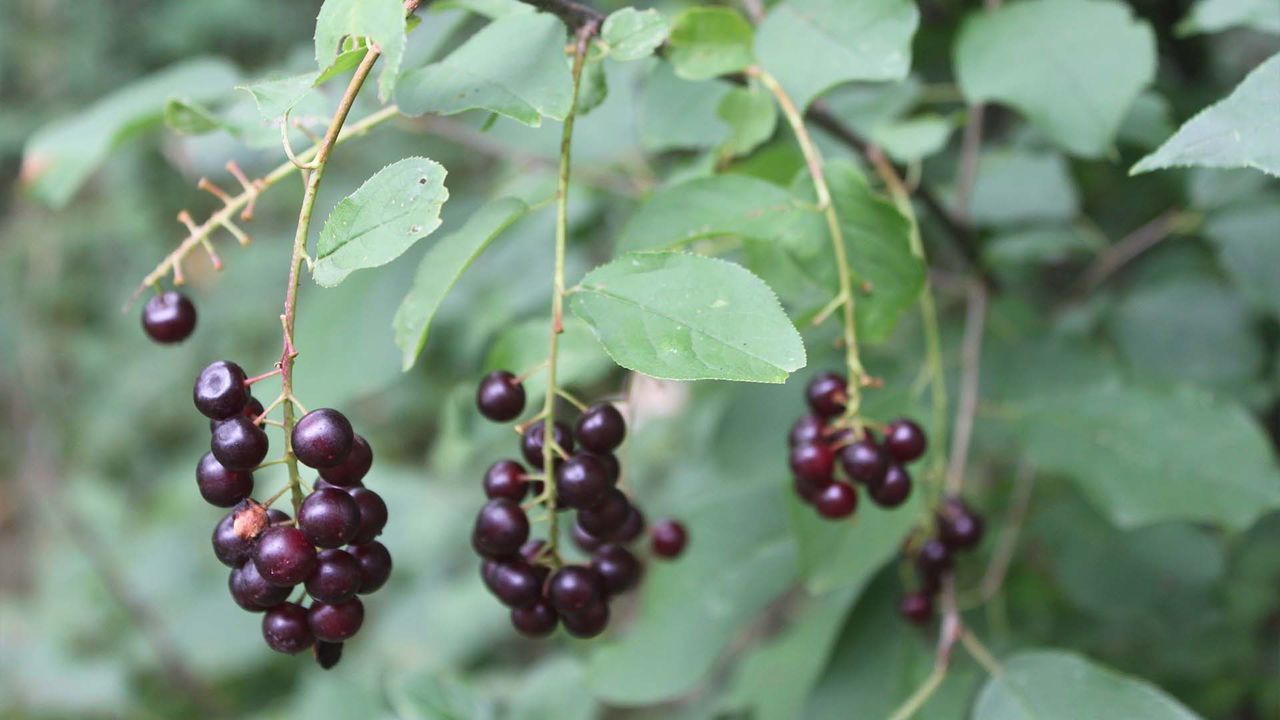
White flowers bloom in the spring, hanging in elongated clusters that later form fruit (often up to 20 per cluster) called drupes which have a large pit in the centre and single seed inside. The fruit are initially bright red and become darker as they ripen in August or September.
Mature trunks are greyish while branches are brown with several whitish pores called lenticels.
Botanists typically recognize geographic varieties with minor differences in fruit and leaf characteristics: namely Prunus virginiana var. virginiana which is in central and eastern Canada, Prunus virginiana var. demissa and Prunus virginiana var. melanocarpa are found in the western regions and are sometimes considered the same variety.
RANGE
Chokecherries are found across Canada, from British Columbia to Newfoundland and up into the northern regions of BC to Ontario, with coastal BC the exception.
HABITAT
You can find this shrub along forest edges, woodland clearings, disturbed areas and along streams and rivers. Chokecherry grows best in full sun and moist but well-drained soil rich in organic matter however they can be found in partially shaded areas and dry soils as well.
PRIMARY ECOSYSTEM ROLES
Many animals use chokecherries for food and some for shelter. Pollinators visit the flowers in the spring, several butterfly and moth species need the leaves for their caterpillars as a larval food plant and a myriad of birds eat the fruit. Small mammals like chipmunks eat the fruit too, with hares and larger mammals also browsing on leaves, twigs and buds.
Chokecherry roots help prevent soil erosion along slopes.