


Browse through a few of our Canadian species in these "At A Glance" fact sheets. Each page has basic information on some of our Canadian wildlife, with links to detailed, reputable sources such as Hinterland Who's Who and the Government of Canada. Don't see a species you need? Comments or questions? Let us know!
-
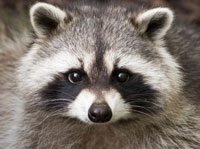
Raccoon
2026-05-21
The common raccoon (Procyon lotor) is probably best known for its mischievous-looking black face mask. Raccoons are usually a grizzled grey in colour with a tail marked by five to 10 alternating black and brown rings. Body coloration can vary from albino, (white) to melanistic (black) or brown. An annual moult, or shedding, of the fur begins in the spring and lasts about three months. A raccoon is about 80 centimetres in length and weighs between 6-8 kilograms.
-
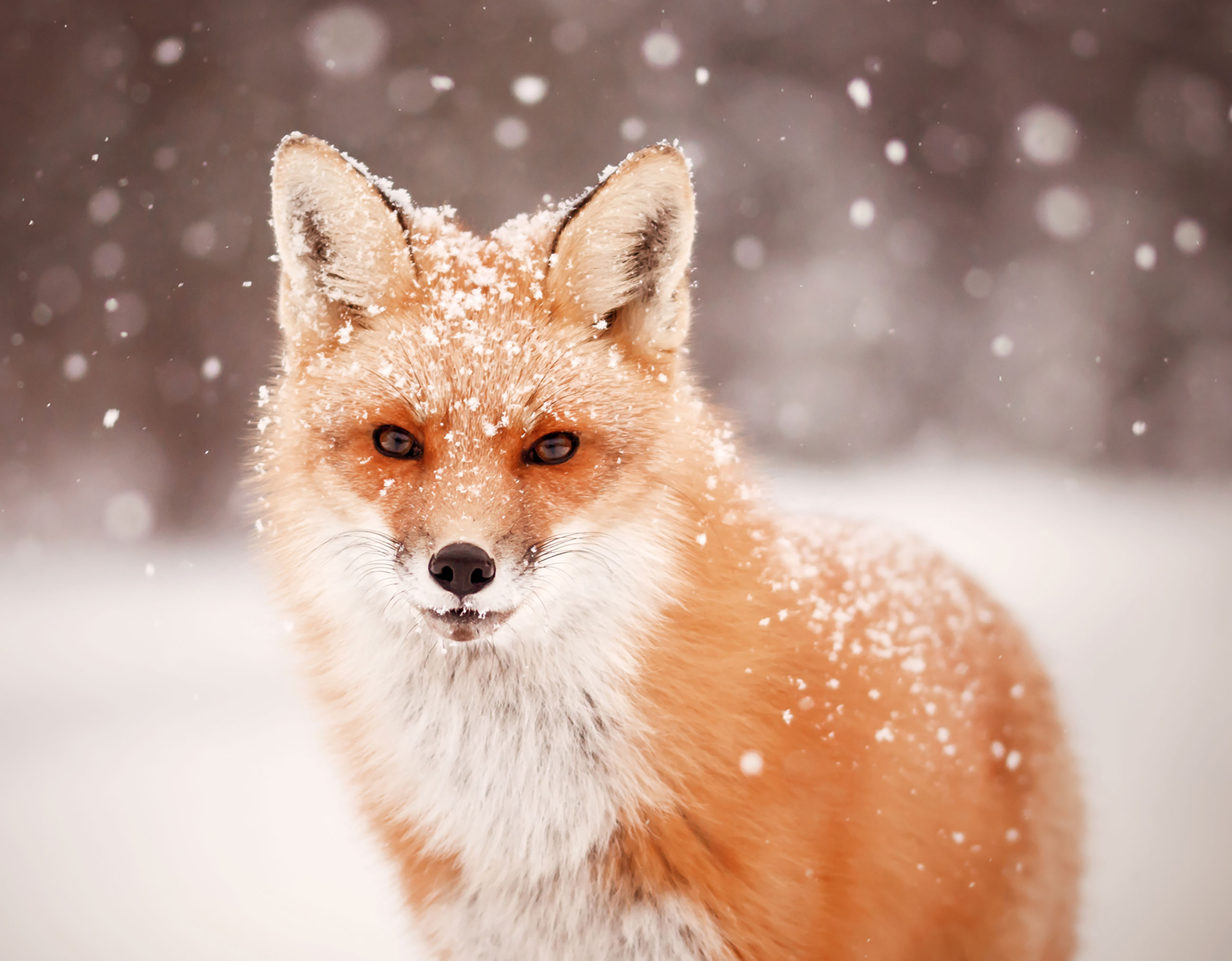
Red Fox
2026-05-21
The red fox is a small, dog-like mammal, with a sharp pointed face and ears, an agile and lightly built body, a coat of lustrous long fur, and a large bushy tail. Male foxes are slightly larger than females. Sizes vary somewhat between individuals and geographic locations
-
Snowshoe Hare
2026-05-21
The snowshoe hare one of our commonest forest mammals, is found only in North America. Well-adapted to its environment, the snowshoe hare travels on large, generously furred hind feet, which allow it to move easily over the snow. The snowshoe hare’s ears are smaller than most hares’. The ears contain many veins, which help to regulate body temperature. A seasonal variation in fur colour is another remarkable adaptation: from grey-brown in summer, the fur becomes almost pure white in midwinter.
-
Striped Skunk
2026-01-09
Despite its reputation, the striped skunk (Mephitis mephitis) is one of the most useful small mammals inhabiting Canada’s mixed farmlands, grasslands and forests. About the size of a cat, this member of the weasel family helps control pests such as mice, grubs and larvae.
-
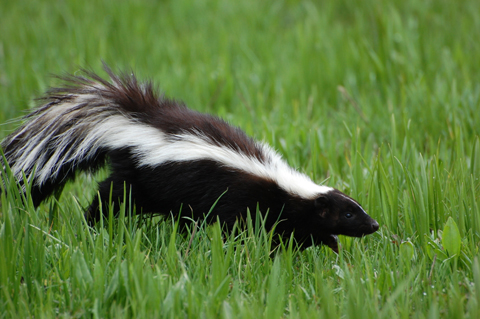
Striped Skunk
2026-06-04
The striped skunk, a member of the weasel family, is about the size of a cat, but has a stout body, small head, short legs, bushy tail and thick, black, glossy fur. The thin white stripe down the centre of the face forks at the shoulders and continues as a white stripe along each side of the back. Tail is mostly black, but stripes may extend down it, usually to a tuft of white at the tip. The skunk is one of the most useful small mammals inhabiting Canada’s mixed farmlands, grasslands and forests because it helps control pests such as mice, grubs and larvae. On average a skunk weighs 3.25 kilograms and is approximately 57.5 - 80 centimetres in length. In the wild a skunk is estimated to live 3 years but in captivity they can live up to 15 years.
-
Testosterone Overload
2025-12-05
By Stephanie Poff<br />In the animal kingdom, most species use cues to determine the best mate; taking into account different scents, body language and competition to be the best. Simply put, while guys and gals are scoping eachother out at the bar, wildlife are congregating to impress a suitable mate; and when boys are flexing their muscles trying to impress a girl on the football field, wildlife are competing to win the affection of their chosen mate by showing off their strengths in front of anyone who’s watching.
-

The Mighty Blue Whale
2025-12-05
The blue whale holds many records in the animal kingdom, and Canadians are lucky enough to have this breathtaking creature include our coastline in its distribution. While you can’t find the blue whale in your garden, the animal serves as a good example of how our gardening practices go a long way in benefitting the health of creatures all over Canada, including aquatic ones. Read on to find out some interesting facts about these animals and what you can do to help them.
-
The Science of Migration
2025-12-05
By April Overall<br />What if the only way you could get from point A to point B was to huff it? And what if point B was thousands of kilometres away? That’s just the kind of trek millions of birds face every year as they make their way to their wintering grounds. How do they do it? Read on to find out!
-
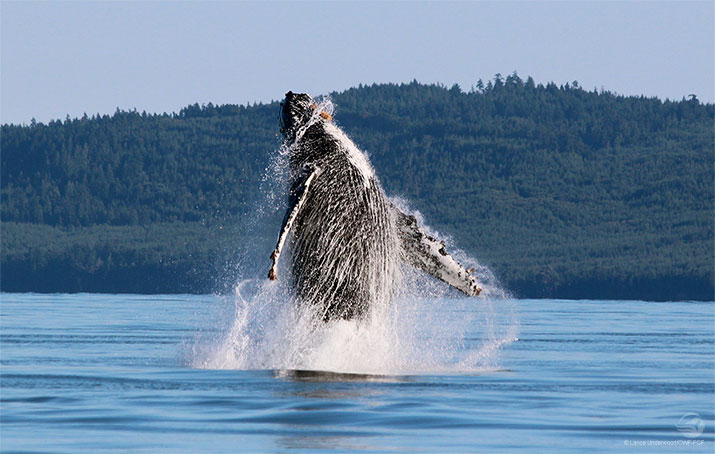
Whales, dolphins and porpoises
2025-12-05
Whales, dolphins and porpoises are all within the same group of animals called cetaceans. These air-breathing mammals are found in all oceans of the world, including Canada’s three oceans. The easiest way to tell the difference between these animals is whether they have teeth or not. Cetaceans are subdivide into mysticetes (baleen whales) and odontocetes (toothed whales, dolphins and porpoises).
For more species, visit Hinterland Who's Who, a joint program of the Canadian Wildlife Federation and Environment Canada.


