


Browse through a few of our Canadian species in these "At A Glance" fact sheets. Each page has basic information on some of our Canadian wildlife, with links to detailed, reputable sources such as Hinterland Who's Who and the Government of Canada. Don't see a species you need? Comments or questions? Let us know!
-
Moose
2026-05-21
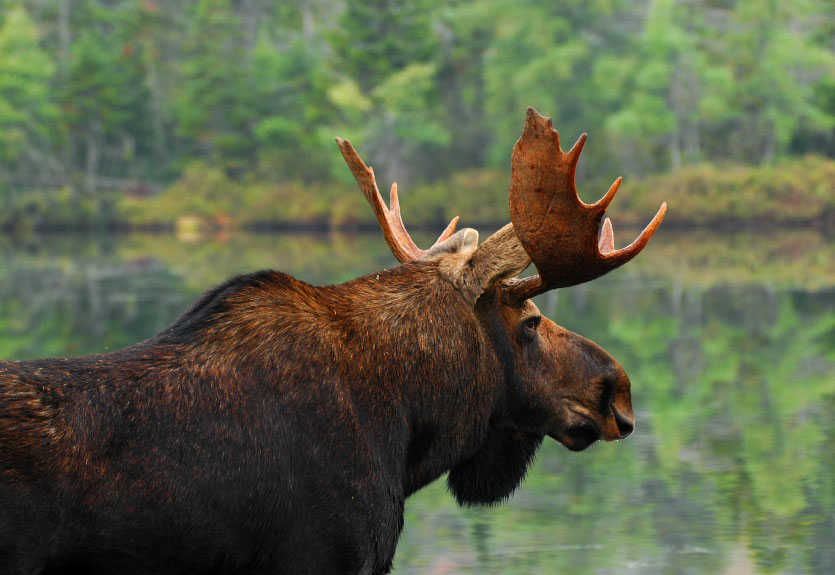
Moose (Alces alces) have long, slim legs that end in cloven, or divided, hooves often more than 18 cm long. The body is deep and massively muscled at the shoulders, giving the animal a humped appearance. It is slab-sided and low-rumped, with rather slender hindquarters and a stubby, well-haired tail. The head is heavy and compact, and the nose extends in an arch terminating in a long, flexible upper lip. The ears resemble a mule’s but are not quite as long. Most moose have a pendant of fur-covered skin, about 30 cm long, called a bell, hanging from the throat. A bull moose in full spread of antlers is the most imposing beast in North America. It stands taller at the shoulder than the largest saddle horse. Big bulls weigh up to 600 kg in most of Canada. The moose is the largest member of the deer family.
-
North American Bison
2026-05-21
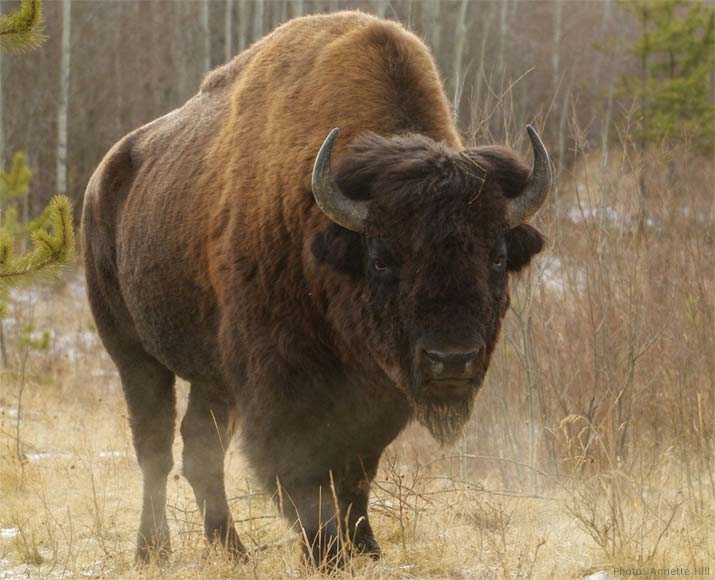
The North American bison, or buffalo, is the largest land animal in North America. A bull can stand 2 m high and weigh more than a tonne. Female bison are smaller than males. A bison has curved black horns on the sides of its head, a high hump at the shoulders, a short tail with a tassel, and dense shaggy dark brown and black hair around the head and neck. Another distinctive feature of the buffalo is its beard.
-
North Atlantic Right Whale
2026-05-21
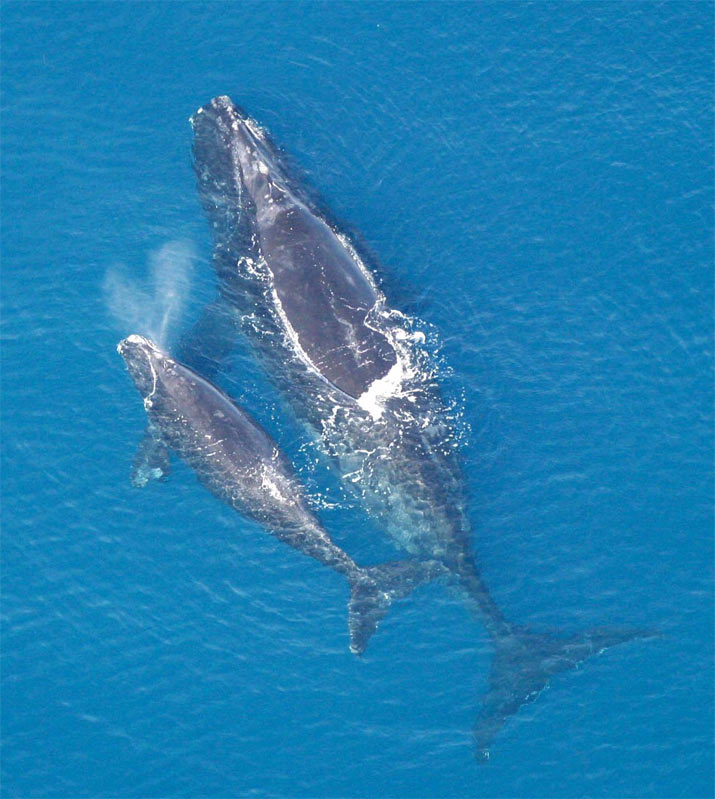
The North Atlantic right whale (Eubalaena glacialis) has a large head that takes up nearly a quarter of the length of its body. Right whales, which can grow up to 18 metres in length can be recognized by: <ul><li> their wide tail flukes and narrow tail stock, large flippers and lack of a dorsal fin; </li><li> their skin is black and some individuals have white patches on the throat or belly; </li><li> rough white patches of skin called callosities on their head, chin, and sometimes on the edge of their lower lips. Each whale's callosity pattern is distinctive, enabling scientists to recognize individual whales. </li></ul>
-
Northern Flying Squirrel
2026-05-21
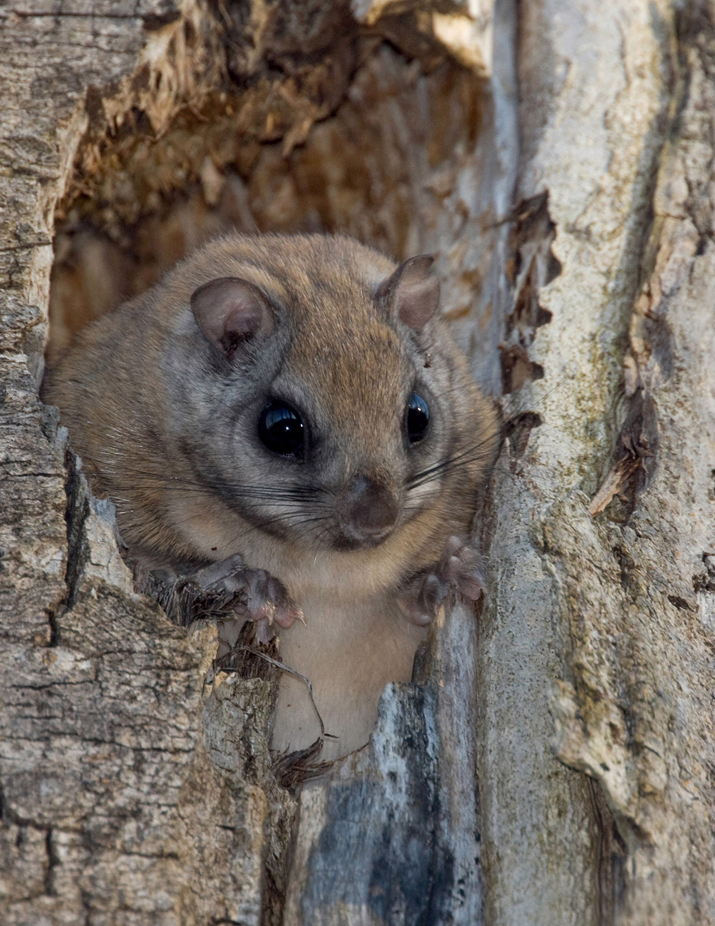
Northern flying squirrels are about 30 cm in length and have broad flattened tails. The fur on their back is a cinnamon brown and they have white bellies. The large eyes of flying squirrels facilitate effective night vision. This is necessary because, unlike their more commonly seen cousins, these squirrels hide away during the day and become active about an hour after sunset.
-
Orca Whale
2026-05-21
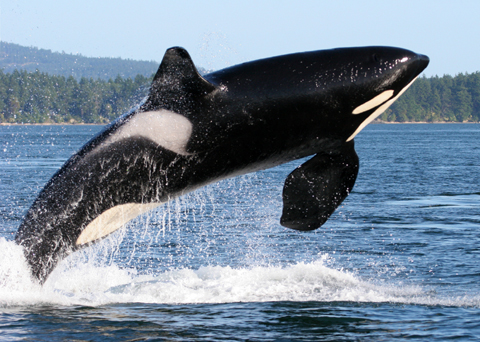
The orca (Orcinus orca), often called the killer whale, is actually the largest member of the dolphin family. Orcas are highly social animals that live in stable, family-related groups called pods. Their distinctive black-and-white colouring and large dorsal fin make them easy to spot and identify. As a result of increased water pollution, especially from toxic chemicals, they are listed as threatened under the Species at Risk Act. The average weight of an Ocra whale is 4 to 5 tonnes and measures between 7 to 9 metres. The lifespan for a male in the wild is 17 years and for females it's 29 years.
-
Pinnipeds
2025-12-05
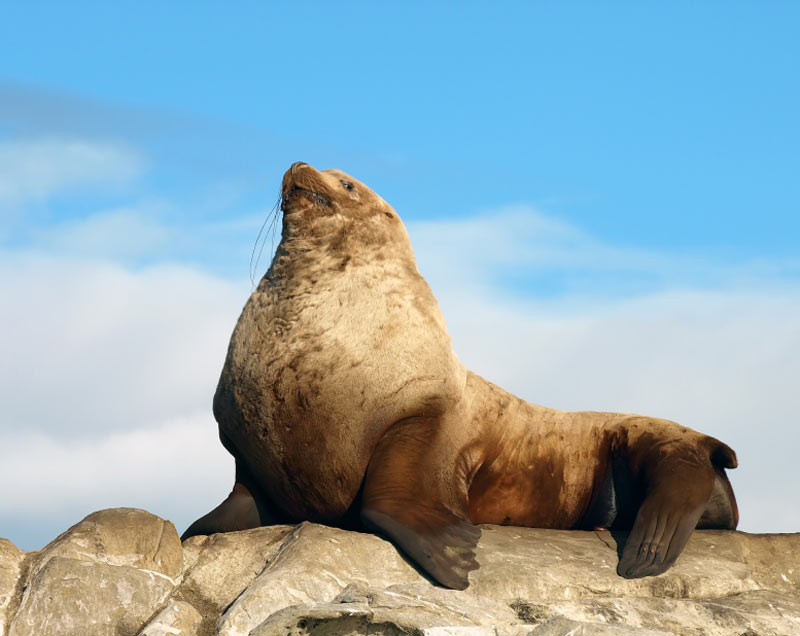
Pinnipeds are a group of marine mammals, mostly seals but also sea lions and walruses, which spend their lives in the ocean and on land. These animals normally spend time on land, but are fin-footed allowing them to swim efficiently in water.
-
Polar Bear
2026-05-21
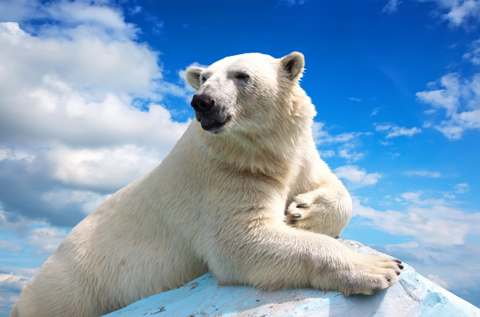
Polar bears are one of the most well-known and recognizable Canadian species. These bears are Canada’s largest land carnivore, with adult males weighing up to 800 kilograms (1763 pounds).
-
-
Porcupine
2026-05-21
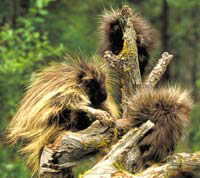
Porcupines have large, chunky bodies and short legs. This results in their slow, waddling manner. With an average weight of 5.5 kg for males and 4.5 kg for females and a total length ranging from 68 to 100 cm, porcupines are Canada's second largest rodents next to beavers. Porcupine's quills are actually modified hairs. They are longest on the back and tail, reaching lengths of 12.5 cm. Quills on the face are much shorter, approximately 1.2 cm long. Despite their prickly appearance, porcupines have soft undercoats with long guard hairs covering the quills. Their undersides, legs, and muzzles have no quills.
-
Raccoon
2025-12-05
Common in many North American cities, the raccoon will eat practically any type of food — plant or animal. Many people see the raccoon’s distinctive facial fur colouring as looking like a burglar’s mask, which fits with the common perception of raccoons as pests. Highly social and intelligent animals, raccoons inhabit every Canadian province except the island of Newfoundland.
For more species, visit Hinterland Who's Who, a joint program of the Canadian Wildlife Federation and Environment Canada.


