

SCIENTIFIC NAME
Anthidium
DESCRIPTION
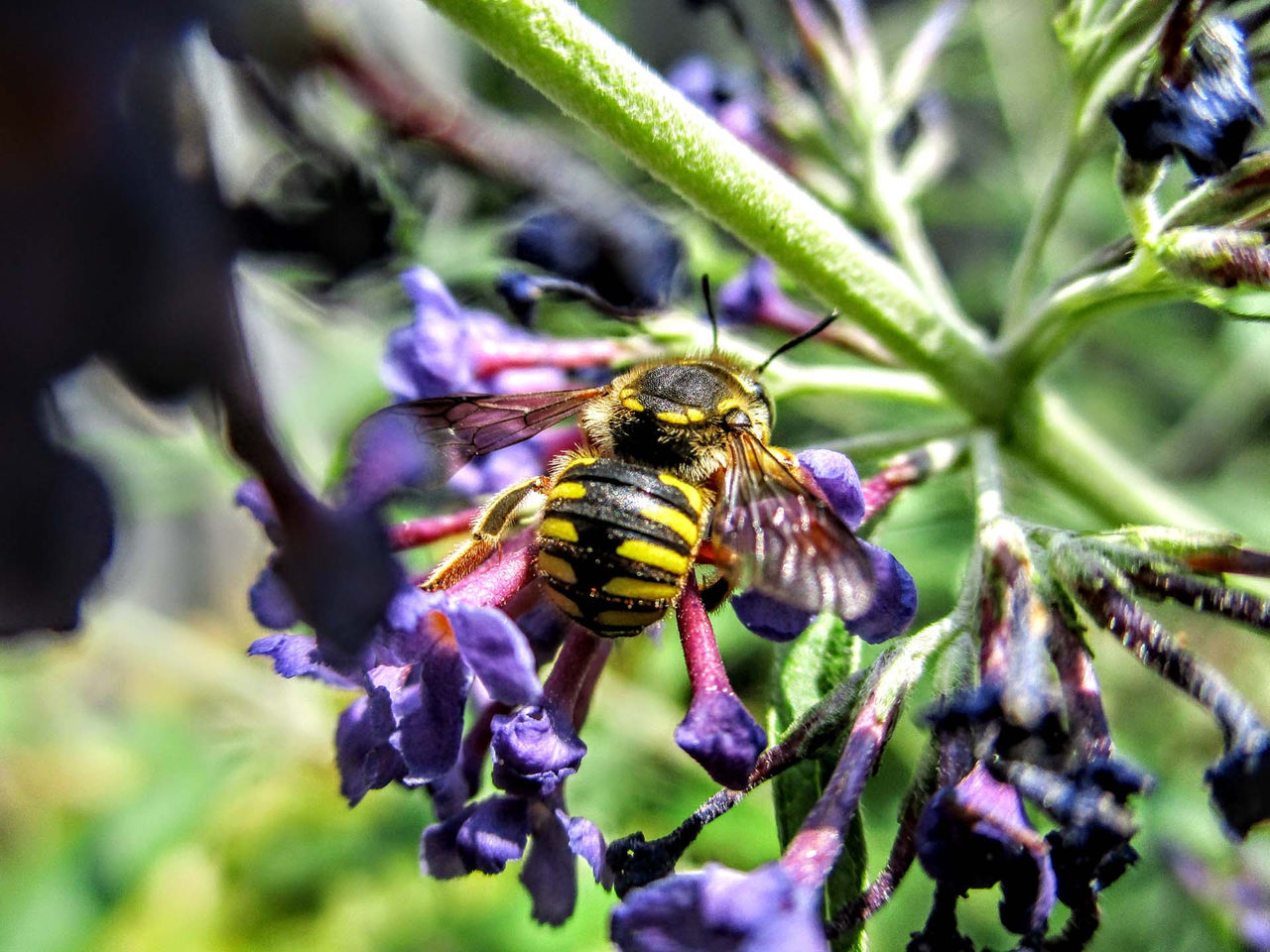
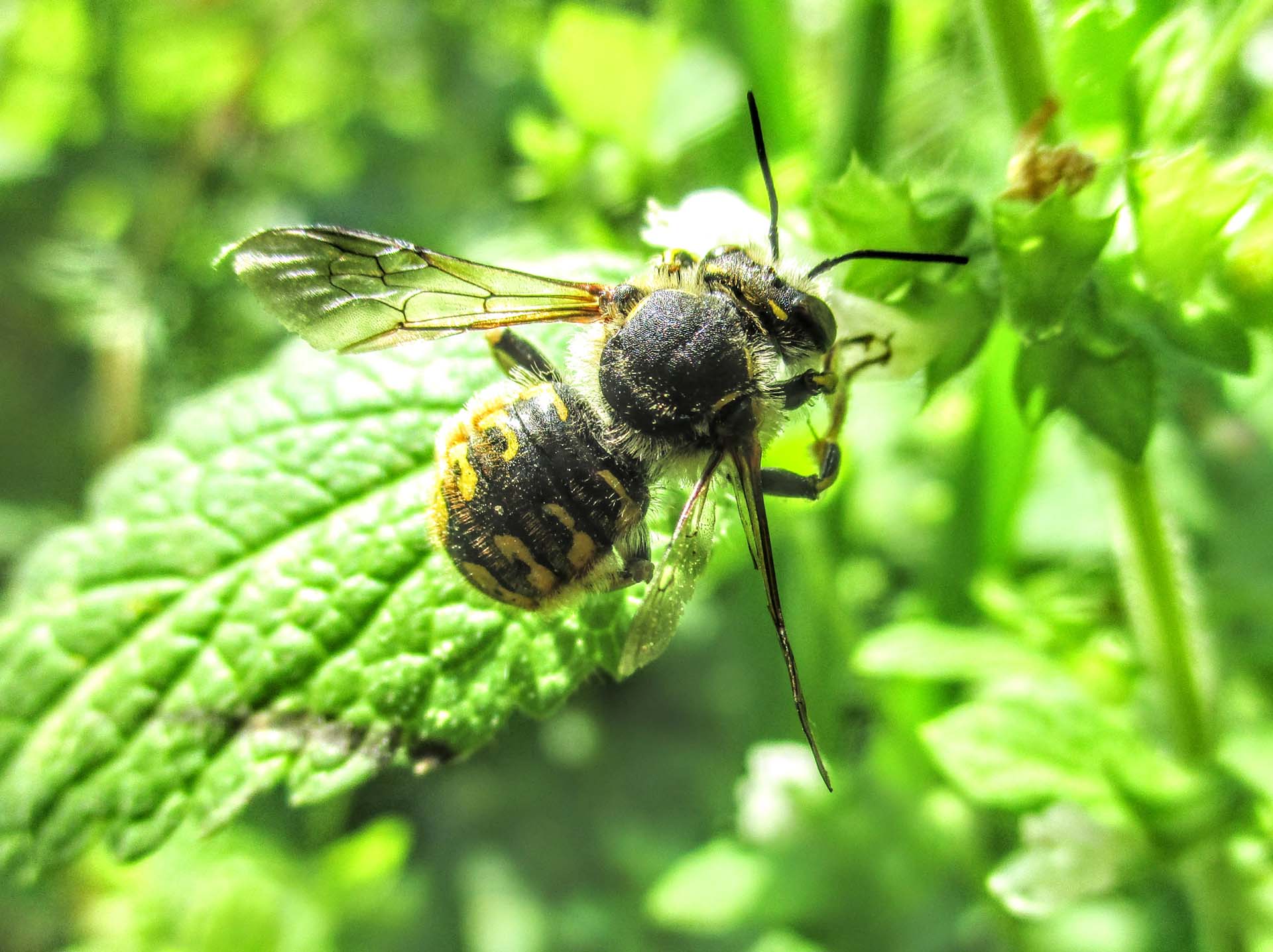
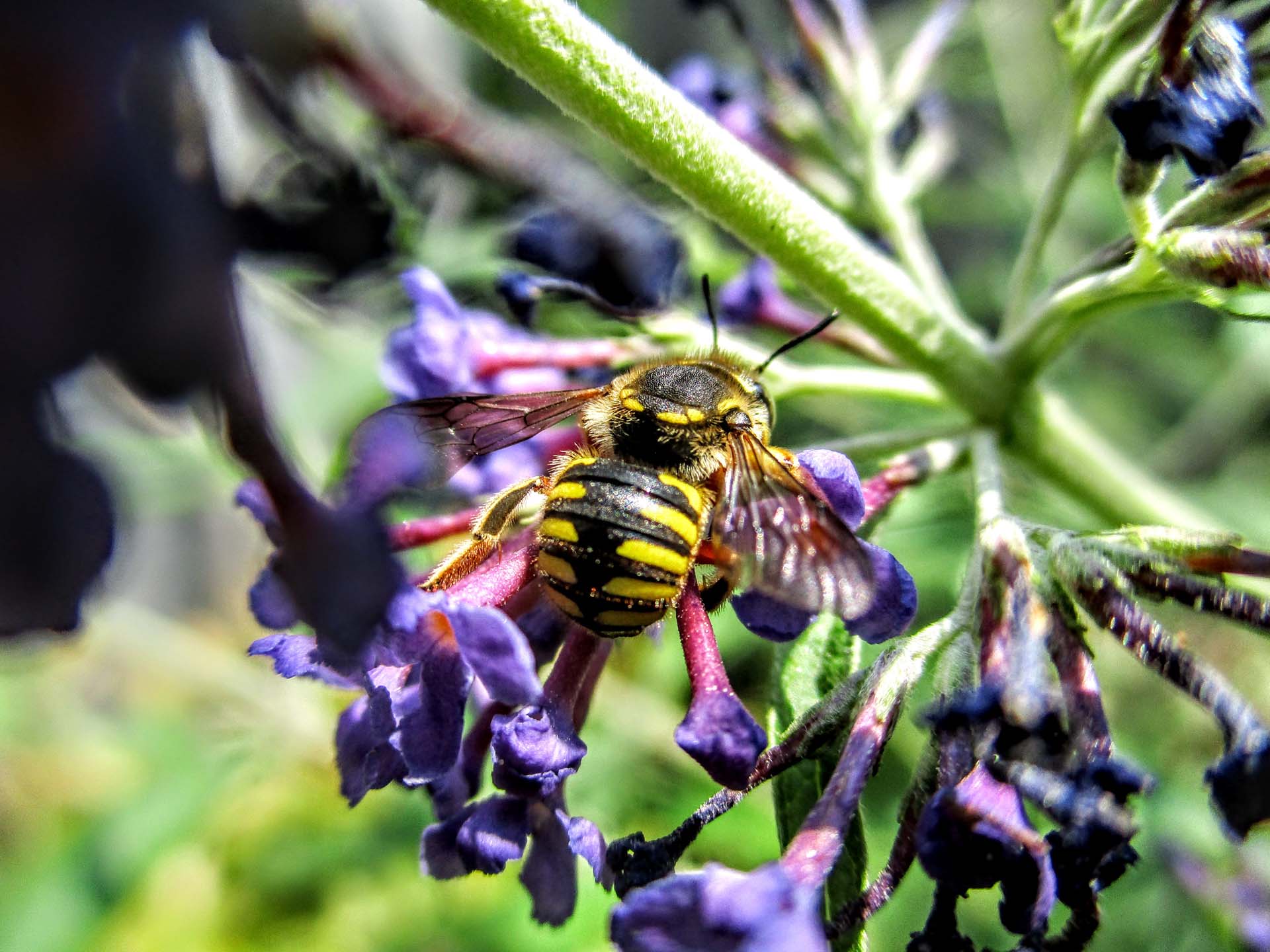
Medium-sized bees (eight to 17 mm), Anthidium are robust, black-and-yellow bees. They are not very common in Canada, only five species present, of which two were recently introduced from Europe (in the last decades). Unlike most bee species, males are bigger than females. They can be observed hovering in front of flowers.
PHOTO GALLERY
|  |
Feeding Habits
Wool carder bees are active in the spring and summer. There seem to be generalists and specialists in this genus, but their diet is not fully known yet for all species. Some plants they are known to visit include Penstemons, Anise Hyssop and Verbenas. Even though they can forage a wide array of flowers, they seem to have a preference for flowers with a long corolla.
Nesting Habits
Wool carder bees are solitary cavity-nesting bees that nest above ground in wood or in stems. They use plant hairs or wool (hence their name) collected from stems and leaves to line their nest cells. They like particularly plants from the Lamiaceae family to harvest this substrate, like lamb’s ears (Stachys byzantina). They can also use other nesting materials such as mud, leaves, or resin.
Neat Facts
Males are territorial and defend—sometimes aggressively—a patch of flowers for females to come and enjoy fresh nectar. They fight off other bees using the spikes at the tip of their abdomen, sometimes sending off much bigger ones such as bumble bees! They hover over a patch of flowers that they have made their territories.


