


-
 Native Plant Encyclopedia
Native Plant Encyclopedia
Growing regionally native plants supports your local and migratory wildlife and can be as rewarding as any of your current favourites. Use our quick or detailed search to find plants native to your province that match the growing conditions of your garden.
More
Focus on Flora
Plants At-A-Glance
Browse through a few of our Canadian species in these "At-A-Glance" fact sheets. Each page has basic information on some of our Canadian wildlife, with links to detailed, reputable sources such as Hinterland Who's Who and the Government of Canada. Don't see a species you need? Comments or questions? Let us know!
-
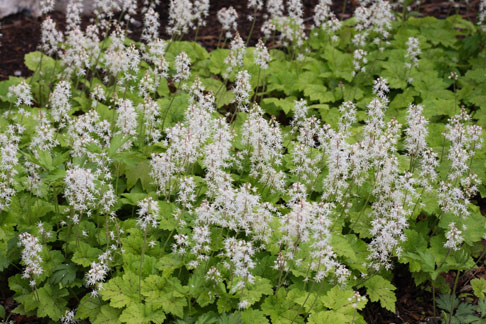
Foamflower
2026-05-21
While there is variety within the two species, both species and their respective forms, share some basic characteristics. Foamflowers have white blooms that grow on a spike that rises above large heart-shaped or maple-like leaves that can form an attractive ground cover.
-
Friends of the Forest
2025-12-05
By Annie Langlois<br />The world’s forests cover 31 per cent of the global land area. These diverse ecosystems, which include the lush Amazonian jungle and the Canadian boreal forest, are home to about 80 per cent of the world’s terrestrial biodiversity. It’s no wonder that the United Nations has declared 2011 the International Year of Forests.
-
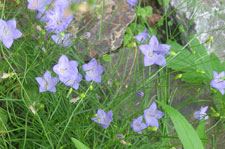
Harebells
2026-05-21
Harebells have bell-shaped purple flowers with five pointed lobes at the tips of each flower. They bloom on thick stalks, from which grow long, thin grass-like leaves. At the base of the plant are small rounded leaves. Harebells reach a height of only 15–45 cm at maturity. Despite their small size, each plant produces an abundance of flowers, though perhaps not as much at greater altitudes and farther north.
-
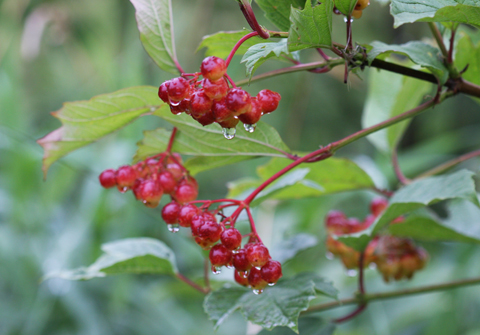
High Bush Cranberry
2026-05-21
If you look closely at the blossoms, you will see they are clusters of small yellowish flowers in the centre and showy white flowers around the edge. The showy flowers are not fertile and will fall off when the other flowers are pollinated and begin to form fruit. The leaves of the high bush cranberry are similar to a maple leaf but with three distinct lobes, hence the Latin name trilobum. Sometimes the leaves have a smooth margin, or edge, and sometimes they have some teeth or serrations. Variability can exist on the same shrub.
-
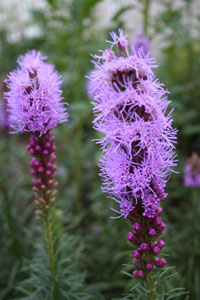
Liatris
2026-05-21
Liatris have a tall spike of summer blooms that are both soft to touch and in appearance. When in full bloom, some species have the appearance of a solid spire while others, such as Liatris ligulistylis, have blooms that are spaced enough apart to have a knobby look. Their long narrow leaves grow up along the stem in a circular fashion. Liatris suit planting in clumps.
-
Maple
2026-05-21
-
Milkweed
2026-05-21
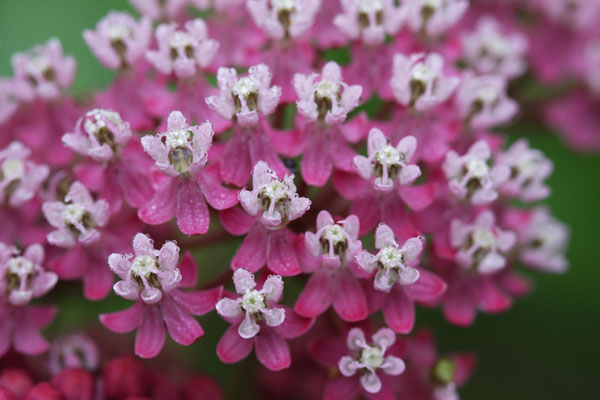
Milkweeds are a large group of plants with heights anywhere from 20 to 180 centimetres (0.5 foot to 6 feet) and flowers that range from white and greenish to pale pink and deep magenta.Some shared traits of Canada’s milkweeds, however, are a large round or flat cluster of late spring or summer-blooming flowers. Their petals fold backwards on the stem and the centre of the flower is comprised of five hood-like structures within which is a protruding ‘horn’ as well as the plant’s nectar. Their leaves and stems typically have a milky sap, hence their name, Milkweed. Ripe milkweed seed pods are elongated and, once hardened, open with a slit along one side to reveal many brown seeds attached to thin silky white fibres that fluff up to catch the wind and carry their seeds farther afield. Many species have thick wide oval shaped leaves arranged oppositely along the stem although some have slightly or extremely narrow leaves as well as have an alternate or whorled arrangement on the stem. They are all generally pointy to some degree at both ends. For a breakdown of Canada’s milkweed species, see below.
-
Native Sunflowers - Joy in a Flower
2026-05-21
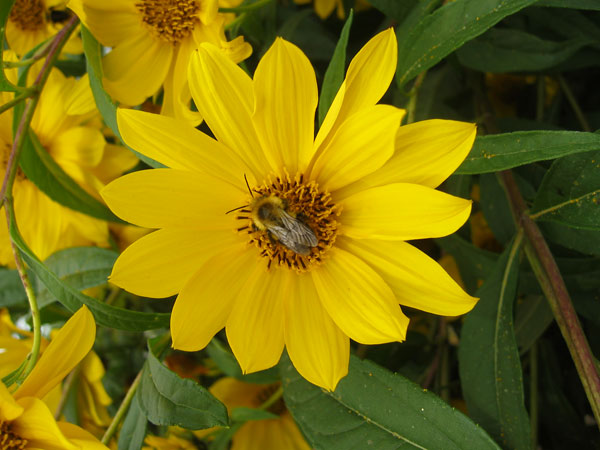
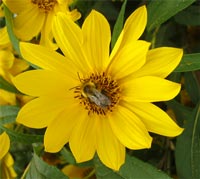
One typical characteristic includes leaves that are widest at the middle or base, giving it a pointed look near the outer tip. Flowers have yellow petals with either yellow or dark brown centres, although new varieties include petals that resemble the colour of a rich red wine. The perennial species typically have a more delicate look than their annual cousins.
-
Northern Bush Honeysuckle
2026-05-21
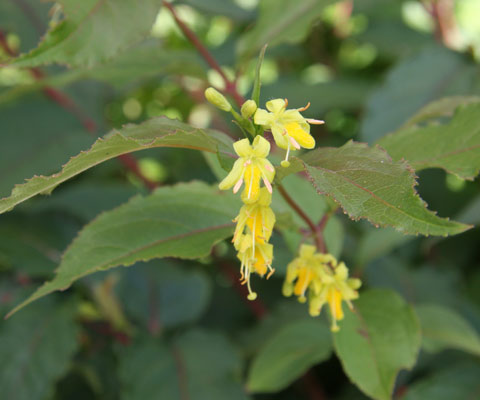
The northern bush honeysuckle blooms during the summer with small clusters of tubular yellow flowers found in leaf axils (where the leaves join the stem) and at the tip of the stem. The flowers turn orange-red once pollinated by bees, butterflies and other pollinators that make use of the plant’s nectar and pollen. The stems and new leaves are typically reddish, but the bright fall colours – with leaves ablaze in shades of yellow, orange and red – are more inclined to catch the eye. The leaves are arranged in opposite pairs along the stem and are pointed at the tip with fine serrations (teeth) along the margin (edge).
-
Ozone Layer 101
2025-12-05
By Sara Chesiuk<br />We’ve all heard about the ozone layer. We know it’s a gas in the sky and that it protects the Earth from harmful UV rays. We’ve heard a little something about a hole, a little something about CFCs and a little something about depletion. But knowing “a little” isn’t enough, especially since the ozone layer is vital to our world’s well being.


