


SCIENTIFIC NAME
Orcinus orca
OTHER COMMON NAMES
Killer whale
DESCRIPTION
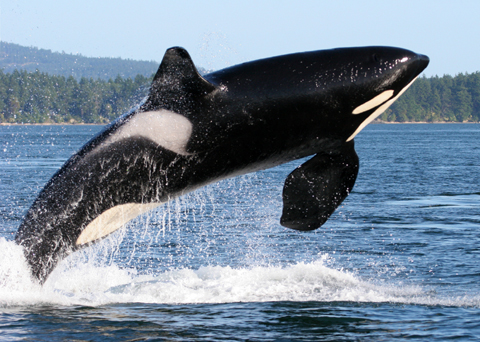
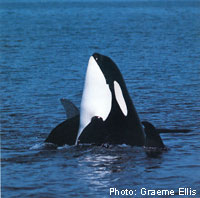
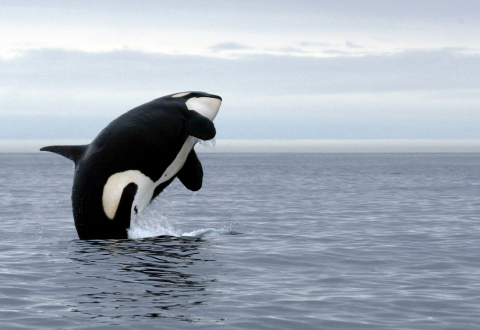
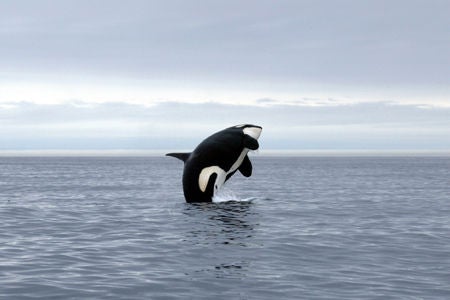
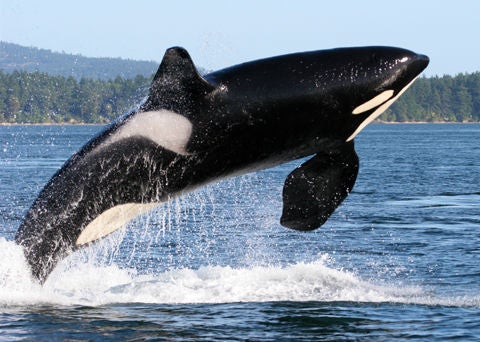
The orca (Orcinus orca), often called the killer whale, is actually the largest member of the dolphin family. Orcas are highly social animals that live in stable, family-related groups called pods. Their distinctive black-and-white colouring and large dorsal fin make them easy to spot and identify. As a result of increased water pollution, especially from toxic chemicals, they are listed as threatened under the Species at Risk Act. The average weight of an Ocra whale is 4 to 5 tonnes and measures between 7 to 9 metres. The lifespan for a male in the wild is 17 years and for females it's 29 years.
PHOTO GALLERY
|  |  |
 |  |
RANGE
Found in colder regions of all of Canada’s oceans, as well as occasionally in Hudson Bay and in the Gulf of St. Lawrence. In British Columbia, they have been seen throughout almost all marine areas, including many inlets and narrow channels.
DIET
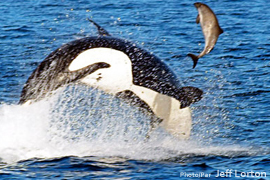
Throughout their worldwide range, killer whales eat a wide variety of prey, including squid, fish, sea turtles, seabirds, sea and river otters, sea lions, penguins, dolphins and other large cetaceans, such as blue whales. Northern and southern resident killer whales, however, eat mainly fish. The preferred prey of the offshore population of killer whales is not known, but it is likely fish as well. Transient killer whales eat mainly other marine mammals. However, because they tend to spend time in water less than five metres deep, often foraging in intertidal areas at high tide, transient whales have been known occasionally to eat animals such as deer, moose and pigs.
BEHAVIOUR
The largest members of the dolphin family, killer whales are highly social animals that live in stable, family-related groups called pods. The internal social structure of a pod remains unclear to scientists, though we do know that they usually consist of 10 to 40 whales. Pods occasionally mix to form groups of well over 100 individuals, though this amalgam is only temporary. Killer whales of both sexes often remain with their parents for life.
Killer whales communicate with each other through a complex variety of whistles, squeaks and whines produced in special air-filled nasal sacs well below the blowhole. The sounds vary from pod to pod, with each group having its own unique dialect. Killer whales can recognize their own pods easily from several miles away based on distinctive songs. Researchers have shown that the more similar the dialects between two pods, the closer they are related. Pods of whales with similar dialects are called clans.
Killer whale pods are very vocal when hunting for prey. They use a series of clicking sounds that bounce off fish and other objects in the water. Called echo-location, this natural sonar is useful when searching for food or navigating in murky water, enabling the whales to build an accurate picture of what’s around them.
Did You Know?
- Orcas communicate through a complex variety of whistles, squeaks and whines that varies from pod to pod. Each group has a unique set of sounds.
- Like other whales and dolphins, orcas use a series of clicking sounds that bounce off fish and other objects in the water. Called echolocation, this natural sonar is useful when searching for food or navigating in murky water.
- With no predators in nature, orcas can live to between 50 and 80 years of age.
- Increased shipping traffic is believed to interfere with the whales’ echolocation method of hunting, confusing them and making it hard to find prey.
- Mass strandings, in which large numbers of whales beach themselves and are unable to return to sea, are among the natural factors threatening orcas.

Learn More
- 0
- 1


