


-
 Backyard Birds
Backyard Birds
Surely some of the most watched and beloved of Canada's wildlife species are the birds we see in our backyards. Robins and woodpeckers, hummingbirds and goldfinches intrigue us with their antics or cheer us with their songs. We may take our birds for granted, yet they have a lot to teach us.
More
Browse through a few of our Canadian species in these "At A Glance" fact sheets. Each page has basic information on some of our Canadian wildlife, with links to detailed, reputable sources such as Hinterland Who's Who and the Government of Canada. Don't see a species you need? Comments or questions? Let us know!
-
-
Common Redpoll
2025-12-05
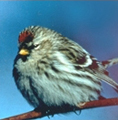
At only 11-14 cm, the common redpoll is a small bird. A member of the finch family, this streaked bird can be difficult to distinguish from pine siskins. Redpolls are named for their red forehead but this is not always obvious, so look instead for the black patch on their chin to recognize them. To identify the sex of common redpolls look for the slight tinge of rose on the breasts of the males.
-
Dark-Eyed Junco
2025-12-05
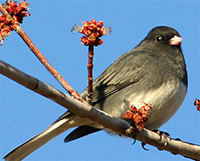
Dark-eyed juncos vary geographically in terms of their colouration. Depending on the region, the backs and sides of dark-eyed juncos can vary from dark grey to reddish-brown. In all regions, however, adults can typically be identified by their dark grey to black coloured head and breast (known as their hood), white outer tail feathers and white undersides. Females are typically smaller than males and are often lighter in colour. Juveniles differ markedly from adults with their streaked appearance and brownish plumage. Dark-eyed juncos can be identified by their sounds as well. Their most familiar call is a musical trill that’s performed on the same pitch. Depending on predation, dark-eyed juncos typically live anywhere from three to 11 years in the wild. Their common predators are hawks, owls, cats, squirrels, chipmunks and weasels.
-
Gray Catbird
2025-12-05
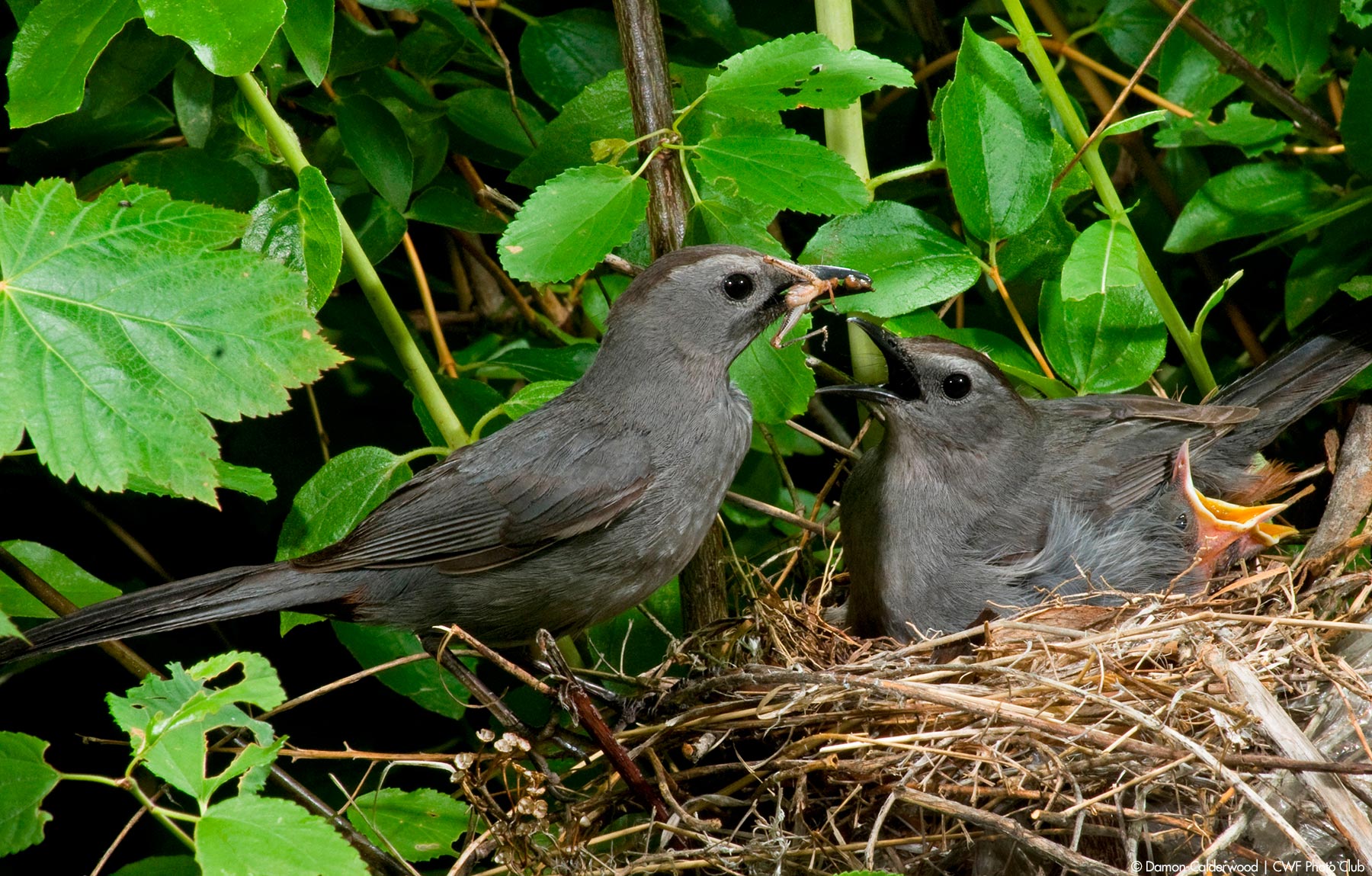
All Gray Catbirds, regardless of their age or gender, are mainly grey with black colouring on the tops of their heads and orange-brown underneath the base of their tail. Their calls are a raspy cat-like sound while their songs are highly variable and often melodic.
-
Great Horned Owl
2025-12-05
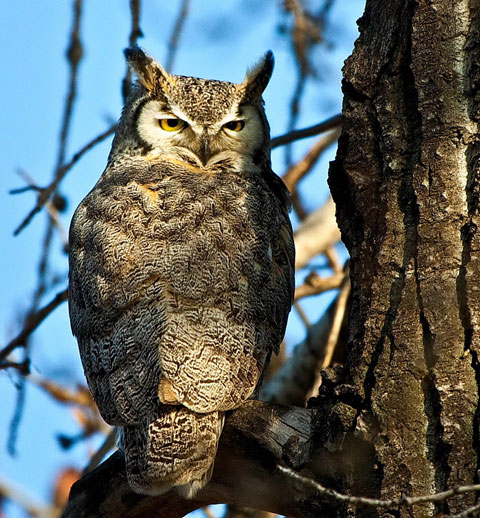
The Great Horned Owl is one of Canada’s commonest large birds of prey. The most notable physical attributes are its large size and prominent ear tufts or "horns." A predator that hunts at night, this owl has enormous yellow eyes set in a broad face, a curved beak and claws, and long fluffy feathers. Its coloration tends mainly toward brown or grey-brown, with conspicuous barring. This bird’s legendary hooting sounds like a soft yet vibrant whoo-hoo-ho-o-o.
-
Hummingbirds
2025-12-22
There’s nothing quite like the thrill of seeing a hummingbird zipping through your garden. Hummingbirds are a marvel to watch as they hover in place or dart quickly among the plants. Despite their tiny size they’re quite feisty little creatures. And their bright jewel-like colours, especially those of males, add a brilliant dimension to any scene. Attracting them to your garden can be very rewarding.
-
Is There a Bluebird on Your Windowsill?
2025-12-05
This past winter, several members of the Mississippi Valley Field Naturalists (MVFN), situated in the northern half of Lanark County in Eastern Ontario, spent a cold wintry Saturday building bluebird boxes. They hope to establish a bluebird trail in the area this spring. The plight of the Eastern Bluebird has long been of interest to naturalists across North America, ever since the 1950s when man almost wiped them out with DDT. Another single deterrent to the successful nesting of these beautiful songsters was the introduction of the European Starling to our continent, a species that spread prolifically a century ago and assumed the bluebird’s natural nesting cavities. Building bluebird boxes and establishing nesting trails has been a constant quest ever since.
-
Northern Cardinal
2025-12-05
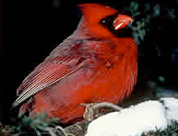
The northern cardinal is a medium-sized songbird, with males slightly larger than females. Males are bright red with a black mask around their red bill and a prominent crest on the top of their head. Females are olive brown with red on their wings, tail, and crest, and a red bill. Juveniles are similar in colour to females but have a black bill and a shorter crest. Colouring plays an important role in the lives of male northern cardinals. Males that are brighter red are more successful than their paler counterparts. They have greater reproductive success, get ranges with better food supplies, and are able to feed more frequently.
-

-
Pileated Woodpecker
2025-12-05
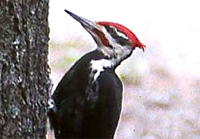
At an average 18" in length, the pileated is the largest woodpecker in Canada. These colossal birds, with their striking red crest and resemblance to prehistoric pterodactyls in flight, are thought to be the inspiration for the once popular cartoon Woody the Woodpecker. As Woody had his loud laugh, pileated woodpeckers also make noise to match their size. Their drumming, reminiscent of construction machinery, can be heard up to a kilometre away. It is fairly easy to recognize a pileated woodpecker by its large size and the red crest on its head. The body is predominantly black, with thick black and white stripes reaching from the bill to the wing and chest area. The red 'moustache' along the cheek distinguishes males from females.
For more species, visit Hinterland Who's Who, a joint program of the Canadian Wildlife Federation and Environment Canada.

Learn More
- 0
- 1


