


Animals At-A-Glance
Browse through a few of our Canadian species in these "At A Glance" fact sheets. Each page has basic information on some of our Canadian wildlife, with links to detailed, reputable sources such as Hinterland Who's Who and the Government of Canada. Don't see a species you need? Comments or questions? Let us know!
By Type:
Amphibians & Reptiles | Bees | Birds | Fish | Insects | Mammals | Marine Animals | Pollinators | Backyard Wildlife
-
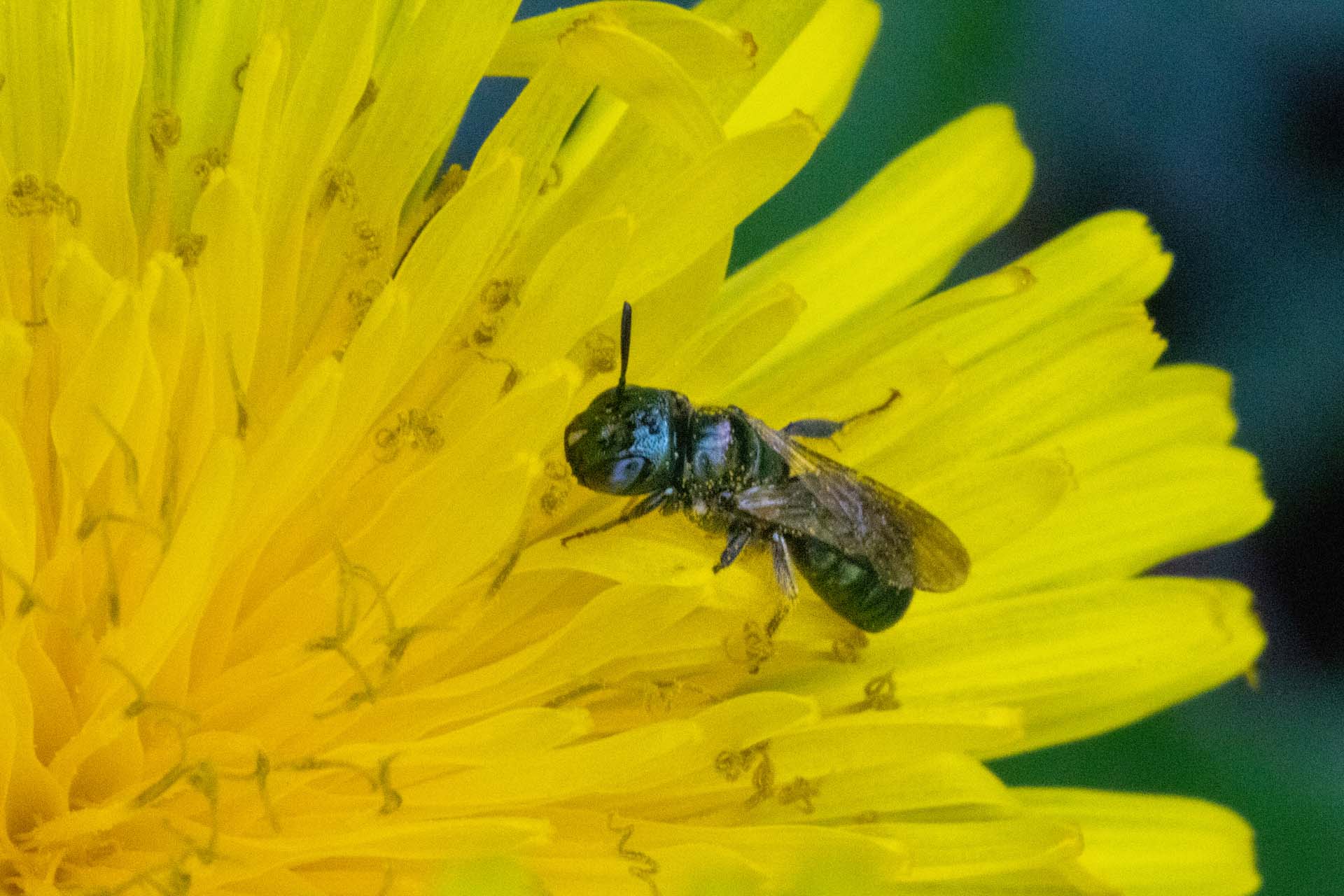
Small Carpenter Bees
2026-05-21
Also called dwarf carpenter bees (three to nine mm in size), Ceratina are dark metallic blue (but can have different coloration in other parts of the world), and their bodies are quite shiny. They can have a pale mark near their mouth, usually only visible with macro (close up) photography. They can be distinguished from other small bees by looking at the apex of their abdomen - theirs is quite abrupt, forming an inverted peak.
-
Small metallic green bees
2026-05-21
As with other bees in this family, these bees are slender and, as their name implies, are bright metallic green, sometimes blueish. They have pale hairs although they are not very noticeable unless you see them close up.
-
Small resin bees
2026-05-21
Small resin bees are small in size (five to nine mm), and circular shaped. Heriades bees are black with thin whitish lines on their abdomens.
-
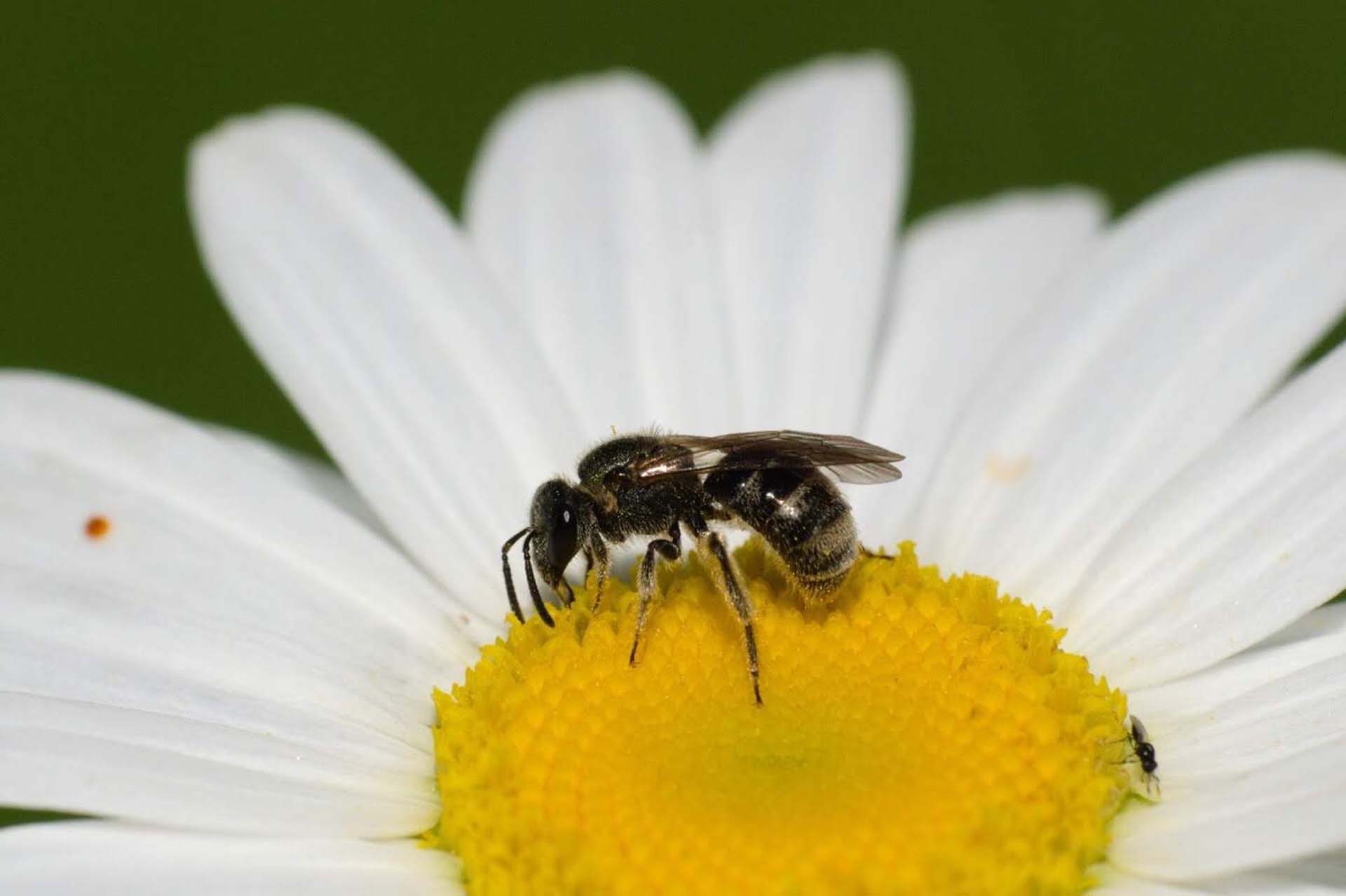
Small sweat bees
2026-05-21
Small sweat bees are usually small, but some are medium-sized (three to 10 mm). Lasioglossum is a very diverse genus with about 100 species in Canada. Usually dark-coloured, they vary in colours from metallic blue to dull green, to brown or black; but some have a light yellow/orange abdomen. These bees are similar to the Halictus bees (above) and they too have males with long antennae.
-
Snowshoe Hare
2026-05-21
The snowshoe hare one of our commonest forest mammals, is found only in North America. Well-adapted to its environment, the snowshoe hare travels on large, generously furred hind feet, which allow it to move easily over the snow. The snowshoe hare’s ears are smaller than most hares’. The ears contain many veins, which help to regulate body temperature. A seasonal variation in fur colour is another remarkable adaptation: from grey-brown in summer, the fur becomes almost pure white in midwinter.
-
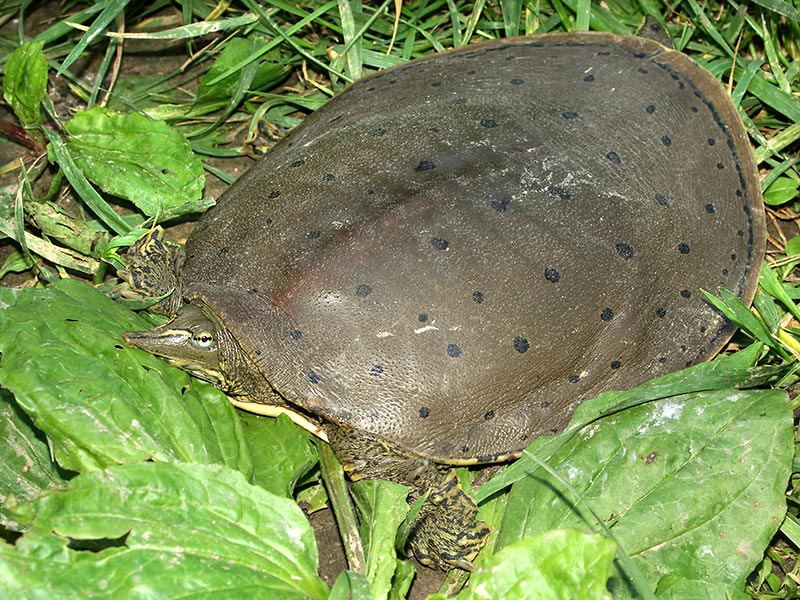
Spiny Softshell Turtle
2026-05-21
The Spiny Softshell Turtle has a flat leathery shell that is a greenish-brown. It has a long neck and a tubular nose.
-
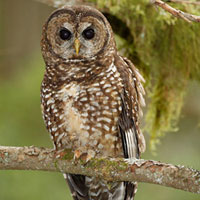
Spotted Owl
2026-05-21
The Northern Spotted Owl is a fairly large, brown owl, 40 to 48 centimetres long, with a puffy round head and no ear tufts. The chocolate to chestnut brown feathers of the head, neck, back and under-parts have many circular or irregular white spots, for which this attractive owl is named. The Northern Spotted Owl has large, round facial discs with dark outer rims, dark brown eyes and a yellowish-green bill.
-
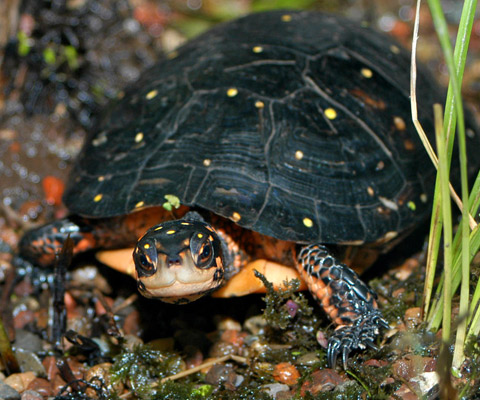
Spotted Turtle
2026-05-21
The Spotted Turtle’s upper shell is covered with small yellow or orange spots. Its limbs and tail are black with varying amounts of yellow or orange.
-
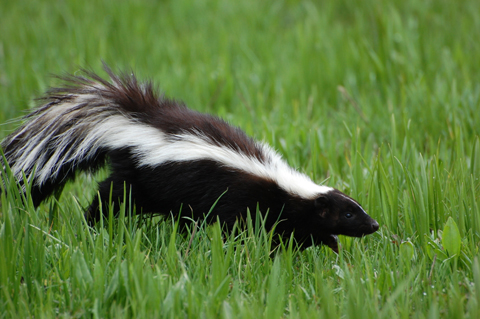
Striped Skunk
2026-05-21
The striped skunk, a member of the weasel family, is about the size of a cat, but has a stout body, small head, short legs, bushy tail and thick, black, glossy fur. The thin white stripe down the centre of the face forks at the shoulders and continues as a white stripe along each side of the back. Tail is mostly black, but stripes may extend down it, usually to a tuft of white at the tip. The skunk is one of the most useful small mammals inhabiting Canada’s mixed farmlands, grasslands and forests because it helps control pests such as mice, grubs and larvae. On average a skunk weighs 3.25 kilograms and is approximately 57.5 - 80 centimetres in length. In the wild a skunk is estimated to live 3 years but in captivity they can live up to 15 years.
-
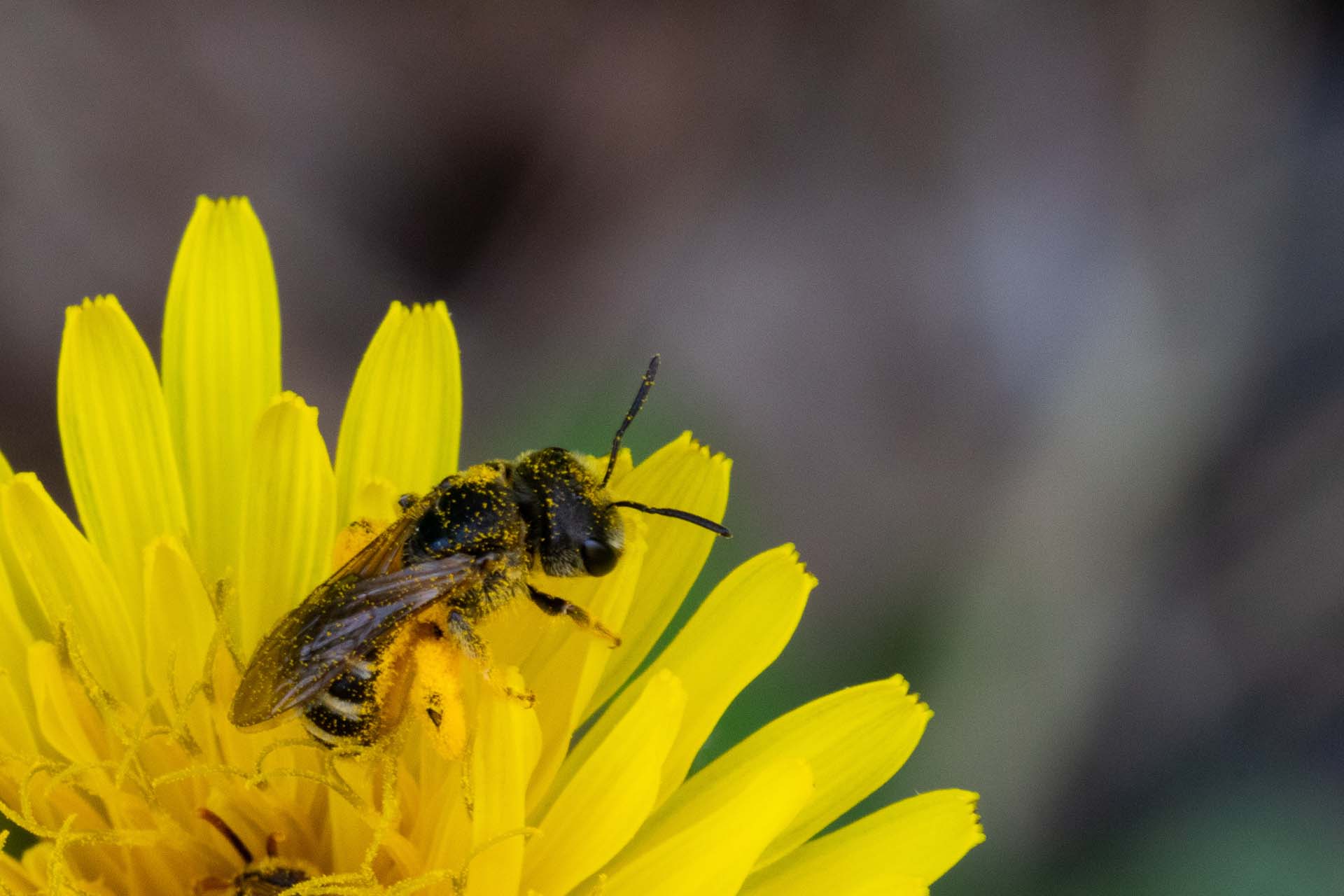
Sweat bees
2026-05-21
Sweat bees are small to medium sized bees (seven to 13 mm in size). These slender bees are almost all dark with pale hairs which form a distinctive banding pattern on their abdomen. One species (Halictus confusus) is small, dull green and looks very similar to Lasioglossum species.
For more species, visit Hinterland Who's Who, a joint program of the Canadian Wildlife Federation and Environment Canada.

Learn More
- 0
- 1
- 2
- 3
- 4
- 5


