

SCIENTIFIC NAME
Halictus
DESCRIPTION
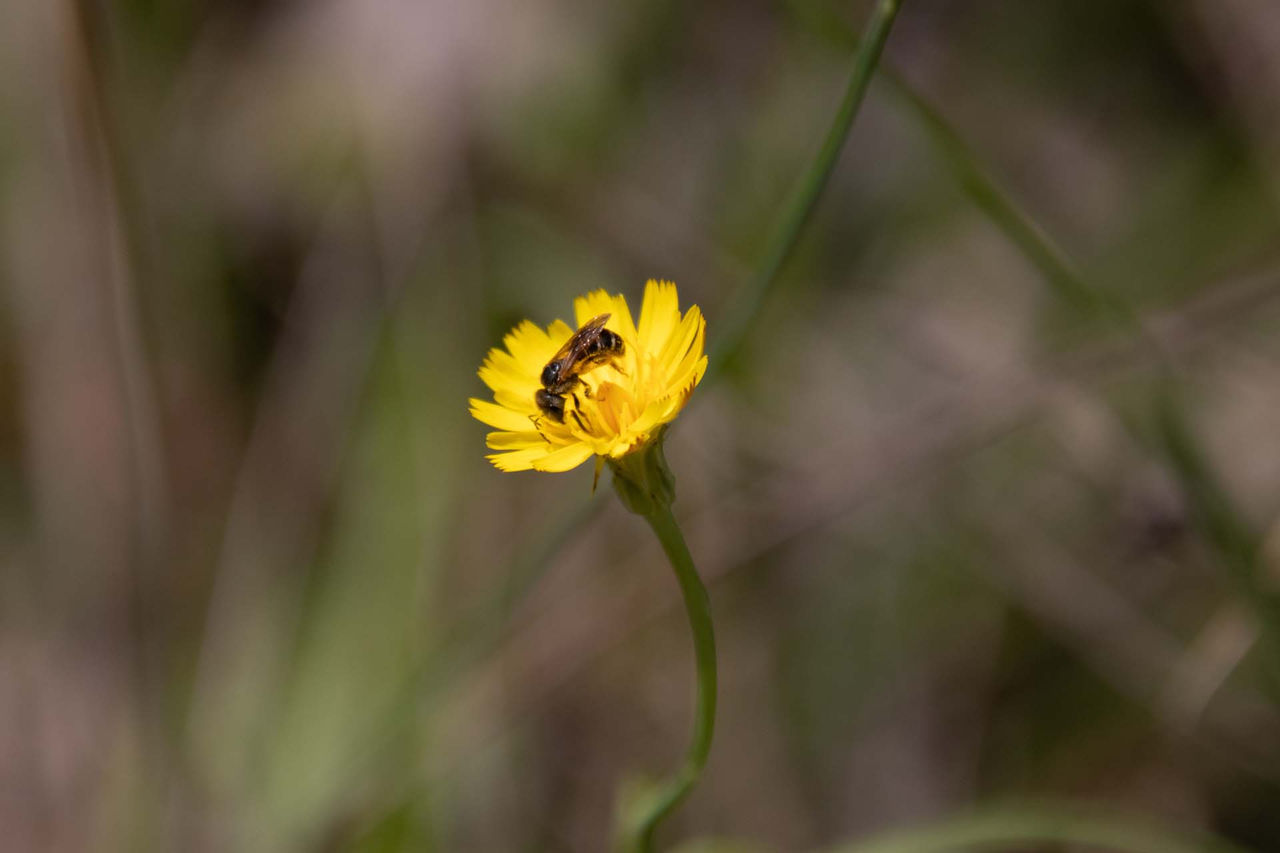
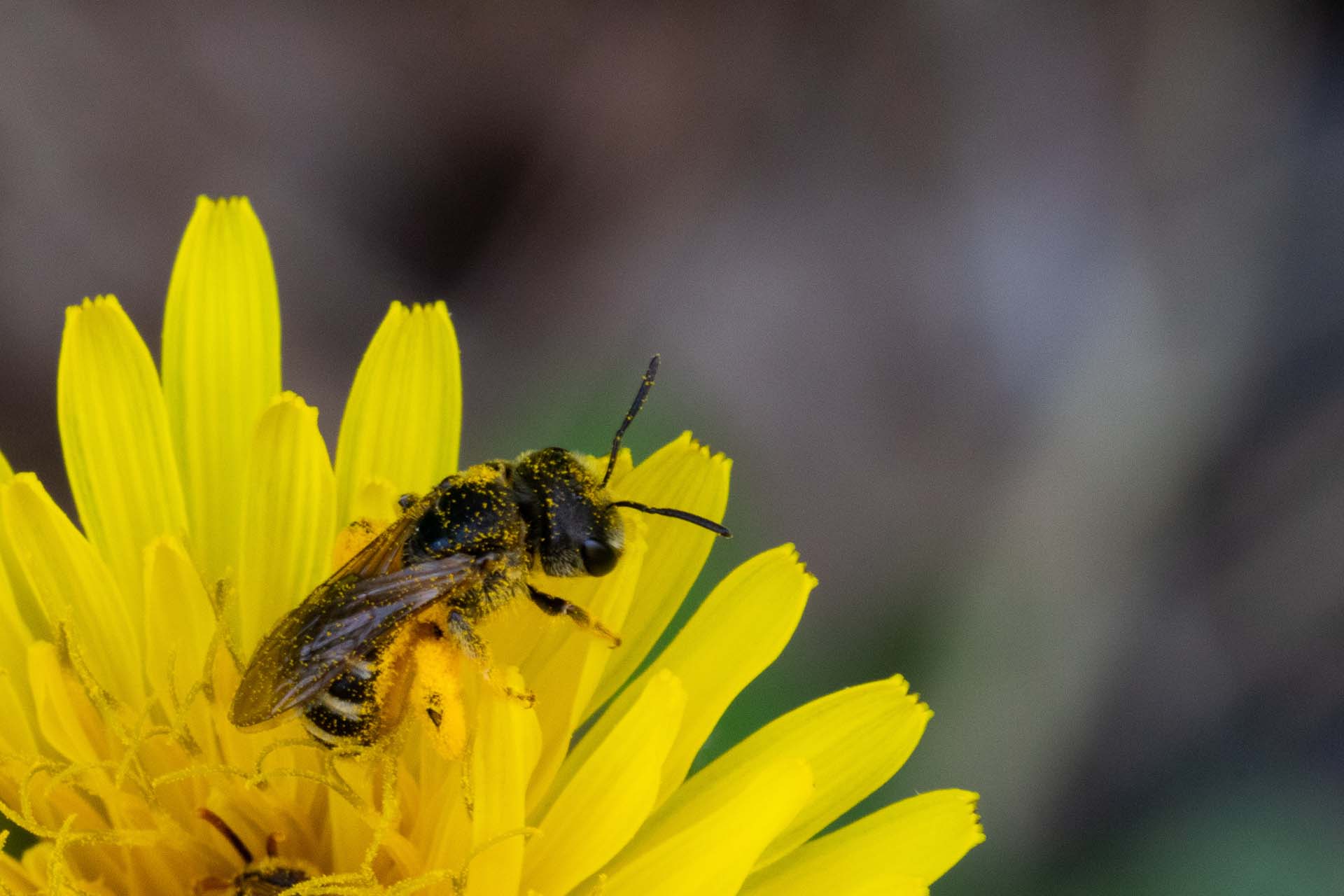
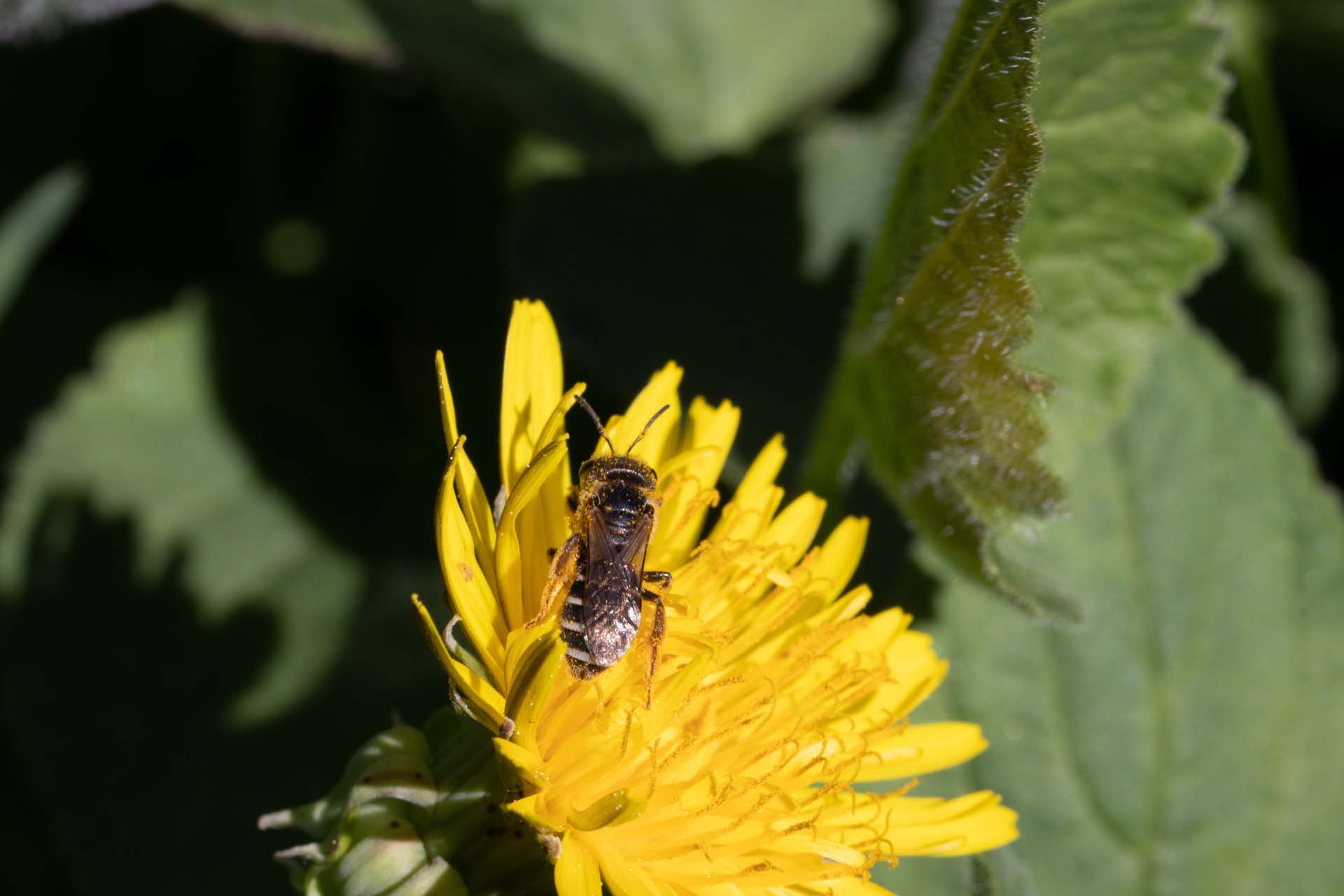
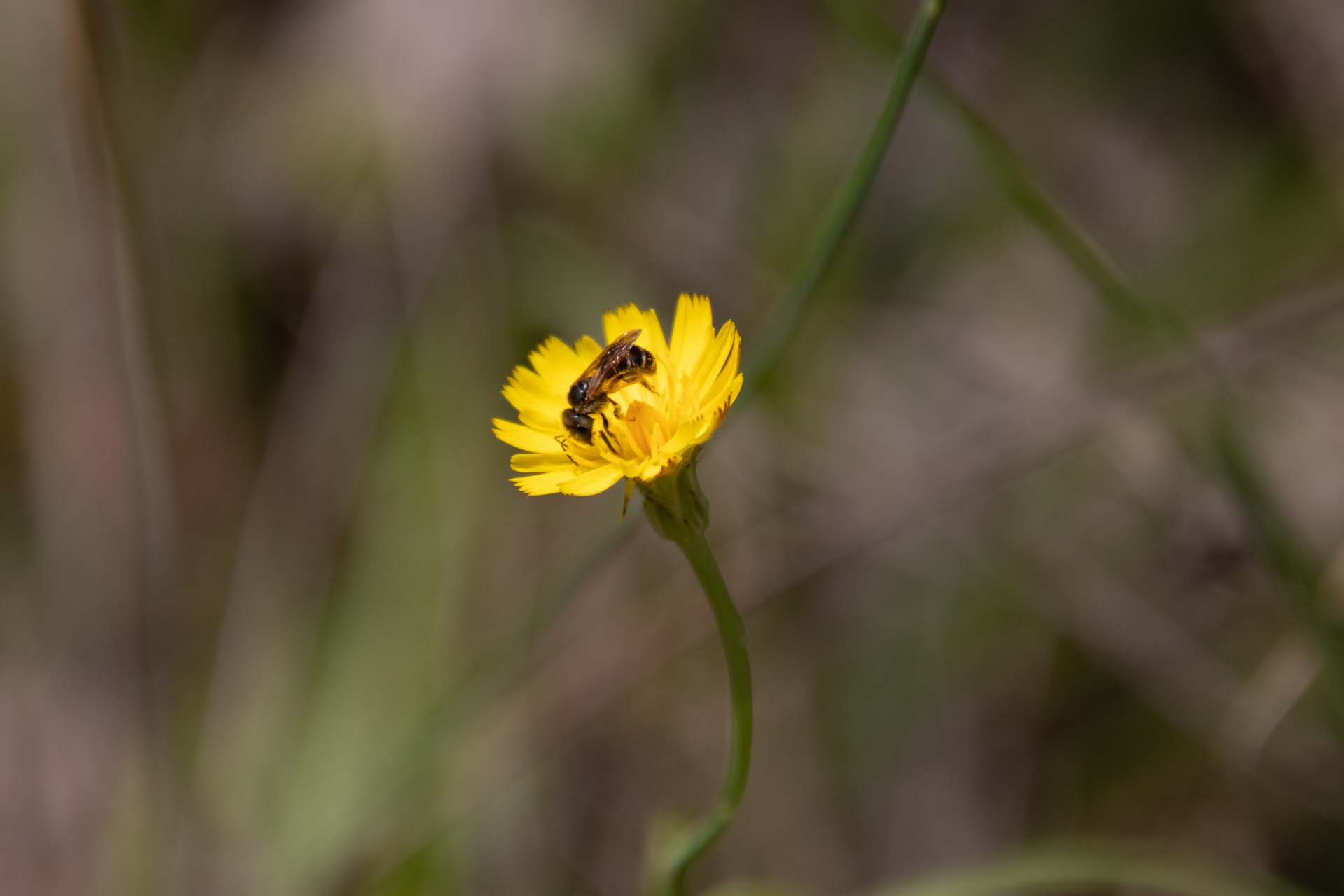
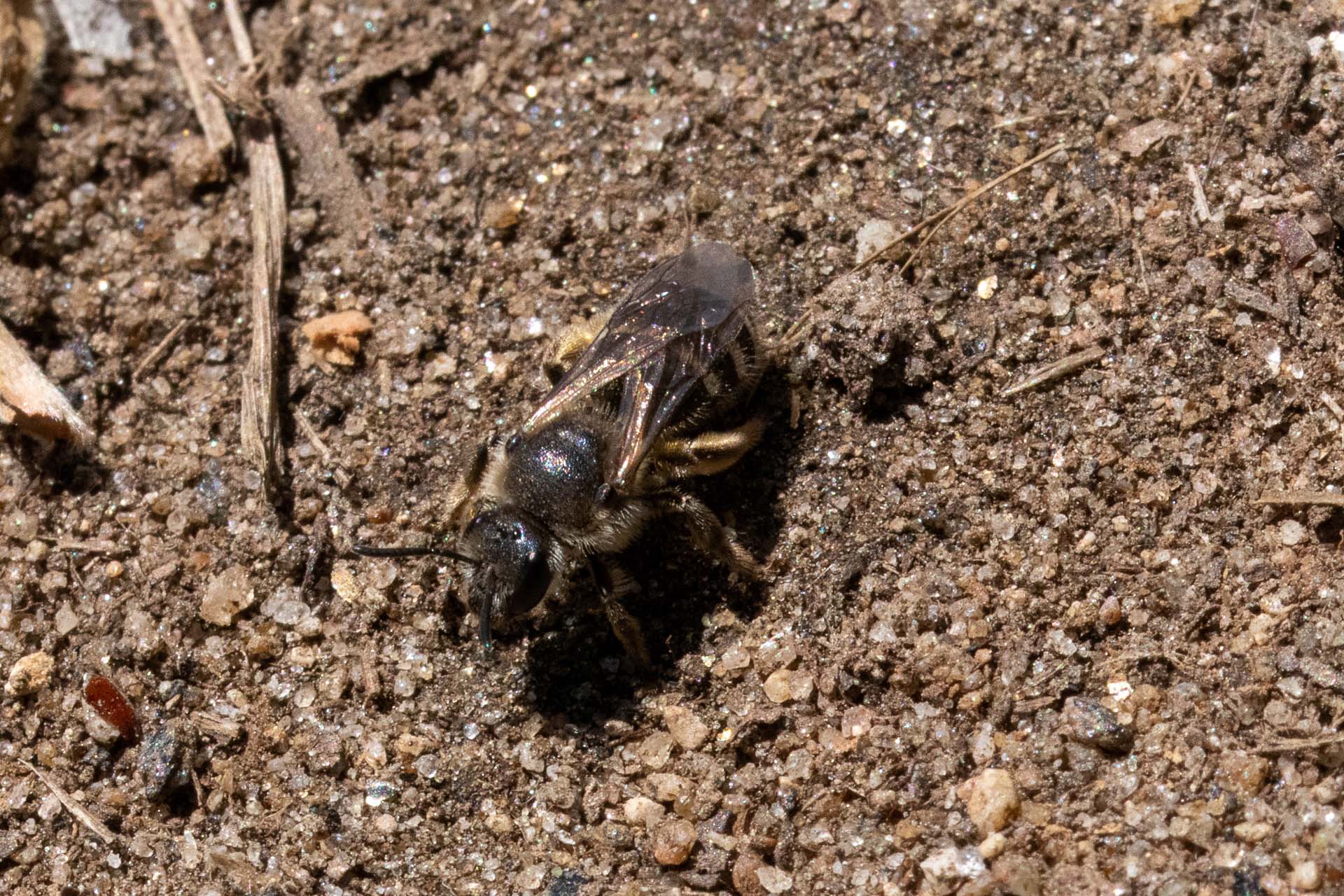
Sweat bees are small to medium sized bees (seven to 13 mm in size). These slender bees are almost all dark with pale hairs which form a distinctive banding pattern on their abdomen. One species (Halictus confusus) is small, dull green and looks very similar to Lasioglossum species.
PHOTO GALLERY
|  |  |
 |
Feeding Habits
Sweat bees can be very abundant in certain areas and because they can be social, multiple generations succeed each other in a single season. Thus, they are around from spring through to autumn. They are generalists and will visit flowers such as Wild Geranium in the spring and then beardtongues, fleabanes, coneflowers, Blue Vervain, Butterfly Milkweed, Yarrow and New Jersey Tea in the summer followed by autumn flowers like goldenrods and asters.
Nesting Habits
A female foundress (the bee that begins a new colony) starts a nest in the spring and produces a first generation of female workers. The number of generations (two, three or more) and workers that will emerge depends on the length and abundance of the flowering season. When the queen dies later that summer, a female worker—one of her offspring—continues the egg-laying task (behavior that differ from bumble bees, for example). They all nest in the ground usually in exposed, well-drained soil. Halictus likes sandy soil located in the sun to nest. Sometimes just a pile of sand is enough!
Neat Fact
Members of the Halictus genus (as for other sweat bees) are known to land on people’s skin to drink their sweat which contain minerals such as salt.


