


-
 Monarchs
Monarchs
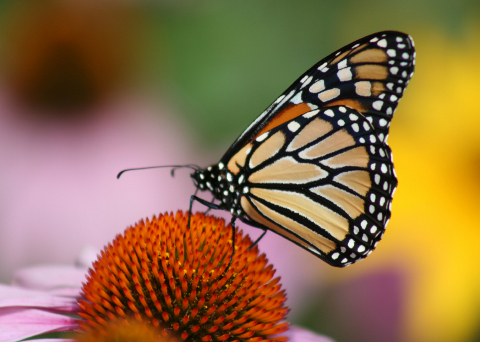
Across North America, populations of the iconic Monarch Butterfly are in steep decline. The brilliantly-coloured Monarch is a summer breeder in many areas of southern Canada, and most Canadian-born adults head to the highlands of central Mexico to overwinter. It takes four to five generations of Monarchs to make it to Canada during the spring migration. In 2016, the Committee for the Status of Endangered Wildlife in Canada (COSEWIC) listed the Monarch Butterfly as Endangered.
More -
 Fabulous Flies
Fabulous Flies
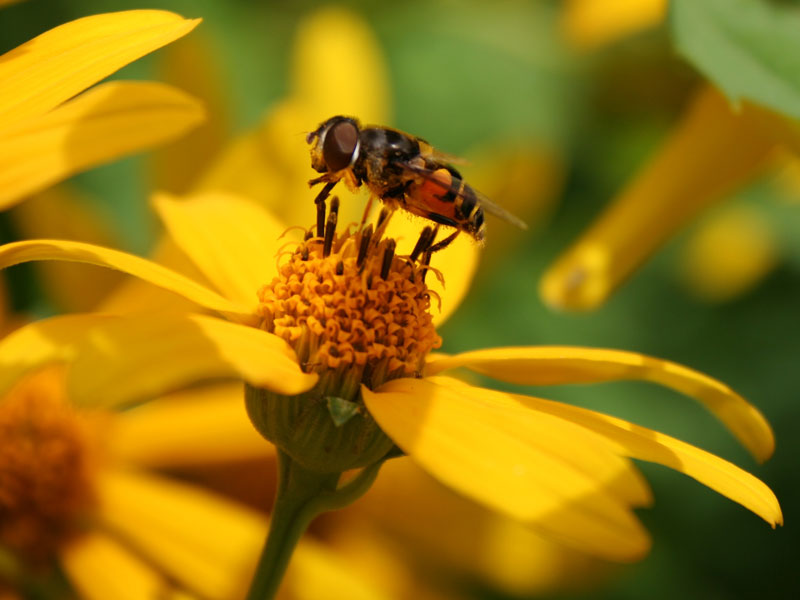
Flies are very important pollinators. They also help with decomposition and pest control as well as contribute to the health of some water bodies. Learn more about some of Canada’s flies here.
More
Browse through a few of our Canadian species in these "At A Glance" fact sheets. Each page has basic information on some of our Canadian wildlife, with links to detailed, reputable sources such as Hinterland Who's Who and the Government of Canada. Don't see a species you need? Comments or questions? Let us know!
-
A Brief Guide to Saskatchewan’s Bugs
2025-12-05
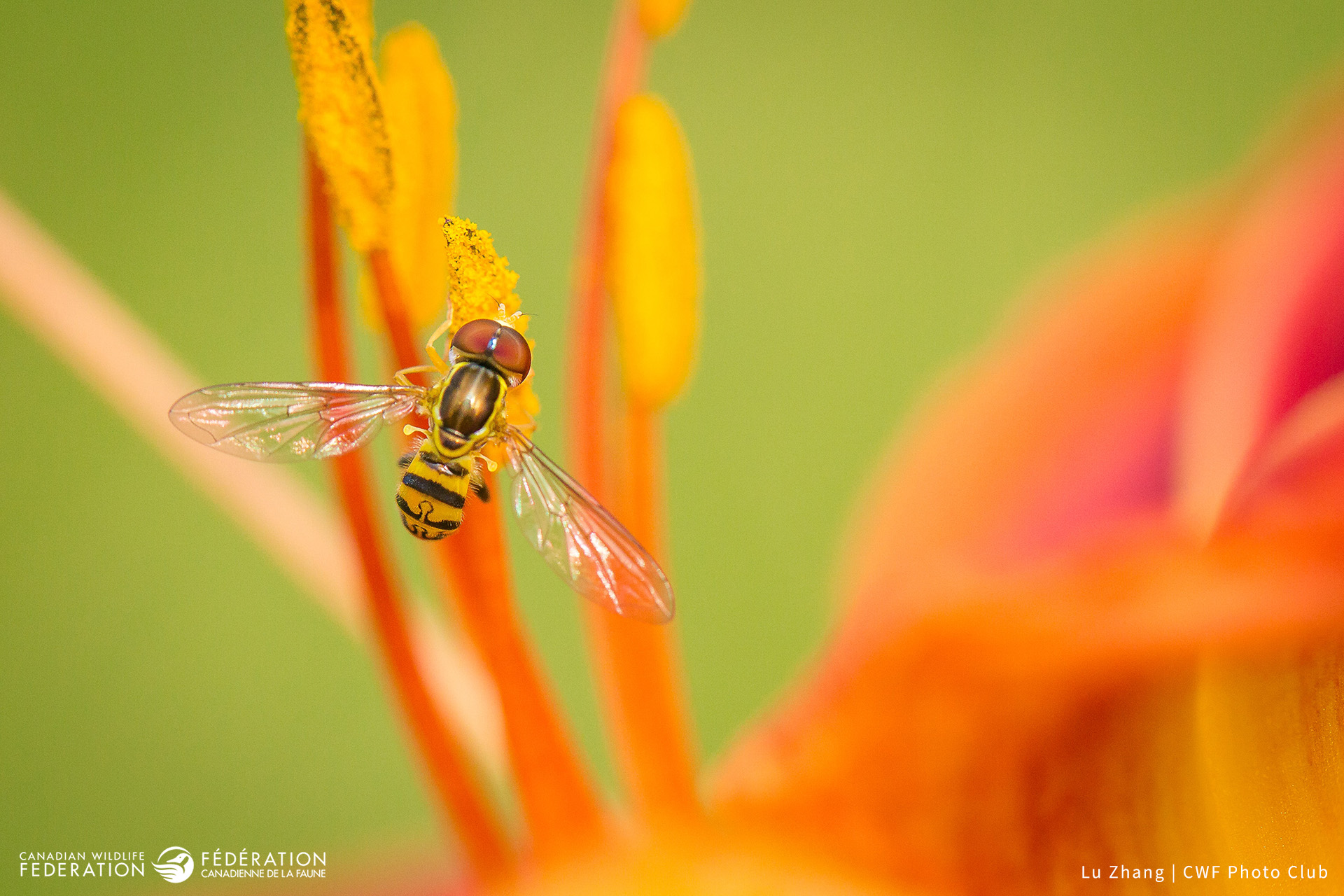
Although insects impact our lives in many important ways, we realize that not everyone is as keen as we are to know every last insect we see. The Canadian Wildlife Federation’s ‘2023 Native Prairie Grassland Report’ to producers details what we found surveying eight south Saskatchewan rangelands. Here is a very short guide to insects we presented in our report .
-

Bees
2026-03-27
Canada has approximately 900 species of bees. From fuzzy bumble bees to tiny dark species and even bright metallic green bees, most are important pollinators. Learn more about our native bees here.
-
Bees and Other Pollinators
2025-12-22
Pollinators are organisms that aid in the transfer of pollen to allow for the fertilization of plants essential to fruit and seed production. While some plants, such as grasses, have very light pollen, which can be transferred by wind, about 80% of flowering plants are dependent on pollinators to help them transfer their pollen.
-
Beneficial Insects
2025-12-05
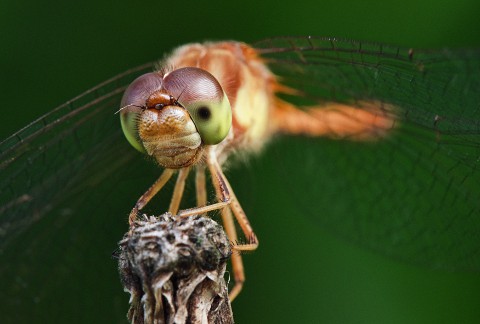
Insects perform a whole host of activities beneficial to our gardens and the environment as a whole. Find out more and how you can support them.
-
Black Swallowtail
2025-12-05
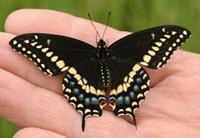
The blackness of its body and wings is embellished with two rows of yellow spots. The female’s yellow spots, while not as bold as the male’s, are adorned with a more distinctive blue band between the pale bands of yellow. In contrast, the male is garnished with more yellow tones than blue. Both sexes have two prominent orange eyespots on their hind wings close to their tails.
-
Canadian Tiger Swallowtail
2025-12-05
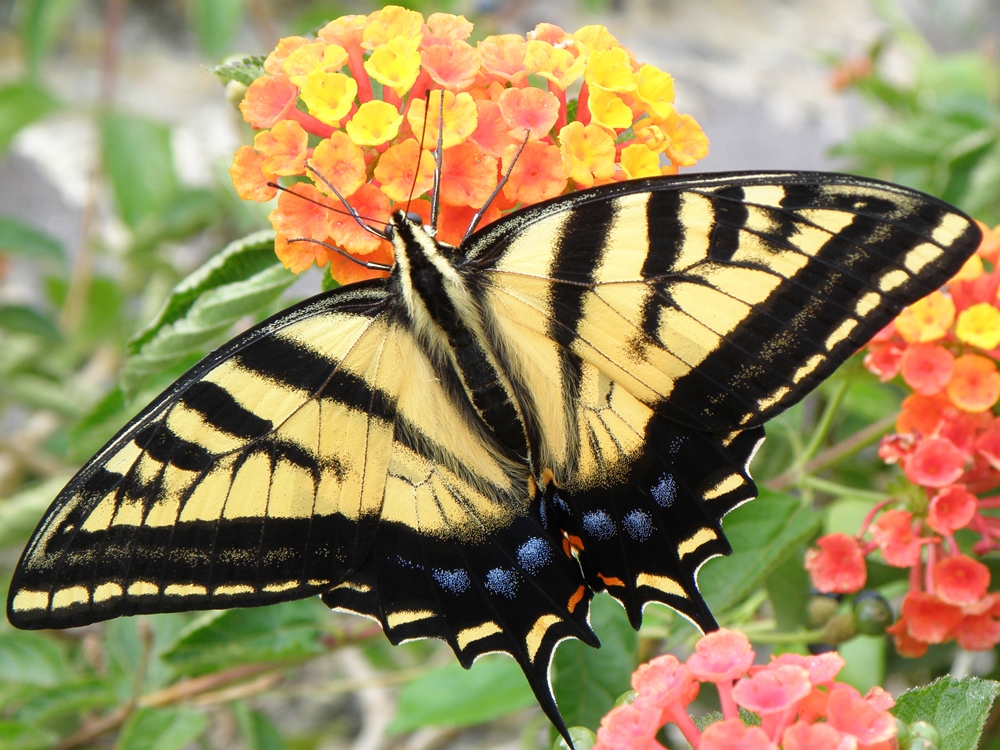
Adult wingspan is 53–90mm. Adults (butterflies) are yellow with thick black bands coming down from the top of the forewing and some black lines/veins across the hind wings. There are thick black bands along the edge of both the forewing and hind wing, with yellow spots along the forewing and yellow and orange spots on the jagged hind wing. There is a softer band of blue patches on the hind wing. Near the bottom of the hind wing is an extension that, when you look at both wings together, resemble the long, forked tails of some swallows. <p> Young (larvae/caterpillars), when immature, are brown and white and resemble bird droppings. Older caterpillars are large and green. Their body is fatter just behind the head and has two yellowish spots that look like eyes and a yellow band farther back, giving the impression of a much larger head, which is thought to deter predators. </p>
-
Checkered Beetle
2025-12-05
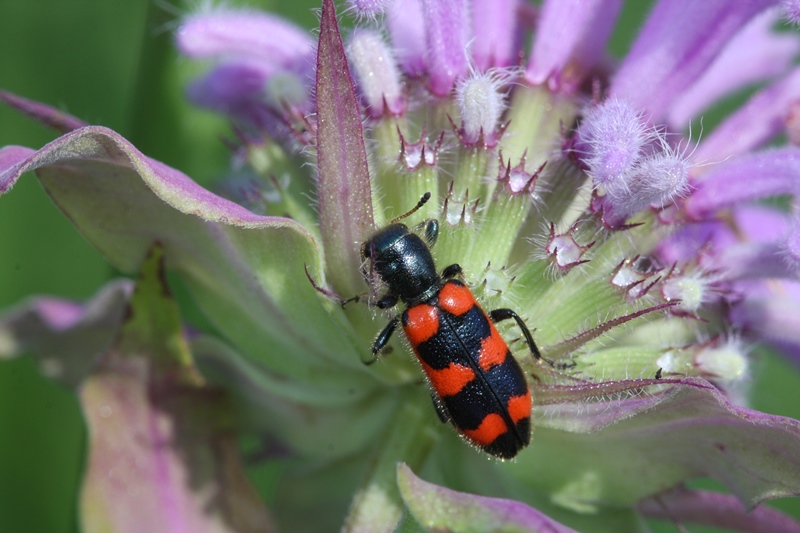
Approximately 8–11 mm long. All-over colour is dark blue, green-blue or purple. The elytra (wings) have three crossbands that can be yellow, orange or red. All checkered beetles (family <em>Cleridae</em>) have a wide head and a long, narrow body with a short thorax and a long abdomen. They have long hairs along their bodies and legs, which pollen can stick onto.
-
-
Explore our pollinators
2026-02-25
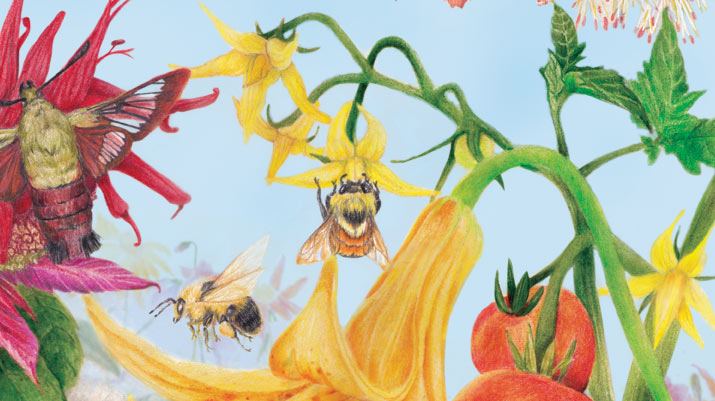
Using the Wild About Pollinators poster, explore the pollinators and some plant species found in Canada.
-
Fabulous Flies
2025-12-18
Flies are very important pollinators. They also help with decomposition and pest control as well as contribute to the health of some water bodies. Learn more about some of Canada’s flies here.
For more species, visit Hinterland Who's Who, a joint program of the Canadian Wildlife Federation and Environment Canada.


