


Browse through a few of our Canadian species in these "At A Glance" fact sheets. Each page has basic information on some of our Canadian wildlife, with links to detailed, reputable sources such as Hinterland Who's Who and the Government of Canada. Don't see a species you need? Comments or questions? Let us know!
-
All About Amphibians and Reptiles
2025-12-05
Amphibians and reptiles, though not everyone's favourite creatures, are important contributors to the good health of the environment and your garden. Both play crucial roles in the ecosystem, and the health of their populations is a good indicator of the health of the environment.
-
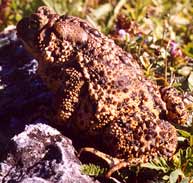
American Toad
2025-12-05
The American toad is a medium sized, squat toad which averages 5-9 cm in length. Its colour can change depending on humidity, temperature, and stress level, though it is typically brown, reddish or olive skinned with dark blotches containing one or two spots or "warts". The belly tends to be white or yellow with dark spots.
-
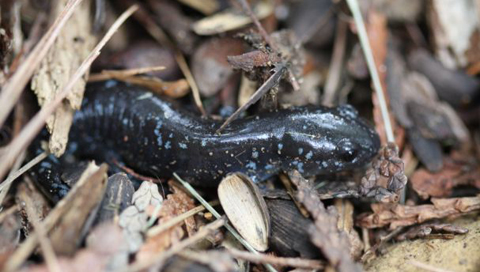
Blue-Spotted Salamander
2025-12-05
The Blue-spotted Salamander is a small, cold-blooded, nocturnal animal. A large adult will only be about 12 cm long, 40% of that is tail and its body is only about 1 cm wide. It is shiny-black with dusty blue spots mainly on the sides and belly.
-
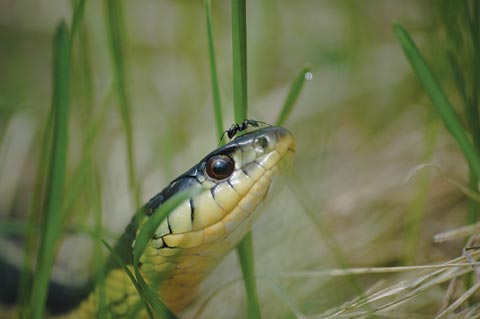
Common Garter Snake
2025-12-05
Garter snakes are typically 60 centimetres long. While their colouring varies greatly, they are generally recognized by a dark body with three light-coloured stripes down their back and sides (usually shades of yellow, red or orange). Some have speckled markings along the lighter coloured stripes and some small populations are all dark with no stripes.
-
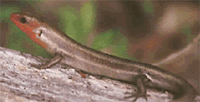
Five-lined Skink
2025-12-05
Despite their smooth-skinned appearance, skinks are actually lizards not salamanders. Lizards, which are reptiles, have scales, claws on their feet, and external ear openings, whereas salamanders, which are amphibians, have smooth, moist skin, and lack both claws and ear openings. Five-lined skinks start off life with a bright blue tail and dark body with 5 broad light-coloured stripes. As they age their tail and body fades to a more uniform brown-grey averaging about 15 - 20 cm in length.
-
Green Frog
2025-12-05
Green frogs are relatively large frogs, 6 - 9 cm in length. They can be distinguished from the similar bullfrog by the ridges that run down each side of their back. To determine the sex of the green frog, look at its eardrum - if it is significantly larger than its eye it's a male, if it's the same size as its eye, it's a female. During the breeding season, you can also tell the males by their yellow throats.
-
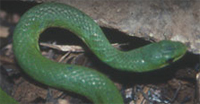
Green Snake
2025-12-05
Often called grass snakes, smooth green snakes, as their name implies, are an emerald green colour with a white or yellow underside. This small- to medium-sized snake has smooth scales and ranges in size from 30 to 60 cm.
-
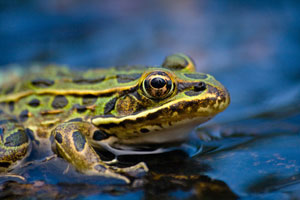
Northern Leopard Frog
2025-12-05
The northern leopard frog is green or brown with dark, rounded, light-edged random spots, and a white belly that occasionally has a yellowish tinge. The body length of this species can exceed 10 centimetres but on average adults are usually five to nine centimetres long.
-
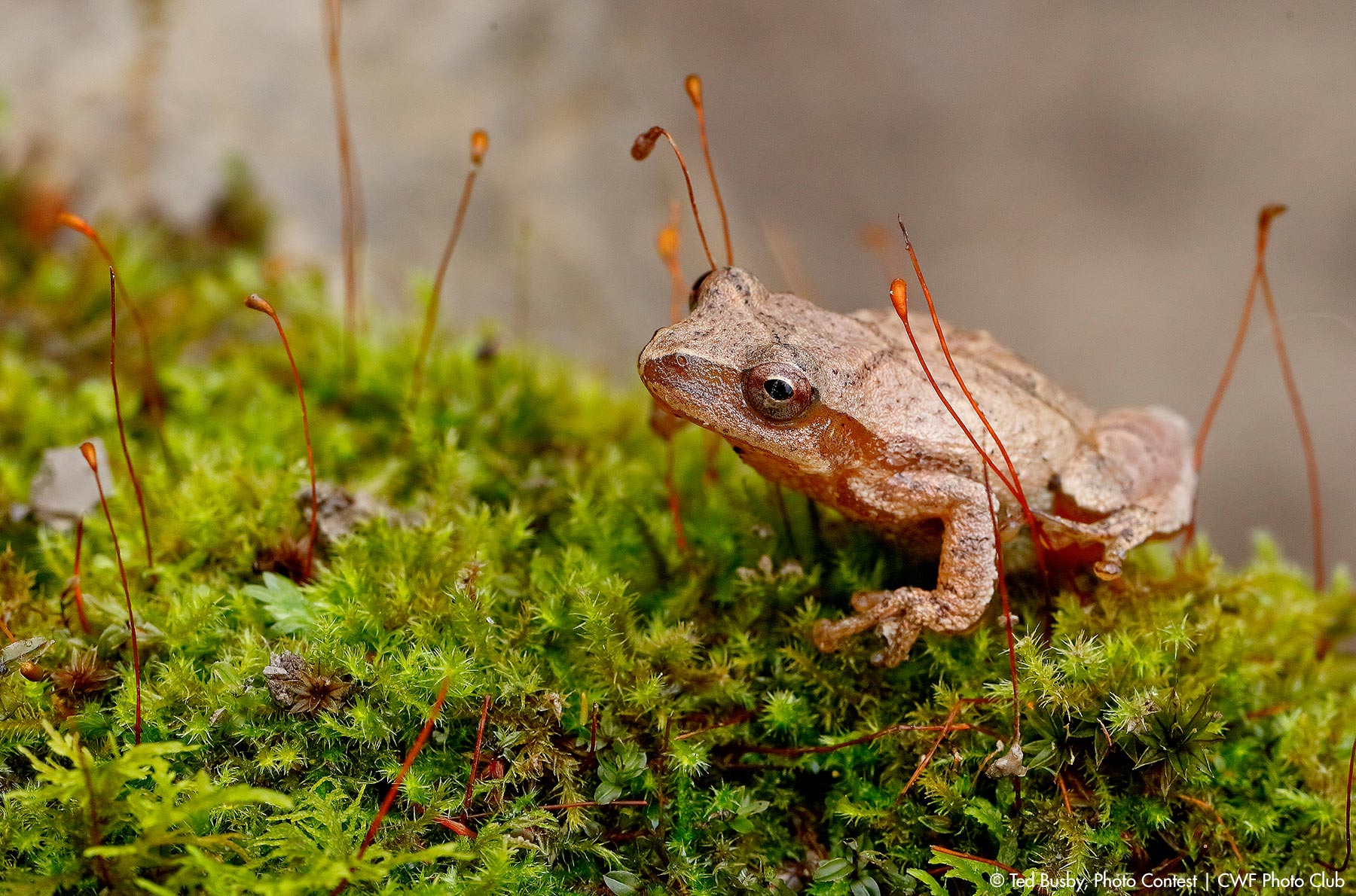
Treefrogs
2025-12-05
As spring comes alive with the sound of frogs there is one group in particular, the treefrogs, that continue to fascinate us with their small size and unique toe-pads.
-
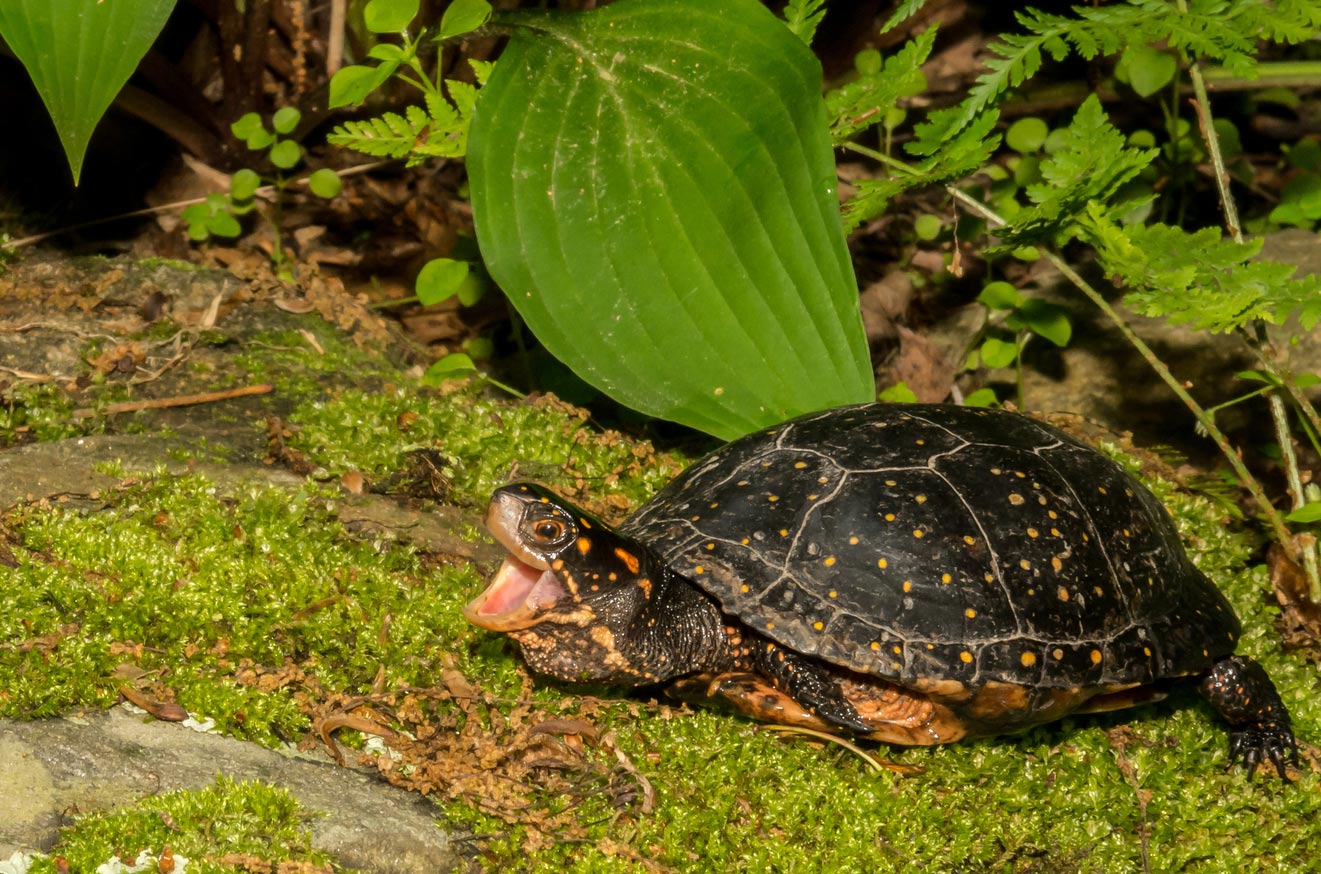
For more species, visit Hinterland Who's Who, a joint program of the Canadian Wildlife Federation and Environment Canada.


