




-
 Guides, Infographics & Posters
Guides, Infographics & Posters
Take a closer look at the ways in which we’ll help you access the facts about wildlife. Whether it’s discovering the Hinterland Who’s Who animal fact sheets, or ordering our handy field guide to Canada’s prevalent shoreline species. This content is available to our CWF Supporters and online members. Please sign in to order your free materials.
More -
-
Wildlife E-cards
Wildlife E-cards
Send Dad a wildlife e-card! You cherish our wonderful wildlife and now you can send e-greetings that reflect your love of nature. We have developed a wide array of wildlife ecards for every occasion for you to share with your family and friends!
More -
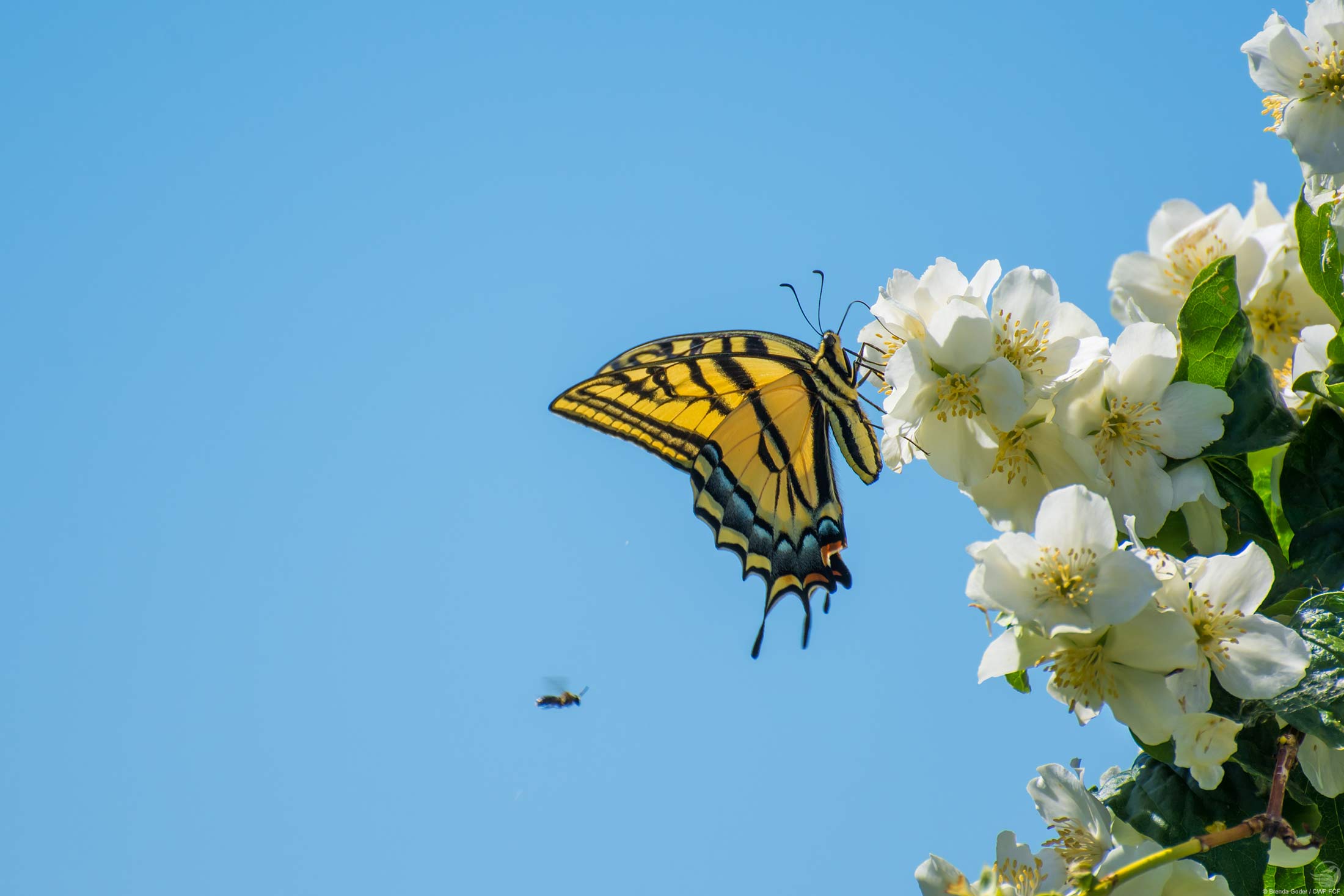 CWF Wallpapers
CWF Wallpapers
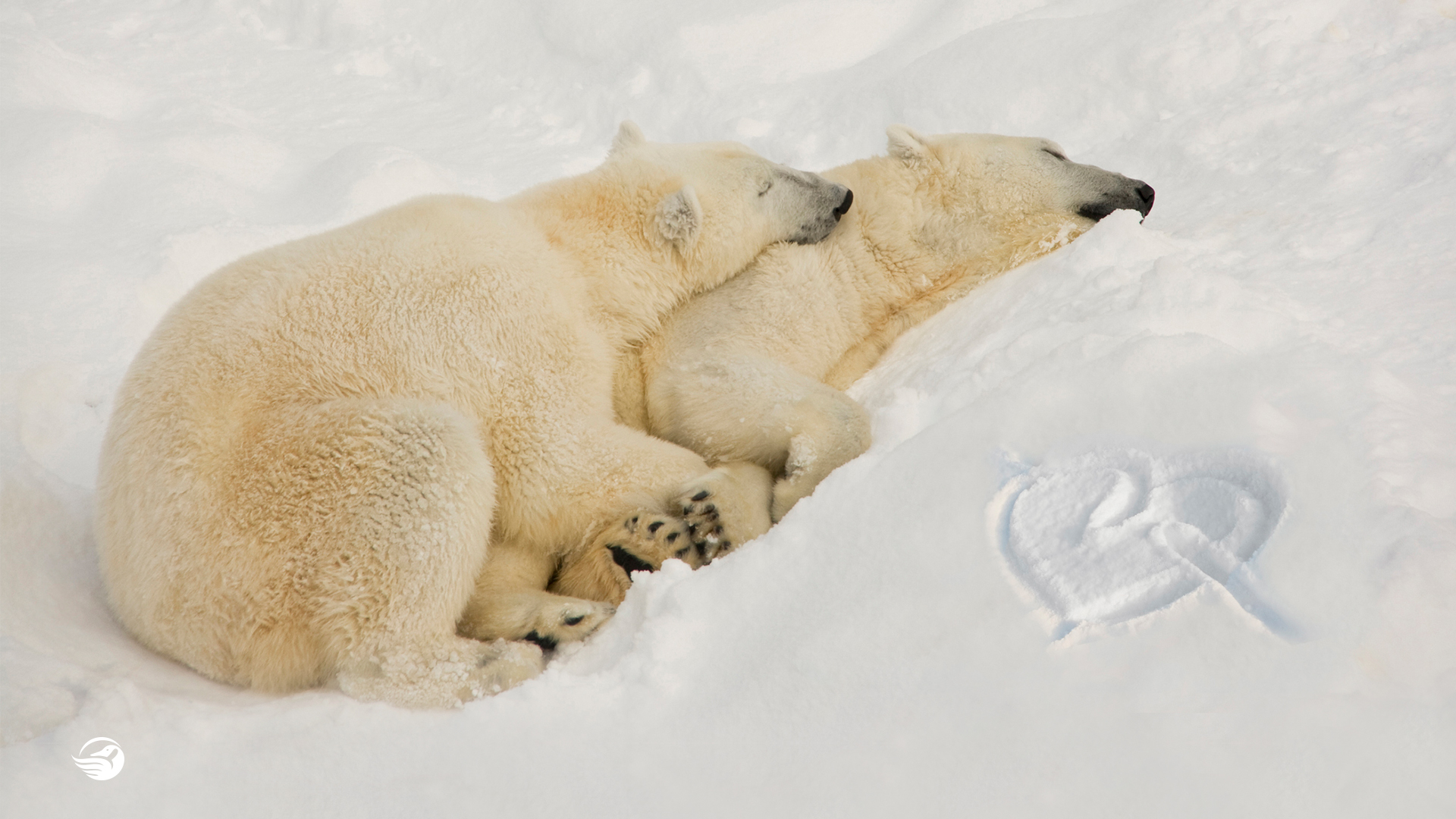
Your desktop is the perfect habitat for this wild wallpaper. Download CWF wallpapers!
More -
 WILD Webinars
WILD Webinars
With topics relating to conservation, wildlife and habitat, we provide a relevant online learning platform, typically for grades four to six but of benefit to any age.
More

From easy-to-use apps designed as tools for your citizen science projects to picturesque wallpaper images for your computer, CanadianWildlifeFederation.ca offers a variety of useful downloads for your PC and mobile devices.
Coasts & Oceans
Connecting With Nature
-
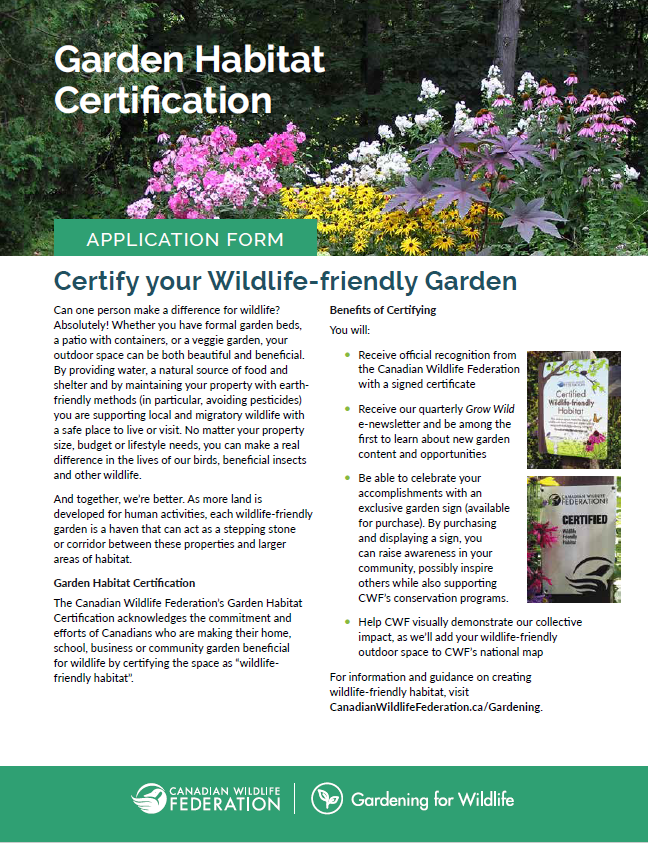
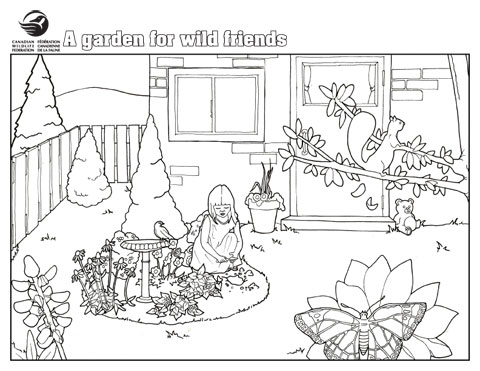
Certify Your Garden Handout
2025-12-05
Whether you are limited to a small patio or have hectares of land, CWF would like to acknoledge your efforts in welcoming wildlife to your garden.
-
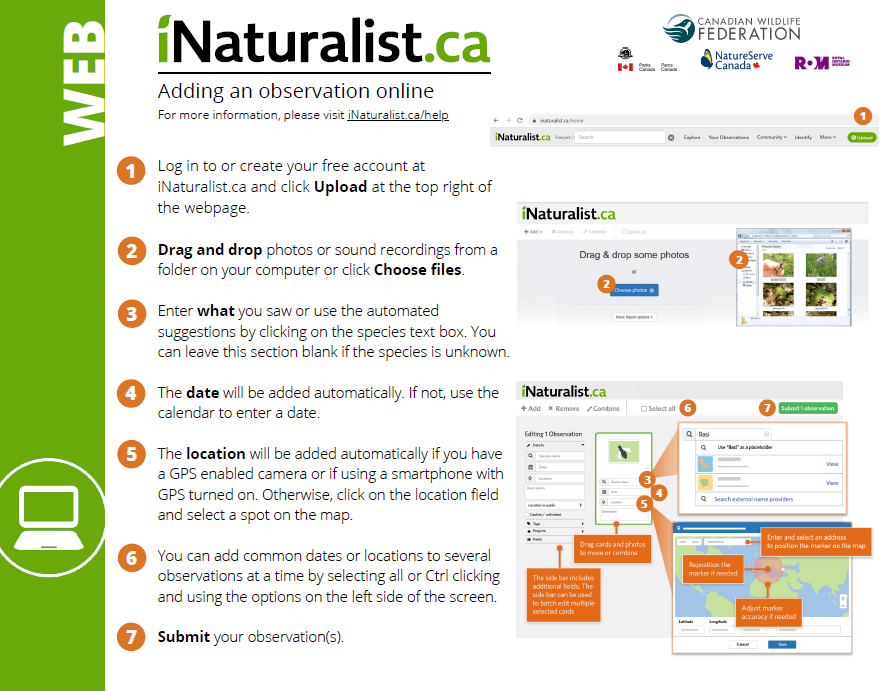
Adding an observation online
2021-04-13
-
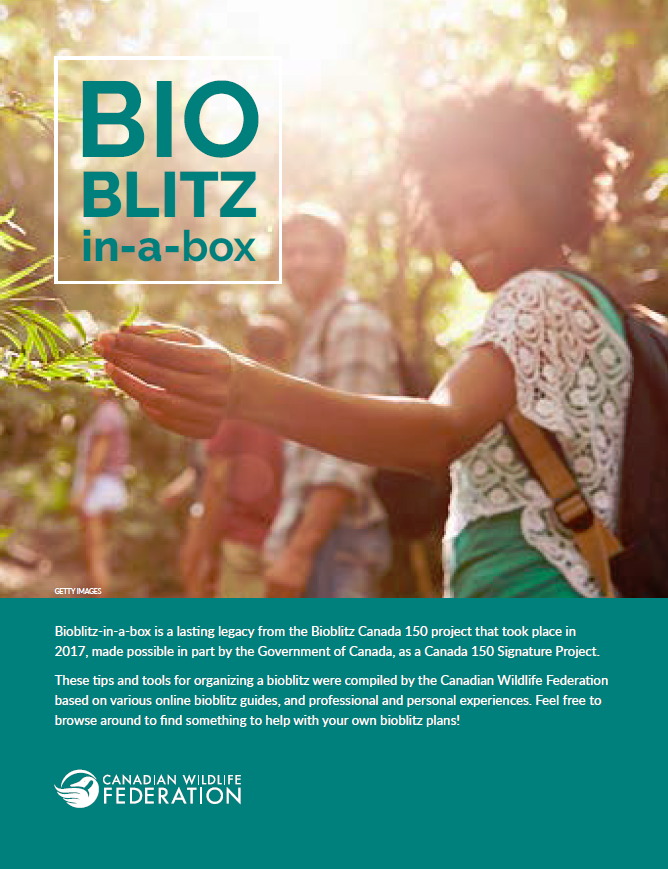
Bioblitz in a Box
2021-09-24
Bioblitz-in-a-box is a lasting legacy from the Bioblitz Canada 150 project that took place in 2017, made possible in part by the Government of Canada, as a Canada 150 Signature Project. These tips and tools for organizing a bioblitz were compiled by the Canadian Wildlife Federation based on various online bioblitz guides, and professional and personal experiences. Feel free to browse around to find something to help with your own bioblitz plans!
-
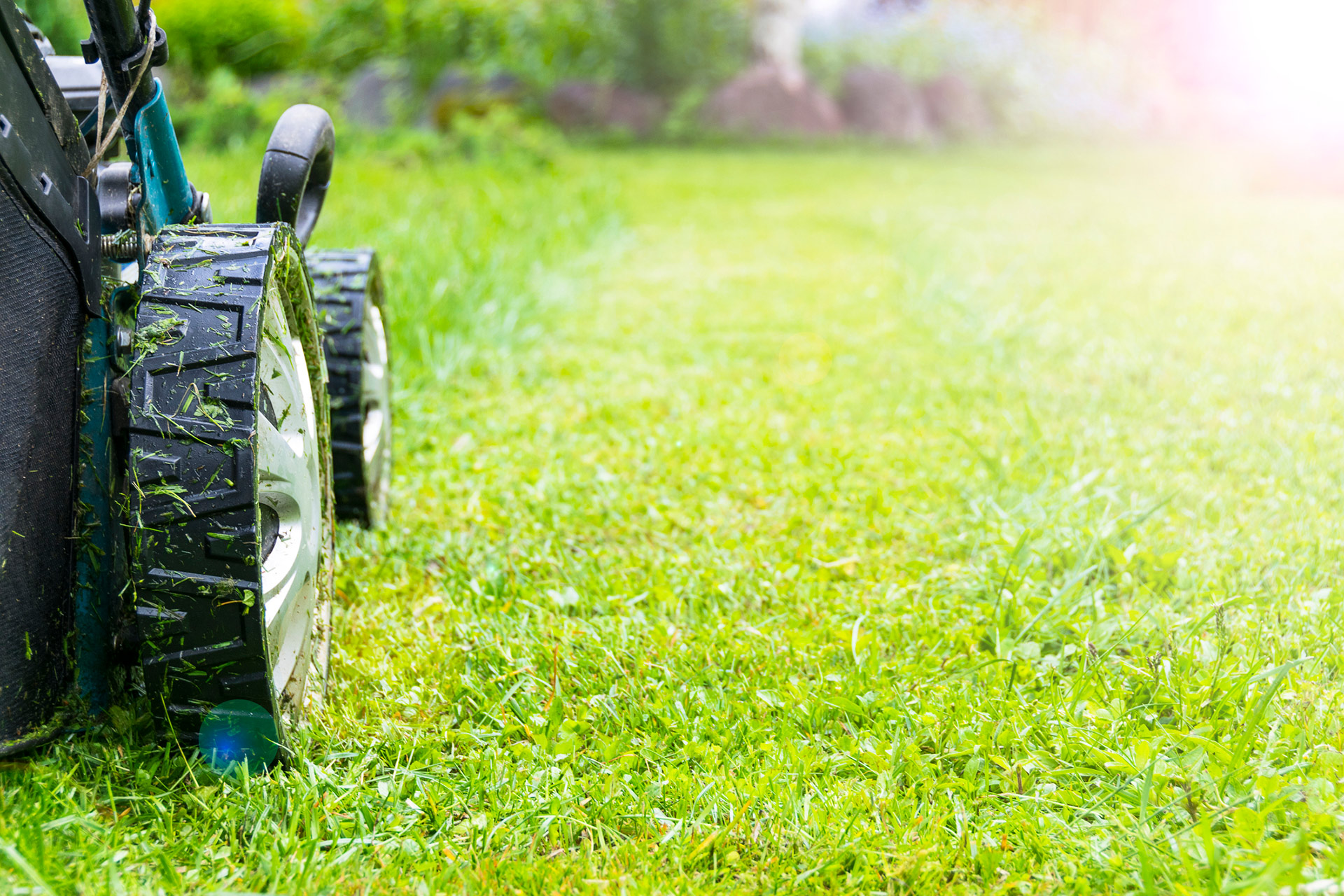
Helping Monarchs and Pollinators: Rethinking Mowing
2019-05-07
Pollinators are a priority resource concern for many conservationists and farmers. The Xerces Society conducted field trials throughout the Easter, Midwestern and Western United States to inform best practices.
-
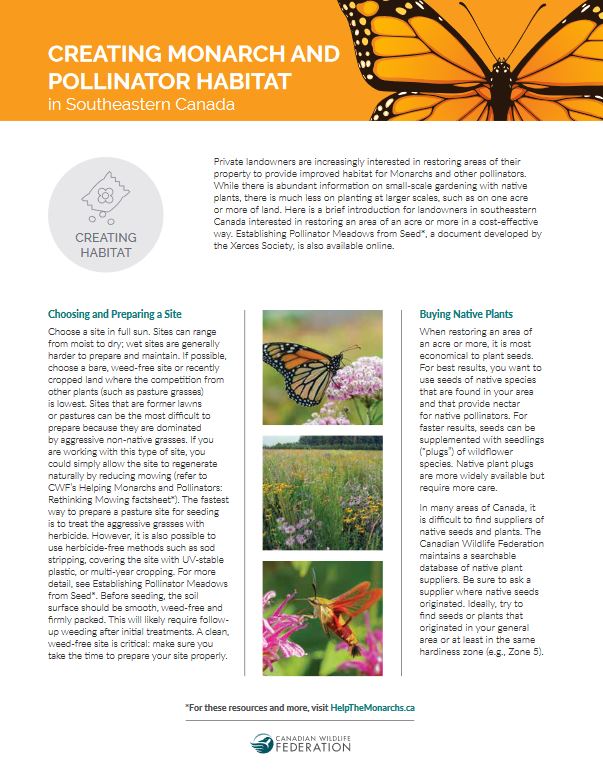
Creating Monarch and Pollinator Habitat
2026-04-21
Private landowners are increasingly interested in restoring areas of their property to provide improved habitat for Monarchs and other pollinators. While there is abundant information on small-scale gardening with native plants, there is much less on planting at larger scales, such as on one acre or more of land. Here is a brief introduction for landowners in southeastern Canada interested in restoring an area of an acre or more in a cost-effective way. Establishing Pollinator Meadows from Seed*, a document developed by the Xerces Society, is also available online
Education & Leadership
Endangered Species & Biodiversity
-
-
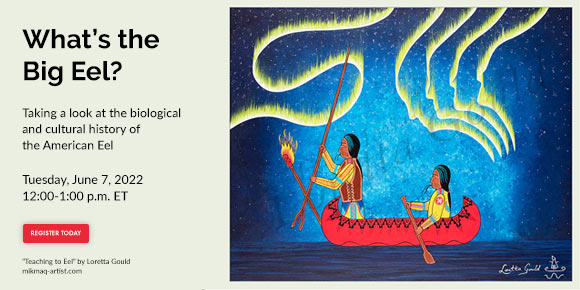
What’s the Big Eel?
2022-06-07
June 7, 2022, 12:00 – 1:00 p.m. ET. Join CWF’s Senior Conservation Freshwater Ecology Biologist Nicholas Lapointe and Jennifer Sylliboy, Program Manager Unama’ki Institute of Natural Resources, as they discuss the biological and cultural history of the American Eel. Jennifer will present on American Eel in the Bras d’Or Lake, Cape Breton, Nova Scotia and the relationship between Kat (eel) and the Mi’kmaq people. The population of American Eel has declined in the Bras d’Or Lakes over the past 20 to 30 years. While many Mi’kmaw harvesters feel the population is still good and has seen its ups and downs, its future is uncertain. Mi’kmaq people have traditionally harvested adult eel for food and cultural purposes for thousands of years. The value of eels to Mi’kmaq culture is difficult to quantify. The value is not driven by dollars, landings, or economic potential. The value is in the life, culture, health, and spirituality they sustain. With population declines globally, we need to ask ourselves what would our lives be like without the American Eel? And what can or are we doing to ensure that doesn’t happen. Nick will take us through the American Eel’s unique and fascinating life history and their conservation crisis in Canada. Sadly, this life history places them at risk from human activities and has contributed to their global decline. Alarms were first raised in the early 1990s about their decline in Canada due primarily to hydropower dams. But little has changed to address this threat. The federal Fisheries Act and Species at Risk Act should both protect the species, along with provincial legislation, but so far regulators have taken little action. We will explain what has been done to date, what has stalled, and what can be done to change the situation and help American Eel recover.
-
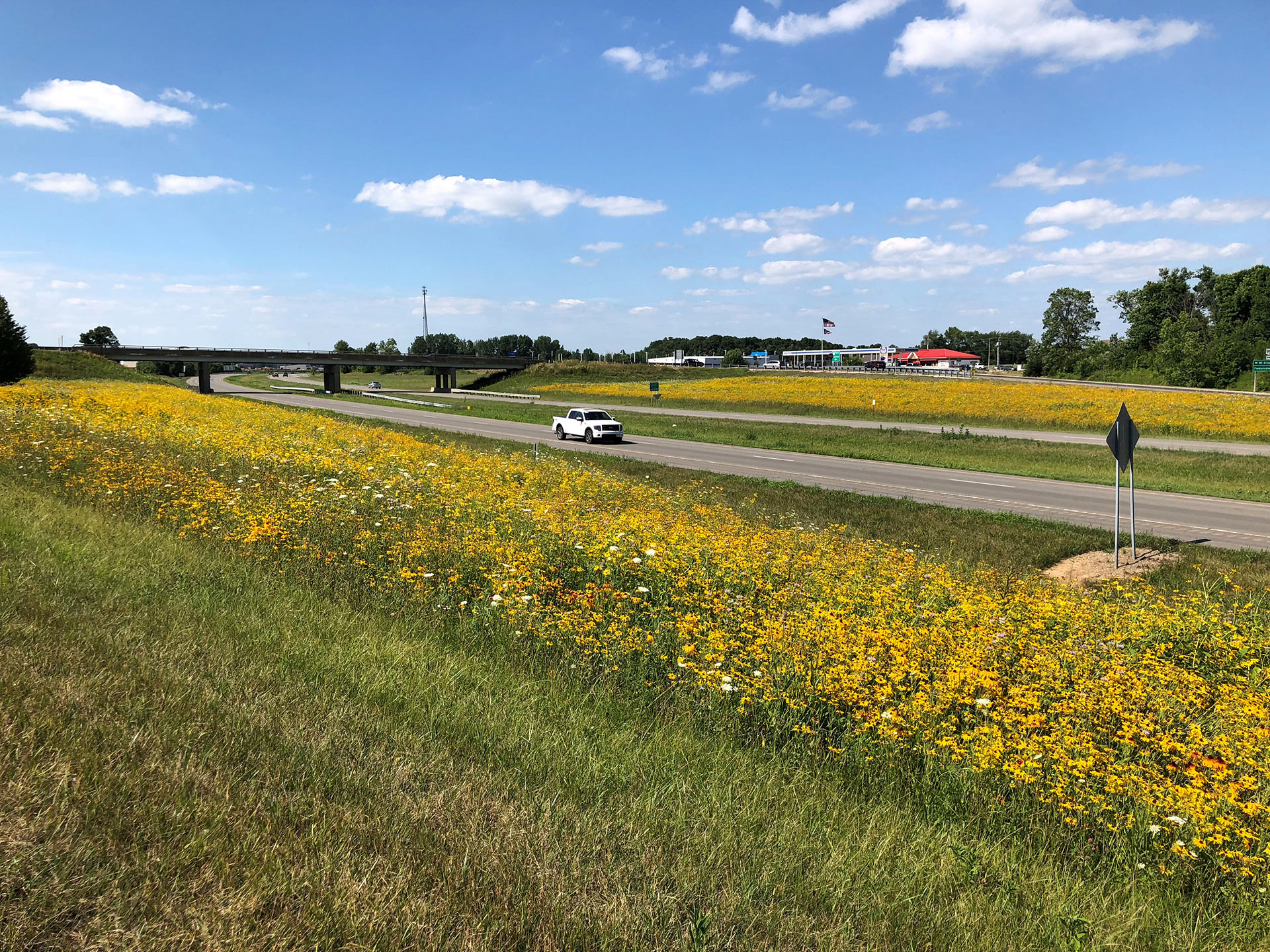
Creating Pollinator Habitat: Opportunities and Examples from Roadsides and other Right-of-Ways
2019-12-12
Pollinating insects are in crisis across North America, with steep declines in some groups. This introductory webinar in our 2019-2020 Pollinator Series will discuss the opportunities that transportation, utility and other corridors present to increase and improve available pollinator habitat across the landscape. Examples from all sectors will be discussed, and the highlights of CWF’s 2019 pilot project in eastern Ontario will be presented.
-
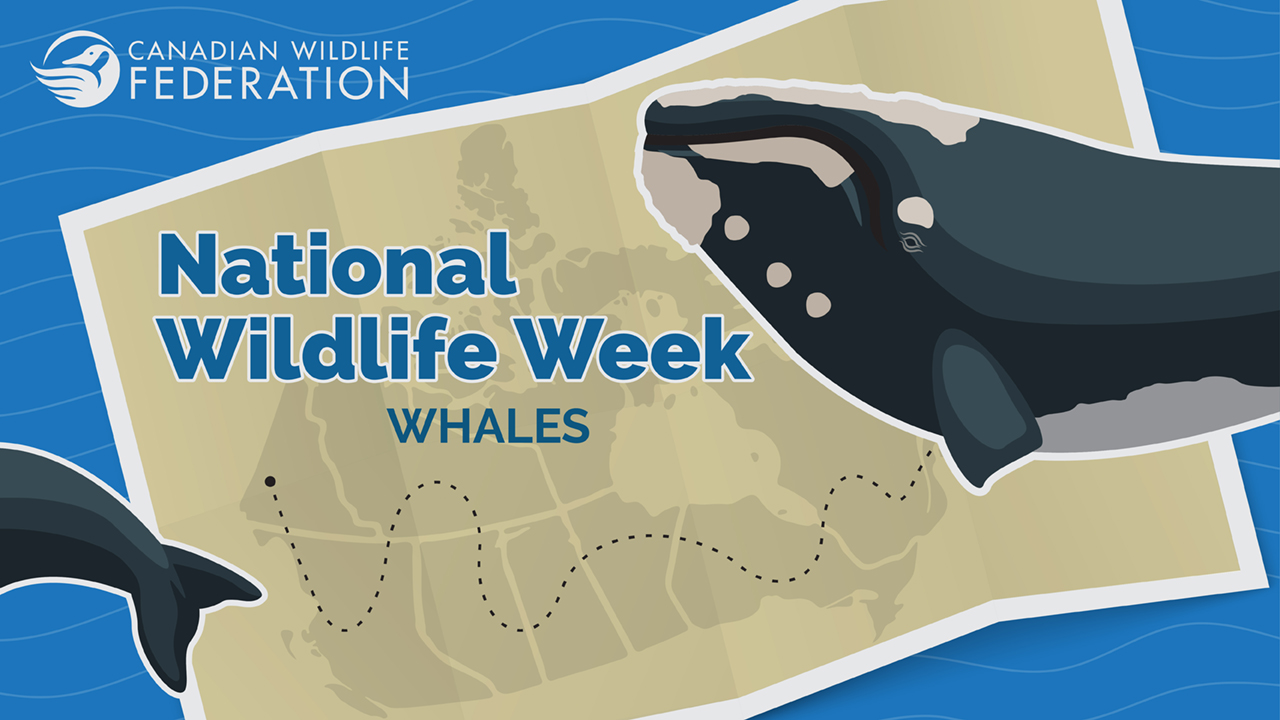
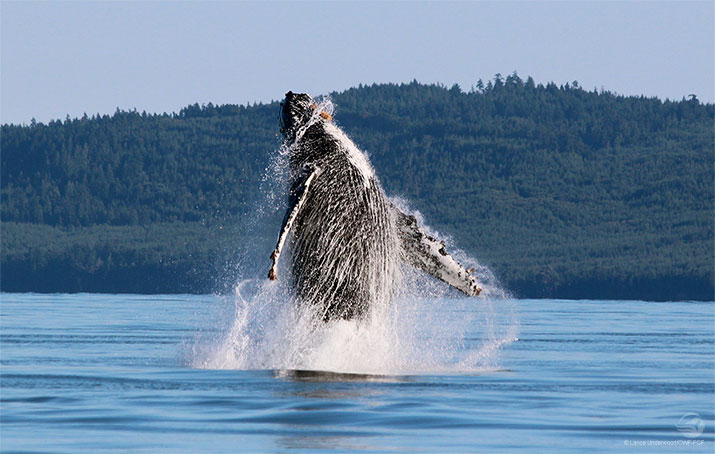
Whales With Shiva Javdan
2025-04-11
Dr Shiva Jian-Javdan is a Research Scientist with the Canadian Wildlife Federation (CWF). For more than a decade, Shiva’s dedication to marine mammal science and conservation has led her to projects with NGOs in Hong Kong, Taiwan, and Greece. Since returning to Canada, Shiva has focused on large whales, the missing piece in her cetacean bingo card, with current projects aimed at assessing entanglement risk of North Atlantic right whales. Join Shiva in a conversation on Canada’s largest migratory animals and learn what CWF is doing to help conserve the most at-risk whale species, the North Atlantic right whale.
-
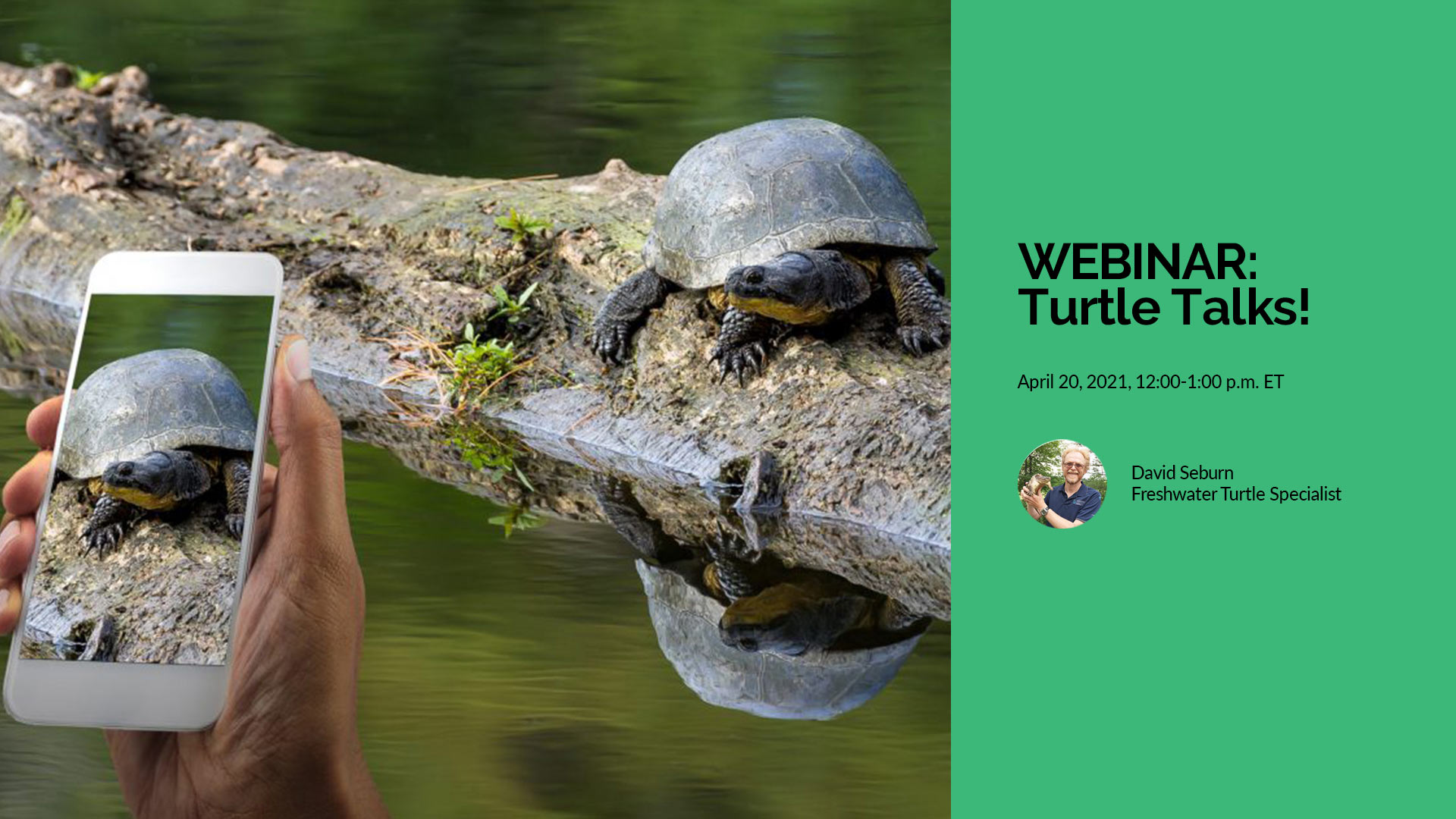
Turtle Talks Webinar
2021-04-20
April 20, 2021, 12:00-1:00 p.m. ET Who doesn’t love turtles?! They’re cute, they’re interesting and they come in so many shapes and size. They’re also one of the most endangered groups of species in Canada. Join us for a webinar all about turtles, and discover what the Canadian Wildlife Federation is doing to help them and what you can do to help, too!
Forests & Fields
-
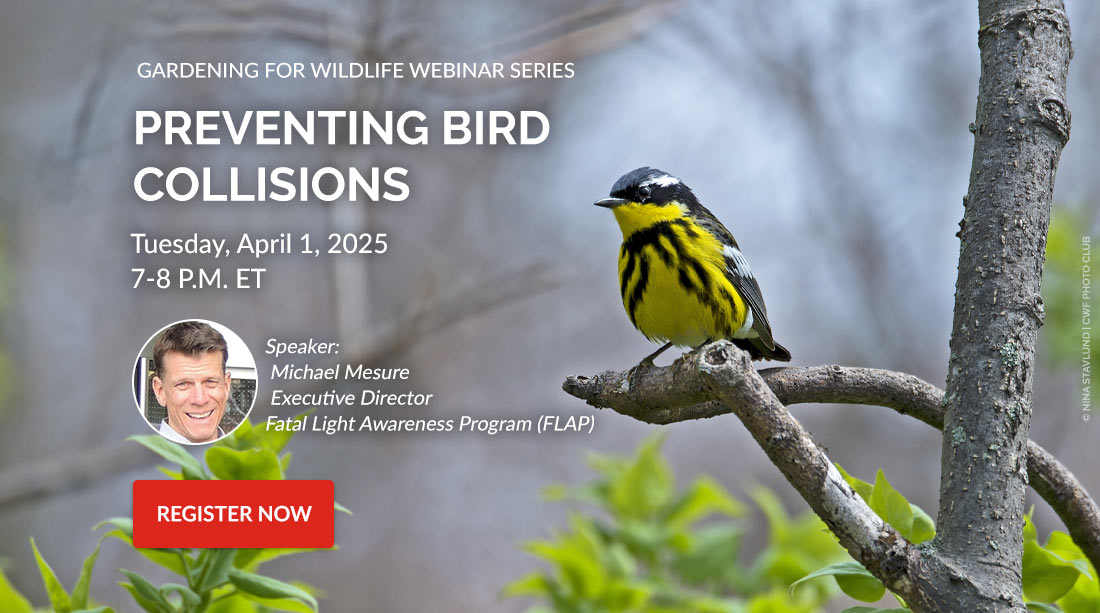
Preventing Bird Collisions
2025-04-01
Each year in Canada approximately 25 million birds die from building collisions. This is not only heartbreaking to witness but is a significant loss to biodiversity and the role these birds play. The good news is that there are solutions! Join the Canadian Wildlife Federation on Tuesday, April 1 at 7:00 p.m. ET to discover effective ways to prevent bird strikes at home, work or at the cottage. Our guest will be Michael Mesure, a founding member and Executive Director of Fatal Light Awareness Program (FLAP) Canada. Michael will speak about the work of FLAP Canada, how human-made structures threatens birds and offer solutions for mitigating building collisions. This will include examples of both effective and ineffective collision deterrent methods and some background on bird-friendly building design guidelines, policies, code and law.
-
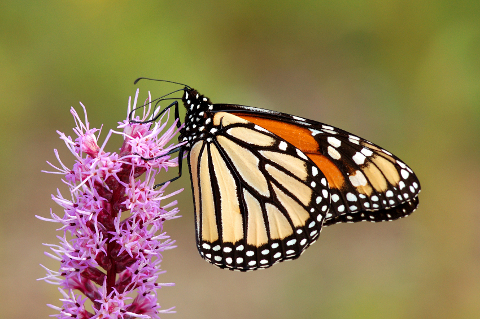
Designing Site-specific Seed Mixes
2022-06-08
When beginning a pollinator habitat restoration project, selecting a native seed mix appropriate to your project region and site conditions is crucial. But how do you know what species to include, and how much of each species? How can you estimate how much seed you might need and what it might cost? Join Botanist and Restoration Ecologist, Stefan Weber, as he leads us through a new tool—a seed calculator that will assist rights-of-way managers conducting pollinator habitat restoration projects.
-
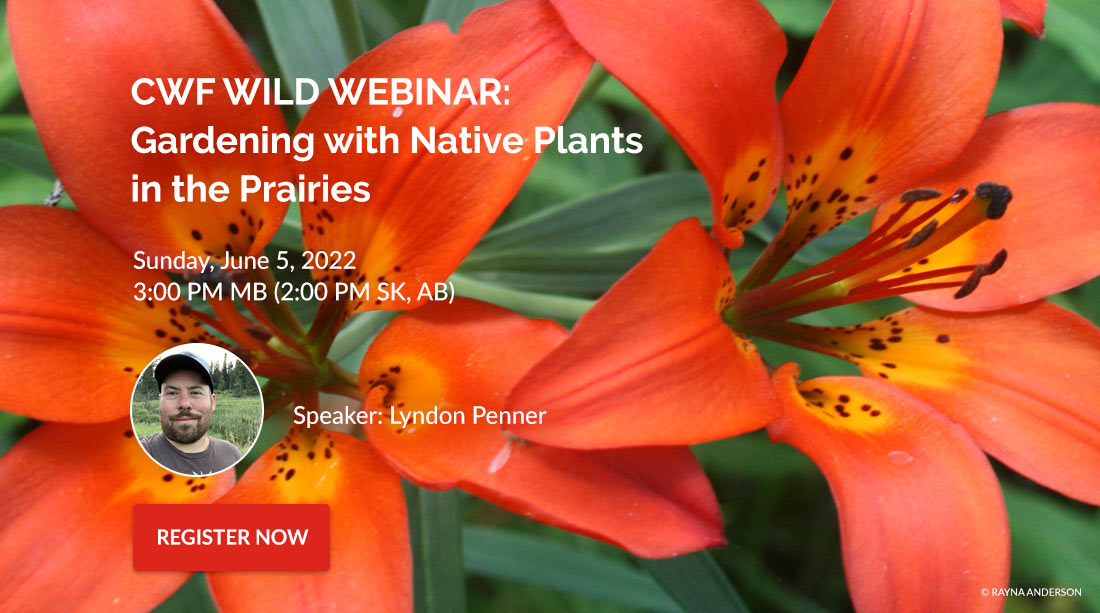
Gardening with Native Plants in the Prairies
2022-06-05
Join CWF Sunday, June 5, 2022, 3:00 PM in Manitoba, 2:00 PM in Saskatchewan and Alberta, for another special presentation in our native plants of Canada series. This time we are very grateful to have Lyndon Penner, author, garden designer, former CBC columnist and Head Gardener for Parks Canada’s Riding Mountain National Park. Please note that this webinar will only be recorded and available for one week for those who register.
-
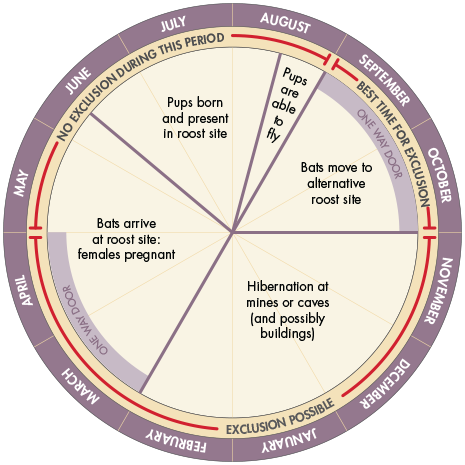
Bat Exclusion Calendar
2016-03-13
If you must exclude bats from your property, take a look at this calendar which outlines the most and least desirable times to do so.
-

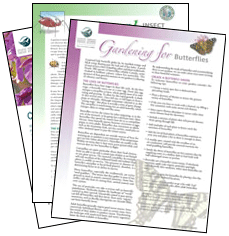
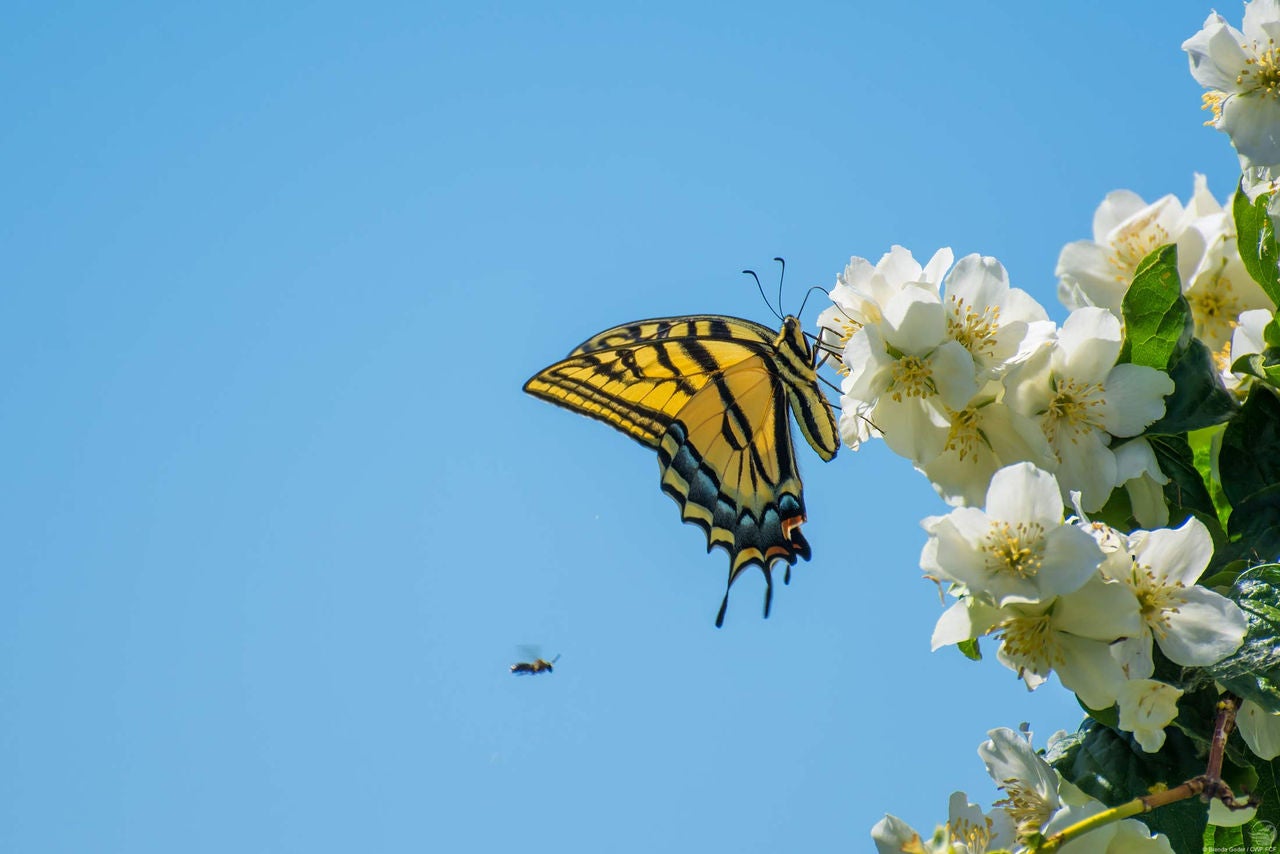
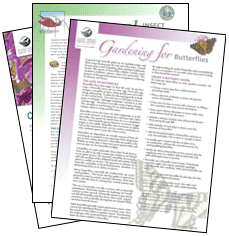
Gardening for Butterflies Handout
2026-04-21
Nearly 300 species of butterflies inhabit Canada, some cloaked in brilliant colours, others less noticeable. The presence of these graceful creatures in our gardens is a blessing of vibrancy and beauty.
Lakes & Rivers

Learn More

- 0
- 1
- 2
- 3