


-
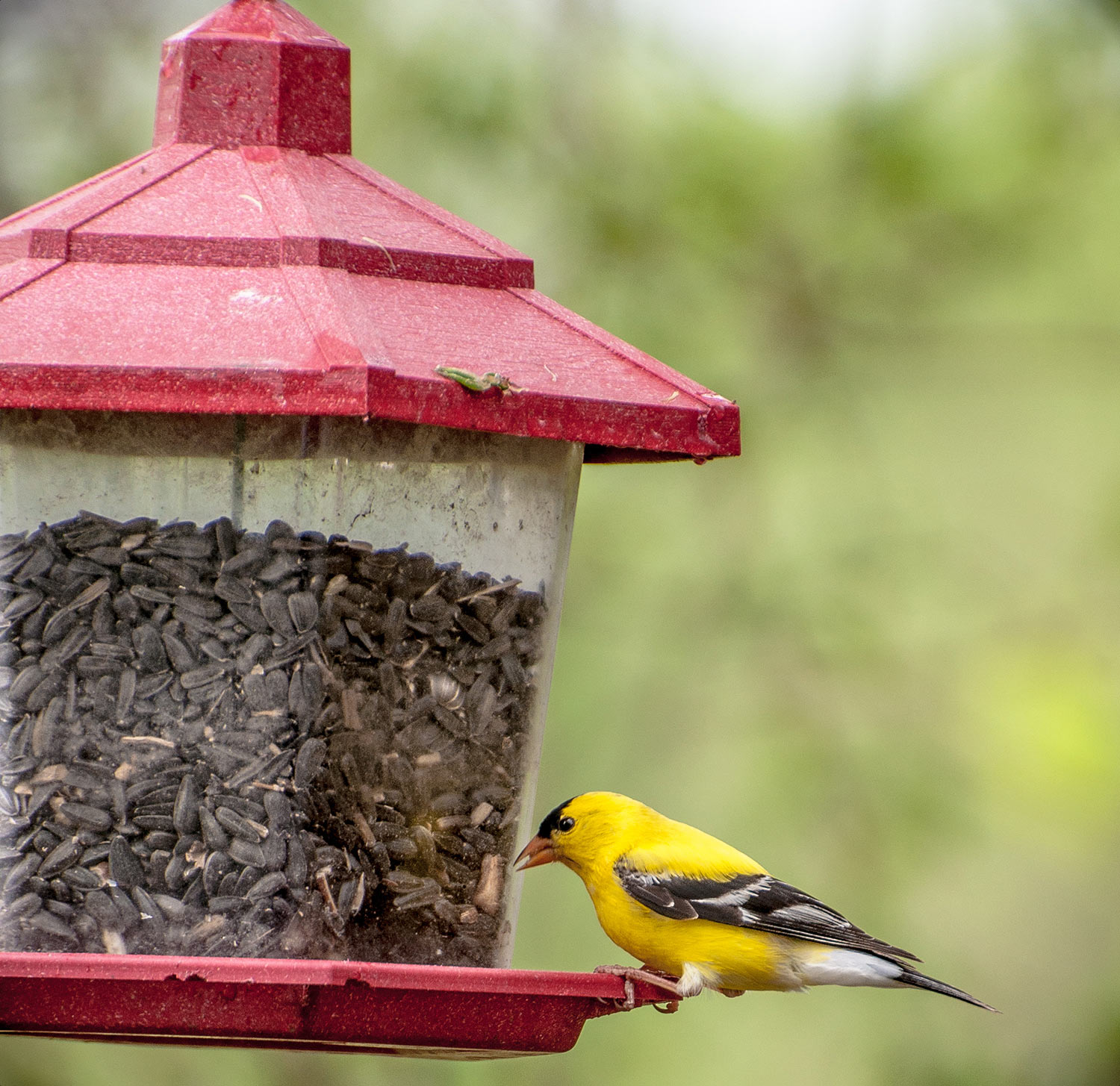 Backyard Birds
Backyard Birds
Surely some of the most watched and beloved of Canada's wildlife species are the birds we see in our backyards. Robins and woodpeckers, hummingbirds and goldfinches intrigue us with their antics or cheer us with their songs. We may take our birds for granted, yet they have a lot to teach us.
More
Browse through a few of our Canadian species in these "At A Glance" fact sheets. Each page has basic information on some of our Canadian wildlife, with links to detailed, reputable sources such as Hinterland Who's Who and the Government of Canada. Don't see a species you need? Comments or questions? Let us know!
-
All About Birds
2025-12-05
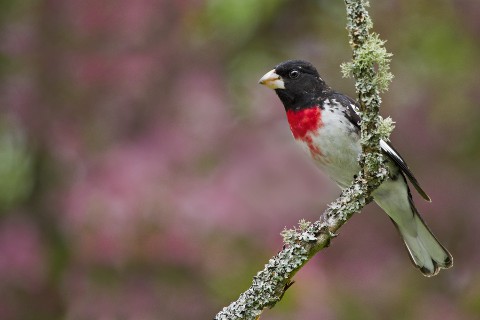
Birds are undoubtedly the form of Canadian wildlife that people most often enjoy watching. The variety of bird species and their ability to live within close proximity of human habitation makes them accessible even in urban areas.
-
American Crow
2025-12-05
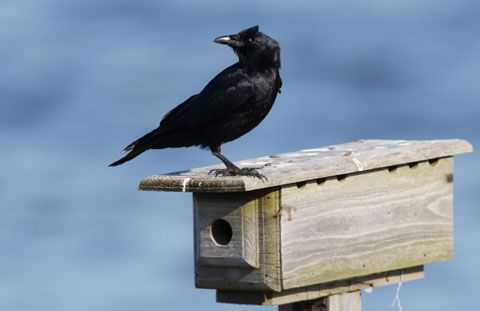
Crows and their kin are very interesting birds, members of what may be the most intelligent avian family — the Corvidae. The crow’s cousins include magpies, blue jays, jackdaws, rooks, nutcrackers and ravens. Many people use the terms crow and raven interchangeably but the two birds are actually quite different. Ravens are larger than crows (on average about the size of a hawk), have a heavier bill, and a wedge-shaped tail. Crows are approximately the size of a pigeon with a fan-shaped tail.
-
American Robin
2026-02-26
The American robin is the largest thrush in North America. Males are not only more vocal than females, but also slightly larger and more brightly coloured. Adult American robins have grey-brown backs, characteristic reddish breasts, white bellies, white chins, yellow bills and throats with dark streaks. Juveniles have dark speckles on their backs and on their cinnamon-coloured breasts.
-
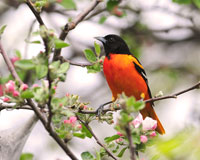
Baltimore Oriole
2025-12-05
Smaller than a robin, the male oriole displays a brilliant orange breast, shoulder patch and rump contrasted with a black head, back, wings and tail. The female resembles the male, but is paler in colour, displaying a dull orange breast with a dark brown olive colour on its head and back. The male has a beautiful flute-like song, which he performs throughout the summer. The female’s song, in comparison, is shorter and simpler. While songs vary slightly from one bird to the next, they always have the recognizable “hew-li” sound.
-
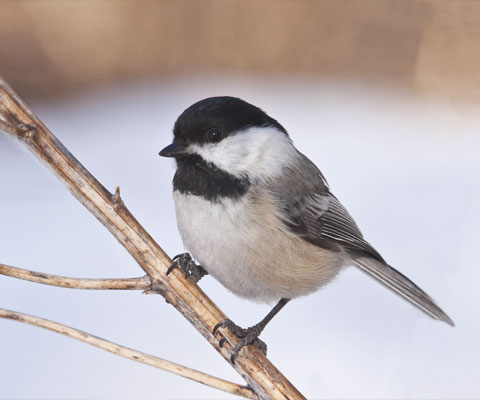
Black-capped Chickadee
2025-12-05
Black-capped Chickadees are small birds that measure 12 to 15 centimetres long. They have grey backs, a black cap that covers their eyes, white cheeks and a black triangular bib on the throat. Their stomachs are white with buff along the sides and their wings and tail are dark grey with white edging.
-
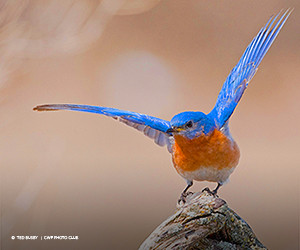
Bluebirds
2025-12-05
Canada has three species of bluebirds. They are in the Thrush family, the same family as the American Robin. Bluebirds are a little smaller than our robins, averaging about 7 inches in length and 13-14 inches in width. All bluebirds have blue heads, wings, backs and tails, which gives them their name. All species also have a black bill, legs and eyes. The differences between species come mainly from the colouring of the throat, breast and belly. The male Mountain Bluebird is mainly blue with a pale blue breast and white belly. The male Western Bluebird is a darker blue with orange-red on the upper and side portions of its chest and dull blue-white on the lower middle portion. The male Eastern Bluebird is similar to the Western Bluebird, but the orange also covers its throat and the front sides of its neck. Another distinction is that its white belly is brighter. The females and juveniles of these species have similar colouring to the adult males but a much paler version.
-
Brown Creeper
2025-12-05
Brown Creepers are small birds that can reach 14 centimeters with their stiff tail and long curved bill making up a fair portion of that! Their undersides are white while the top of their body, from head to tail, is mottled with varying shades of brown with off-whites and grey. In flight you may notice a striking pale-coloured band across the wings.
-
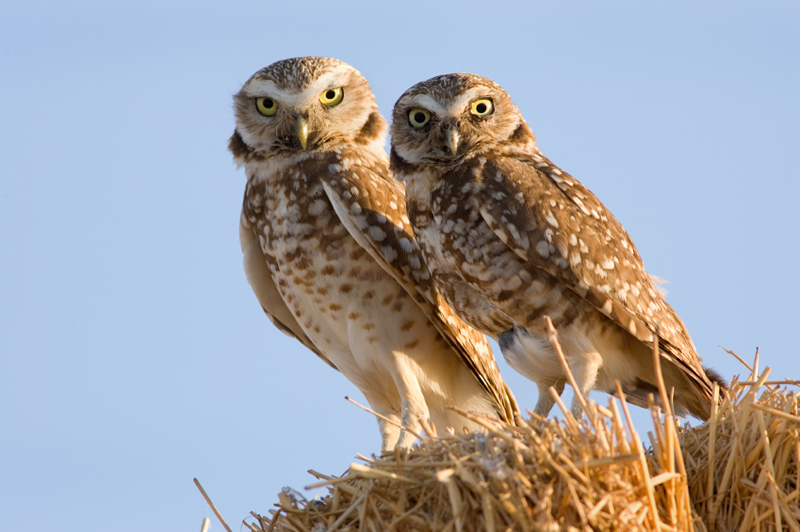
Burrowing Owl
2025-12-05
Once a common sight in portions of Manitoba, Saskatchewan, Alberta, and British Columbia, the burrowing owl is now much more rare. The Canadian population of this little bird of prey has declined over 95 per cent since 1987, and now occupies a mere 36 per cent of its original distribution in Canada. This alarming rate of decline has motivated scientists to list the species as endangered under the Species at Risk Act.
-
-
Cedar Waxwings
2025-12-05
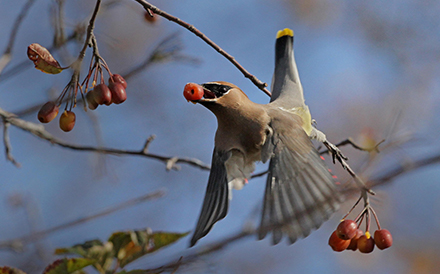
Cedar Waxwings are creamy yellow below, have light brown colouring on their heads and upper backs, grey on their lower backs and wings and a black mask across the top of their bills that extends around their eyes. They also have feathers on their heads that form a crest. They have a bright yellow band at the end of their tails. Sometimes you can see a thin red strip on the edge of their secondary wing feathers.
For more species, visit Hinterland Who's Who, a joint program of the Canadian Wildlife Federation and Environment Canada.

Learn More
- 0
- 1


