In 2013, CWF partnered with regional response groups to create the Canadian Marine Animal Response Alliance (CMARA), a national network that addresses issues related to marine animal emergencies and incidents.
2017 marked a tragic year with the deaths of 17 North Atlantic Right Whales in Canadian and U.S. waters. The most endangered whale on the planet, the North Atlantic Right Whale is at risk of extinction in as little as twenty years. CWF began working with the fishing industry to trial ropeless fishing gear and developed a model to predict the trauma to a whale after collision with a vessel to help prevent the two greatest threats to the species.
CWF is continuing to work with the fishing industry in the trials of ropeless gear and moving our Marine Action Plan forward. More than 75,000 Canadians have joined with CWF to urge the Federal government to enhance its investment in programs to support marine conservation and reduce threats to whales such as vessel strikes and entanglement. This summer, we will launch CanFish – a new gear lending library for the fishing industry to trial new equipment that could reduce the risk or entanglement for marine animals.
WILD Outside
In 2019, CWF launched a new program for young people ages 15 to 18 – WILD Outside. Operating in 14 Canadian cities, the program is a service initiative developed by CWF and funded by the Government of Canada as part of the Canada Service Corps. The barrier-free program offers outdoor adventure as well as the opportunity to plan and deliver community-based conservation projects.

There are plenty of ways we can all #DoMoreForWildlife
- Get WILD Outside! If you know a young person from 15 to 18 years old looking for outdoor adventure, encourage them to sign up for WILD Outside. Learn more >
- Reduce your plastic footprint to help keep plastic pollution out of our oceans and waterways. Take our quiz to find out how >
- Discover the plight (and the HOPE!) of the North Atlantic Right Whale with the documentary film Last of the Right Whales and join in the film’s impact campaign. Watch now >
- Do you live near one of Canada’s coastlines, planning a trip to explore these regions, or simply want to learn more about our sea life? Join The Watch – a program to help people learn more what to do if you encounter a marine animal in distress. Join now >
You can also enter our 60 Days of Conservation Contest for a chance to win one of six exciting CWF #DoMoreForWildlife prize bundles or our grand prize.
Signature Species:
North Atlantic Right Whale

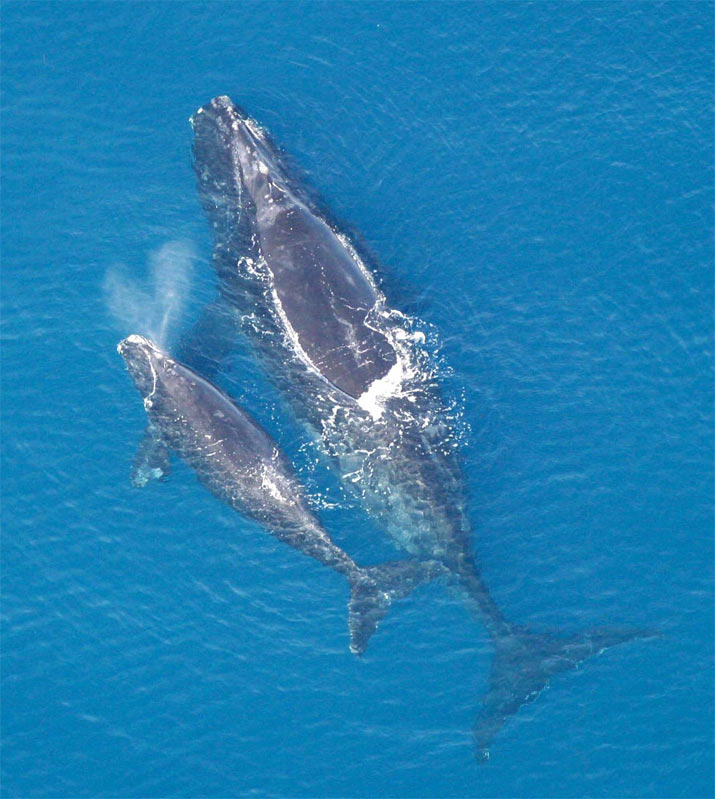
The North Atlantic Right Whale (Eubalæna glacialis) is one of the rarest of the large whales. It can weigh up to 63,500 kilograms and measure up to 16 metres. That’s the length of a transport truck and twice the weight! Females tend to be a bit larger than males – measuring, on average, one metre longer. Considering its weight, it’s fairly short, giving it a stocky, rotund appearance. Its head makes up about a fourth of its body length, and its mouth is characterized by its arched, or highly curved, jaw. The Right Whale’s head is partially covered in what is called callosities (black or grey raised patches of roughened skin) on its upper and lower jaws, and around its eyes and blowhole. These callosities can appear white or cream as small cyamid crustaceans, called “whale lice”, attach themselves to them. Its skin is otherwise smooth and black, but some individuals have white patches on their bellies and chin. Under the whale’s skin, a blubber layer of sometimes more than 30 centimetres thick helps it to stay warm in the cold water and store energy. It has large, triangular flippers, or pectoral fins. Its tail, also called flukes or caudal fins, is broad (six m wide from tip to tip!), smooth and black. That’s almost the same size as the Blue Whale’s tail, even though Right Whales are just over half their size. Unlike most other large whales, it has no dorsal fin.
The Right Whale has a bit of an unusual name. It is thought to have been named by whalers as the “right” whale to hunt due to its convenient tendencies to swim close to shore and float when dead. Its name in French is more straightforward; baleine noire, the black whale.
For a variety of reasons, including its rarity, scientists know very little about this rather large animal. For example, there is little data on the longevity of Right Whales, but photo identification on living whales and the analysis of ear bones and eyes on dead individuals can be used to estimate age. It is believed that they live at least 70 years, maybe even over 100 years, since closely related species can live as long.
Excerpts compliments of Hinterland Who’s Who