CWF launched a major campaign against acid rain and thankfully it began to dry up at this time. The world’s biggest pollution problem metamorphized into one its biggest success stories! A new magazine was also born at this time; CWF’s International Wildlife magazine.
During this time, CWF created an Endangered Species Program to help save endangered, threatened and rare species throughout Canada.
Within a few years, the success of initiatives like the Endangered Species Program helped lead to the creation of the Committee on the Status of Endangered Wildlife in Canada (COSEWIC) and endangered wildlife in Canada began to get the attention they needed by the government.
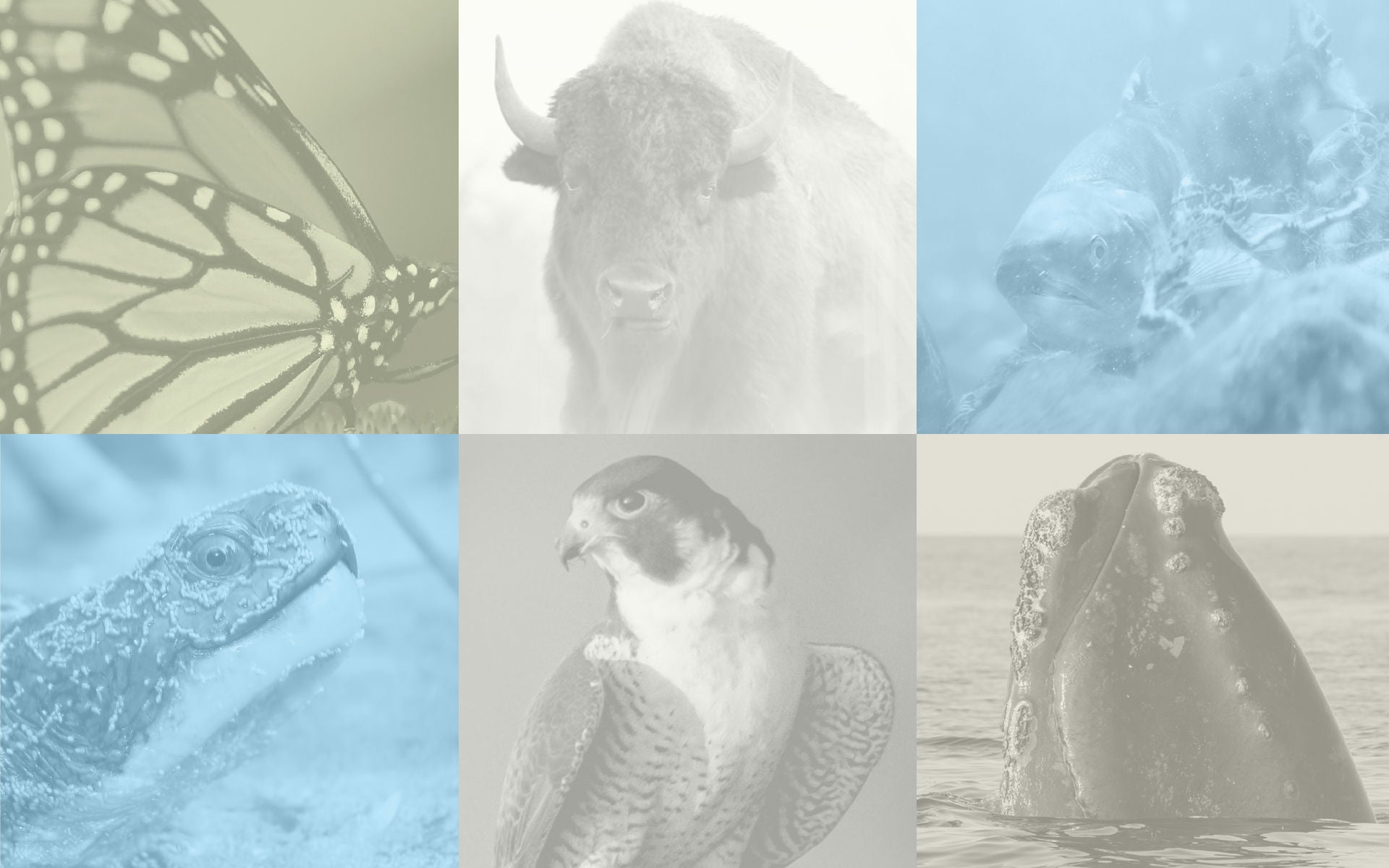
Today, there are over 800 species at risk in Canada. CWF continues its work to conserve Canadian species currently at risk such as Eastern Meadowlark and Bobolink, all eight of Canada’s freshwater turtles, North Atlantic Right Whales, American Eels, Monarch Butterflies and three bat species that are affected by the deadly fungal disease, White-nose Syndrome. CWF is an active voice for species at risk, advocating for strong Species At Risk legislation and the listing of species in need of protection. To date, CWF has raised millions of dollars to conserve endangered species in Canada.
Conservation Education
Always at the forefront of environmental education, CWF began offering university accredited summer programs that provided ecological field training for student teachers at this time. CWF continues to develop unique innovative programs today such as our Canadian Conservation Corps for young adults between the ages of 18 and 30. All of our education programs encourage young Canadians to be conservation leaders.
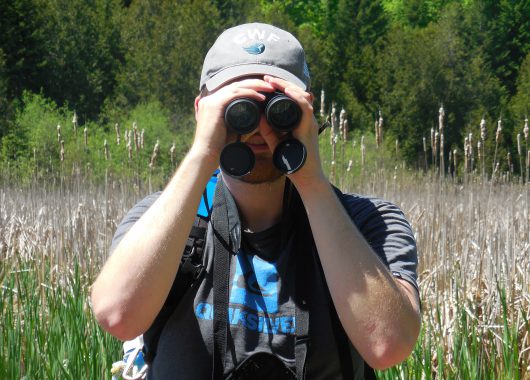

There are plenty of ways we can all #DoMoreForWildlife
- Do you know someone between the ages of 18 and 30 who is looking to change their life and change the world? Then the Canadian Conservation Corps might be the perfect adventure. Funded by the Government of Canada, as part of the Canada Service Corps, this barrier free three-part program offers a wilderness journey, field learning experience and community service. Encourage them to apply at CanadianConservationCorps.ca >
- Become a Citizen Scientist! Record, share and discuss wildlife sightings wherever your travels take you. Download the iNaturalist app or sign up at iNaturalist.ca >
- Join in our upcoming iNaturalist webinar on Earth Day April 22 to learn more about how you can contribute to this global biodiversity database and find more about how you can participate in this year’s City Nature Challenge. Register now >
- Give a bat a home! Bat houses are popping up everywhere. Buy or build your own bat house and help these amazing creatures find a place to roost >
- Is that an eel on your reel? Fish at night? Use live bait? Looking for catfish? You may catch an endangered American Eel. Learn what you should do >
You can also enter our 60 Days of Conservation Contest for a chance to win one of six exciting CWF #DoMoreForWildlife prize bundles or our grand prize.
Signature Species:
Peregrine Falcon
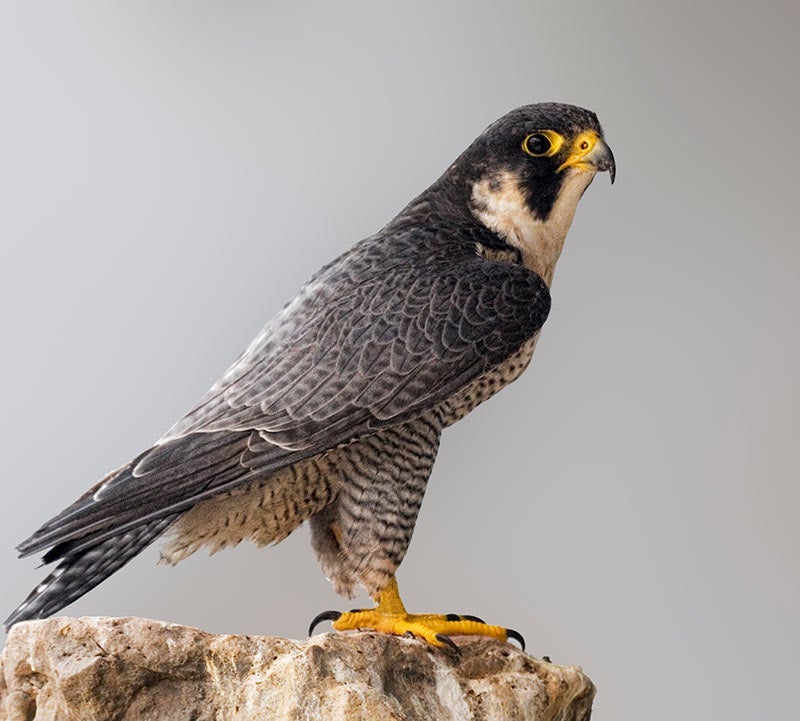
The Peregrine Falcon (Falco peregrinus) is a sturdy crow-sized falcon. Adult females are larger than males, measuring 45 to 59 centimetres and weighing about 910 grams, compared with the males’ length of 36 to 49 centimetres and weight of about 570 grams.
The Peregrine’s most reliable distinguishing features are the blackish malar, or cheek, stripe below the eye and the dark bluish-grey or slate-coloured crown, back, and upper surface of the wings. The throat is white and the underparts are white to buff, with blackish brown bars on the sides, thighs, abdomen, underwings and lower breast area. Young Peregrines have upperparts whose colour varies from pale to slate or chocolate brown and underparts that are buffy with blackish streaks.
Generally smaller and more streamlined than hawks, Peregrines, like all falcons, have small heads, firm compact plumage, and long pointed wings—adaptations that allow them to fly at great speed. In flight they use quick, powerful wing strokes. Their powerful talons and strong hooked beak, equipped with a notch or “tooth” that aids in severing the spinal cord of avian prey, mark them as highly specialized predators.
Some Peregrines have lived 18 to 20 years, but the average life span is much shorter.
With few enemies and a long lifespan, Peregrines, like other predators, are at the top of a food chain. However, exposure to pesticides brought the species to near extinction. One of the first species to be assessed by COSEWIC, the Peregrine Falcon is a conservation success story as it is no longer at risk of extinction in most of Canada thanks to a ban on the deadly pesticide DDT.
Excerpts compliments of Hinterland Who’s Who