The Canadian Wildlife Federation has a long history of using the medium of art to help further wildlife conservation. In 1982, CWF reached across the ocean to Princess Grace of Monaco, gifting an original painting by famed Canadian artist, Robert Bateman.
She responded kindly by authorizing limited edition prints of Robert Bateman’s “Golden Crowned Kinglet and Rhododendron” to fund the introduction of Wood Bison in Manitoba. Within six years, CWF unveiled long-term management plans for this sturdy but endangered species.
Today, CWF is proud to be working with renowned artist Dwayne Harty on an exciting new project. The goal is to create a body of artworks depicting the North American bison. The artworks will be exhibited internationally at well-known public art or natural history museums and galleries, increasing the profile of the bison’s story, CWF’s work, as well as the artwork itself. This exhibition will facilitate an educational experience and broaden the public’s awareness and appreciation of the bison as a keystone species.
Project WILD
In 1984, CWF launched Project WILD in Canada. This education program provides teachers and youth leaders with curriculum-based lesson plans and activities about wildlife and the environment which can be adapted for any age, grade level or subject.
Over the years, CWF has provided program training to thousands of formal and non-formal educators who have helped their students develop the awareness, knowledge, skills and commitment needed to make informed decisions and take constructive action. A refreshed version of the Project WILD was launched in 2021 that includes new activities, as well as online and distance learning opportunities.

There are plenty of ways we can all #DoMoreForWildlife
- Are you an educator or youth leader? Sign up for CWF’s WILD Education program where you will find a plethora of resources to bring nature and wildlife into your learning environment. Find out more >
- Is your creative talent nature photography? Submit your best pictures to CWF’s “By Popular Vote” monthly photo contest. Your winning photo could be featured in an upcoming issue of Canadian Wildlife and Biosphère magazines. Enter now >
- Adopt a Bison! Yup, you read that right. Continue the work Princess Grace of Monaco and Robert Bateman started – by adopting your own Bison. Each adoption comes with a certificate of adoption and makes a great gift for the conservationist in your family! Adopt Now >
- Canada’s native grasslands have been whittled down. These resilient ecosystems need our help. Discover and share!
- Is that an eel on your reel? Fish at night? Use live bait? Looking for catfish? You may catch an endangered American Eel. Learn what you should do >
- Subscribe! Canadian Wildlife magazine for adults and WILD magazine for kids puts the wonder and fragility of nature right in your hands. Great on your coffee table or as a gift – subscribe here!
You can also enter our 60 Days of Conservation Contest for a chance to win one of six exciting CWF #DoMoreForWildlife prize bundles or our grand prize.
Signature Species:
Bison
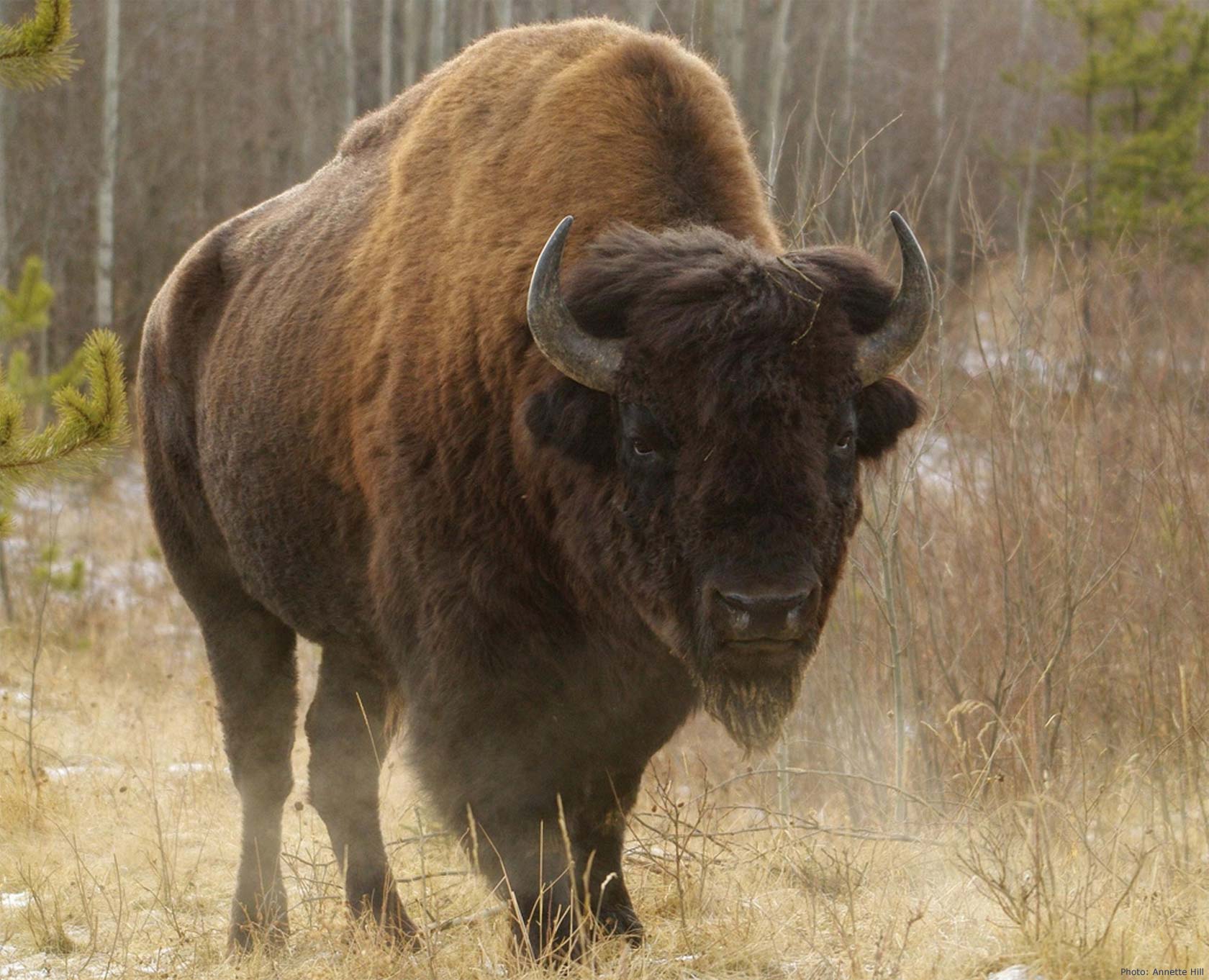
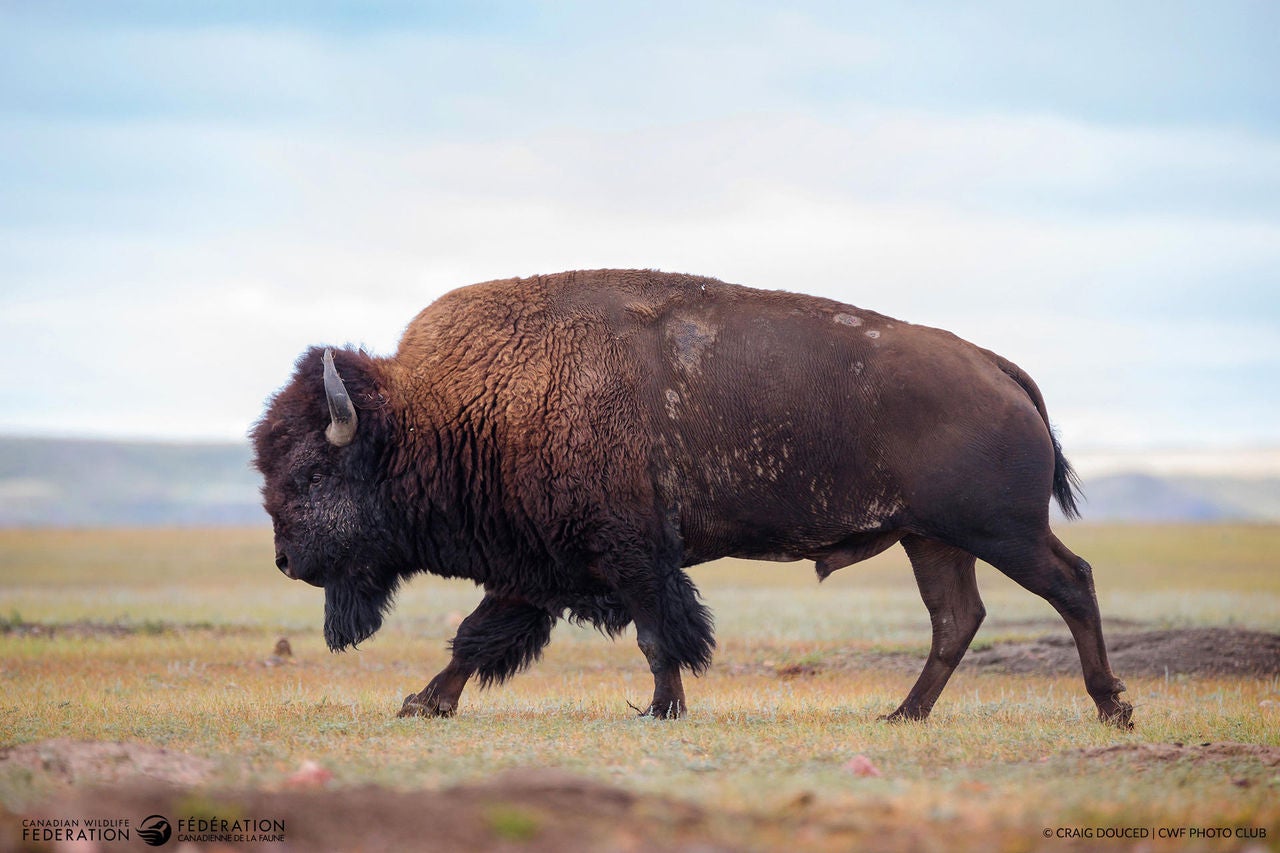
The North American Bison, or buffalo, is the largest land animal in North America. A bull can stand two metres high and weigh more than a tonne. Female bison are smaller than males.
A bison has curved black horns on the sides of its head, a high hump at the shoulders, a short tail with a tassel, and dense shaggy dark brown and black hair around the head and neck. Another distinctive feature of the bison is its beard.
There are two living subspecies of wild bison in North America: the Plains Bison (Bison bison bison) and the Wood Bison (Bison bison athabascae). In general, the Plains Bison is lighter in colour than the Wood Bison. The Wood Bison is taller, longer legged, and less stockily built than the Plains Bison, but it is heavier.
Most bison live in mixed herds of cows, calves, yearlings, subadults and a few bulls. The other bulls form groups of their own. Bison herds are alert and quick to detect changes in their environment. Bison have keen senses of smell and hearing; they can distinguish smells from three kilometres away.
Two hundred years ago, anywhere from 30 to 70 million bison roamed free in North America. The Aboriginal People who lived on the Great Plains relied on these wild mammals for food, clothing and shelter. The arrival of European settlers destroyed this way of life. During the late 1800s, commercial hide hunters, settlers and thrill seekers shot millions of bison. The destruction of the vast free-ranging bison herds on the prairies brought the species to the verge of extinction and with it the collapse of the civilization of the Plains Indigenous Peoples. In so doing, it cleared the way for prairie agriculture. Since about 1900, the population of bison in North America has increased, but not to anything near its original numbers.
Excerpts compliments of Hinterland Who’s Who
Indigenous Teachings
Watch People of the Buffalo Nation episodes one and two by the Royal Saskatchewan Museum and the Saskatchewan Teachers’ Federation.
In these videos, Joely BigEagle-Kequahtooway from the Buffalo People Arts Institute explains how she is working to reconnect with the bison.
She shares the lessons that we can learn from the bison in the face of adversity, and inspiration we can draw from the bison in our goal to live sustainably.
Special thanks to all those involved for granting CWF permission to share these teachings.