

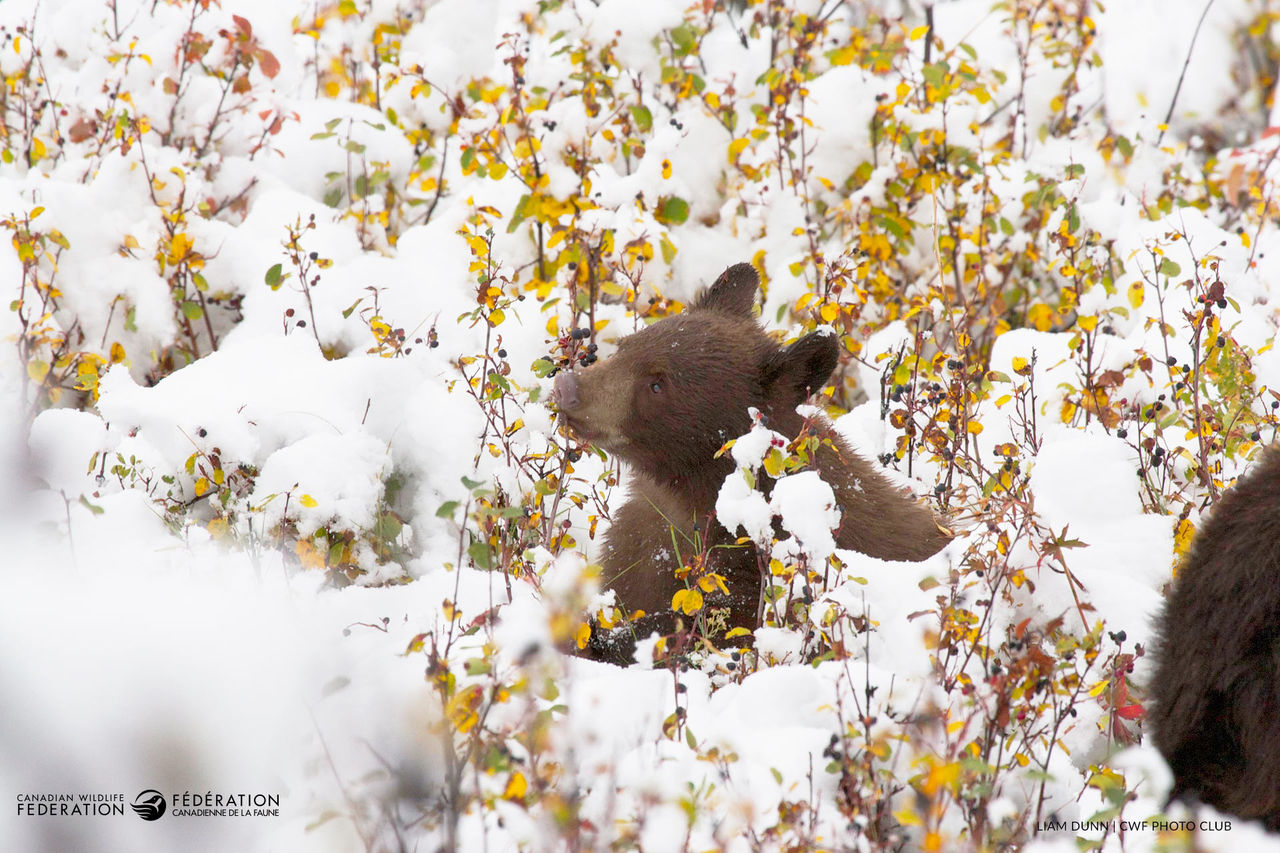
Q. I saw a black bear roaming around in the winter snow. Isn’t it supposed to be hibernating?
A. Technically yes, but depending on the weather, food availability or if it was disturbed, it is possible to see a black bear while it’s still cold outside.
Black Bears are called “super hibernators”. They can enter hibernation for several months and during this time they don’t eat or drink, nor do they excrete any waste products. While Black Bears do lower their heart rate, breathing rate and metabolism, their body temperature only lowers slightly. This differs from true hibernators, like groundhogs, whose body temperatures drop close to freezing. Because of this, black bears can be roused from their sleep and will sometimes come out of their den.
The main reasons Black Bears go into hibernation is due to lack of food. Depending on the resources in the area, black bears could enter hibernation as early as mid-October or could be in December.
Because they can wake from their sleep and venture outside, if it’s a warmer than normal winter, they may take a stroll to see if they can find food. When they come out of hibernation is also variable – but is commonly between March and April.
If they gave birth to cubs over the winter, this could also prolong the amount of time they stay in their den. Adult males are typically the first to come out of hibernation, while mothers and cubs emerge last.
Therefore, it is possible to see a Black Bears in the winter – depending on local conditions.


