


SCIENTIFIC NAME
Orcinus orca
OTHER COMMON NAMES
Killer Whale
DESCRIPTION
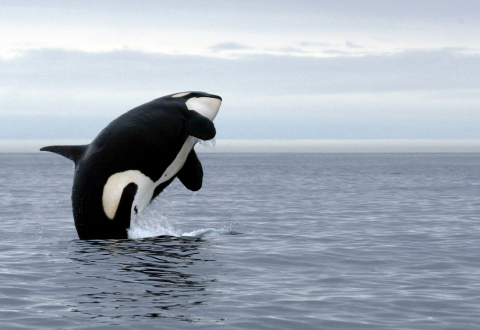
Without a doubt, the killer whale is one of the most distinctive marine mammals in the world. Its size — seven to nine metres long and between four and five tones in weight — and its striking black-and-white colouring, and long, rounded body make it unmistakable.
PHOTO GALLERY
(Please note — these photos are unverified images submitted by members of the CWF Photo Club.)
RANGE
Nova Scotia, International, Manitoba, New Brunswick, Newfoundland, Quebec, Nunavut, British Columbia, Ontario, Prince Edward Island
The killer whale is a cosmopolitan creature, having been observed in oceans all over the world. They tend to concentrate in colder regions and are found in all of Canada’s oceans, as well as occasionally in Hudson Bay and in the Gulf of the St. Lawrence. In British Columbia, they have been seen throughout almost all marine areas including many inlets and narrow channels.
DIET
Throughout their world-wide range, killer whales eat a wide variety of prey, including squid, fish, sea turtles, sea birds, sea and river otters, sea lions, penguins, dolphins and other large cetaceans, such as the blue whale.
BEHAVIOUR
Females don’t give birth to their first calf until they are about 15 years old and they calve only once every five years on average. While whales have no natural predators, calves are vulnerable during infancy.
References
Hinterland Who's Who
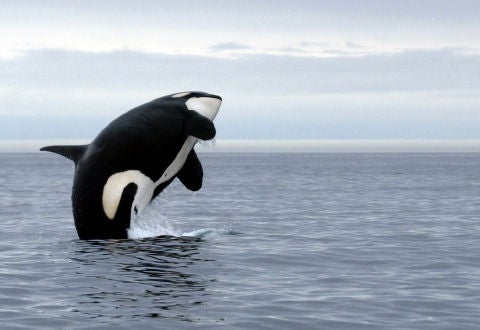
Without a doubt, the killer whale is one of the most distinctive marine mammals in the world. Its size — seven to nine metres long and between four and five tones in weight — and its striking black-and-white colouring, and long, rounded body make it unmistakable.
Learn more about Canada’s marine mammals such as the killer whale, Atlantic walrus, beluga whale, bowhead whale and harbour porpoise. Also, check out the Canadian Wildlife Federation’s Rivers to Oceans Week: Underwater Mysteries, June 8 – 14, 2008.


