


SCIENTIFIC NAME
Chelydra serpentina
DESCRIPTION
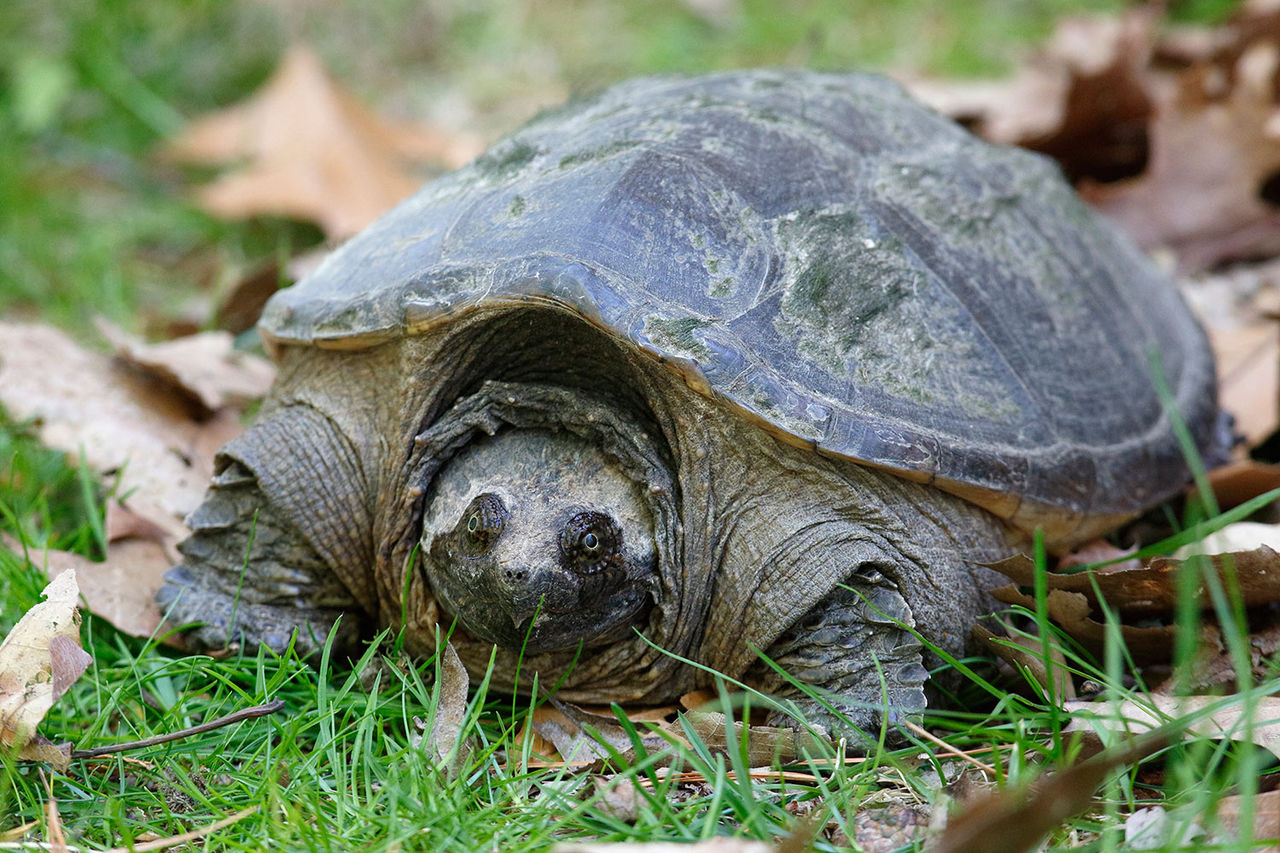
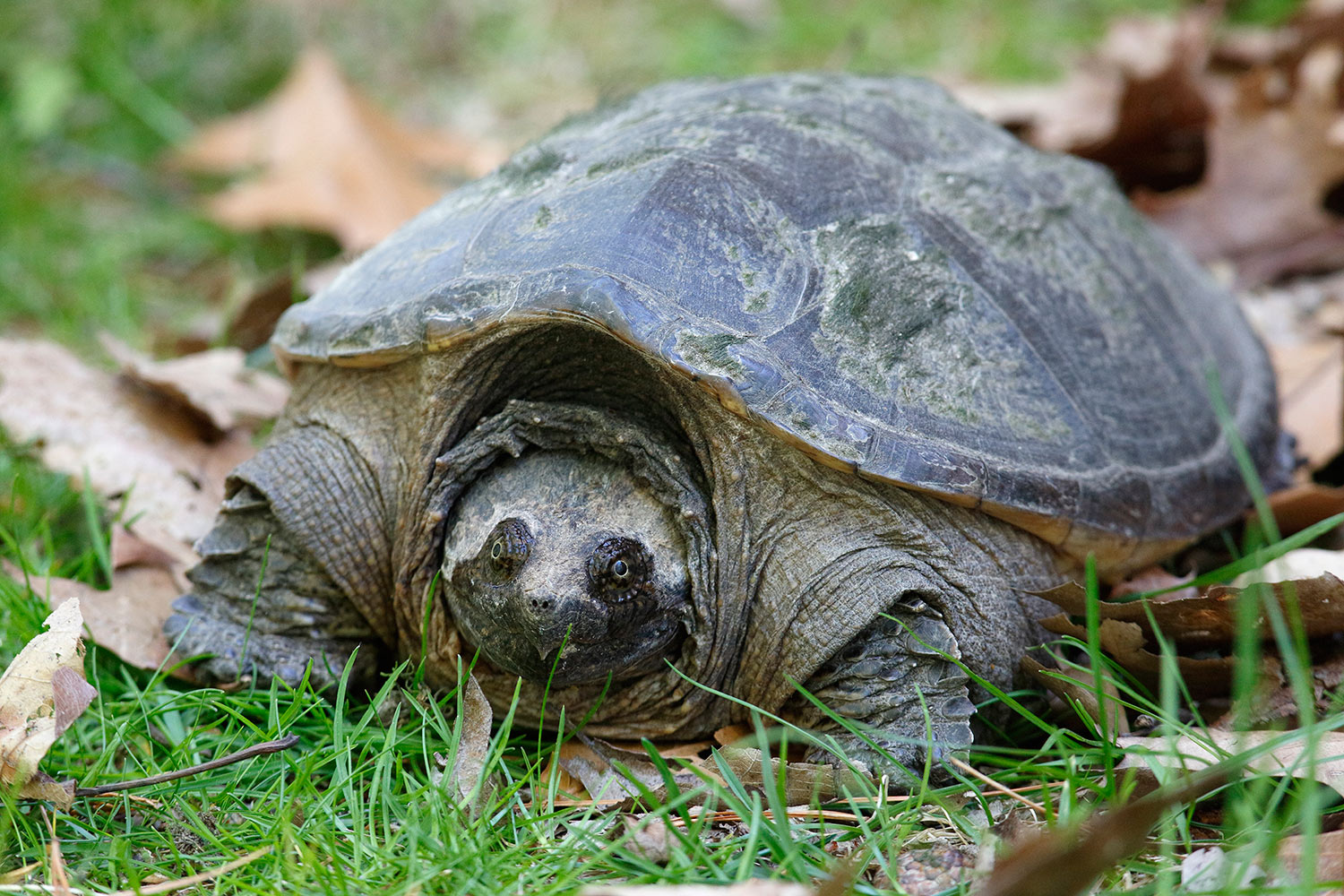
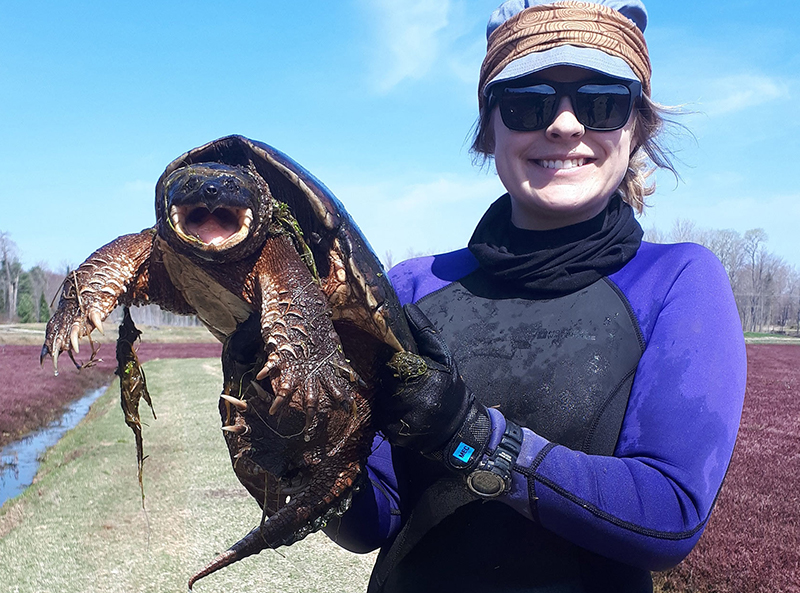
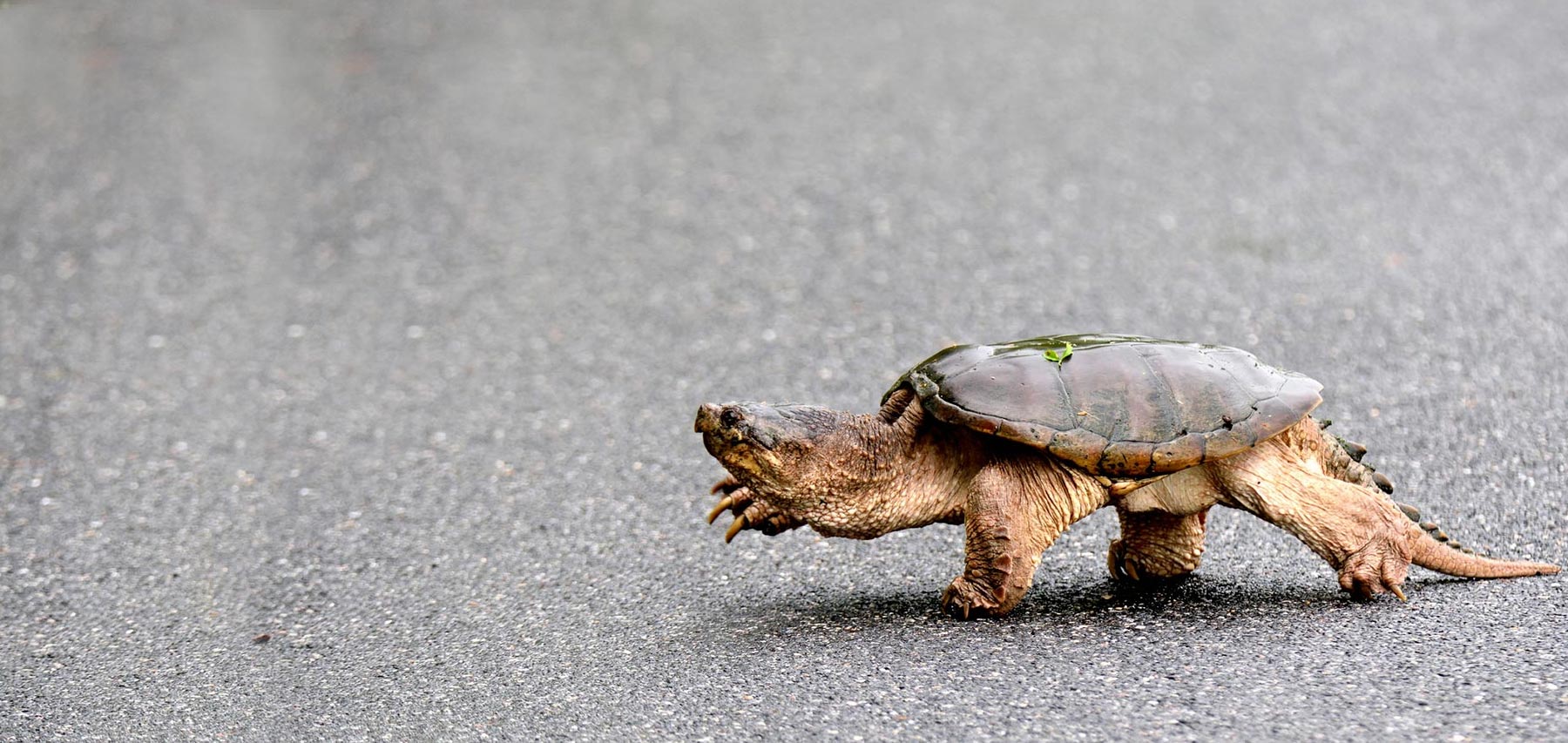
The Snapping Turtle is the largest freshwater turtle in Canada. It is distinguished by its large head, hooked upper jaws and long tail. Its upper shell has a serrated rear edge. The tail has triangular scales (“spikes”) that protrude from the top.
PHOTO GALLERY
 |  |  |
 |  |  |
 |  | |
RANGE
Southern portions of Saskatchewan through to Nova Scotia
HABITAT
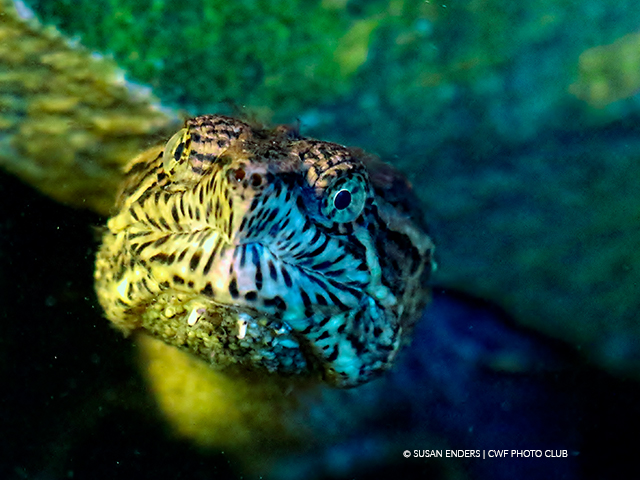
Snapping Turtles live in shallow, slow moving lakes, rivers, ponds, and wetlands with abundant aquatic vegetation and a muddy bottom. Females nest in open areas in sand, soil, or gravel. In winter, Snapping Turtles hibernate under water on the bottom of lakes and wetlands.
BEHAVIOUR
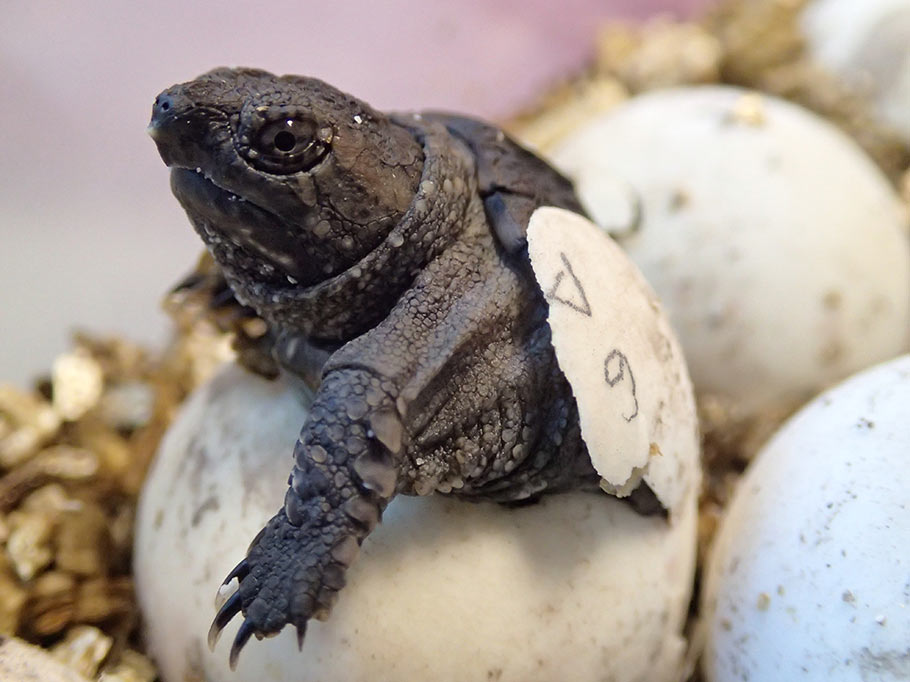
Snapping Turtles bask out of the water less than many other turtles, but are most apt to bask in the spring. They do not reach maturity until 17 to 19 years of age. Female Snapping Turtles lay one clutch in June that can range between 25 and over 45 eggs. The sex of the hatchlings is determined by the temperature of the nest during incubation. The hatchlings will emerge in late summer or early fall.
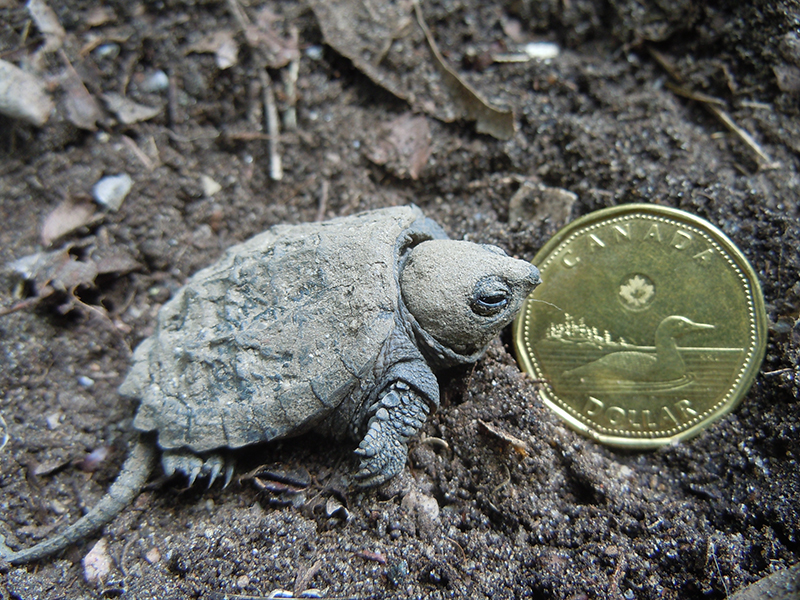
Adult Size: 20-49 cm
STATUS
Special Concern
THREATS AND/OR WHAT YOU CAN DO
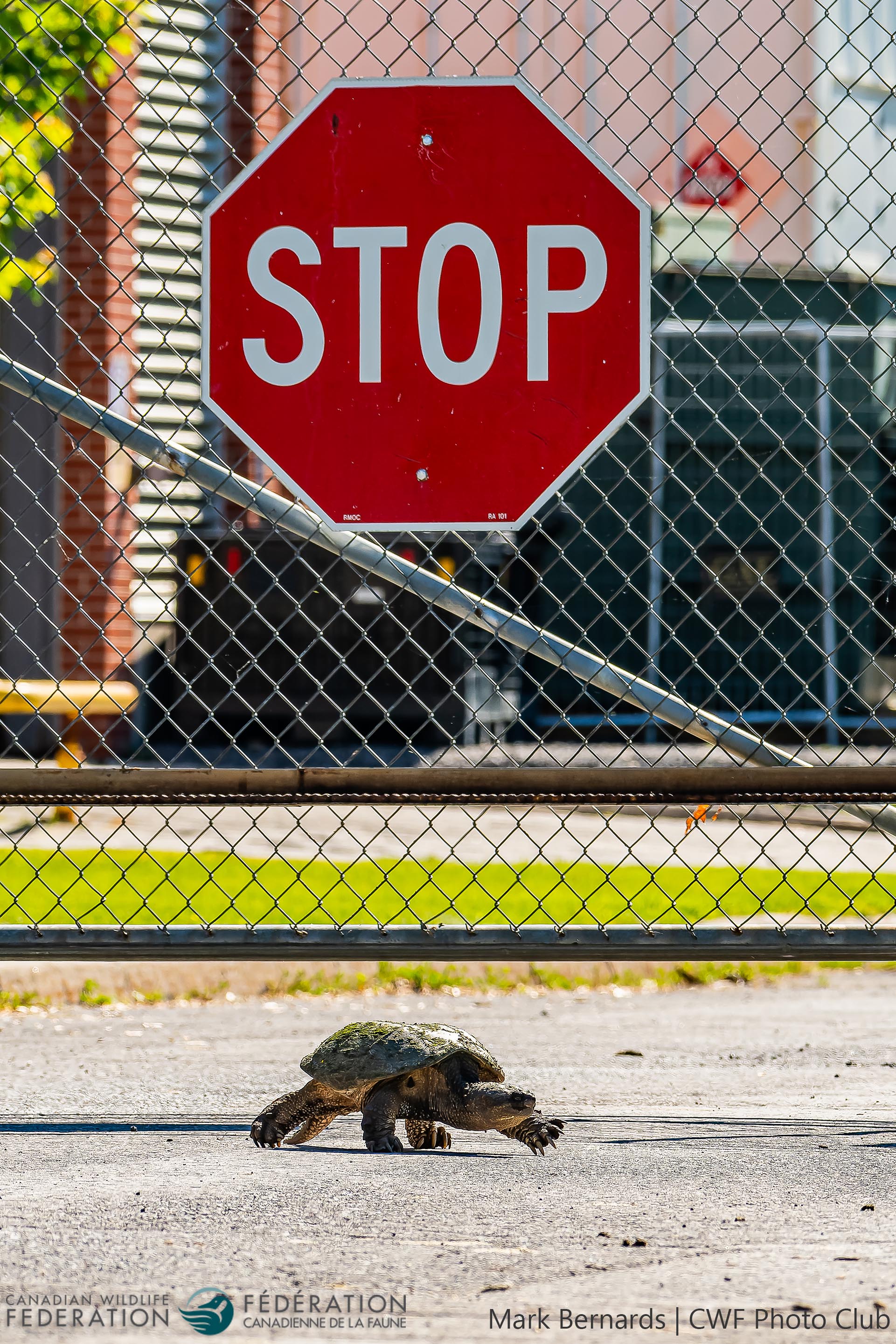
Wetland destruction is still an ongoing threat for this species. Road mortality is also a serious threat in many areas. High rates of nest predation by raccoons can pose a threat in some areas.
NOTES
Did you know? Snapping Turtles cannot pull completely inside their shells, like other turtles can, so they defend themselves by snapping at potential predators or well-meaning people trying to help them across the road.

Learn More
- 0


