


SCIENTIFIC NAME
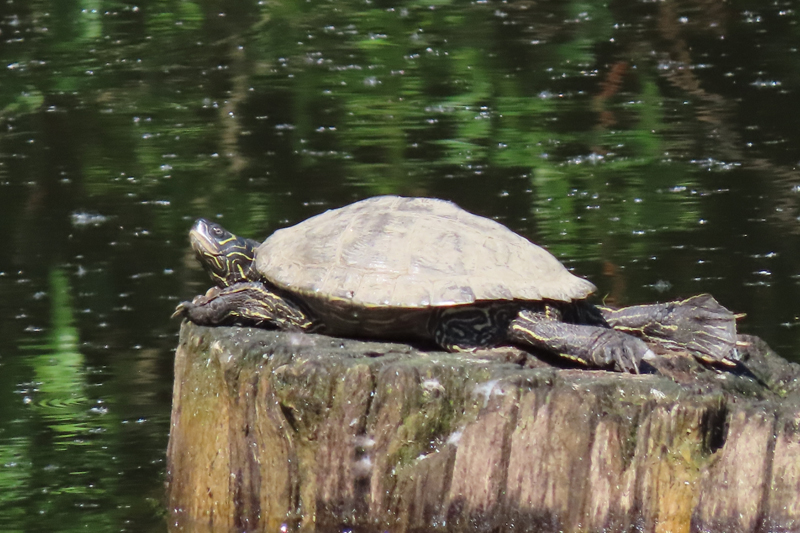
Graptemys geographica
DESCRIPTION
The False Map Turtle’s upper shell has a ridge or keel running down the center and has a serrated rear edge. The shell is adorned with a series of faint lines that resemble the lines on a map. The False Map Turtle differs from the native Northern Map Turtle in having hockey stick shaped “eyebrows” rather than an eye spot behind the eye.
RANGE
False Map Turtles have been released into the wild in southern BC, Ontario, and Quebec.
HABITAT
False Map Turtles are typically found in lakes or large rivers, but releases have also occurred in urban waterbodies.
BEHAVIOUR
Reports in Canada are largely in urban waterbodies. The False Map Turtle commonly basks on logs or other objects in the water. The native range of the species extends as far north as Minnesota, so parts of southern Ontario may be warm enough for eggs laid by the False Map Turtle to successfully hatch.
Adult size: 9-15 cm for males, 18-27 cm for females
Status
None, non-native species
Notes
Did you know? Native to the United States, False Map Turtles are becoming common in the pet industry. Commonly sold in pet stores, these turtles are often released into the wild once they become larger and more difficult to care for. Non-native species or pets should never be released into the wild because they could transfer diseases that threaten native species.

Learn More
- 0


