




-
 Guides, Infographics & Posters
Guides, Infographics & Posters
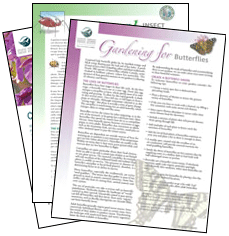
Take a closer look at the ways in which we’ll help you access the facts about wildlife. Whether it’s discovering the Hinterland Who’s Who animal fact sheets, or ordering our handy field guide to Canada’s prevalent shoreline species. This content is available to our CWF Supporters and online members. Please sign in to order your free materials.
More -
-
Wildlife E-cards
Wildlife E-cards
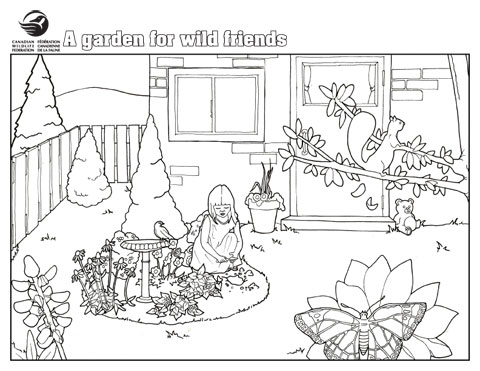
Send Dad a wildlife e-card! You cherish our wonderful wildlife and now you can send e-greetings that reflect your love of nature. We have developed a wide array of wildlife ecards for every occasion for you to share with your family and friends!
More -
 CWF Wallpapers
CWF Wallpapers
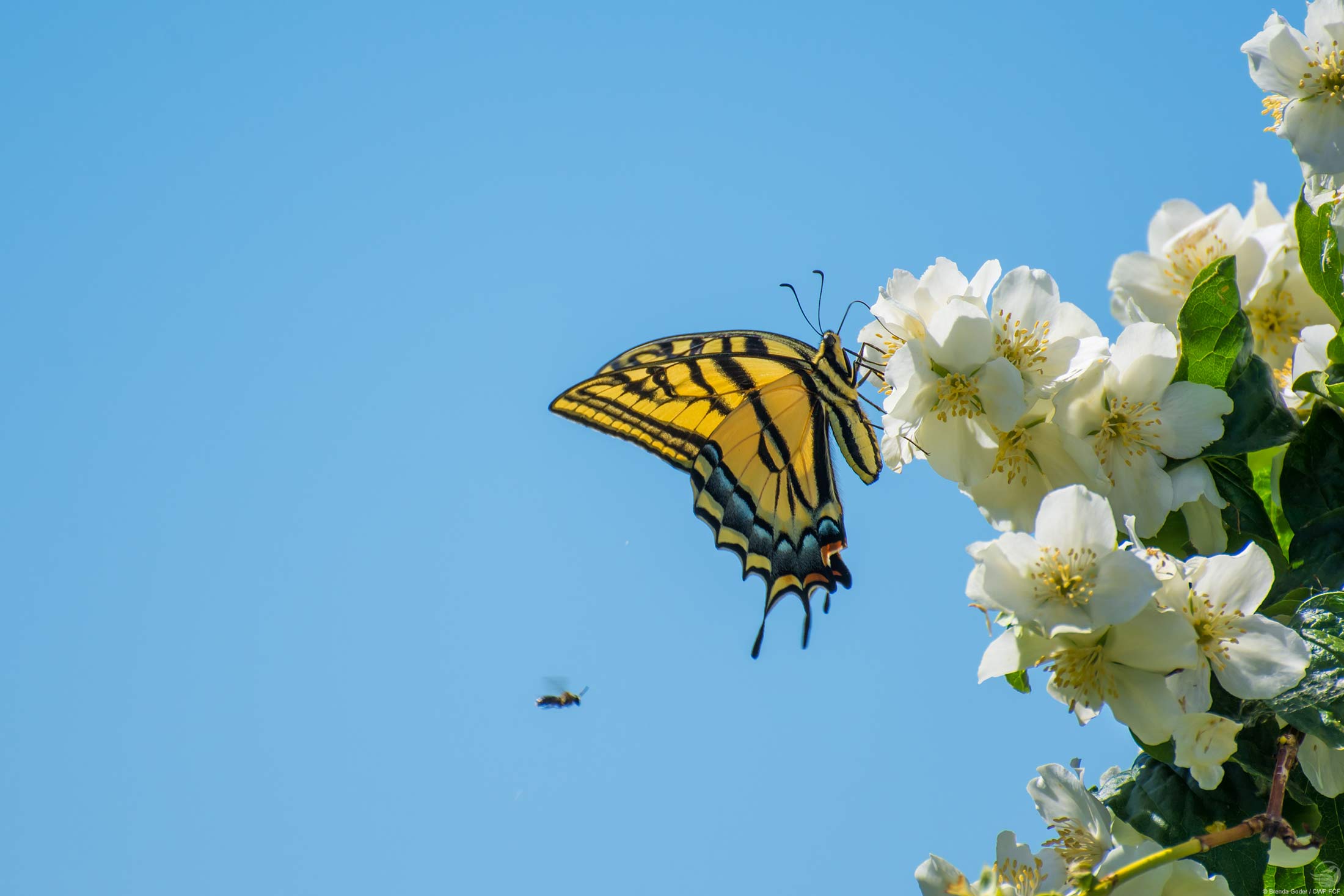
Your desktop is the perfect habitat for this wild wallpaper. Download CWF wallpapers!
More -
 WILD Webinars
WILD Webinars
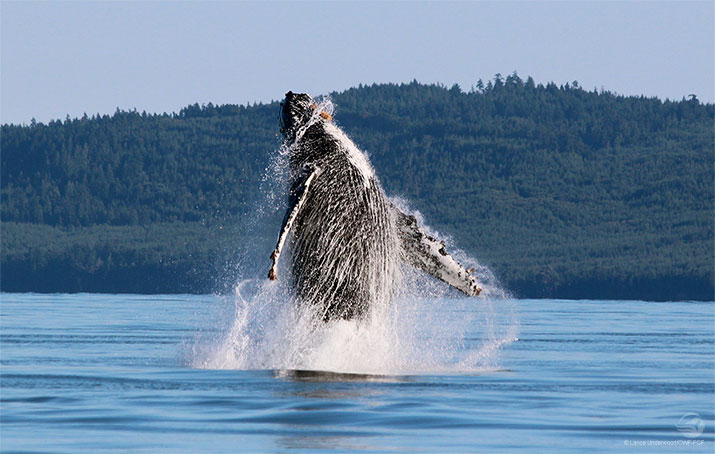
With topics relating to conservation, wildlife and habitat, we provide a relevant online learning platform, typically for grades four to six but of benefit to any age.
More

From easy-to-use apps designed as tools for your citizen science projects to picturesque wallpaper images for your computer, CanadianWildlifeFederation.ca offers a variety of useful downloads for your PC and mobile devices.
Coasts & Oceans
Connecting With Nature
-
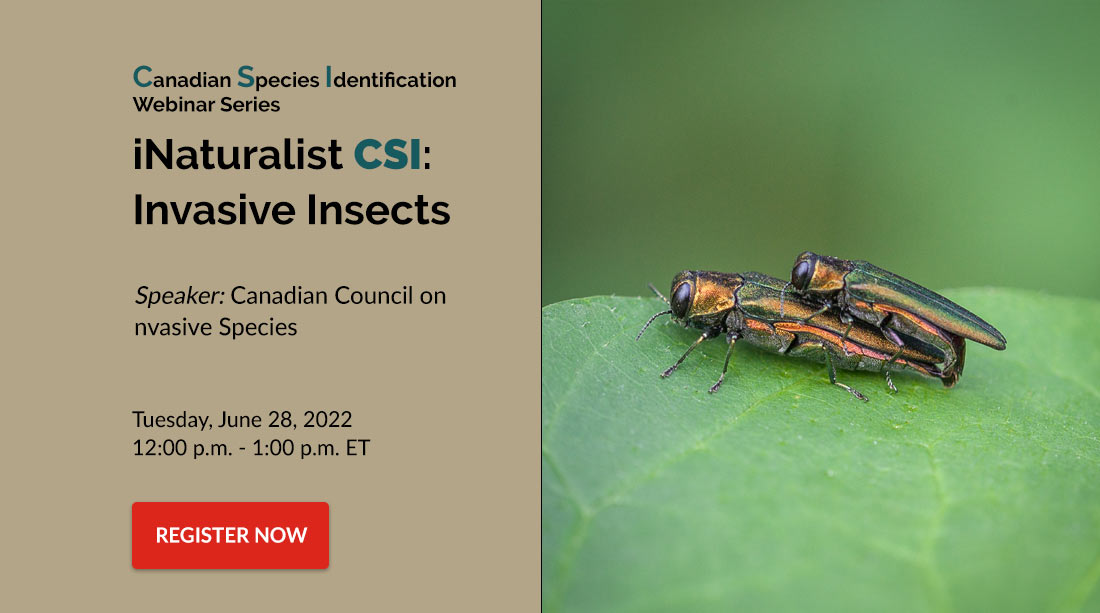
iNaturalist CSI: Invasive Insects
2022-06-28
Join the Canadian Wildlife Federation (CWF) for a webinar on how to photograph and identify Canada’s top 10 invasive insects using iNaturalist.ca, presented by the Canadian Council on Invasive Species (CCIS). Nearly one-fifth of the Earth’s surface is at risk of plant and animal invasions. Invasive species are threatening Canada’s ecosystems, economy and communities. Climate change is also exacerbating this issue and can make ecosystems more vulnerable to invasive species, and invasive species can worsen the impacts of climate change. The good news is - you can help! Learn how to ID Canada’s top 10 invasive insects so you can report them, helping to stop their spread. Every report helps scientists track and protect Canada’s natural spaces and biodiversity from the negative impacts of invasive species. iNaturalist has become one of the world’s most popular nature apps and the Canadian Wildlife Federation has led the charge in bringing it to the forefront of Canadian citizen science. Date: June 28th, 12:00-1:00 Eastern Host: Kellie Sherman, Operations Supervisor at CCIS presenting, James Pagé to host.
-
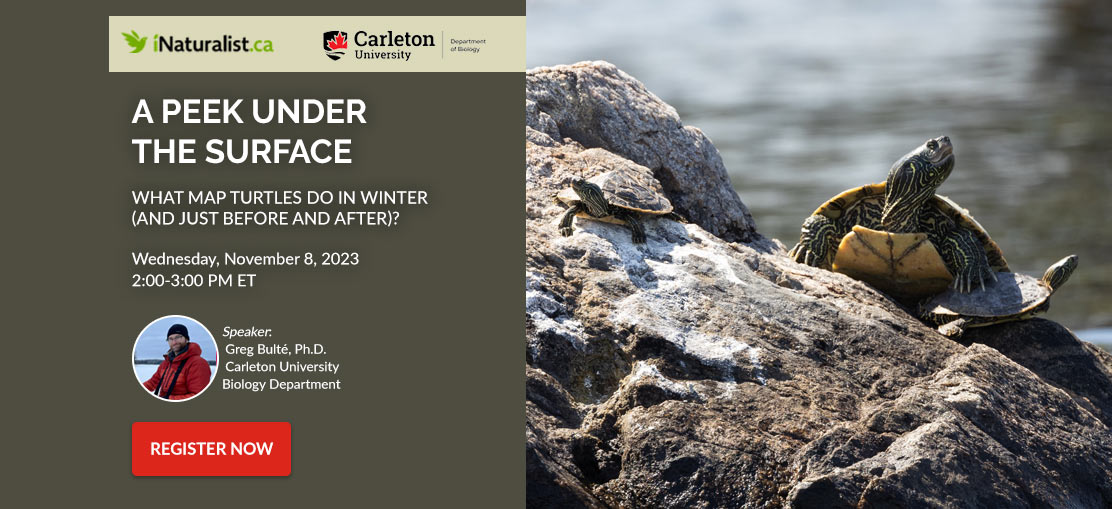
A Peek Under the Surface
2023-11-08
Join us for a look at what map turtles do in winter (and just before and after)? Each fall, Northern Map Turtles get together. In Opinicon Lake, found in eastern Ontario, they come from all over the lake to meet where they will spend the winter months under the ice. From November to April, they are nowhere to be seen. What are they doing under the surface of the water? Under the ice? Contrary to common belief, they are not just buried in the muck waiting for spring. This is a time of love, physiological challenges, and sometimes death.
-
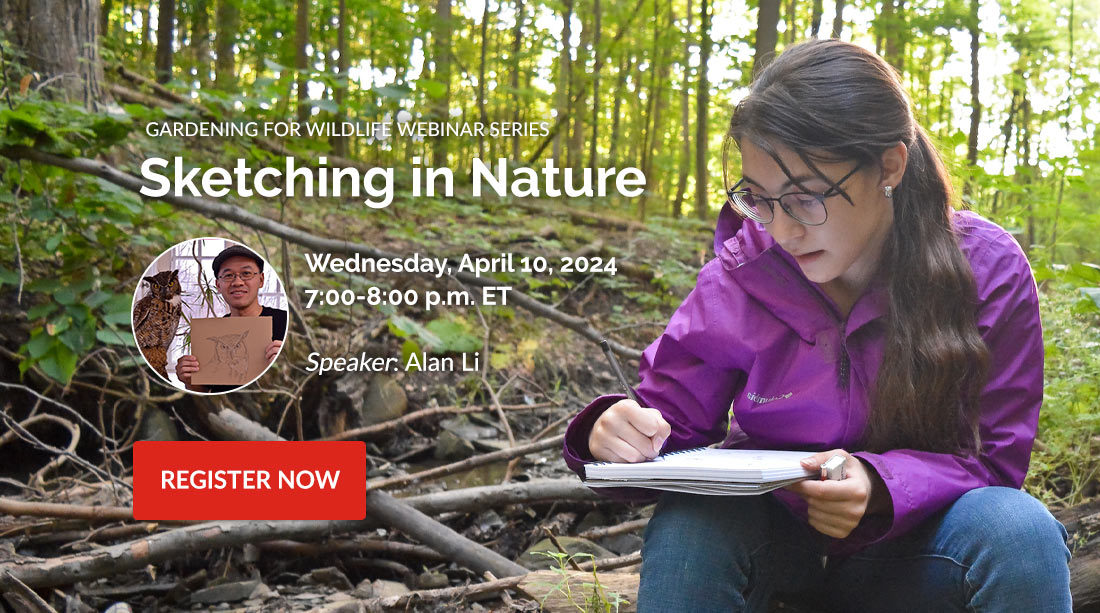
Sketching in Nature
2024-04-10
Join CWF for our webinar “Sketching in Nature”, a creative activity that can enrich your understanding of the natural world. Our guest speaker, Alan Li, is both a brilliant artist and a down-to-earth teacher who will share practical advice on sketching outdoors including which art supplies work best in the field. He will also give you a peek inside his sketchbooks and provide tips on how to make expressive sketches of your subjects, whether it’s a perching bird or fallen leaf, without sacrificing accuracy or realism. Sketching is for all ages and all abilities. You do not require an art degree nor do you need to feel intimidated. The best place to begin your sketching adventures is close to home; your local park, a nearby creek or woodlands are wonderful places to explore.
-
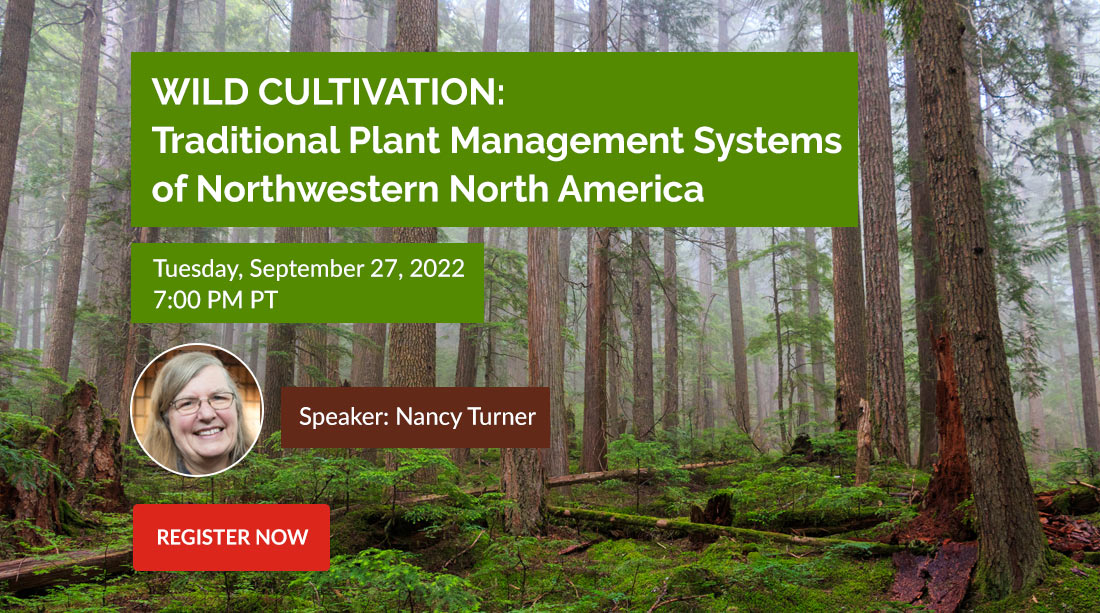
“Wild cultivation”: Traditional Plant Management Systems of Northwestern North America
2022-09-27
Please join CWF Tuesday September 27 at 7:00 p.m. Pacific Time (10 p.m. Eastern Time) for a very special presentation with Nancy Turner, an award-winning ethnobotanist who has worked with Indigenous Elders and knowledge holders in western Canada for over 50 years. Nancy will share her insights on how the cultural values of the Indigenous Peoples in the Northwest have enhanced both the health of the land and their harvests. We hope you will join us for this special event! About Nancy Turner: Nancy Turner is an ethnobotanist, and Distinguished Professor Emerita, School of Environmental Studies, University of Victoria, Canada. She has worked with First Nations elders and cultural specialists in northwestern North America for over 50 years, helping to document, retain and promote their traditional knowledge of plants and environments, including Indigenous foods, materials and traditional medicines. Her two-volume award-winning book, Ancient Pathways, Ancestral Knowledge (July, 2014; McGill-Queen’s University Press), integrates her long-term research. She has authored or co-authored/co-edited 30 other books, including: Plants of Haida Gwaii; The Earth’s Blanket; “Keeping it Living” (with Doug Deur); Saanich Ethnobotany (with Richard Hebda), and Food Plants of Coastal First Peoples, and over 150 book chapters and papers. Her recent edited book is Plants, People and Places: the Roles of Ethnobotany and Ethnoecology in Indigenous Peoples’ Land Rights in Canada and Beyond (2020). She has received a number of awards for her work, including membership in Order of British Columbia (1999) and the Order of Canada (2009), honorary degrees from University of British Columbia, University of Northern British Columbia and Vancouver Island and Simon Fraser Universities.
-
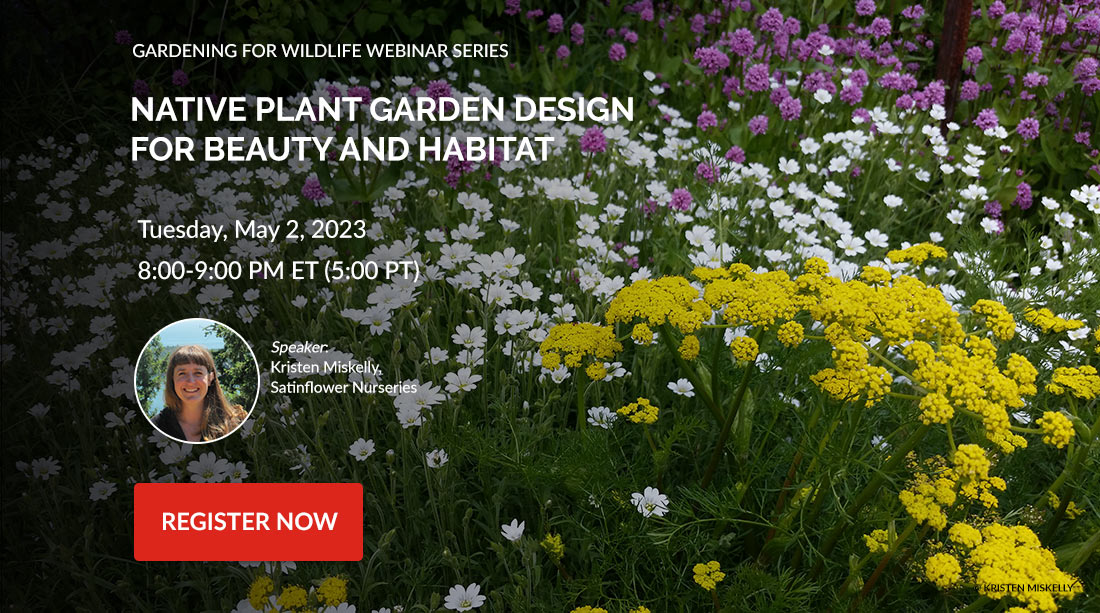
Native Plant Garden Design for Beauty and Habitat
2023-05-02
Join CWF as Kristen Miskelly, biologist and owner of a native plant nursery and consulting business, shares design principles for home gardens. She will also touch upon using native plants in creating green roofs, rain gardens and planting along septic beds and boulevards. Kristen will guide you through various aspects of working with native plants, from choosing the best plants for your spot, site preparation, design considerations, maintenance and timing of activities. Examples from British Columbia will be shared, but the principles can be applied broadly across our Canadian landscapes. We hope you can join us!
Education & Leadership
Endangered Species & Biodiversity
Forests & Fields
-
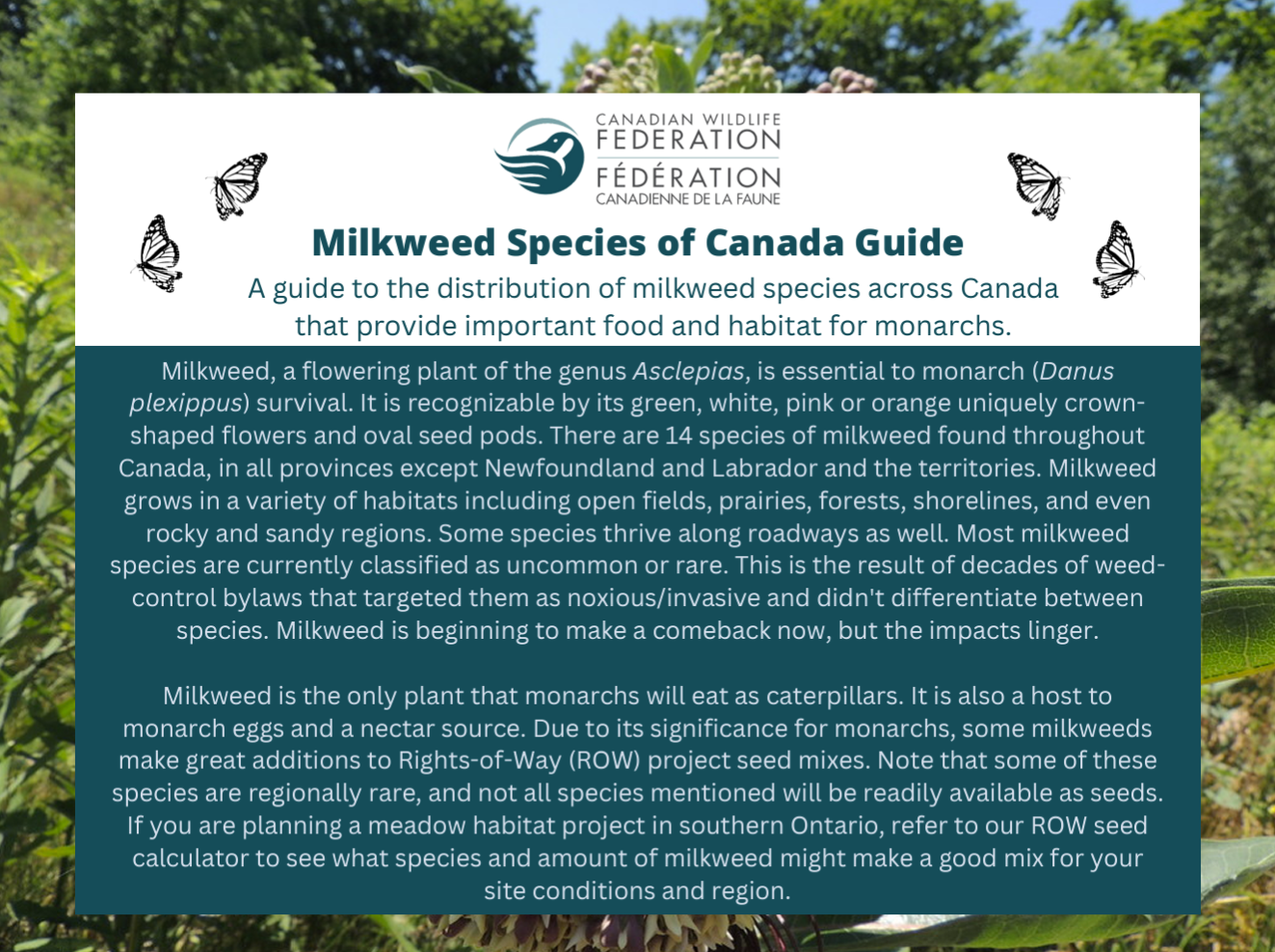
Milkweed Species of Canada
2026-06-26
A guide to the distribution of milkweed species across Canada that provide important food and habitat for monarchs.
-
-
Planting the Seed: A Guide to Establishing Prairie and Meadow Communities in Southern Ontario
2000-01-01
Prairie and meadow are complex communities and even the best attempts to recreate them will be simplified versions that do not fully replace the ones that have been lost. For this reason, protecting existing natural habitat should always be a top priority. If habitatcreation projects are well executed, however, they can provide a significant contribution to the conservation of wildlife...
-
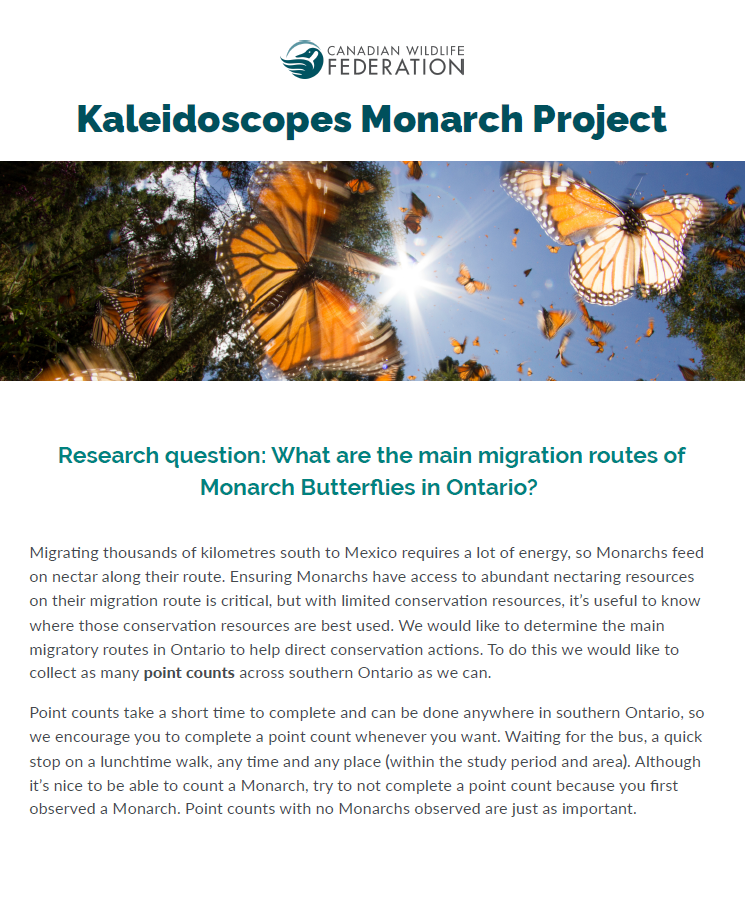
Monarch Point Count Data Guide
2026-06-26
-
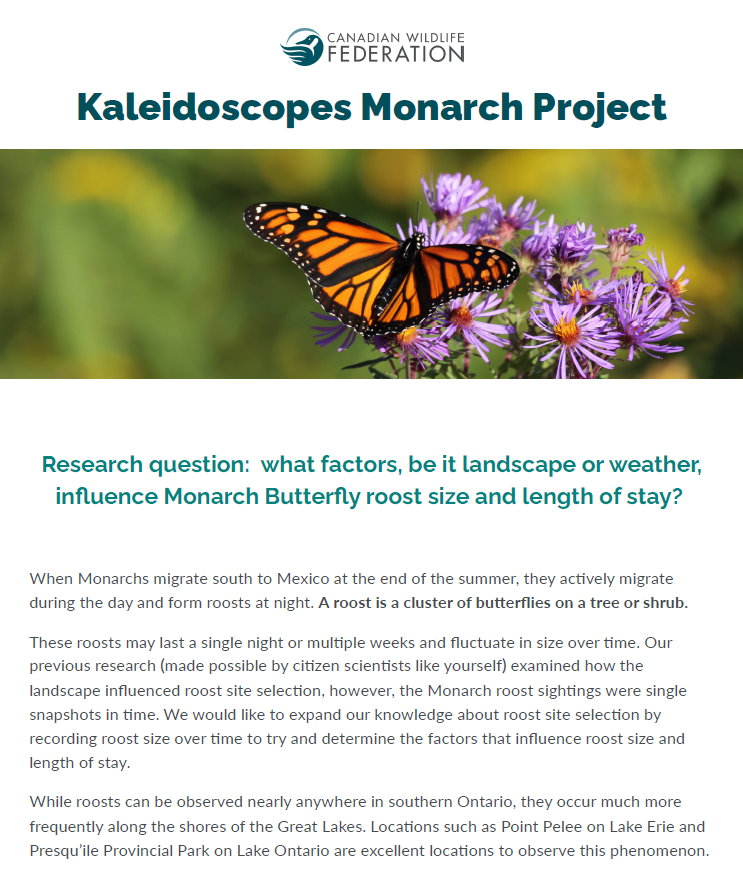
Monarch Roost Data Guide
2026-06-26
Lakes & Rivers

Learn More

- 0
- 1
- 2
- 3