


There is no doubt that moose are well adapted to Canadian winters. Hollow hairs in their dense coat trap air which acts as insulation, their long legs carry them through snow and their cloven hooves spread widely to provide support as they travel through snow. Despite these adaptations, when snow becomes too deep, moose can have a hard time moving around in it. To help conserve energy, moose will use packed trails or cleared areas such as roads to avoid deep snow.
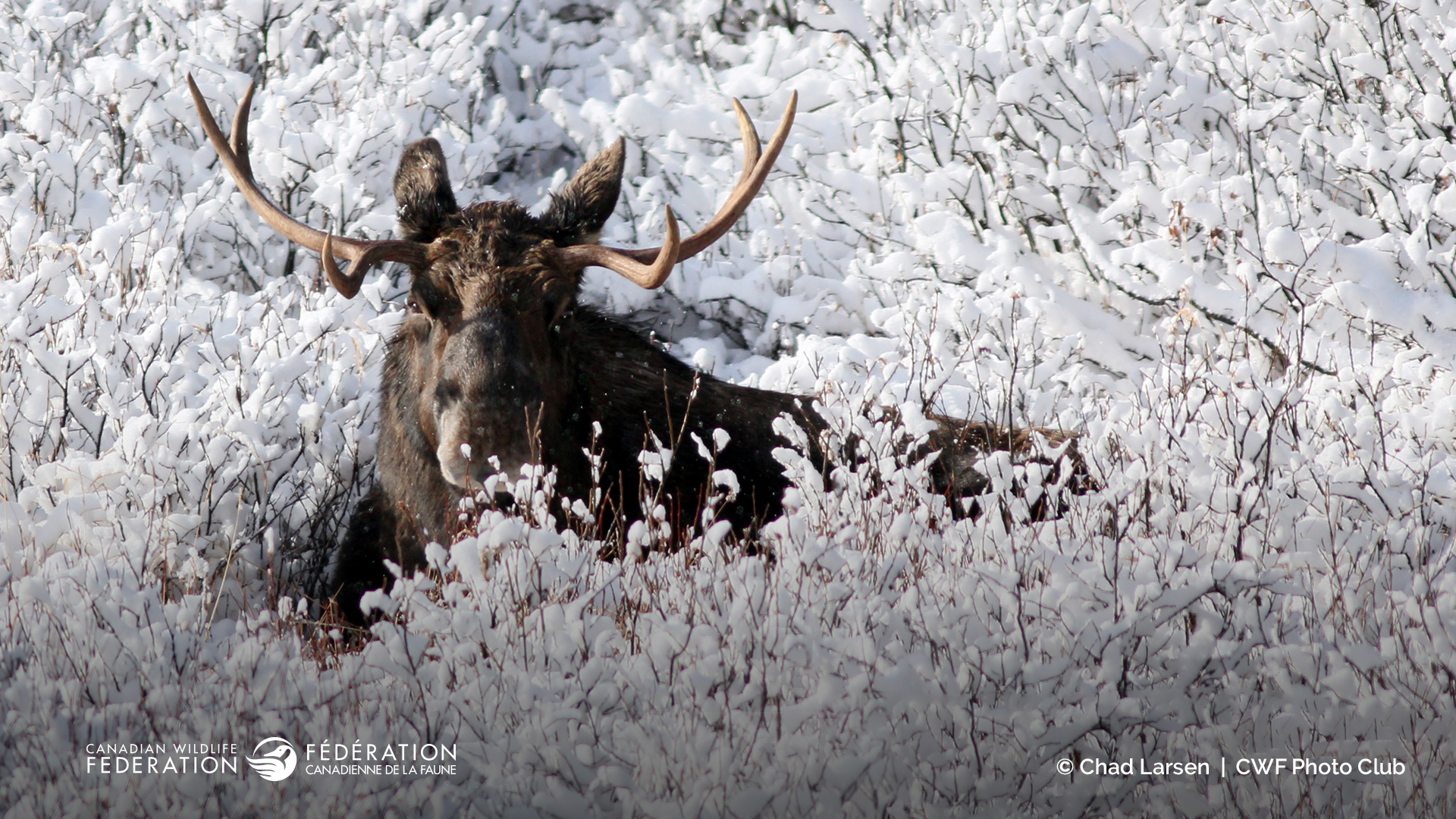
Studies have looked at how snow depth influences moose movements and the following has been found:
- Moose movements are not inhibited when snow depth is less than 60 cm
- Moose movements in snow can become inhibited when there is between 60-90 cm of snow
- When snow reaches more than 90 cm, moose movements become severely restricted
If you find a moose that is stuck in snow, the best thing to do is call your provincial wildlife agency. Moose are large and under these situations would be stressed and their behaviour unpredictable. It is important to keep everyone safe.


