

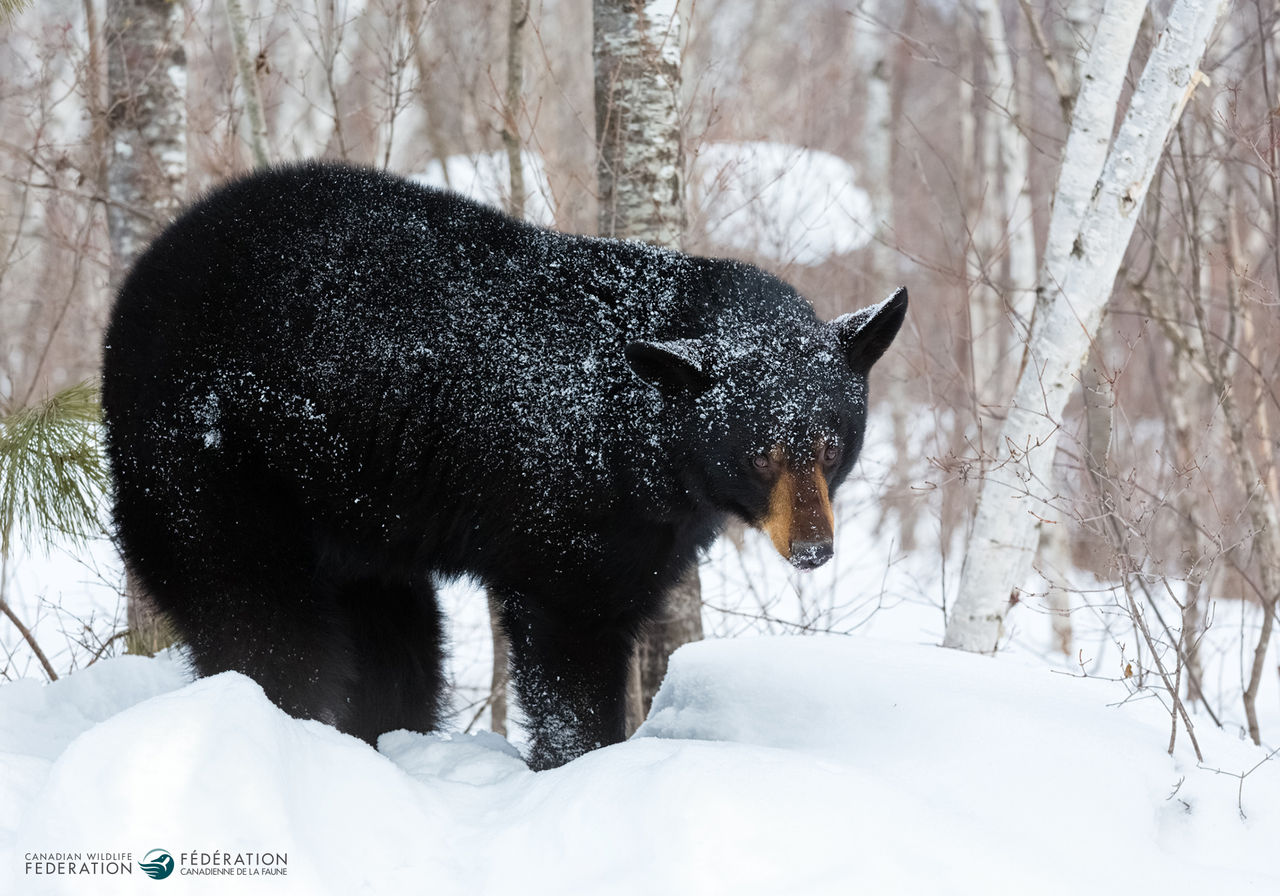
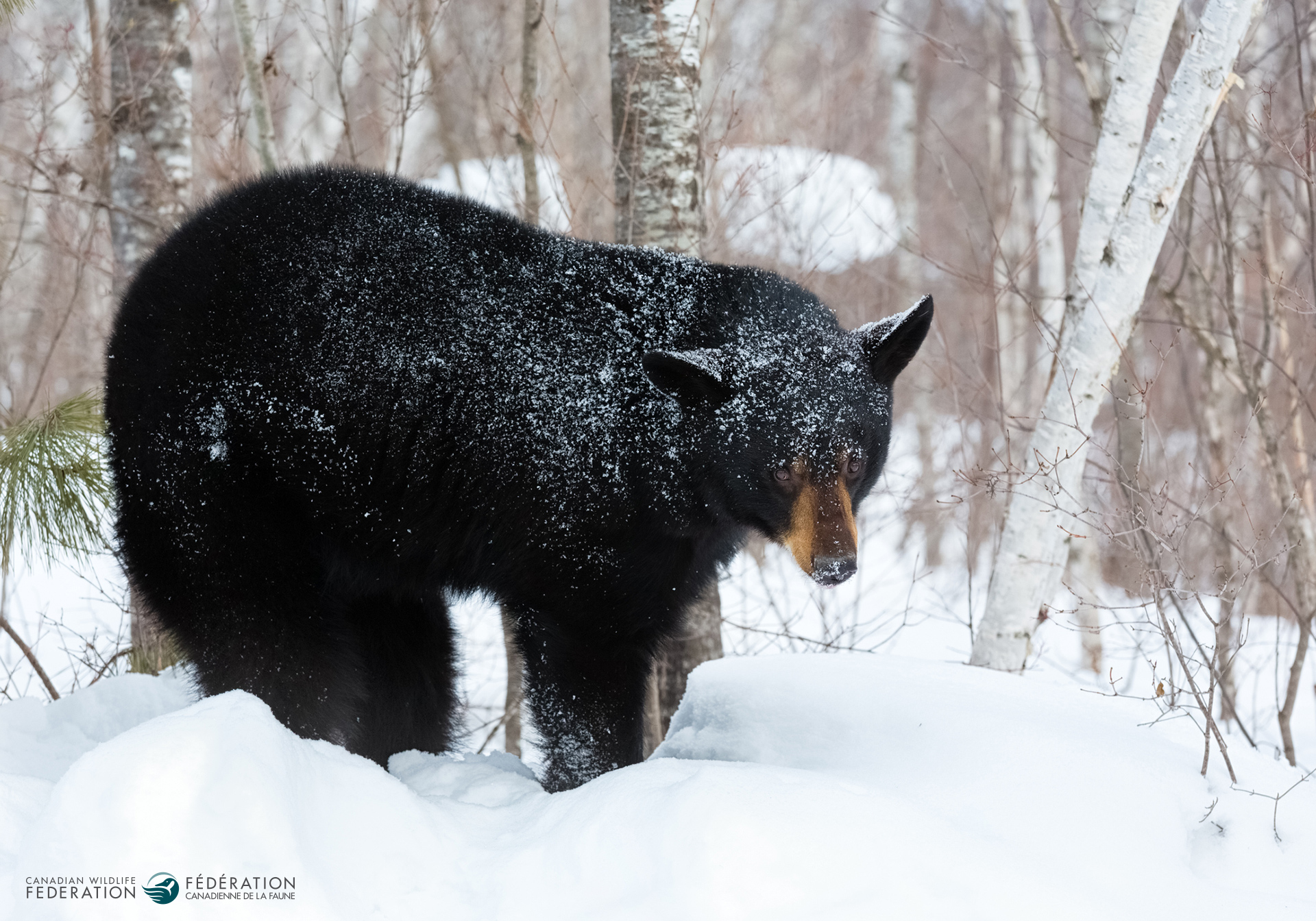
Depending on where you live, Black Bears can begin looking for a denning site in October or November and they can emerge as late as April or May.
Turns out though that seeing bears in the winter, while perhaps not common, isn’t unheard of, and more bears may soon begin cutting their slumber short. A Black Bear in Thunder Bay made headlines when its movements were captured by a trail camera late December/early January 2021. This bear made numerous trips outside its den as it foraged for left over corn in a nearby field and spent time working on its den.
There was another report of a Grizzly Bear sighting in Banff National Park on February 28, 2020, making it the earliest sighting of a Grizzly Bear for the area in the past decade. A representative from the US Fish and Wildlife Service in early 2020 noticed an increase in the number of reports of bears out in late February/early March.
What’s causing this shortened denning period? A 2017 study used activity data from 131 dens that were used by 51 different adult female Black Bears and found that both weather and food availability impacted the hibernation behaviour of these bears. Increased temperatures led to a reduction in the duration of hibernation and caused an earlier emergence in the spring. Interestingly, for every 1°C increase in the average fall minimum temperature, hibernation was delayed by 2.3 days; for every 1°C increase in winter minimum temperatures, bears reduced their hibernation by an average of six days; and for every 1°C increase in spring temperatures, bears came out of hibernation 3.5 days earlier. They also found that food sources, both natural and anthropogenic (caused by people or their activities), had a similar effect – delaying hibernation in the fall when food sources were abundant and reducing its duration. In fact, there are reports of some black bears skipping hibernation altogether.
If bears are active for longer periods of time, there is concern that this will lead to an increase in human-bear conflicts as bears desperately search for food. Typically, the emergence from their den coincides with new plant growth, an earlier emergence means this food source won’t be available.
If you’ve seen a bear in your backyard, it may be an indication that times are changing.


