

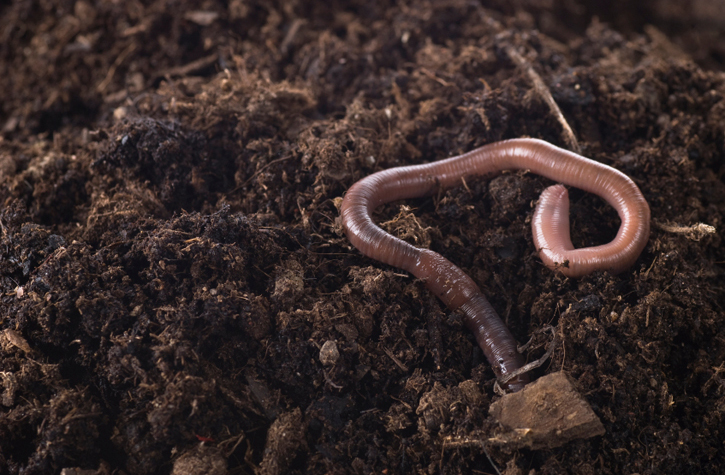
Q. I heard that earthworms are not native to Canada. Is that true?
A. This may come as a surprise to many people, but most species of earthworms found in Canada are not native. It is believed that most of our native earthworms were wiped out during the last ice age. There are a few native species that did survive, species that lived in areas not impacted by the ice age, and while rare they can be found in places like the west coast of British Columbia, the Yukon and the Porcupine Hills area of Alberta. But for the most part, the earthworms you find in your gardens, lawns, on wet roads and other places – they’re not native!
Today, these non-native intruders can be found across most of Canada, from southern Canada to the north. How did they get here? It dates back to the arrival of European settlers. Many people see earthworms as beneficial, after all they aerate soil, break down organic matter and add nutrients to soil. And while these benefits are true, they also consume leaf litter which affects soil structure, impacting water infiltration, erosion, microbial communities and nutrient cycling. So much so that some forest understories look barren of leaf litter, which provides essential organic material for plants.
And there’s a new kind of earthworm making its way into Canada – worms known as jumping worms. They originate from Asia and it’s believed they arrived primarily through horticultural practices. Most sightings are from greenhouses, parks and residential properties and there is much concern for the spread of these invaders in Canada’s forests. While researchers are still learning about their impacts, some studies show that jumping worms may impact soil properties more so than their European counterparts. They are larger, reproduce faster, can be found in greater densities and have more flexibility in their diet. As their range expands, which it will undoubtedly do, there is concern for how they will impact soil nutrient regimes. There’s also evidence that they may be able to outcompete the already well-established European earthworms. Jumping worms aren’t as broadly distributed as European earthworms, at least not yet. There are reports of them in Ontario, New Brunswick and Nova Scotia although it’s possible they could be in other locations.
While most of us know what a ‘normal’ earthworm looks like, jumping worms look different. Jumping worms appear glossy and smooth. While they don’t jump per se, they get their name from their behaviour when disturbed – they thrash wildly around and can have movements similar to a snake. Another identifying feature is their clitellum which is the ring-like band on their body. This is only found on adults but in jumping worms, it’s a milky colour, is found near their head, it’s flush with their skin and wraps around their entire body. The clitellum of European earthworms is raised, is pinker, is further from their head and doesn’t wrap around the entire body.
If you think you’ve discovered jumping worms, you can report your sightings to iNaturalist Canada. You can also use Early Detection and Distribution Mapping System (EDDMapS) to provide a more detailed account. Your observations will play an important role in helping researchers better understand this species.


