

Q. I found a Blanding’s Turtle on my property. What should I do?
A. The Blanding’s Turtle is listed as a Threatened species under the Ontario Endangered Species Act and the act provides habitat protection for threatened and endangered species. Wetlands up to two kilometres from an observation of a Blanding’s Turtle can be protected when there are multiple wetlands in the area. At a minimum, the wetland closest to the observation is protected. The habitat protection does not interfere with day to day activities around a wetland, or building a cottage nearby, but it would make it difficult to drain the wetland.
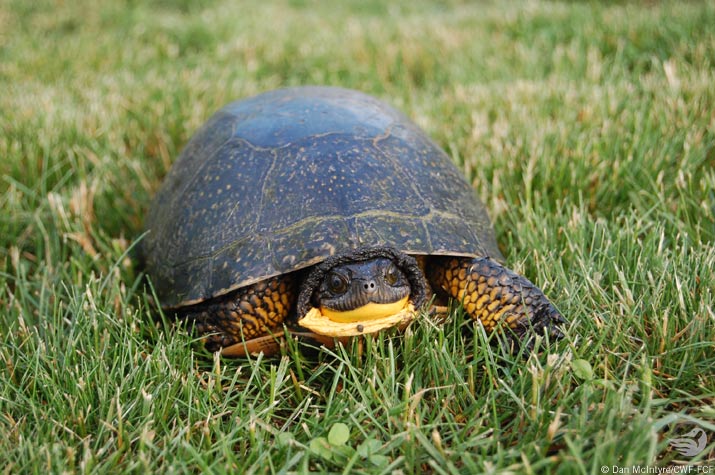
Any valid observation can increase the amount of protected wetland habitat. It can be a photo of a Blanding’s Turtle basking on a log, or even a dead individual on a road. Observations of Blanding’s Turtles need to be carefully collected to be considered valid by the Ontario Ministry of Environment, Conservation and Parks. A clear photograph of the turtle is needed, along with the specific location and the date. If possible, make sure the photo shows the yellow neck of the turtle which clearly identifies it as a Blanding’s Turtle. And it is good to take more than one photo to make sure the turtle can be identified. Here are some tips on taking better photos of turtles for iNaturalist.ca to make it easy to identify the species in the photo and this guide to taking identifiable photos of turtles in particular.
Log Your Sighting on iNaturalist Canada
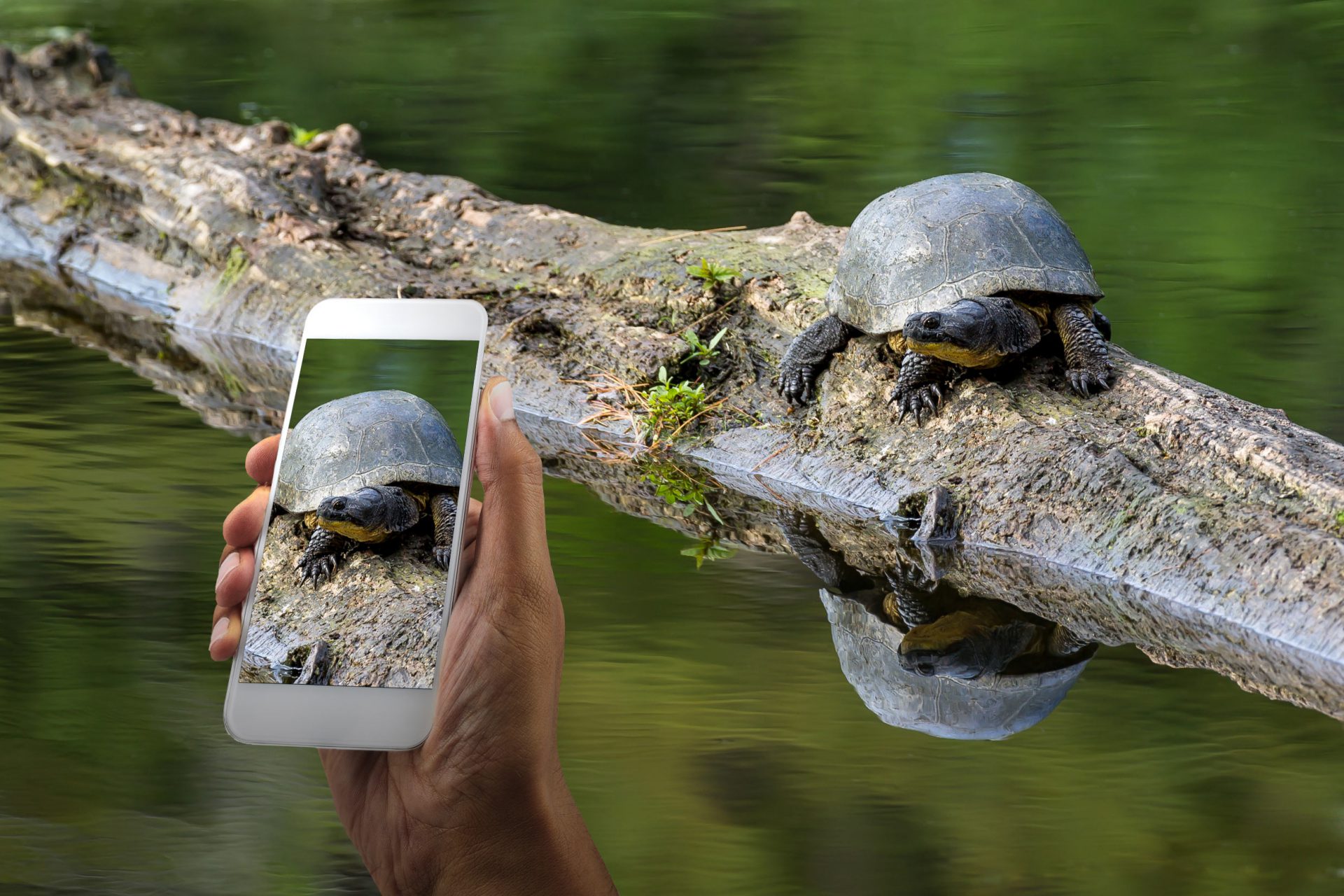
A simple way to collect that information and at the same time ensure it is submitted to the government is to use iNaturalist Canada, a community science project that allows people to easily document and upload photos of native and exotic species.
Observations can be easily uploaded using the iNaturalist app on a smartphone. Using the app, snap a photo or two of the Blanding’s Turtle and then upload the image and details about the observation. Or, take a photo with a digital camera that will zoom in for a close-up, and then submit the observation through the iNaturalist Canada website. Make sure you take detailed notes on the location.
The Right Info in Official Hands
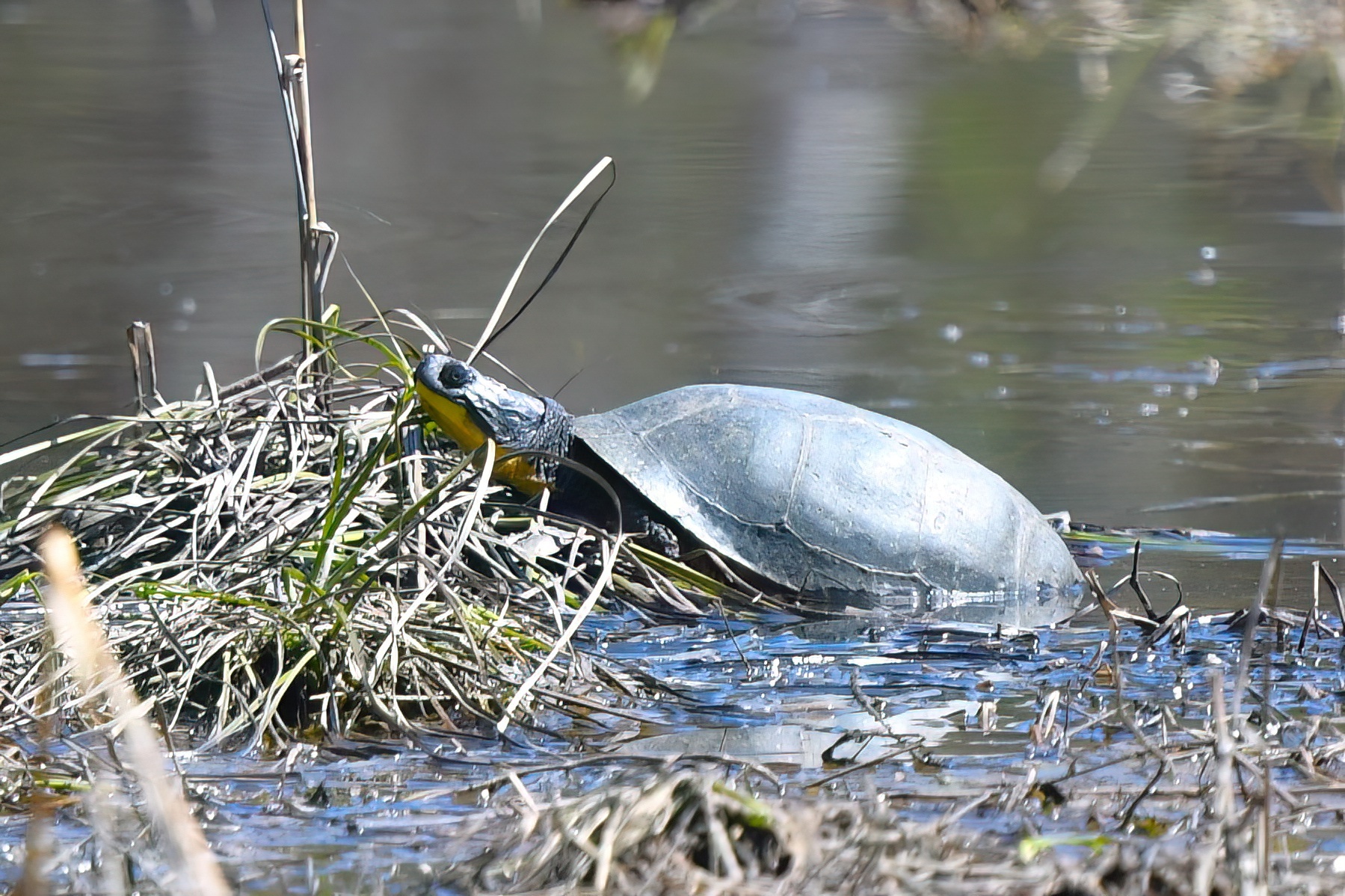
Once an observation is submitted to iNaturalist, it will get into the right hands. The Natural Heritage Information Centre (NHIC) is the rare species tracking group of the Ontario government. They gather observations submitted to iNaturalist of protected species, such as the Blanding’s Turtle. Those observations will then contribute to habitat protection.
Increase the benefit of your Blanding’s Turtle observations by joining two iNaturalist projects: (NHIC) Rare Species of Ontario, and Canadian Wildlife Federation’s Help the Turtles. Joining these two projects will help the Natural Heritage Information Centre to see the exact location of your Blanding’s Turtle observation (it will otherwise be obscured to keep the exact location private in order to safeguard it from potential poachers) and help CWF to better understand the distribution of the species in Ontario.
It is hard to know if one particular observation will increase habitat protection for the Blanding’s Turtle. Possibly someone else has already submitted an observation from that location, but in many cases, an observation even a few hundred meters from a previous report will result in additional protected habitat. It is worthwhile submitting any Blanding’s Turtle observation to iNaturalist.
And you just never know when the next observation will protect a wetland and all the species that live there.
Learn more about how you can HelpTheTurtles.ca


