

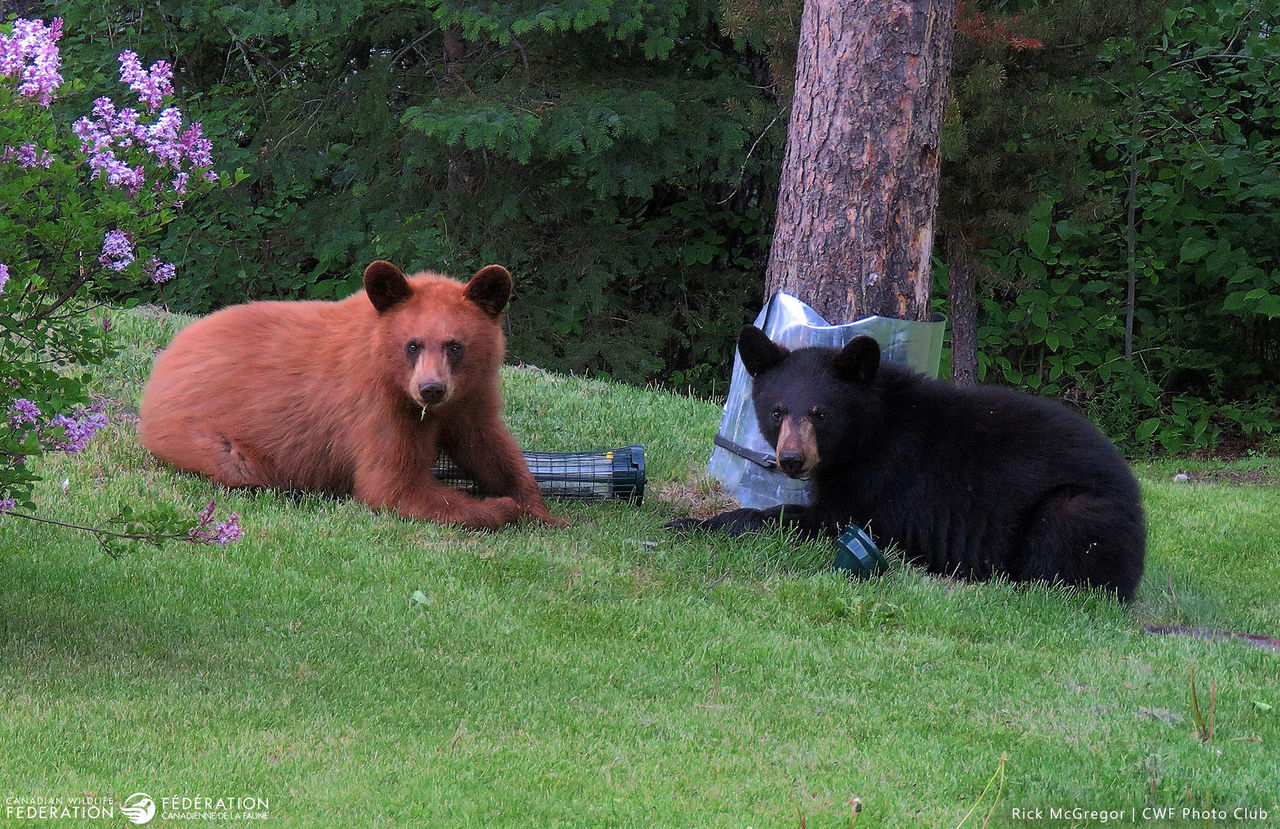
Q. I live in the suburbs and for some reason we keep getting black bears passing through our neighbourhood. Last year the police said they were going to try to catch and release the bears but they repeatedly are killing them! Why?
A. It is sad and unfortunate when wildlife become habituated to urban settings and end up being put down. As the Canadian Wildlife Federation is not involved in making these decisions, I unfortunately don’t have the answers to your question. It is the provincial wildlife departments who manage Black Bears and are therefore typically responsible for handling these kinds of situations, sometimes in conjunction with police. I would therefore encourage you to contact your provincial wildlife department. They will be able to address your questions and concerns and let you know how these decisions are made.
While I can’t speak on their behalf, and protocols may differ among different areas, below are some things fish and wildlife officers may take into consideration when making decisions on how best to handle bears in towns and cities:
- What is the bear’s level of food habituation?
- Is the bear showing any signs of aggression towards people?
- Does the bear have past conflict history?
- What is the health of the bear?
- Are orphaned cubs present? If so, are they a candidate for rearing and release (i.e. is there a rehabilitation centre available, are they in good health, are they habituated to people, conditioned to human food sources, etc.)?
Relocation
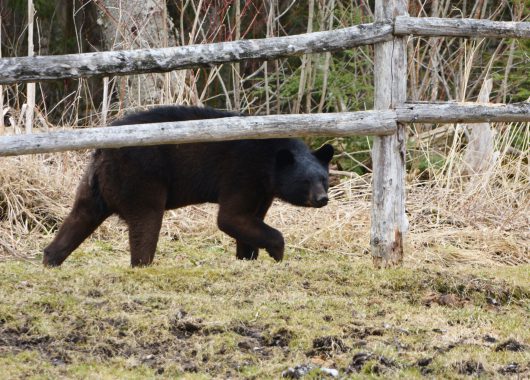
Relocating Black Bears may be possible in some situations, depending on the particular situation. However, it doesn’t always work out. Below are some stats from the Ontario government from 2000:
- Approximately 70 per cent of juvenile males may be successfully relocated
- Approximately 40 per cent of juvenile females may be successfully relocated
- The success rate for adult bears of either sex drops to 20 per cent
- Relocated bears typically return to their original range from distances up to 200 km, travelling at a rate of more than 18 km/day
- Relocated females begin their way back to their original range within hours of their release
- Bears studied near Sudbury, Ont repeated their behaviour in 24 per cent of cases
- The number of bears repeating their behaviour in Chapleau, Sudbury and Parry Sound was found to range between 10 per cent and 60 per cent.
Don’t Feed the Bears!

To help keep the bears in your area safe, make sure you don’t feed them – either intentionally or unintentionally:
- Monitor your bird feeders. Bears can be attracted to the seed. If bears are attracted to your bird feeders, take them down until the bears have moved on or enter hibernation.
- If you have fruit producing trees and shrubs make sure to pick the fruit before it is fully ripe.
- Keep an eye on your vegetable garden. Bears can be especially attracted to potatoes and root vegetables.
- Make sure your compost is well maintained to reduce odours.
- Feed pets inside, keep pet food securely contained and always keep dogs on leash.
- Make sure your bbq is clean to reduce odours.
- Keep fuel containers locked up in a secure building.
- Put household garbage out as close to pick up time as possible.
This question indicates that Black Bears are repeatedly being attracted to their suburban area. In this case it would be important to determine what is attracting the bears to the area and to find ways to remove the attractants.


