

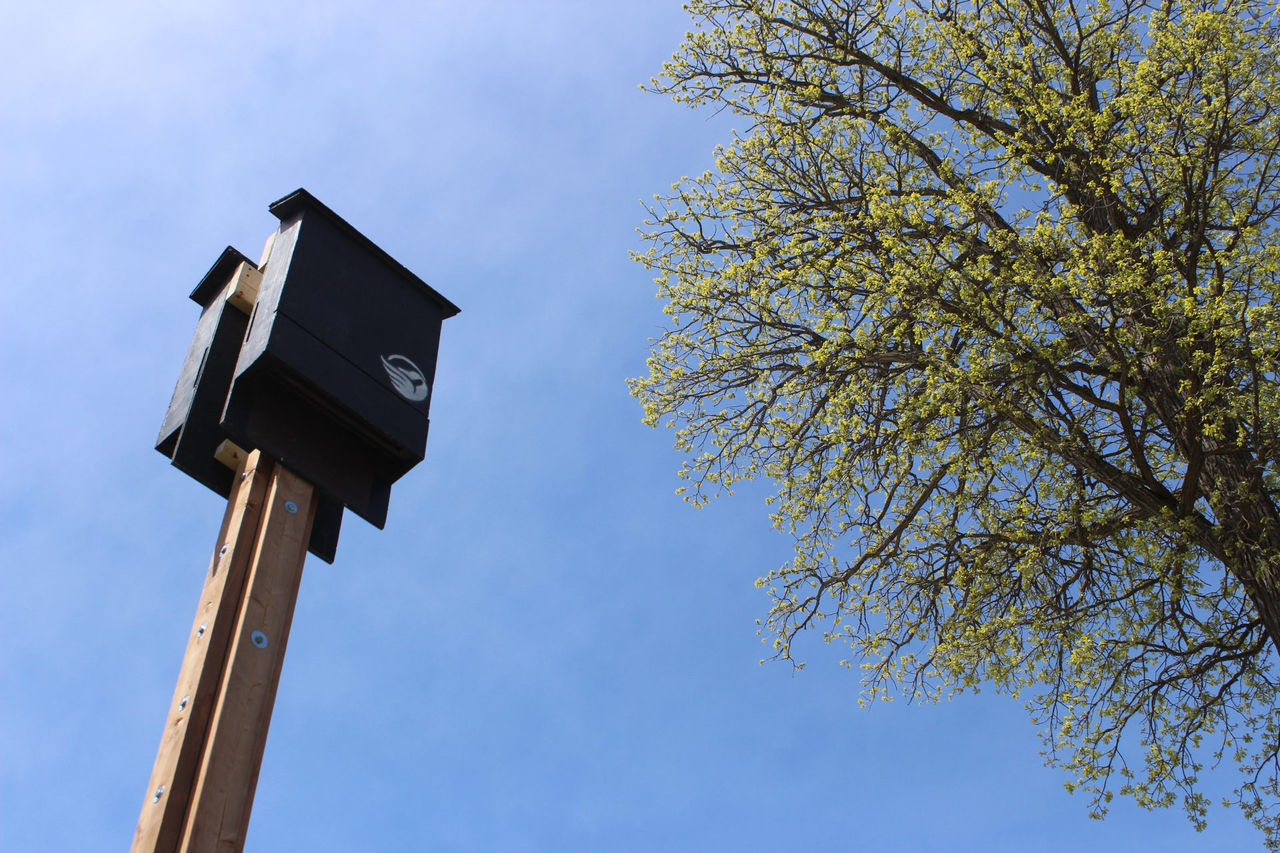

Q. I've had a bat house up for five years now and NO bats are visiting! What am I doing wrong?
A. Thank you for caring about Canada’s bats! Installing a bat house is a great way to help. However, bats are a bit picky when it comes to bat house designs, their colour and where they are placed. Even just a few years ago we still had large information gaps regarding their preferences. The good news is that the Canadian Wildlife Federation, along with our partners – The Wildlife Conservation Society Canada and Post Doctoral Fellow Karen Vanderwolf – performed a multi-year nationwide study and we now have a better idea about not only what makes an ideal bat house, but also where they should be placed to increase the likelihood of bats using them. This is very exciting!
Having a bat house installed by early spring provides a great roosting site for a female bat and her pup. Bat houses can be used by many female bats at the same time. On the other hand, males are more likely to roost by themselves or in smaller groups. Below are some things to consider about bat houses based on information that has been learned only recently:
- They should be a minimum length or height of 45 cm (18 inches), although 60 cm (24 inches) or more is better.
- They should have a minimum width of 25 cm (10 inches), although 38 cm (15 inches) or more is better.
- They should have a minimum of three chambers.
- Decisions on colour should be made with decisions about placement and number of boxes. If using black paint, it is helpful to have a lighter coloured bat box nearby. This way if bats get too warm, or too cool, in one box they have an alternate site nearby.
Your bat house may be of an older design that may benefit from an update. If so, check out HelpTheBats.ca for our full guidelines as well as our DIY instructions on how to build a bat house. There’s also a list of ideal bat houses that can be purchased from different suppliers.
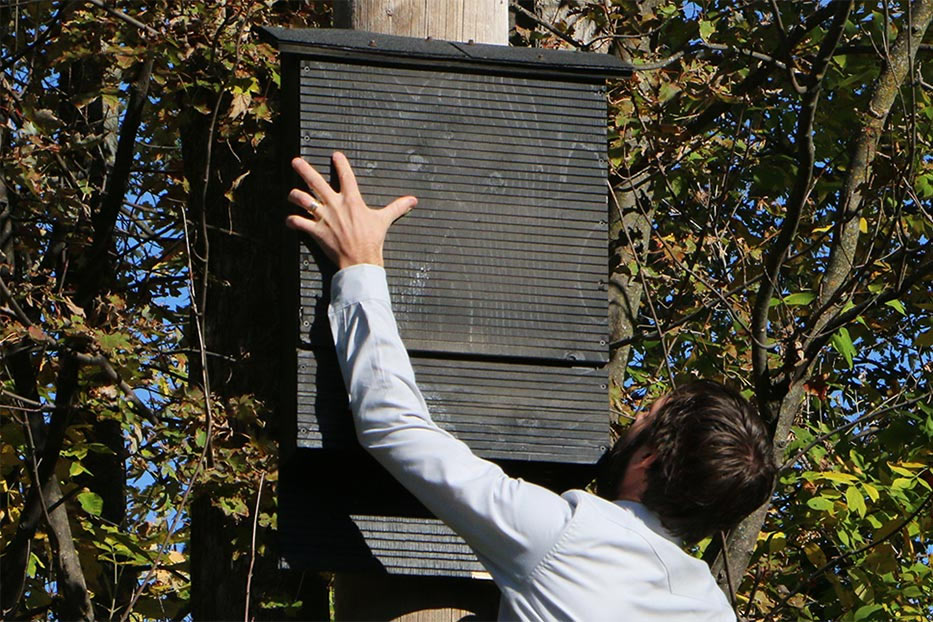
Bats are also particular about where the bat house is placed. The more guidelines listed below that you can follow, the greater the chances are that your bat house will get used:
- Install the bat house about three metres above the ground.
- It is best to install in partial sun where the bat house will receive six to eight hours of sun each day. While bats like it hot, they don’t like it too hot.
- If you can, install multiple houses in a range of sun exposures; this will provide bats with options as research shows they may like to switch roost sites.
- If your bat house is black, this can heat up quickly so avoid placing it in full sun.
- If possible, install your bat house near a water source.
- Ideally, attach your bat house to the side of a building. If this isn’t possible, a pole will also work. Keep in mind, if on a pole in full sun, it is more likely to overheat.
- Make sure the bat house isn’t installed near lights or tall vegetation.
You mentioned you’ve had your bat house up for five years and it still isn’t being used. Our study found that the longer a bat house is up, the more likely it will get used. A bat house is also more likely to get used if a colony gets evicted from a nearby building, and you never know when this might happen. If your bat house is of good design and you’ve followed the placement guidelines as best you can, keep being patient. Habitat loss is a significant threat to bats and your bat house is important.
Did you know you can help us with our research? Use this link to register your bat house and keep us up to date on any bat activity associated with it. Or, if you see a bat that is not in a roost, we’d appreciate it if you could submit your observations to iNaturalist.ca. You’ll be part of a great citizen science community that’s helping to increase knowledge about Canada’s bats.
You can find more information about bats and their bat houses at Canadian Wildlife Federation: Bat House in Your Backyard.


