

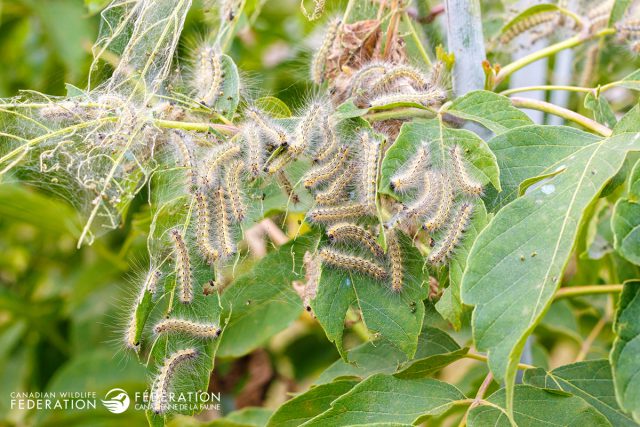
Q. Last spring, I saw Gypsy Moths in my city park. I'm afraid that they are going to come back this spring and kill all the trees. What should I do?
A. The Gypsy Moth has undergone a name change. They are now referred to by their scientific name, Lymantria dispar dispar or Ldd. As such, we will refer to this moth as the Ldd Moth in future reference.
The Ldd Moth is not native to Canada but rather originates from Europe. It is the caterpillars of this species that feed on the foliage of over 300 plant species, mostly hardwoods but some softwoods. Of these, there are about 150 plant species that they consider favourites and this includes species of birch, hawthorn, oak, maple and alder.
The good news is that if trees are healthy, they can be quite resistant to these ravenous eaters. Some trees will even grow another round of leaves that year/season if the first set is destroyed. What’s more is that they are considered an appetizing treat by many birds and small mammals, helping to reduce their numbers. Blue Jays, Eastern Towhees and orioles are some of the species that will forage on the caterpillars; Black-capped Chickadees will feed on eggs during winter, and squirrels and mice are known to feed on the pupae.
The not-so-good news, however, is that when caterpillar numbers are high, trees can be completely defoliated. If trees are already stressed, diseased or weakened in another way, and suffered from Ldd attacks in previous years, an attack can result in the loss of trees. If you have noticed egg masses and caterpillars on trees in your city park, it’s best to contact your city to let them know. You can also report it to your Invasive Species Council.
If you noticed egg masses or caterpillars on your property – perhaps on trees, your vehicles or outdoor equipment, there are few things you can do if you are worried about potential damage. It should be noted that some people are sensitive, even allergic, to the long hairs on the caterpillars so be sure to wear gloves if doing any of the following:
- If you found eggs – fuzzy, tan coloured masses – you can scrape them into a bucket of soap and water. Leave it for a couple of days and then throw away.
- Ldd caterpillars can be handpicked and placed in a bucket of soapy water.
- You can also place burlap around tree trunks to act as a trap for caterpillars. It’s suggested to use a 45 cm wide strip of burlap to wrap around the tree at chest height. Tie rope or twine around the centre of the burlap. Pull the top portion of the burlap over the rope to create an overhang; this is where caterpillars will move to find shelter. Each day, simply lift the overhanging piece of burlap and place the caterpillars in a bucket of soapy water, and don’t forget to wear gloves.


