




-
 Guides, Infographics & Posters
Guides, Infographics & Posters
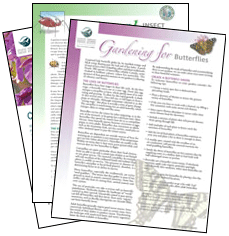
Take a closer look at the ways in which we’ll help you access the facts about wildlife. Whether it’s discovering the Hinterland Who’s Who animal fact sheets, or ordering our handy field guide to Canada’s prevalent shoreline species. This content is available to our CWF Supporters and online members. Please sign in to order your free materials.
More -
-
Wildlife E-cards
Wildlife E-cards
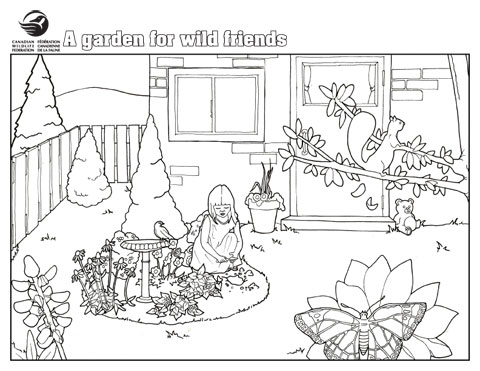
Send Dad a wildlife e-card! You cherish our wonderful wildlife and now you can send e-greetings that reflect your love of nature. We have developed a wide array of wildlife ecards for every occasion for you to share with your family and friends!
More -
 CWF Wallpapers
CWF Wallpapers
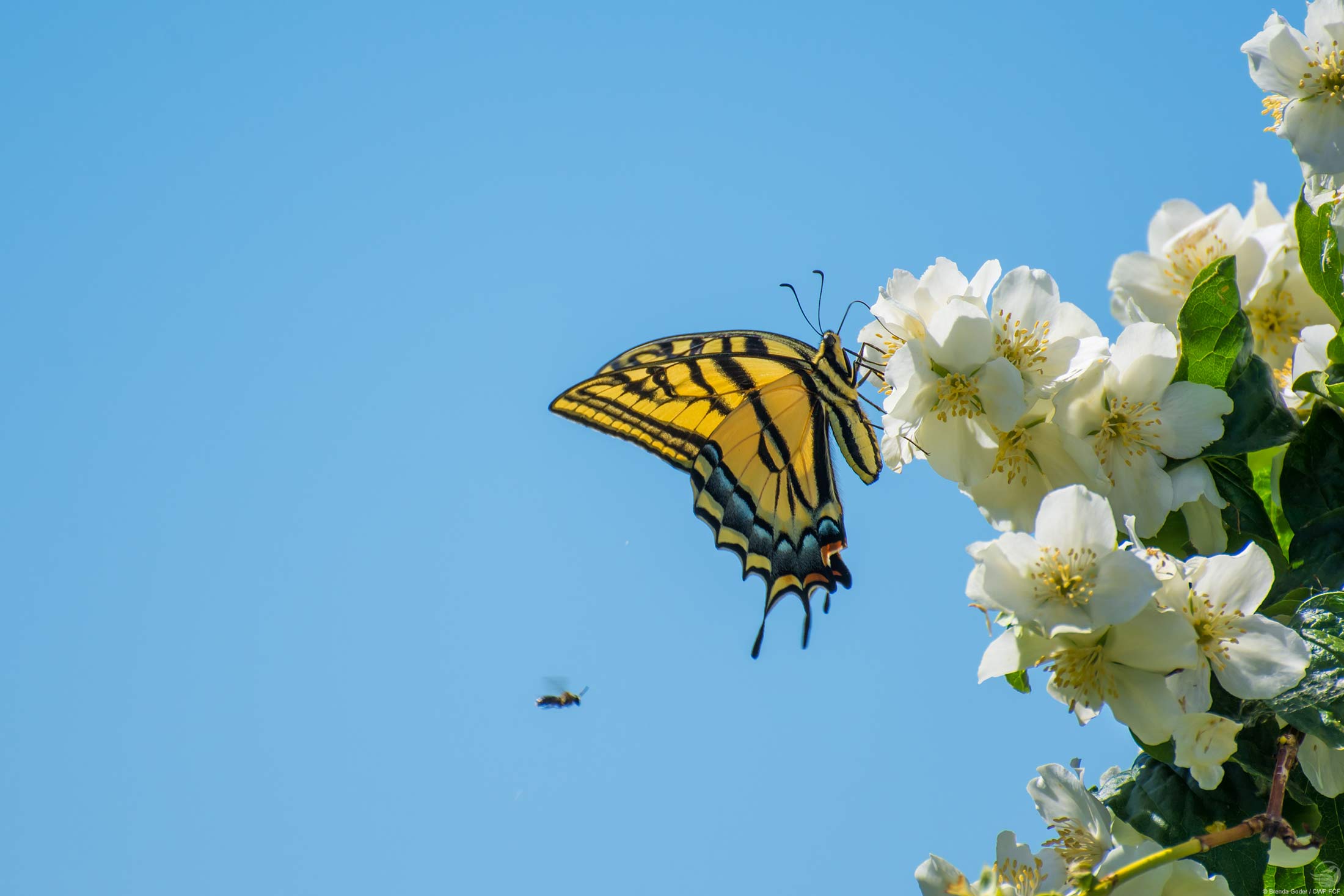
Your desktop is the perfect habitat for this wild wallpaper. Download CWF wallpapers!
More -
 WILD Webinars
WILD Webinars
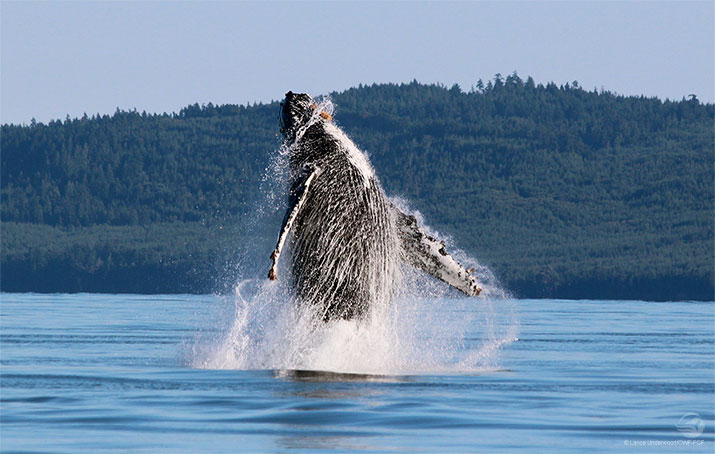
With topics relating to conservation, wildlife and habitat, we provide a relevant online learning platform, typically for grades four to six but of benefit to any age.
More

From easy-to-use apps designed as tools for your citizen science projects to picturesque wallpaper images for your computer, CanadianWildlifeFederation.ca offers a variety of useful downloads for your PC and mobile devices.
Coasts & Oceans
Connecting With Nature
-
Creating Monarch and Pollinator Habitat
2026-06-26
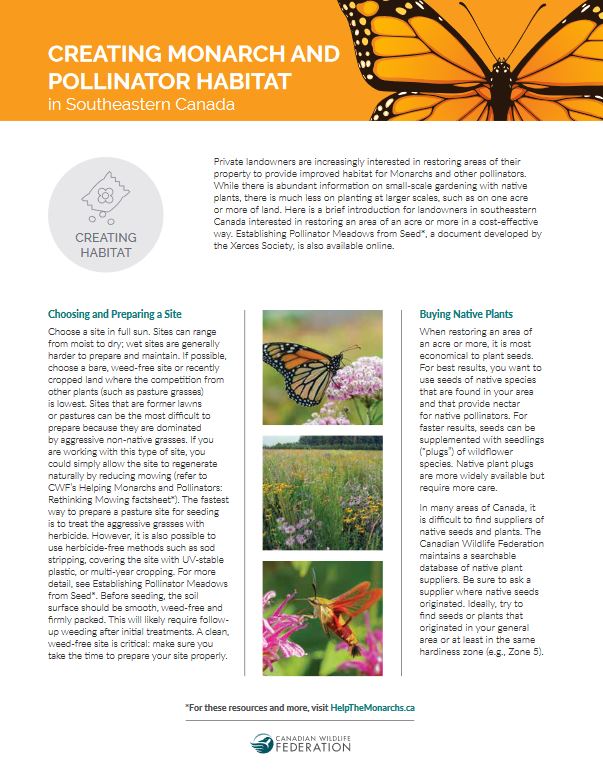
Private landowners are increasingly interested in restoring areas of their property to provide improved habitat for Monarchs and other pollinators. While there is abundant information on small-scale gardening with native plants, there is much less on planting at larger scales, such as on one acre or more of land. Here is a brief introduction for landowners in southeastern Canada interested in restoring an area of an acre or more in a cost-effective way. Establishing Pollinator Meadows from Seed*, a document developed by the Xerces Society, is also available online
-
The City Nature Challenge 2023 Results
2023-05-10
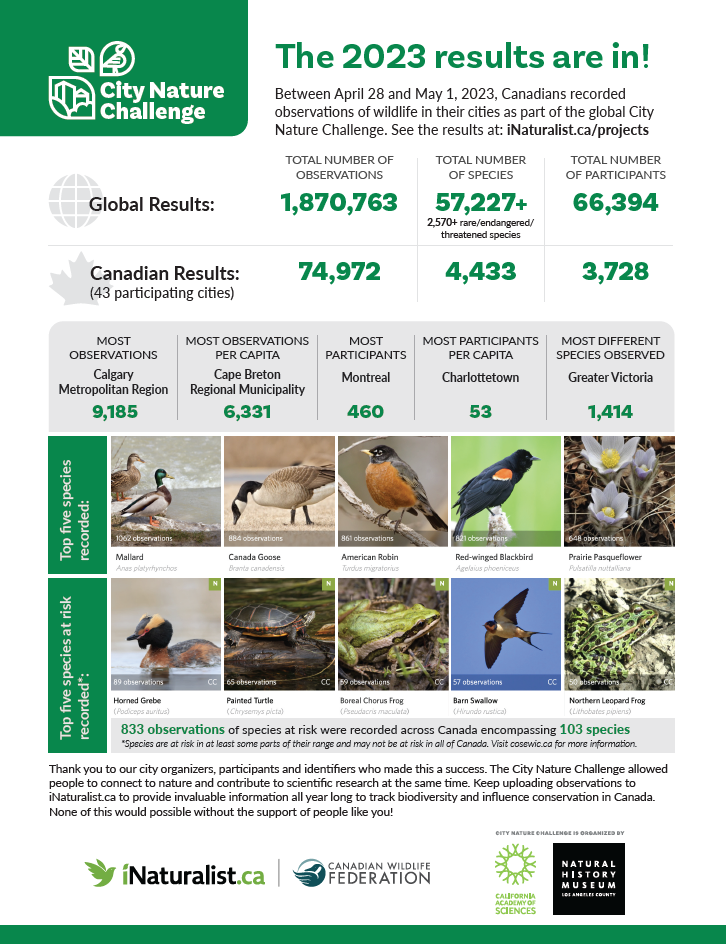
Between April 28 and May 1, 2023, Canadians recorded observations of wildlife in their cities as part of the global City Nature Challenge. See the results at: iNaturalist.ca/projects
-

-
How to Take Identifiable Photos of Fish
2026-06-26
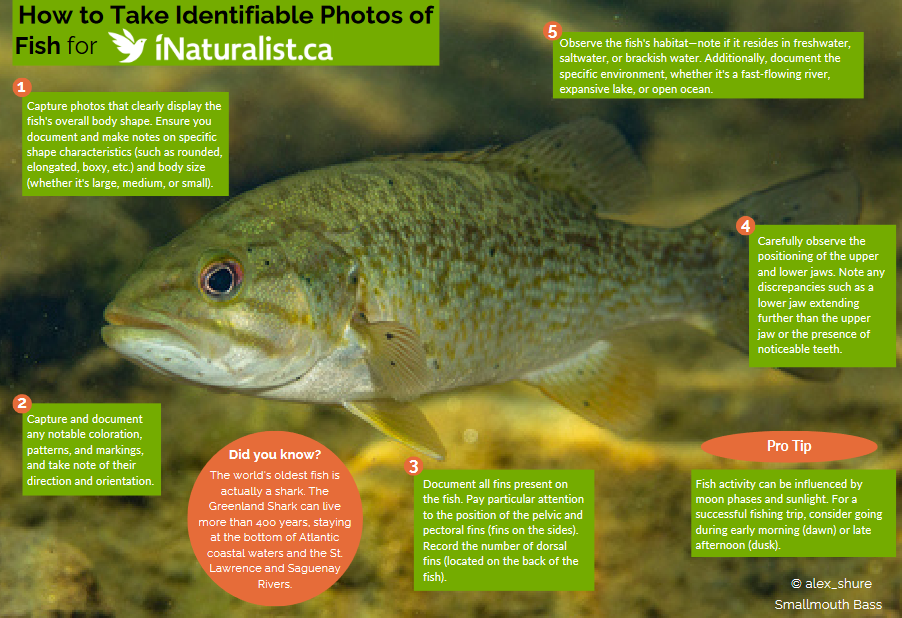
Taking photos of wildlife can be challenging. It is not essential to photograph every point on this diagram to get an identifiable observation. Just try your best! When photographing fish, minimize air exposure by taking an underwater photo whenever possible, allowing them to breathe freely. If taking a picture outside the water, keep the fish near the water and lift it briefly for the photo, limiting air exposure to 10 seconds or less. Be sure to follow local fishing guidelines and regulations.
-

Education & Leadership
Endangered Species & Biodiversity
-
Canada's Turtles Webinar
2013-05-23
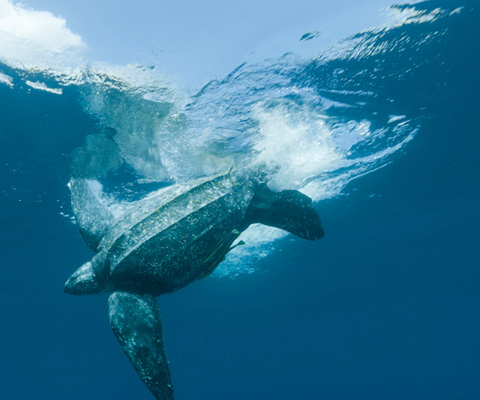
A leatherback turtle presentation by Dr. Sean Brilliant, Manager of Marine Programs for CWF, and Dr. Mike James, a marine turtle scientist with Fisheries and Oceans Canada. This webinar will focus on the lifecycle and ecology of Canadian leatherback turtles and the CWF Great Canadian Turtle Race.
-
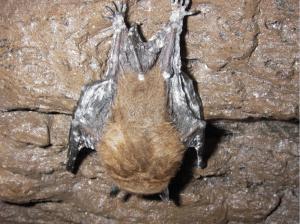
Help the Bats
2014-10-23
-
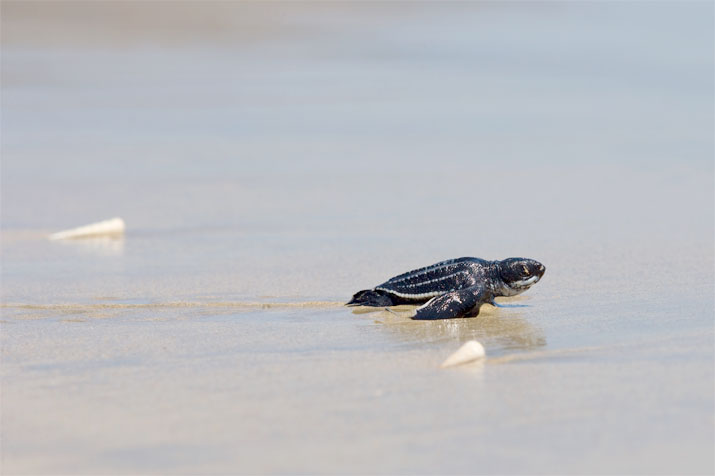
Following Leatherback Sea Turtles as they Migrate to their Southern Nesting Grounds
2016-02-28
A leatherback turtle presentation by Dr. Sean Brilliant, Manager of Marine Programs for CWF, and Kathleen James, Canadian Sea Turtle Network.
-
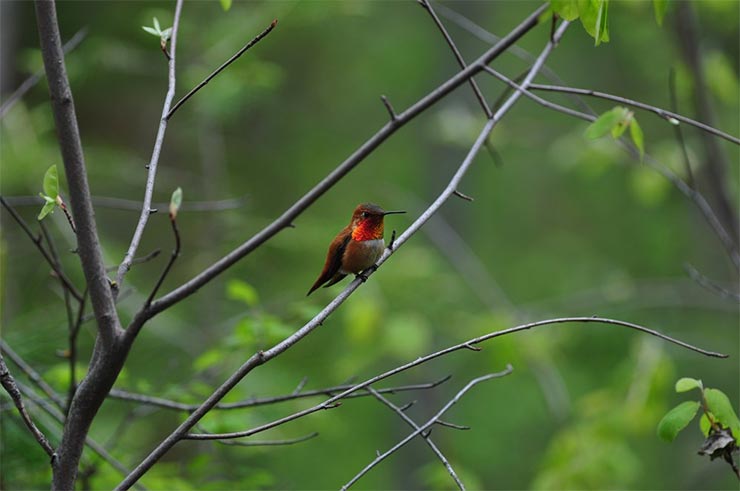
Hummingbird Migration Webinar
2015-04-09
-
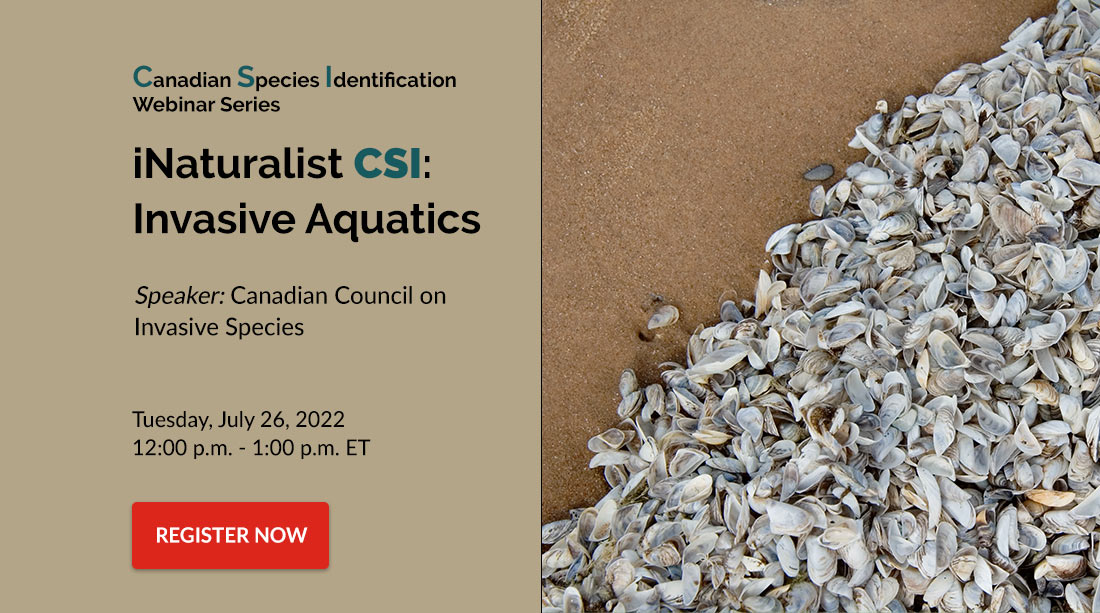
iNaturalist CSI: Invasive Aquatics
2022-07-26
Join the Canadian Wildlife Federation (CWF) July 26th, 12:00-1:00 Eastern for a webinar on how to photograph and identify Canada’s top 10 invasive aquatics using iNaturalist.ca, presented by the Canadian Council on Invasive Species (CCIS). Nearly one-fifth of the Earth’s surface is at risk of plant and animal invasions. Invasive species are threatening Canada’s ecosystems, economy and communities. Climate change is also exacerbating this issue and can make ecosystems more vulnerable to invasive species, and invasive species can worsen the impacts of climate change. The good news is - you can help! Learn how to ID Canada’s top 10 invasive aquatics so you can report them, helping to stop their spread. Every report helps scientists track and protect Canada’s natural spaces and biodiversity from the negative impacts of invasive species. iNaturalist has become one of the world’s most popular nature apps and the Canadian Wildlife Federation has led the charge in bringing it to the forefront of Canadian citizen science.
Forests & Fields


Lakes & Rivers

Learn More

- 0
- 1
- 2
- 3