

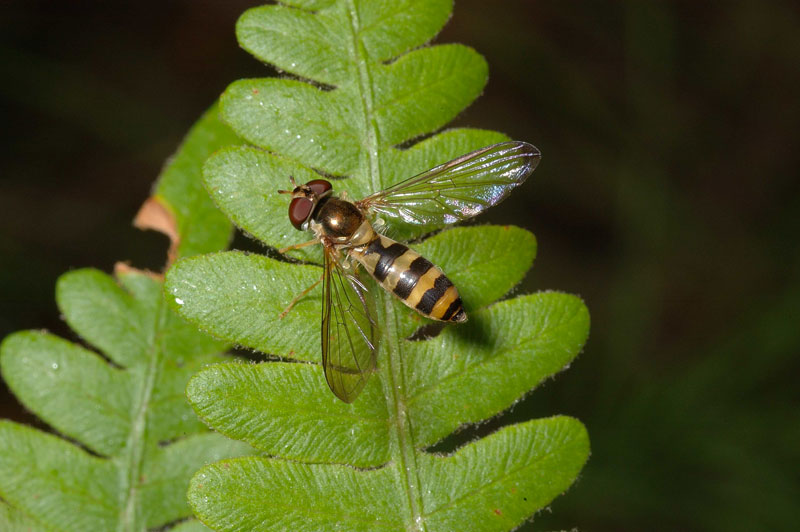


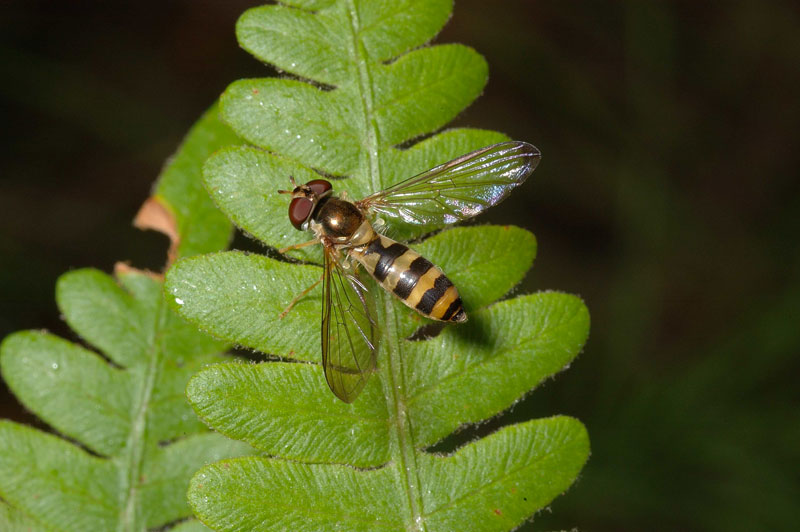
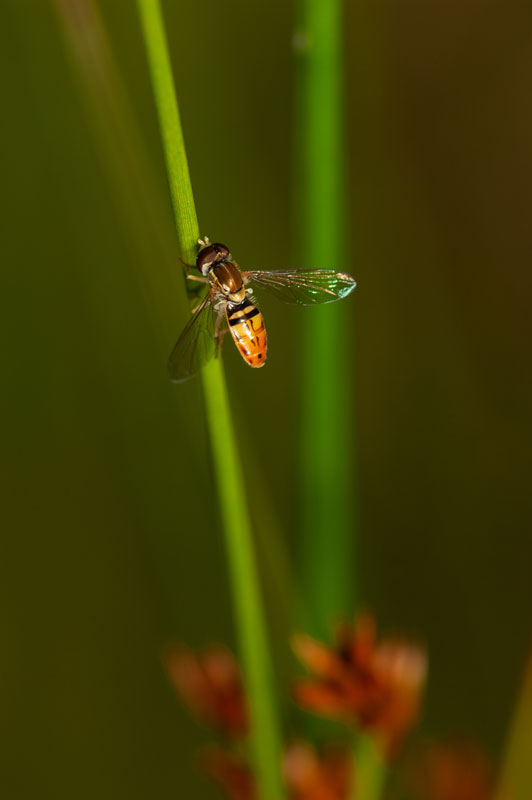
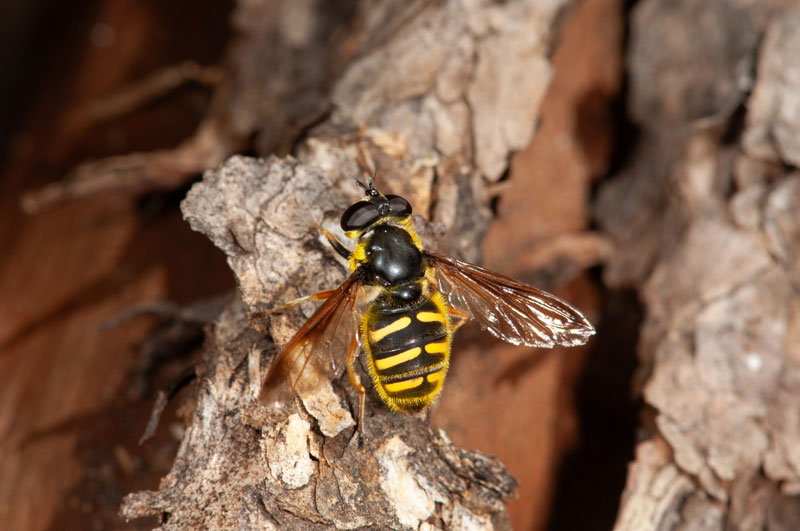
Also known as hover flies because of their incredible flying abilities, flower flies are one of the most important groups of pollinating insects in the world. With 556 species in Canada, they are comparable in diversity to birds and thus a manageable chunk of diversity to start your fly voyage with. Flower flies are abundant in and around gardens, along streams and in wetlands once you know what to look for. Forest-dwelling flower flies are harder to find even though they are abundant as they spend a lot of time in the canopy. Watch for these species sitting in sunny openings or visiting flowers lower in the forest.
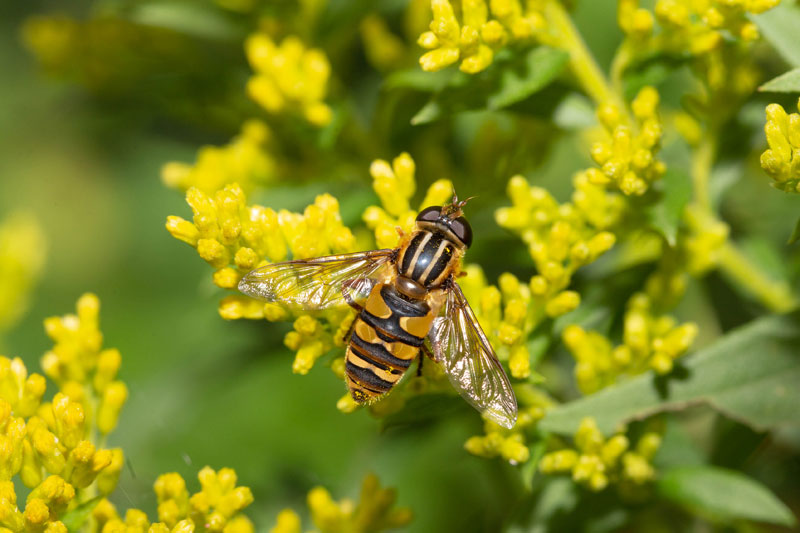
About one-third of the world’s flower fly species are predators as larvae and spend their juvenile period feeding on aphids, scale insects and other soft bodied pests. Most of these species are in the group called Syrphinae and the adults are imperfect mimics that tend towards the same general gestault (black and yellow banded and small). These are the trickiest to identify but also among the most conspicuous and abundant in gardens.
The bulk of the other species tend to be larger and more distinctive. Larvae of these do everything from feeding on rotting vegetation, eating plants, eating other insects, filter-feeding on bacteria in rot holes in trees, ponds or larger bodies of water and eating fungi. Some of my favourite flies are in this group and many are spectacular mimics of bees and wasps.
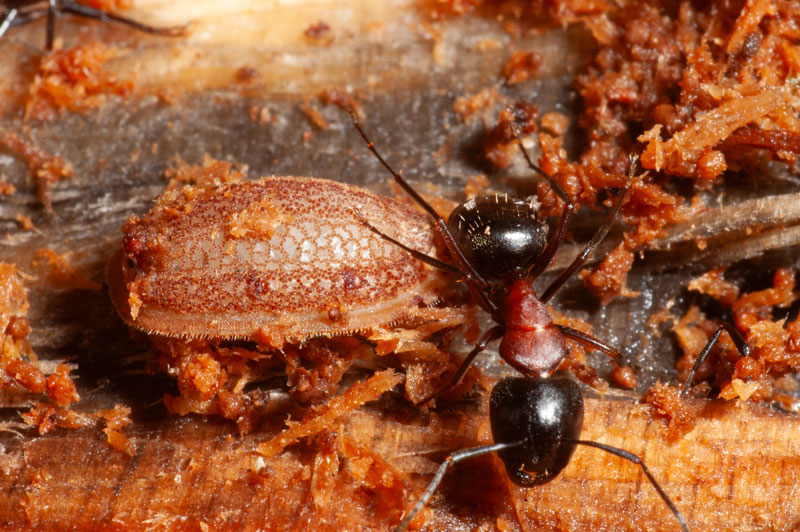
A small group of syrphids called ant flies also live in our gardens and nearby places and have a remarkable natural history. Adults do not visit flowers so they can be hard to find. Larvae live in ant nests where they feed on ant eggs and larvae. These fly larvae have evolved pheromones similar to those in the ant species they attack. This allows them to chemically mimic the ant larvae and thus avoid attack by adult ants as they feed in the colony. The ants simply don’t recognize them as threats.
There are over 6,200 identified species of flower flies worldwide and we think as many as 10,000 may exist. To be sure you are looking at a flower fly, check the wing venation. Almost all flower flies have a spurious vein that doesn’t connect to other veins. Some thick-headed flies are the only other flies to show this characteristic, but they have distinctive mouthparts.
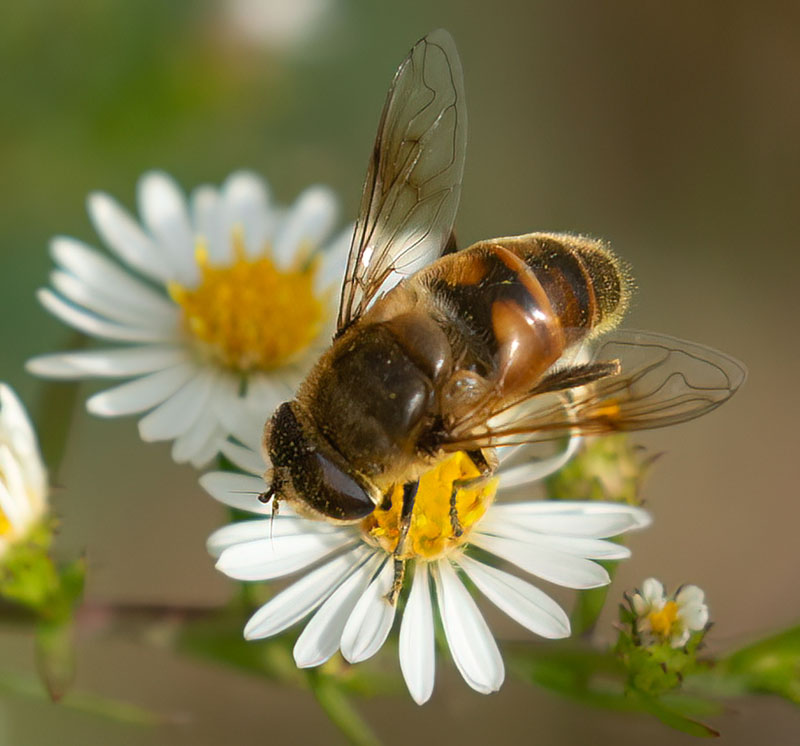
Some of the best documented migrations in the insect world are undertaken by flower flies. For example, the Marmalade Hover Fly (Episyrphus balteatus), has been observed moving in the tens of thousands out of the United Kingdom in the autumn with other individuals coming back in the spring. In Canada, we know that Monarch Butterflies migrate, but so do many other insects that are poorly studied. Some dragonflies and many flies migrate. For example, we have documented thousands of Narrow-headed Marsh Flies (Helophilus fasciatus) and Common Drone Flies (Eristalis tenax) migrating south along Lake Erie in the autumn, but much is yet to be learned about which species migrate here, where they go and if they return.
See a collage of a few more flower fly images by clicking here.