

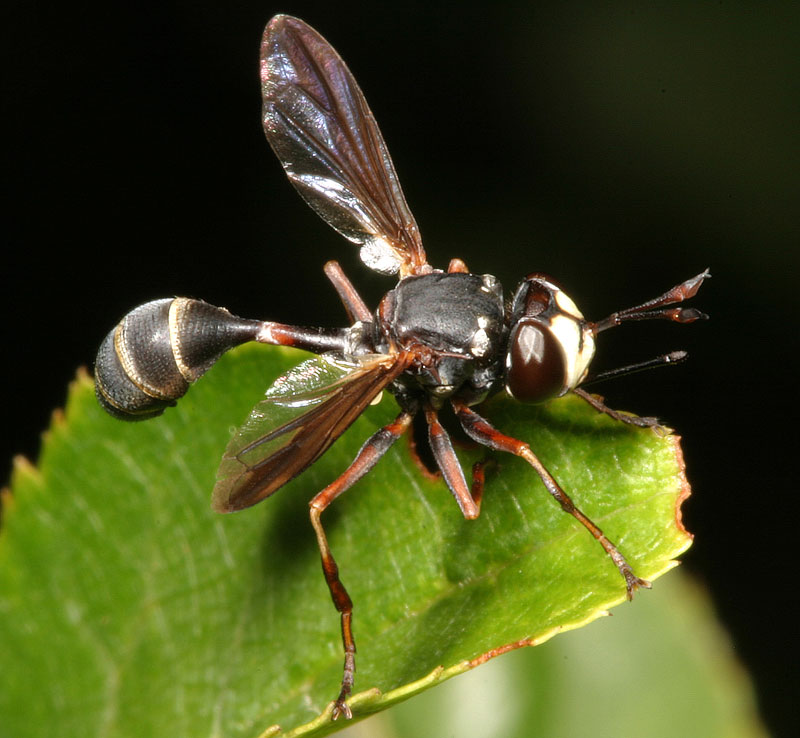


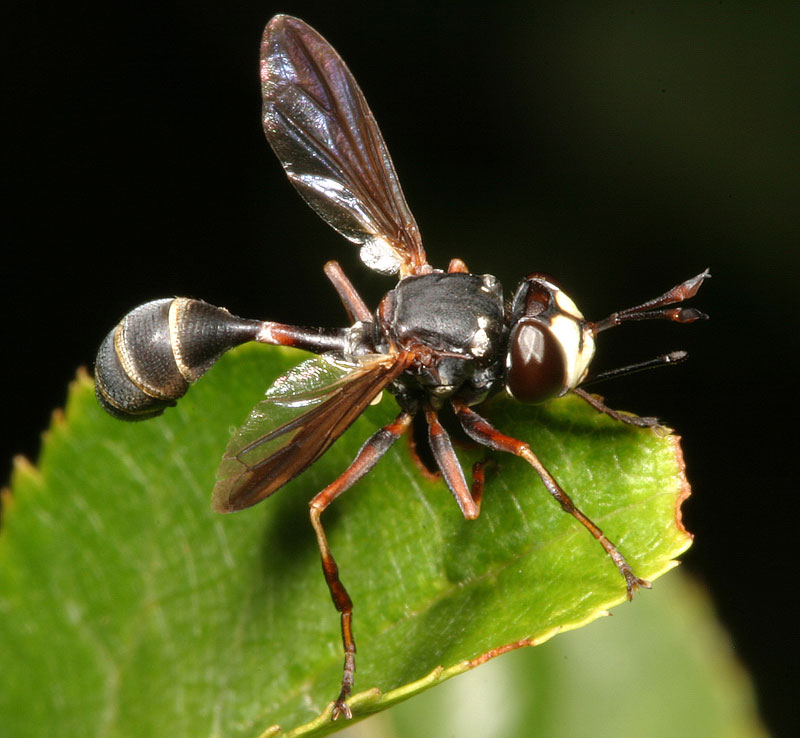
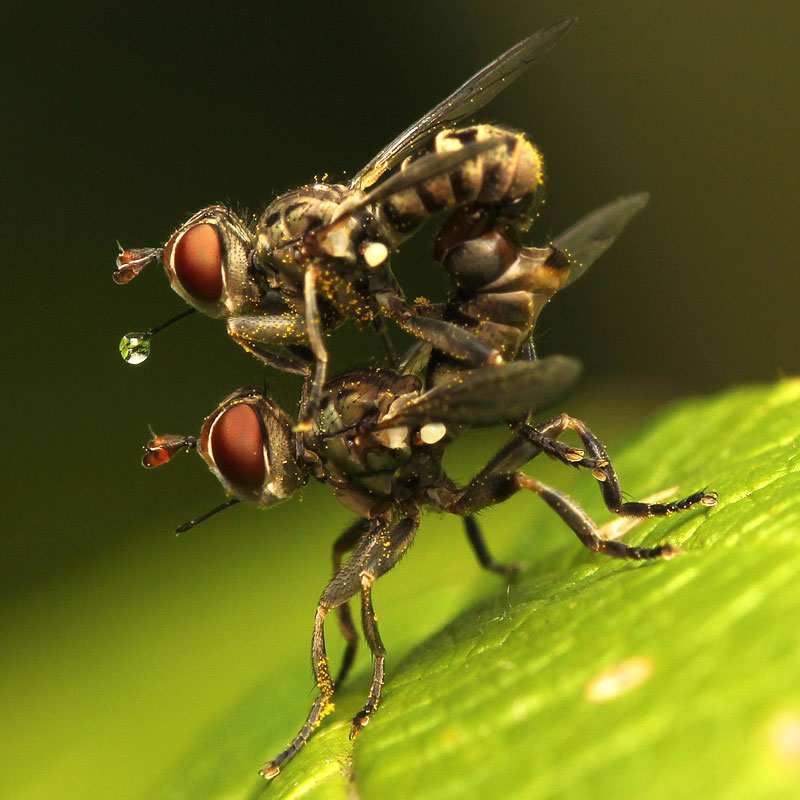
Thick-headed flies are a small family of about 800 species worldwide. Within Canada there are 41 known species. All our species are pollinators as adults but in a twist, all but two species are parasitoids of bees. Look for them on or near flowers in any habitat including gardens. Adults are mostly mimics of bees and wasps and this presumably gives them a double benefit with both protection from predators and concealment from their bee hosts. Adult females wait on or near flowers and then grab their host bees that visit. They have an amazing can opener-like apparatus called a theca at the end of their abdomen that pries the abdominal segments of the bee apart so they can lay an egg in the bee abdomen. Larvae feed on the bee, ultimately killing it. Two very different looking thick-headed flies called Stylogaster are parasitoids of crickets. Look for these elongate flies on small white flowers. Their bent proboscis is distinctive.