

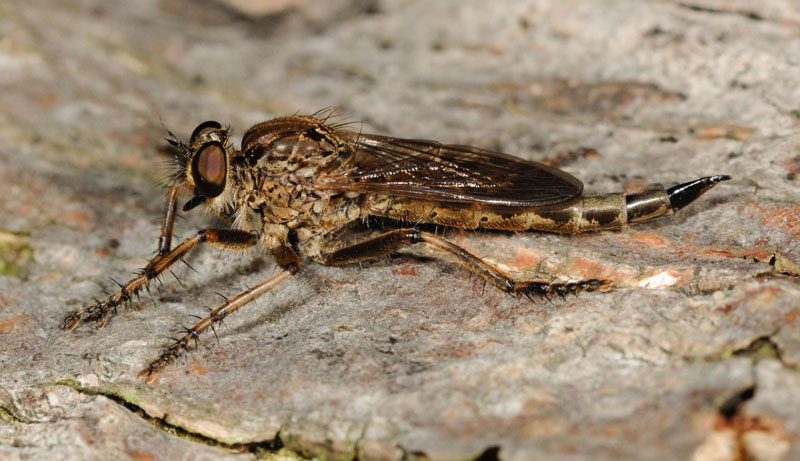


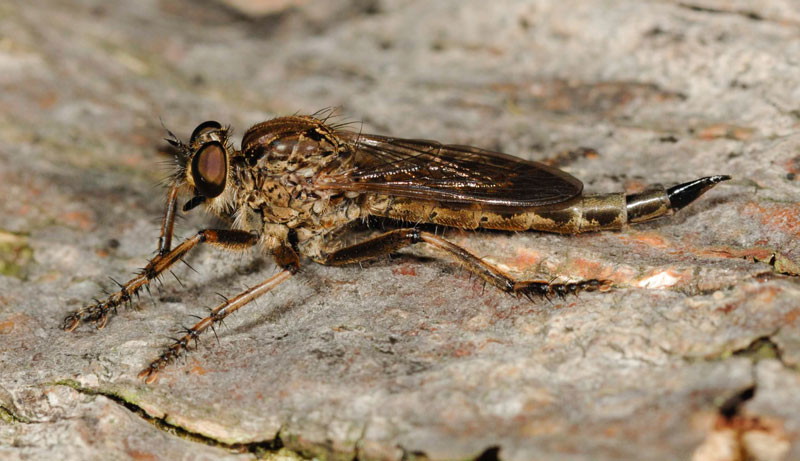
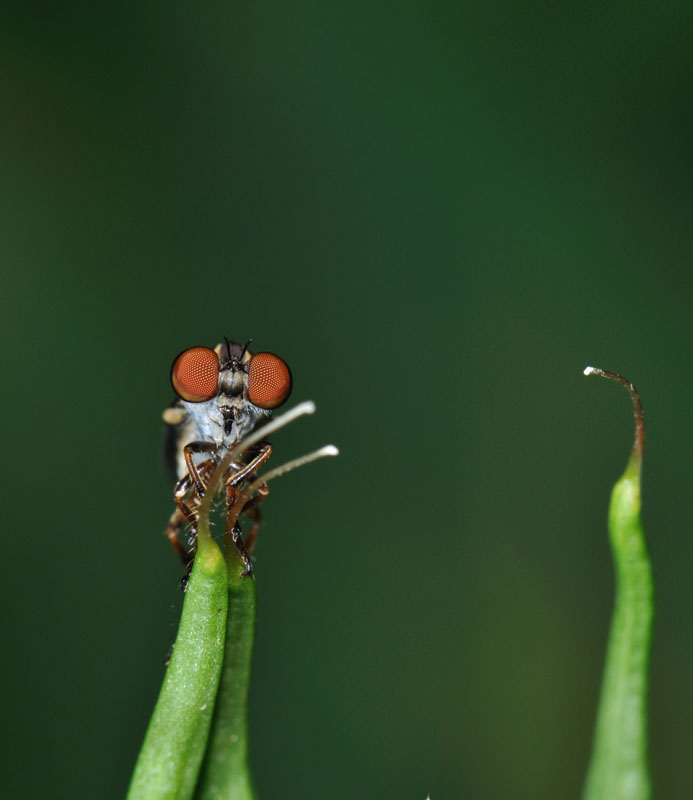
These are amongst my favourite flies to watch. From their perches, they watch for other insects that they attack. They are the hawks of the insect world and sometimes attack insects larger than themselves. Robber flies have beak-like mouthparts that they use to stab their prey before injecting enzymes that first paralyze and then dissolve the tissues of their prey. They can then drink their meal by sucking it through this straw. Like all the other fly families discussed here, many species are mimics of bees and wasps and gain protection from predators by looking like these stinging insects. This mimicry also allows them to attack insects before they are noticed. There are over 7,000 described species worldwide and 226 species in Canada. They are distinctive flies with spiny legs that help hold their prey, a concave dip between their eyes and a pronounced moustache of bristles called a mystax hanging down around their beak. This mystax presumably protects their eyes from prey. Larval robber flies live in soil or rotting wood and are either predatory or feed on detritus. Adults are most commonly observed in forests where they sit on the tips of twigs or in sunny openings where they hunt other insects. Robber flies vary in size but many species are amongst the largest flies regularly encountered.