

SCIENTIFIC NAME
Megachile
DESCRIPTION
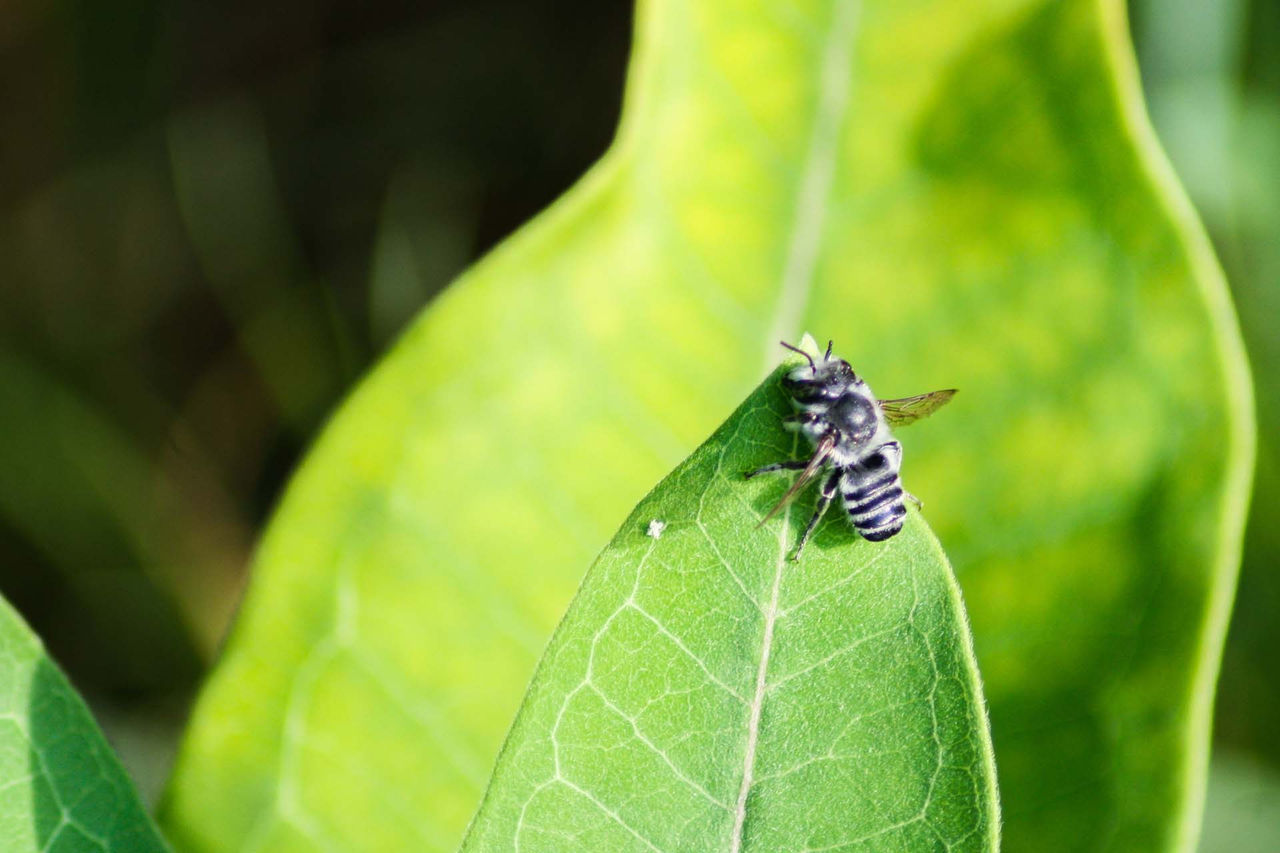
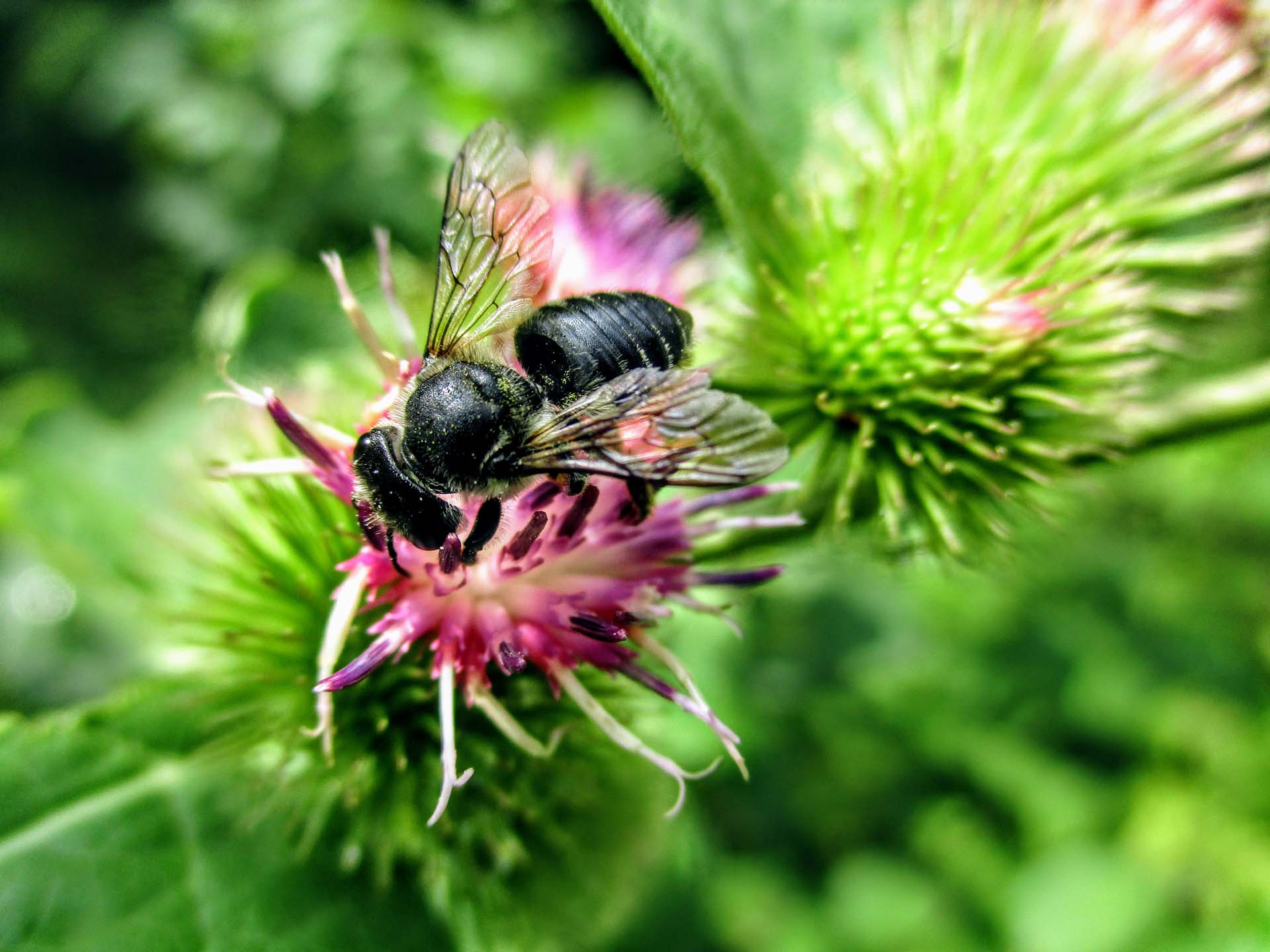
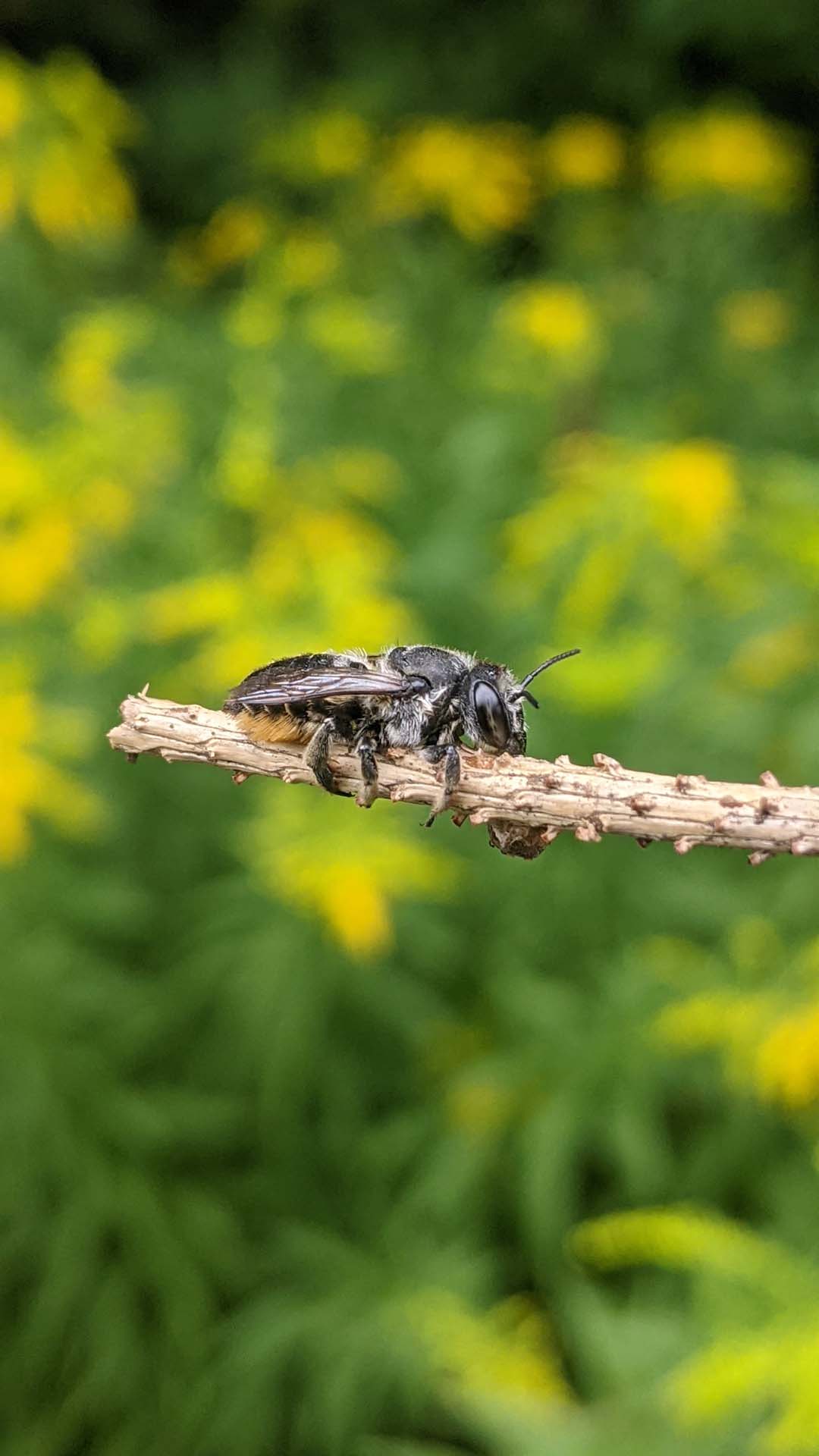
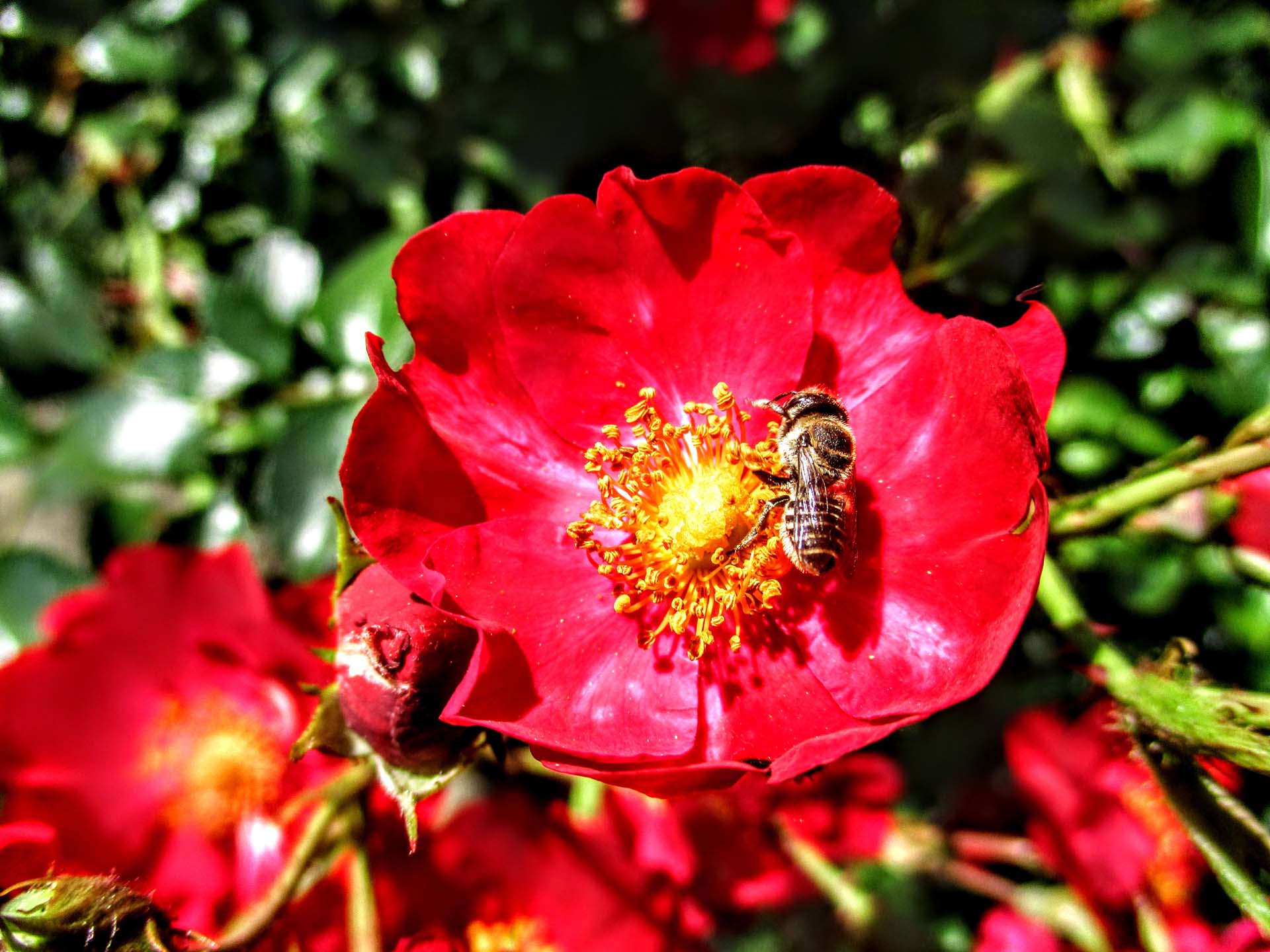
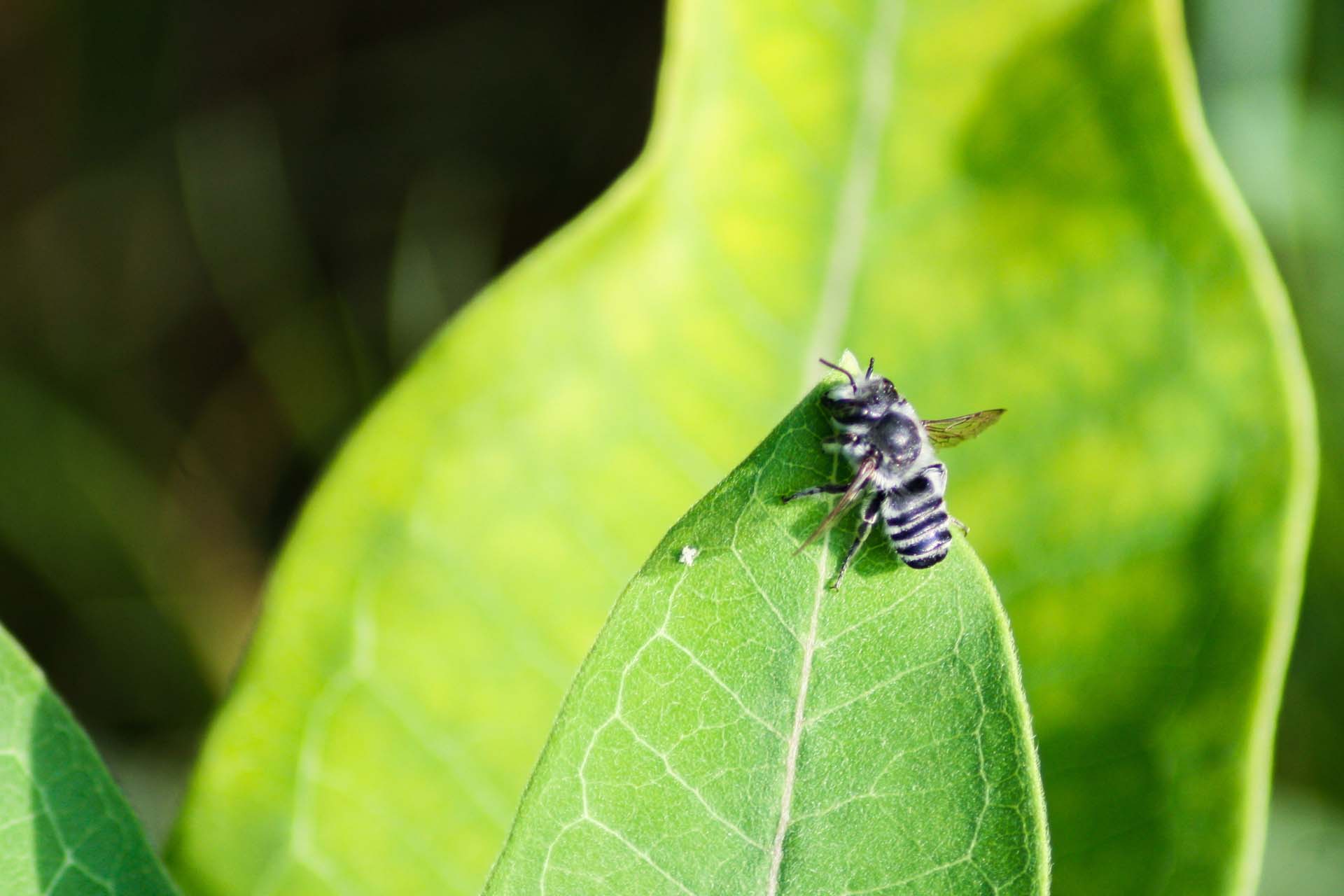
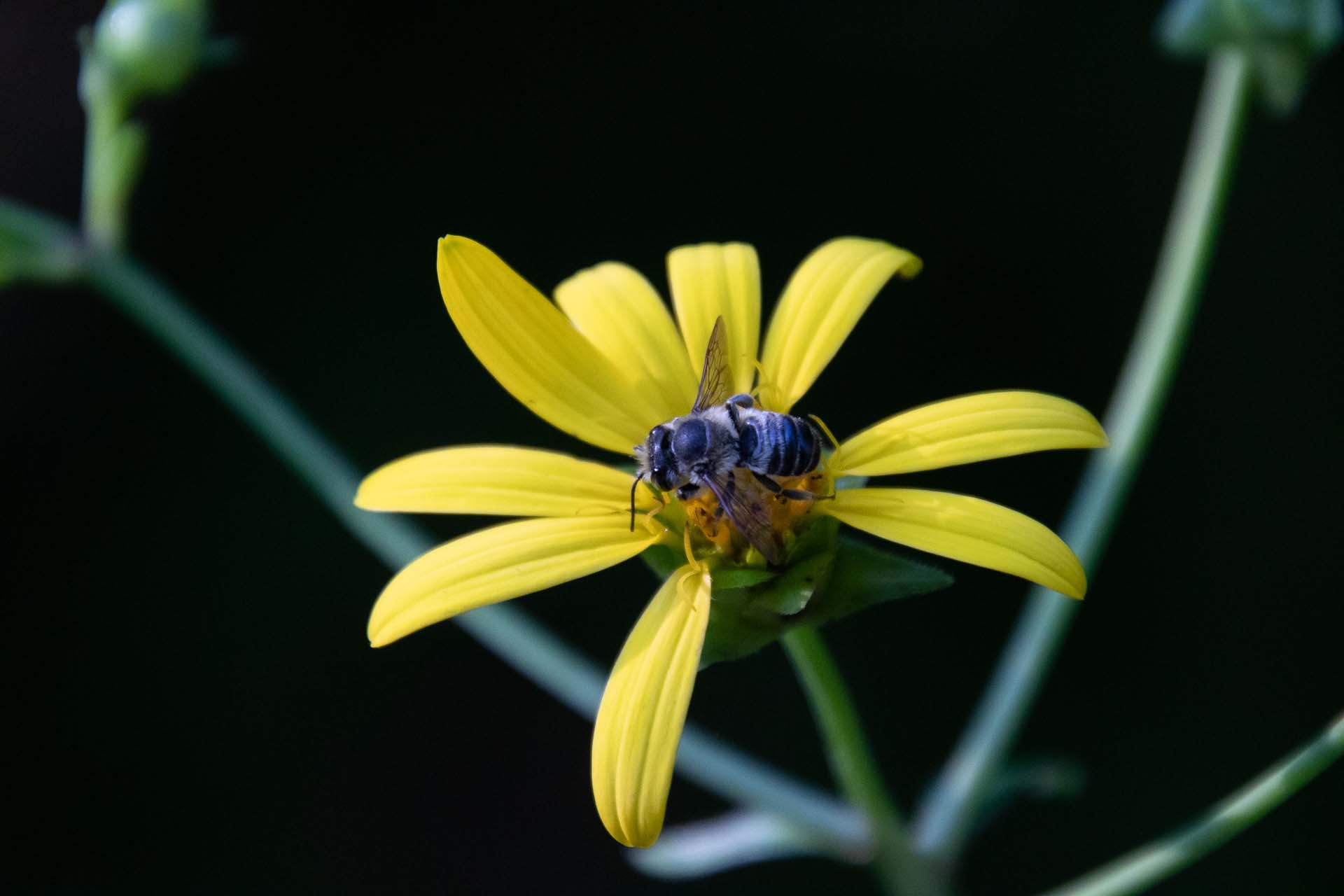
Small to large bees (seven to 25 mm), the Megachile genus show a wide range of sizes and forms among its species, the biggest being Megachile sculpturalis. Leafcutter bees are generally black with white hair on their upper body and stripes on their abdomen; but their body shape and hair patterns vary greatly. A common feature of this genus is the large mandible—with several teeth—that act like scissors to cut pieces of leaves.
PHOTO GALLERY
 |  | |
 |  |
Feeding Habits
Leafcutter bees can be active from late spring all through the end of summer. This genus includes generalists and specialists with some Megachile species broadly prefering Asteraceae plants. Some native plants Leafcutter bees go to include penstemons, coneflowers, Joe-pye weeds, blazingstars, verbenas, goldenrods and asters.
Nesting Habits
Leafcutter bees are solitary. Many make their nests in above ground cavities while some species nest below ground. This includes existing holes in dead wood, hollow or pithy plant stems, old insect homes in the soil, crevices in rocks, gaps under tree bark as well as human-made bee nests with holes drilled in wood.
As their name implies, these bees cut bits of leaves or petals to line their nests. To do so, they usually use plants from the Rosacea family, including some trees such as cherries, plums, ash, etc. They cut circular shaped pieces of leaves to partition each egg chamber, and they use a thicker plug at the end to keep out predators.
Neat Facts
Since its introduction from Europe in the 1940s, the alfalfa leafcutter bees Megachile rotundata has been used to pollinate alfalfa fields. They are such good pollinators that they have been shown to boost alfalfa yields. Thanks to their gregarious behavior—meaning they like to nest in aggregations (close to each other) —M. rotundata can be managed using human-made structures. This species can also be used to pollinate other plants from the Fabaceae family such as clovers (Trifolium spp.) and vetches (Vicia spp.) among others.


