

SCIENTIFIC NAME
Colletes
DESCRIPTION
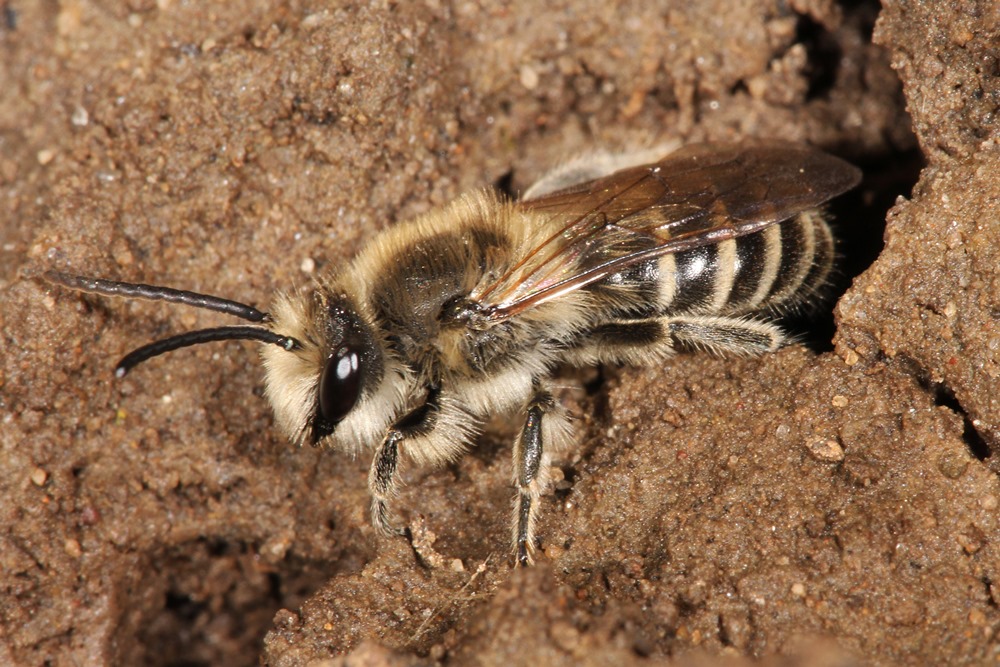
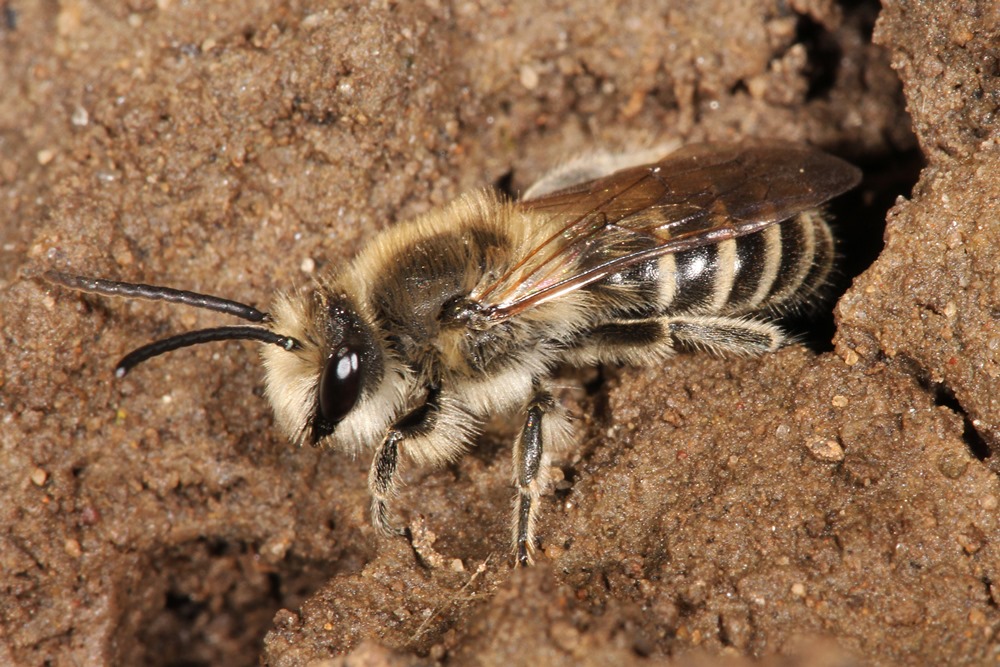
These medium-sized bees (nine to 13 mm), Colletes are generally furry on their upper bodies (head and thorax) with white, grey, or brown hairs and they have a striped abdomen. These bees have a heart shaped face and a short tongue. Similar in size to the Honey Bee, they tend to look like mining bees Andrenas in the Adrenidae family.
PHOTO GALLERY
|
Feeding Habits
Many species in this genus tend to emerge early in the spring while others come out later in the summer. They will feed on spring flowering plants such as Red Maple, willow, American Plum, then summer flowers like wild onions with some specialists feeding on prairie clover, and autumn flowers like asters and goldenrods.
Nesting Habits
Bees in this genus are solitary ground-nesters, sometimes found in dense aggregations. Many species like to nest in the sand. As with many ground-nesting bees that secrete a waterproof layer, females in this group line their nests with a mixture of their saliva and a waxy material. However, their secretions tend to be thicker and look similar to cellophane, hence their name. Other bees that secrete a substance to line their ground nests typically just use the waxy substance from their Dufour’s gland.
Neat Fact
Because they like sandy areas, Colletes nests can be found on riverbanks and embankments.


