

SCIENTIFIC NAME
Hylaeus
DESCRIPTION
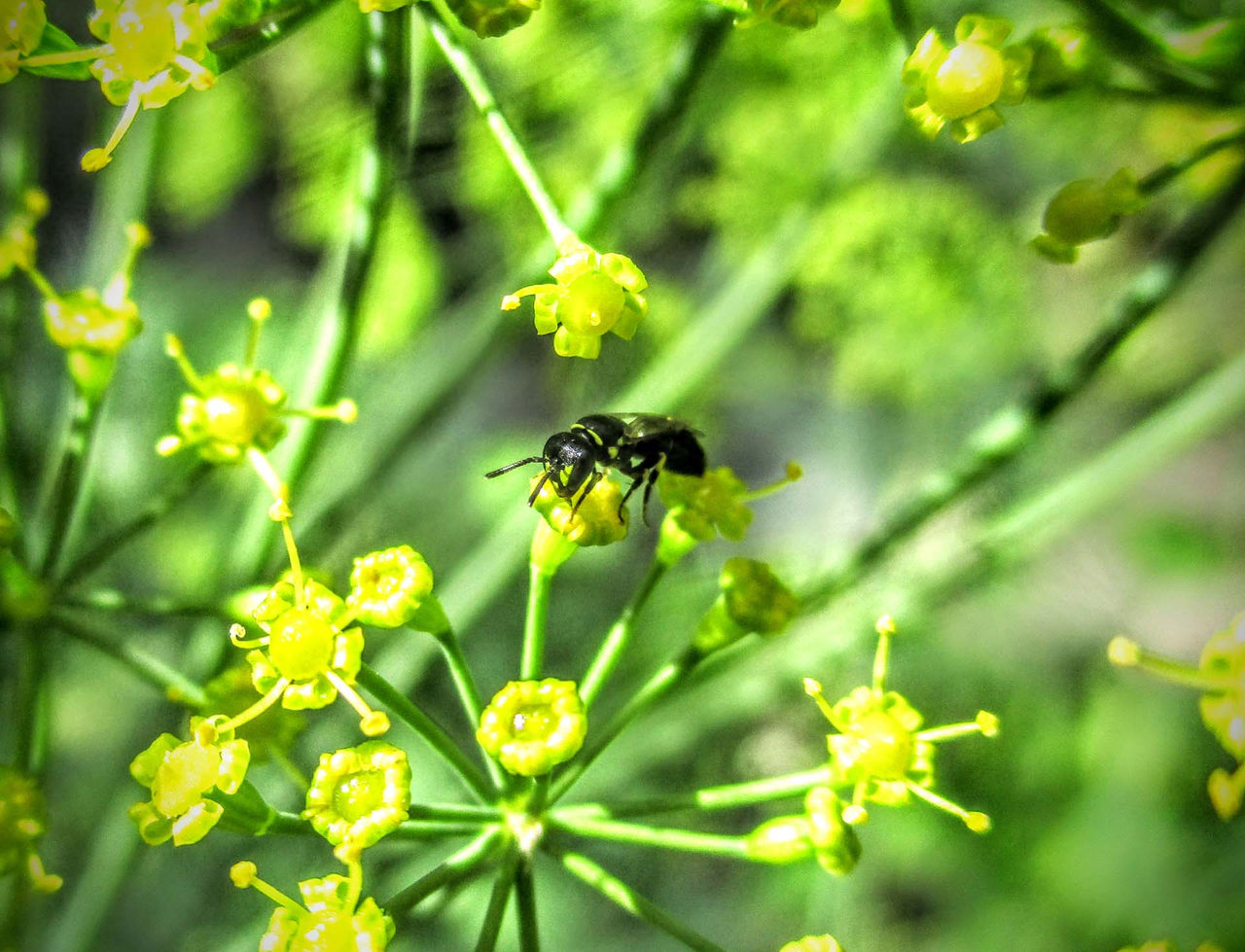
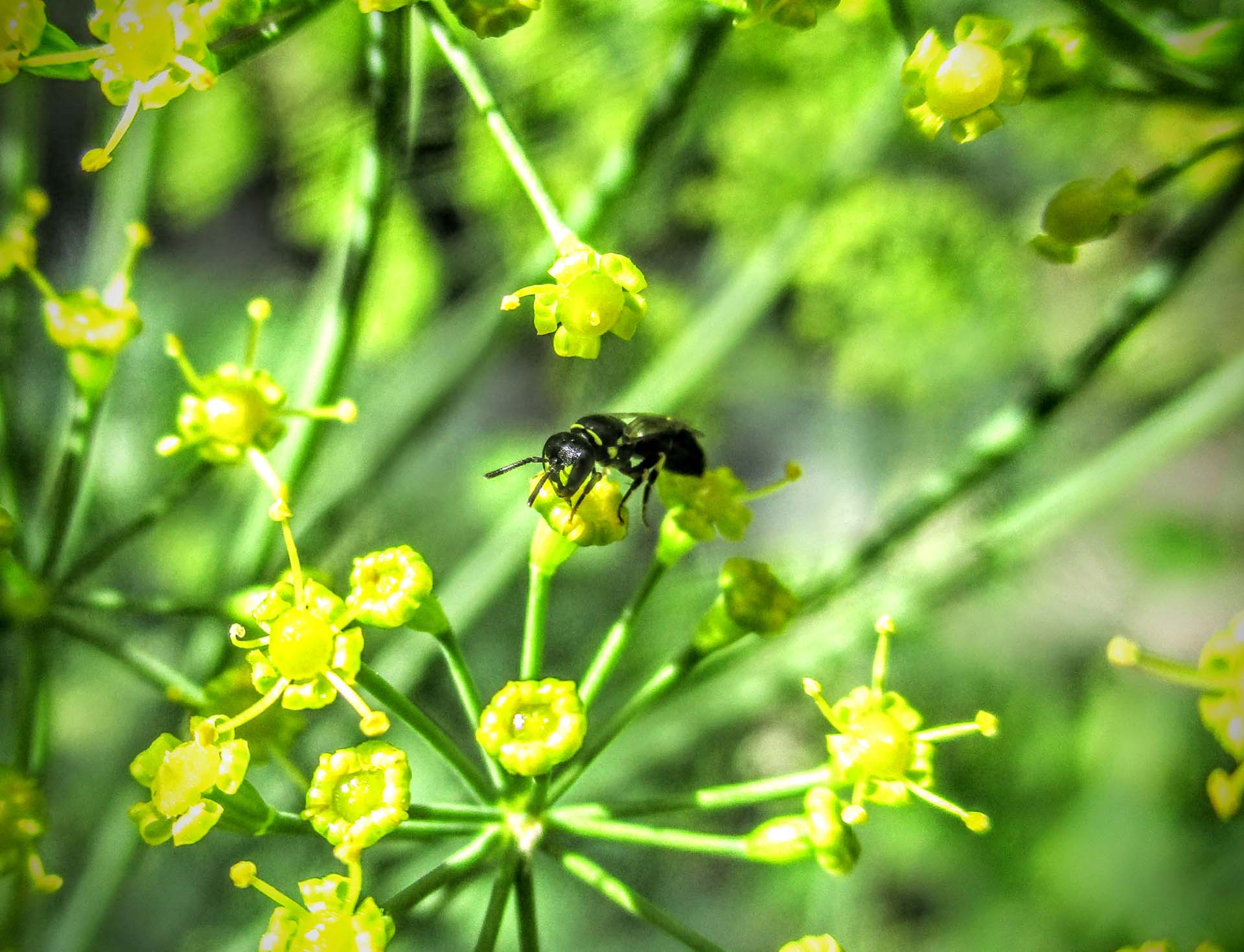
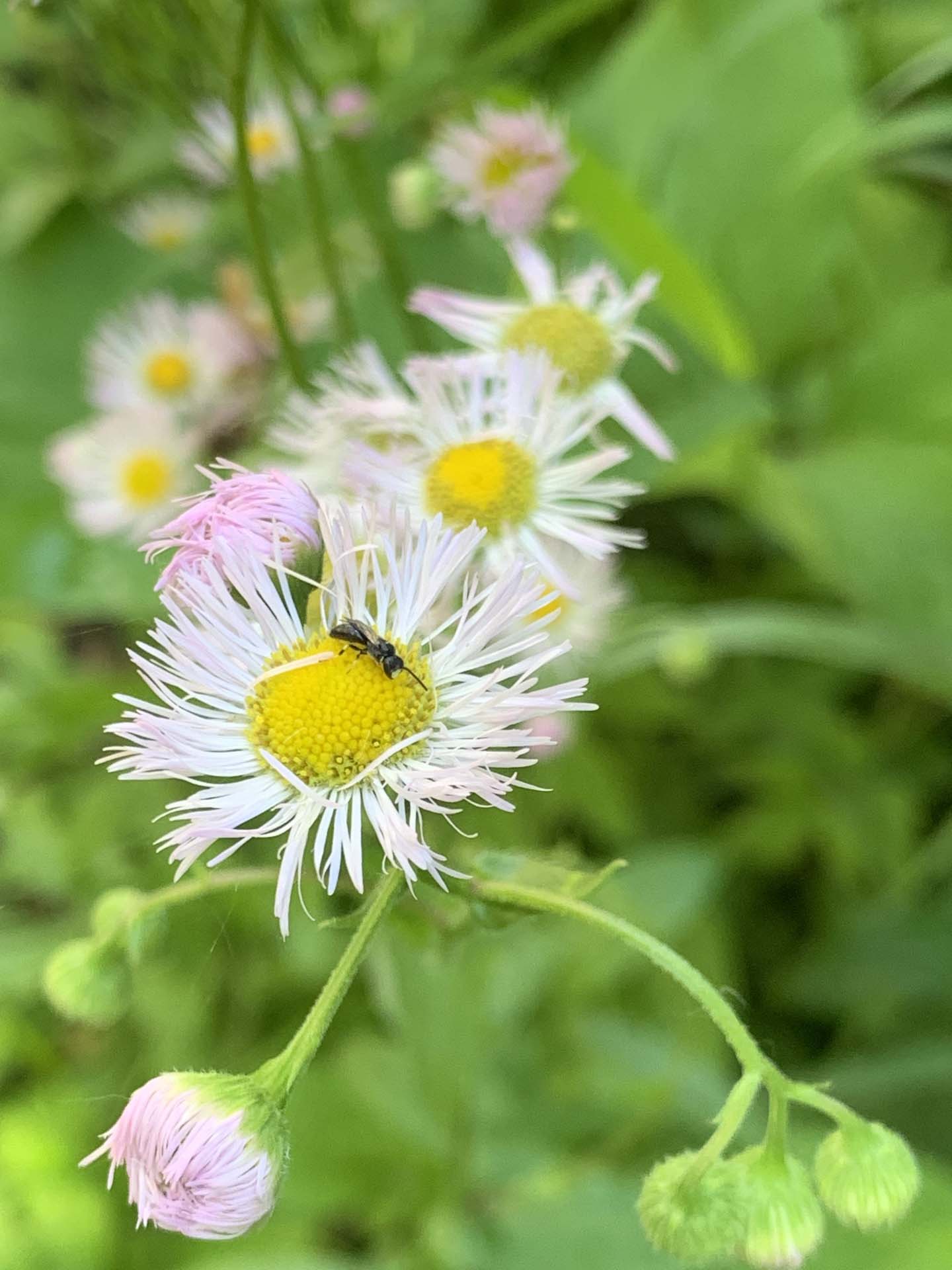
Masked bees are tiny (three to seven mm), wasp-like and relatively hairless. They are mostly black and have ivory or yellow markings on their face (hence their name), legs and upper body. There are about 20 recorded Hylaeus species in Canada.
PHOTO GALLERY
|  |
Feeding Habits
These bees are active in spring and summer, feeding from a variety of plants including Golden Alexanders, Canada Anemone, dogwoods, Swamp Milkweed, Boneset, Prairie Onion (A. stellatum), Harebeells, Obedient Plant, Culver’s Root, Stiff Goldenrod, Blue Lobelia and Lindley’s Aster (S. ciliolatum).
They lack specialized hair for transporting pollen. Instead, they chew the anthers with pollen, swallow the pollen, carry it back to the nest in their crop along with some nectar, and regurgitate it into the nest cell.
Nesting Habits
These solitary bees nest in pre-made cavities, preferring pre-existing holes in hollow stems, insect tunnels in dead wood, small beetle burrows, nail holes, or abandoned nests of other bees. As do Colletes, Hylaeus females line their nests with “silk-like” secretions that are water-resistant.
Neat Fact
This genus is the only one globally distributed on all continents except Antarctica. It is believed that Hylaeus species can “colonize” islands and mainland by emerging from driftwood, in which they may nest.


