

SCIENTIFIC NAME
Xylocopa
DESCRIPTION
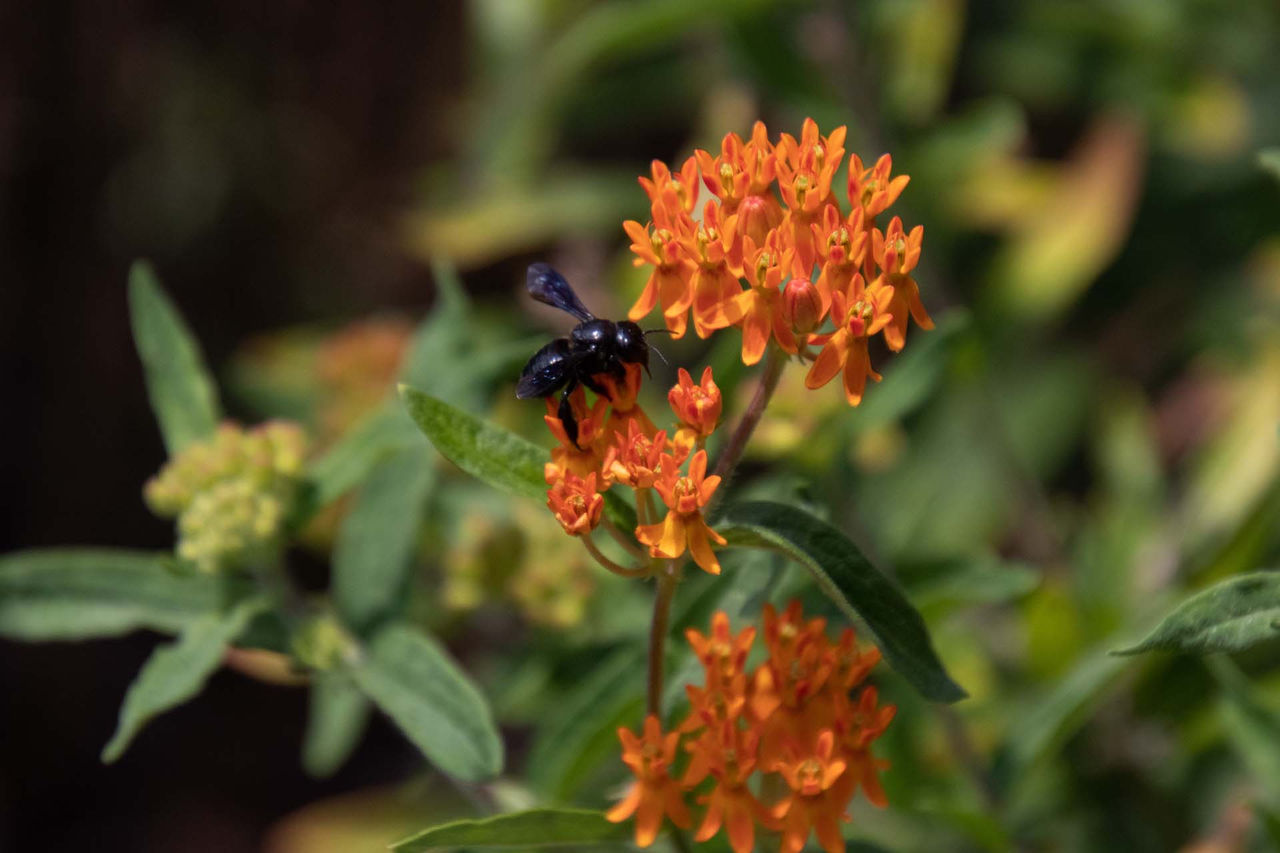
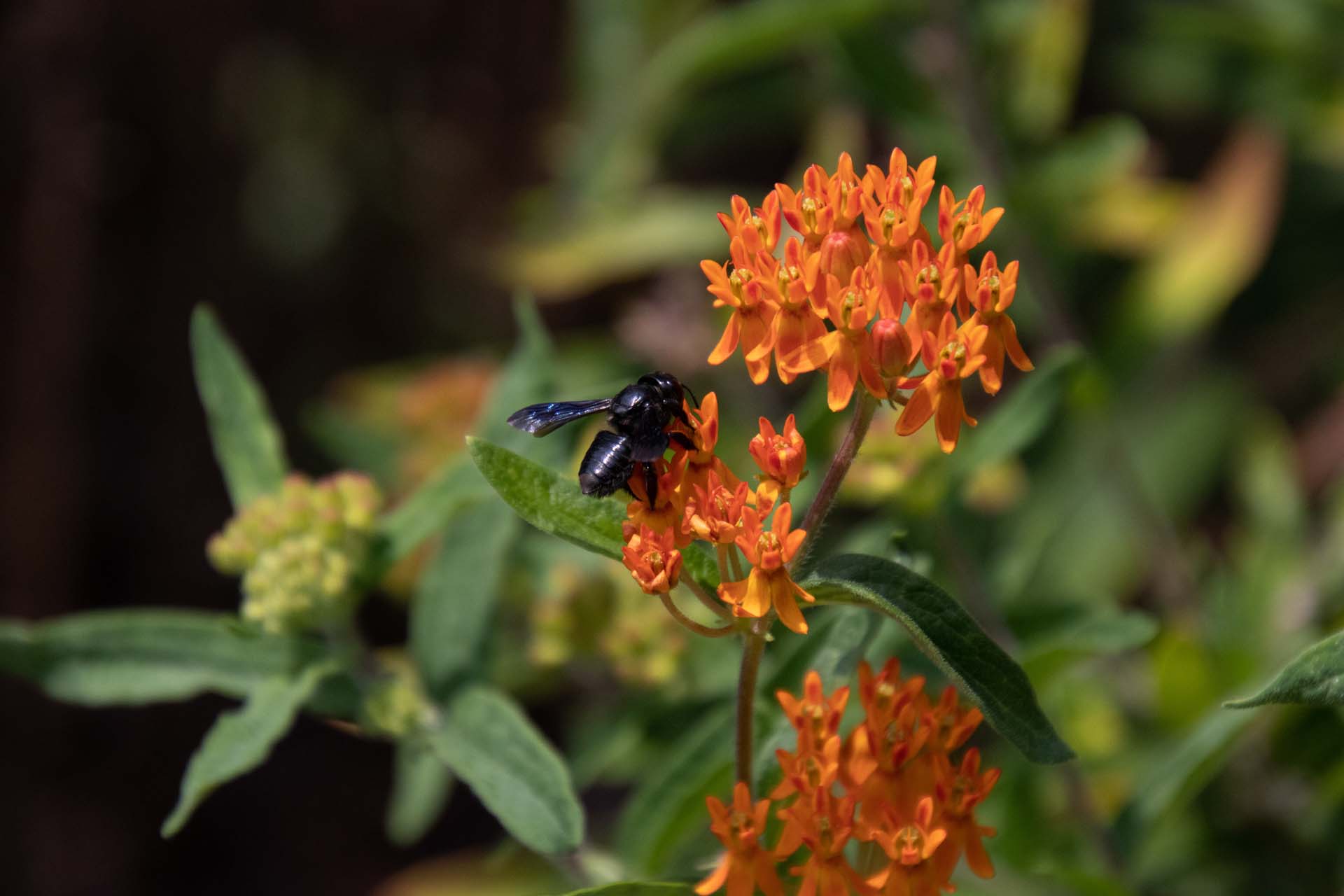
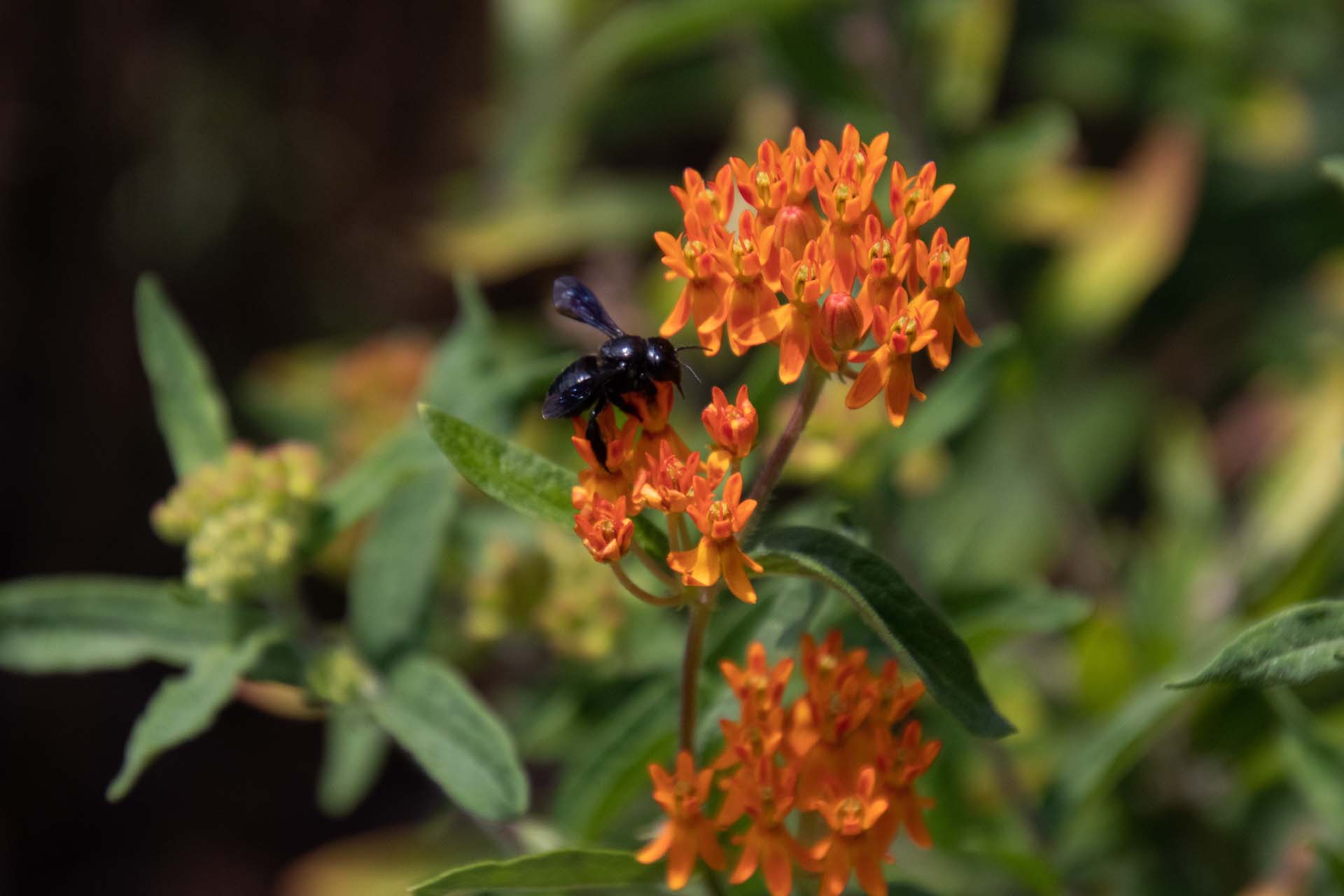
Large carpenter bees are massive—some of the biggest bees (17 to 23 mm) found in Canada—generally furry and dark-colored. Some species are completely black while others have white/creamy hairs on the upper body. There are about 10 species of Xylocopa in Canada and they tend to live in restricted areas: the Great Lakes region in the east and British Columbia are the two main regions where you can find them but they can be found elsewhere too.
PHOTO GALLERY
 | |
Feeding Habits
Large carpenter bees are generally active April to September and so need a wide array of flowers from Eastern Redbud in the spring to coneflowers, Wild Bergamot, ironweeds and False Sunflower in the summer to the usual autumn plants – goldenrod and asters. They tend to be consistent in a foraging trip, visiting flowers from the same plant species, thus are excellent pollinators of certain plants and reared in some regions around the world for pollination purposes.
Nesting habits
Large carpenter bee nests are made in wood, either using existing holes or by chewing through the wood to make new ones. Sometimes they will use wooden decks or siding on houses, they adapt very well to human-made structures. They are mostly solitary, although mothers and daughters overlap in their adult period. Female mothers care for their brood by feeding them and guarding them as they develop. The offspring emerge before the winter, and then return to their natal nest to overwinter with their siblings.
Neat Fact
Xylocopa individuals have the ability to “steal” the nectar from a flower when it is hard to reach (i.e. tubular flowers) by cutting a hole at the base of the flower to rob the nectar secreted there.
Male Xylocopa can be territorial (like Anthidium males) defending nest entrances from predators and importantly: other male carpenter bees!


