

SCIENTIFIC NAME
Apis mellifera
DESCRIPTION
The European Honey Bee (also known as the Western Honey Bee) was imported in Canada long ago for their honey-making services.
PHOTO GALLERY
|  |  |
Appearance
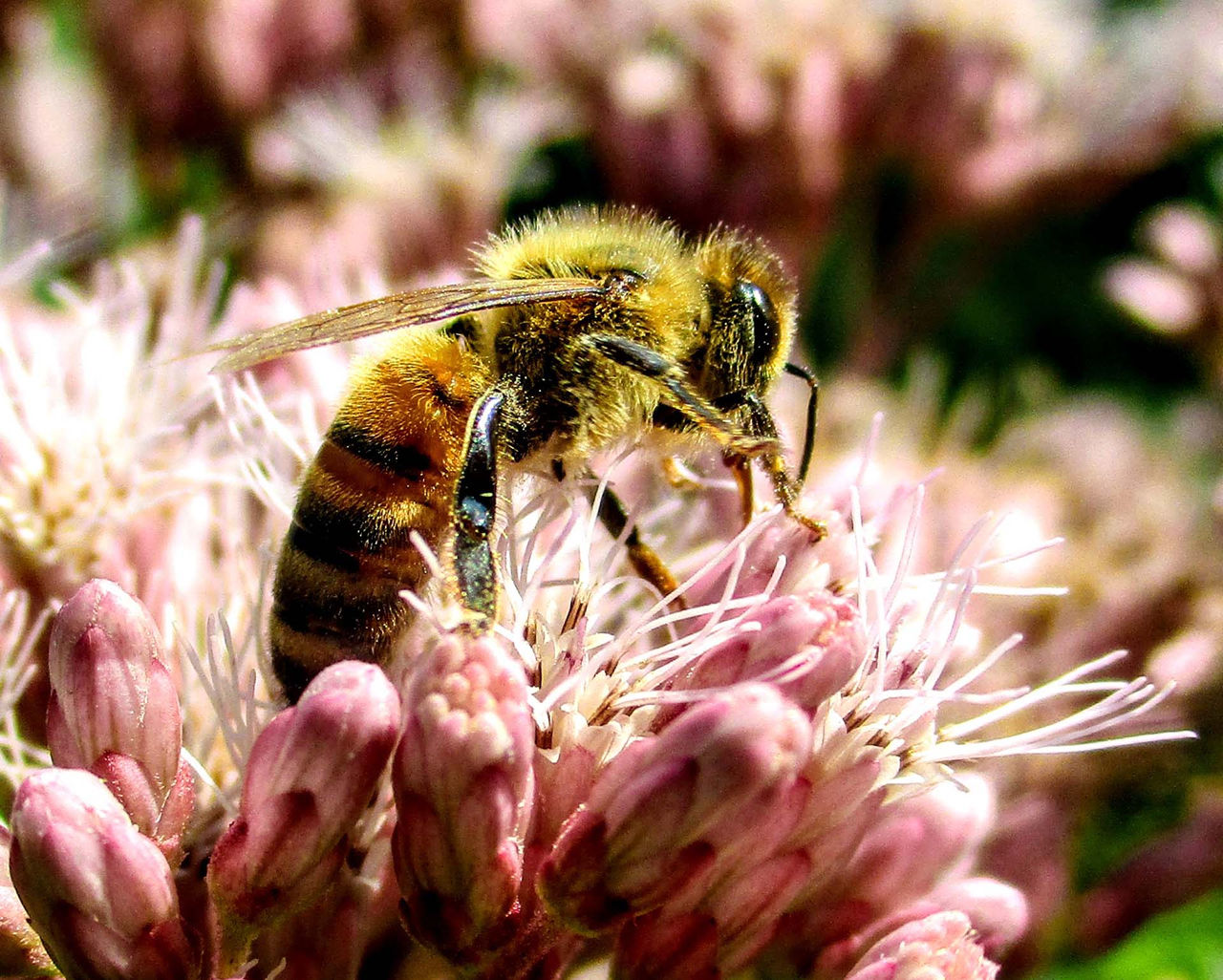
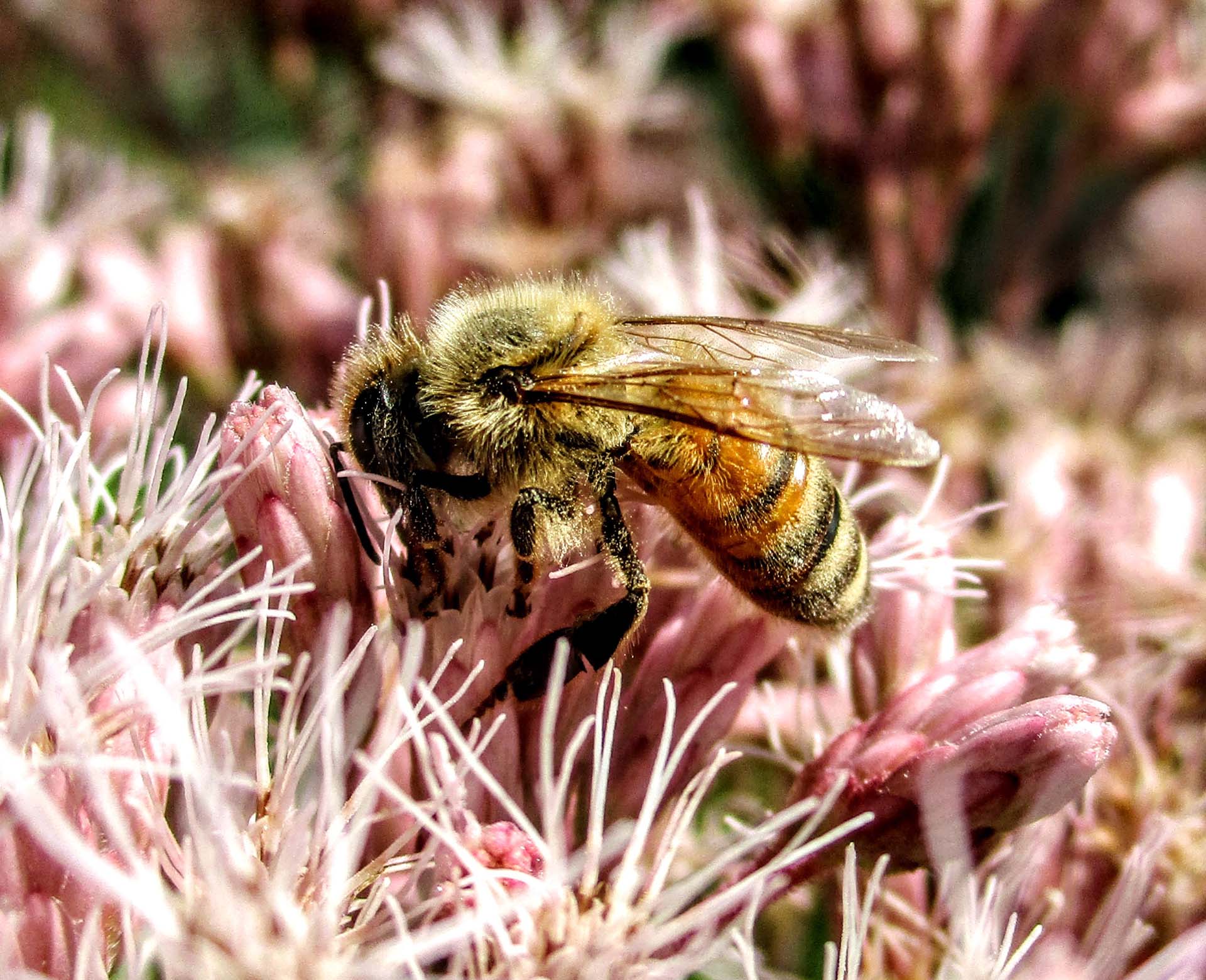
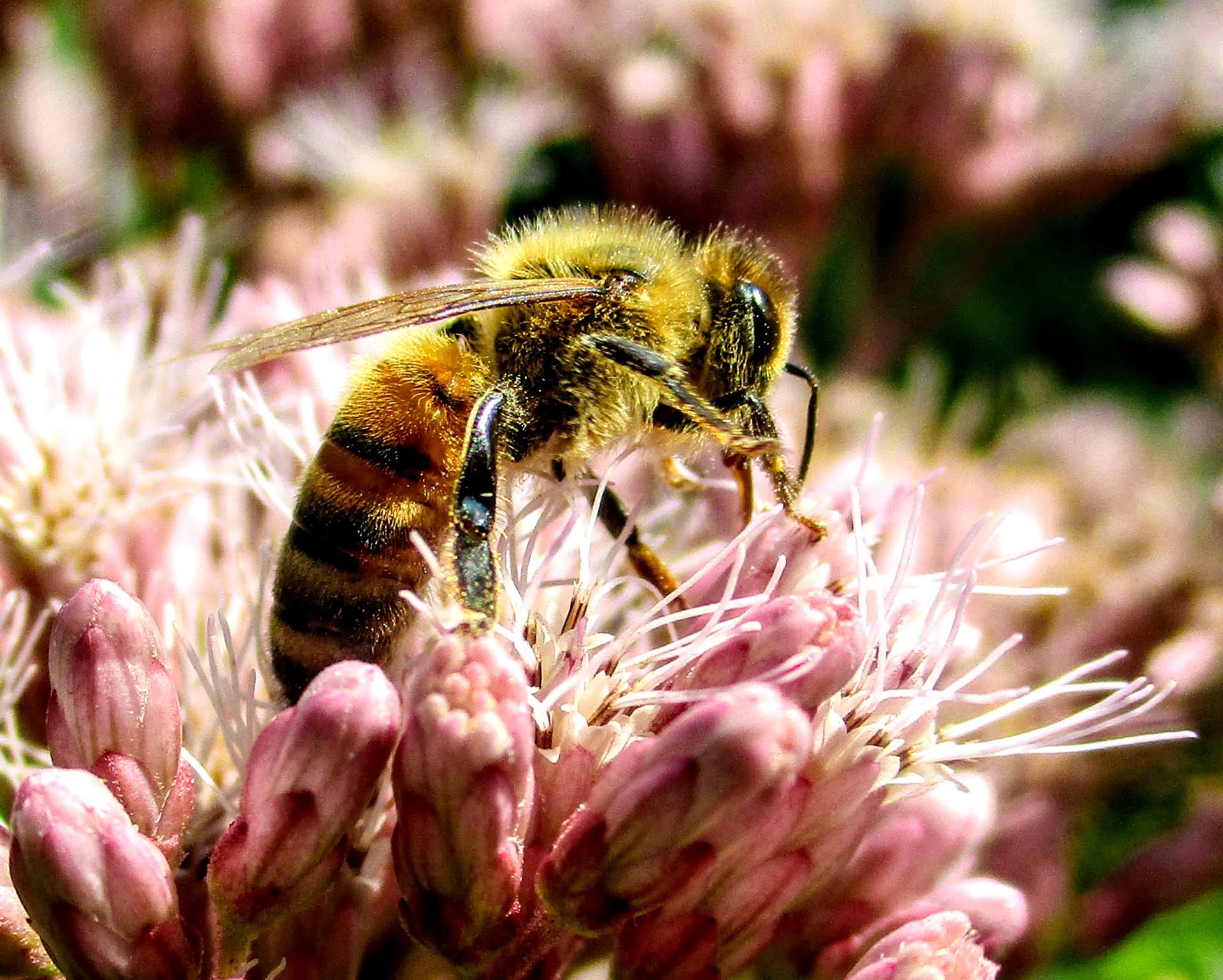
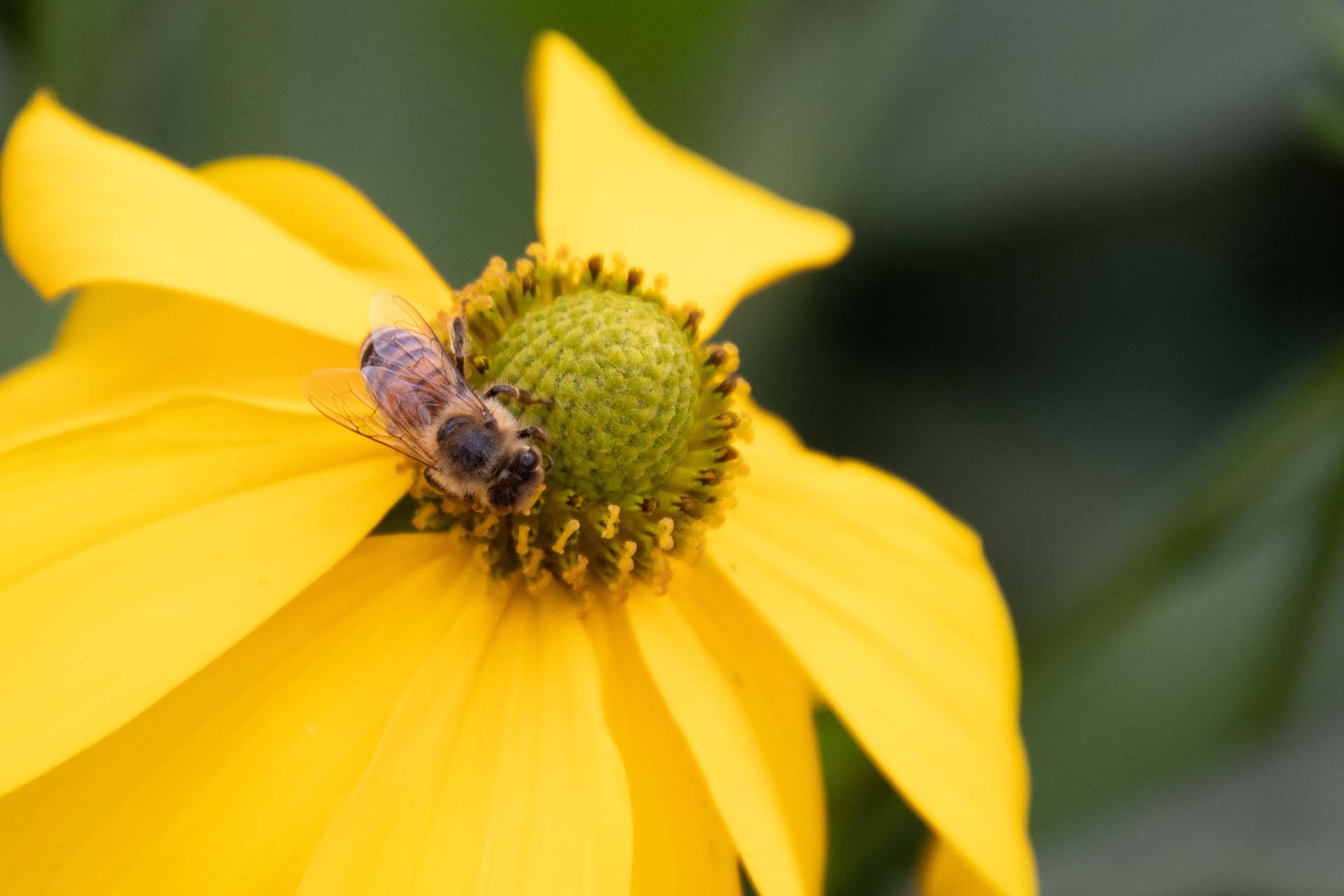
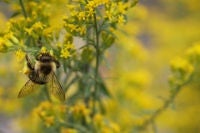
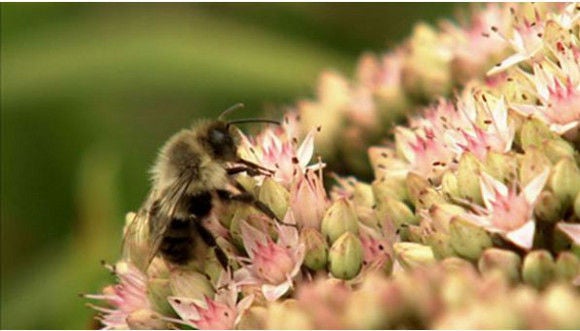
Honey Bees are medium sized (12 to 19 millimetres in size), golden brown bees with striped abdomens. Their upper body is very hairy. They have the characteristic corbiculae on their hind legs for carrying pollen.
Feeding Habits
Apis mellifera is a generalist species, as foragers will visit a wide range of flowers during the warmer months.
Nesting
These social bees create a nest for their colony, usually in hollow trees (in their natural state) or in artificial hives. They are perennial, meaning that members of their colony can live for several years, especially the queen that can live up to five years. There are about 30,000 to 80,000 bees that make up the hive, with one queen who lays eggs, males who reproduce with new queens once and die after and most importantly, female workers who tend to the young, gather nectar and pollen or clean and protect the hive. They create large amounts of honey to allow the colony to survive the winter.
Neat Facts
Honey Bees are able to communicate the location of food sources by moving in patterns in what is called a “dance”, indicating the direction of the resource from the hive. They are not always the most effective pollinators, compared to native bees, but they can be very abundant in a given landscape due to their big colony size.
When they sting, female Honey Bees get their abdomen torn out and they die soon after. Be careful though, their venom usually attracts other females that can also sting you. This is why it’s better not to approach a hive or an apiary without beekeeper’s equipment: the integral suit that will protect you against their defensive guardians.
There are 24 subspecies of Apis mellifera that occur in North America including Canada; and one of them is the “Africanized bee” (Apis mellifera scutellata) made up by crossbreeding two sub species in hope of developing a domesticated honey bee adapted to the tropics. Africanized bees have the same morphological characteristics than other subspecies, but they are known to be more aggressive (or more defensive from the bee’s perspective!) in their behaviours.

Learn More
- 0
- 1


