

SCIENTIFIC NAME
Eucera (Peponapis) pruinosa
DESCRIPTION
There are multiple species of squash bees but only one—Eucera pruinosa—is found in Canada and it is mainly present in the east. Its scientific name has changed recently as it used to be part of the genus Peponapis and now are part of the genus Eucera. Peponapis is now considered their subgenus and is written in parenthesis.
PHOTO GALLERY
|  |
Appearance
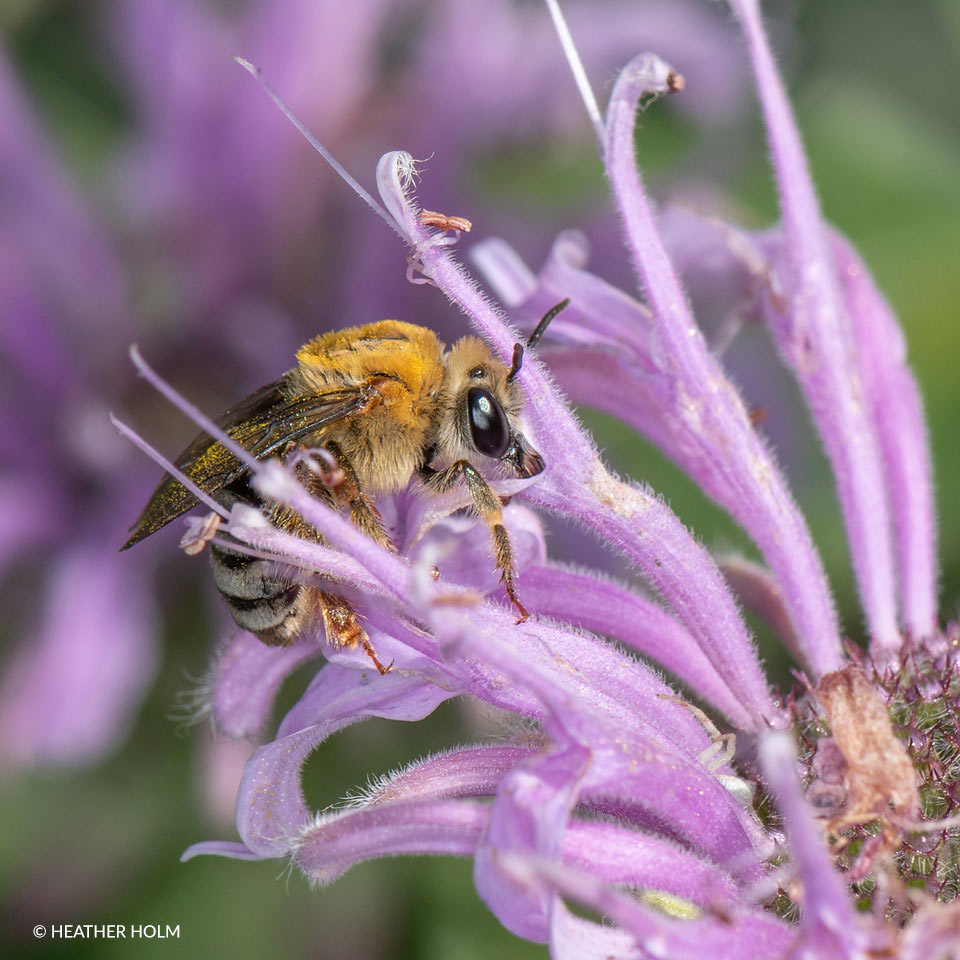
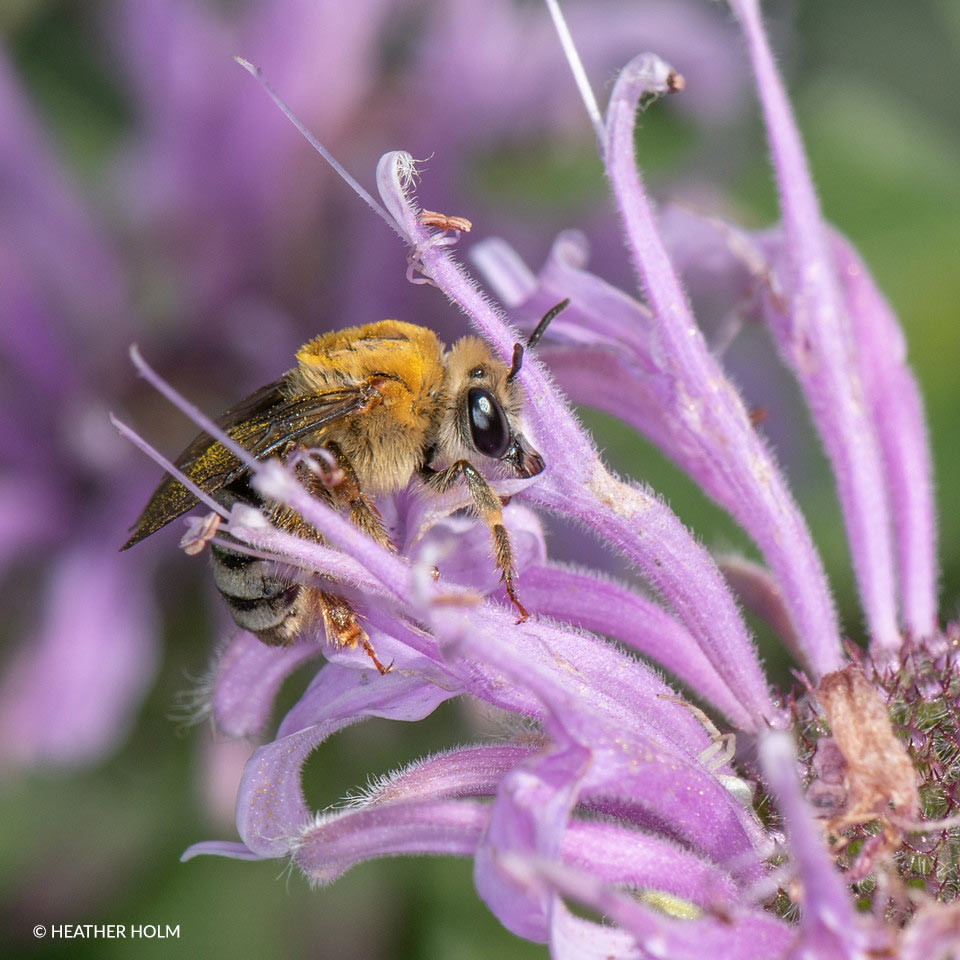
The Hoary Squash Bee is a medium sized bee, between 12 and 14 mm in size. Squash bees have dense yellow/orange hair on their head and thorax; they also have a striped abdomen as with Honey Bees. Males have long antennas.
Feeding Habits
Squash bees are active in the summer from June to August. They get their name due to their exclusive pollination of squash, pumpkins and other plants in the plant family Cucurbitacea. Females arrive early in the morning as the flowers open and move quickly as they feed from them.
Nesting habits
They are solitary bees that nest underground, often below or very near the plants that they pollinate. In squash fields, there can be huge aggregations of squash bees with multiple nests under a single squash plant. They dig their nests usually around 16 to 18 centimetres below ground and create about four cells for each offspring.
Gardener’s Tip
You may want to grow Cucurbita plants in an area where the soil is not too disturbed, to allow the Hoary Squash Bees to live on and maintain a sustainable population. For ideas on how to avoid digging in your vegetable patch, check out lasagna gardening.
Neat Facts
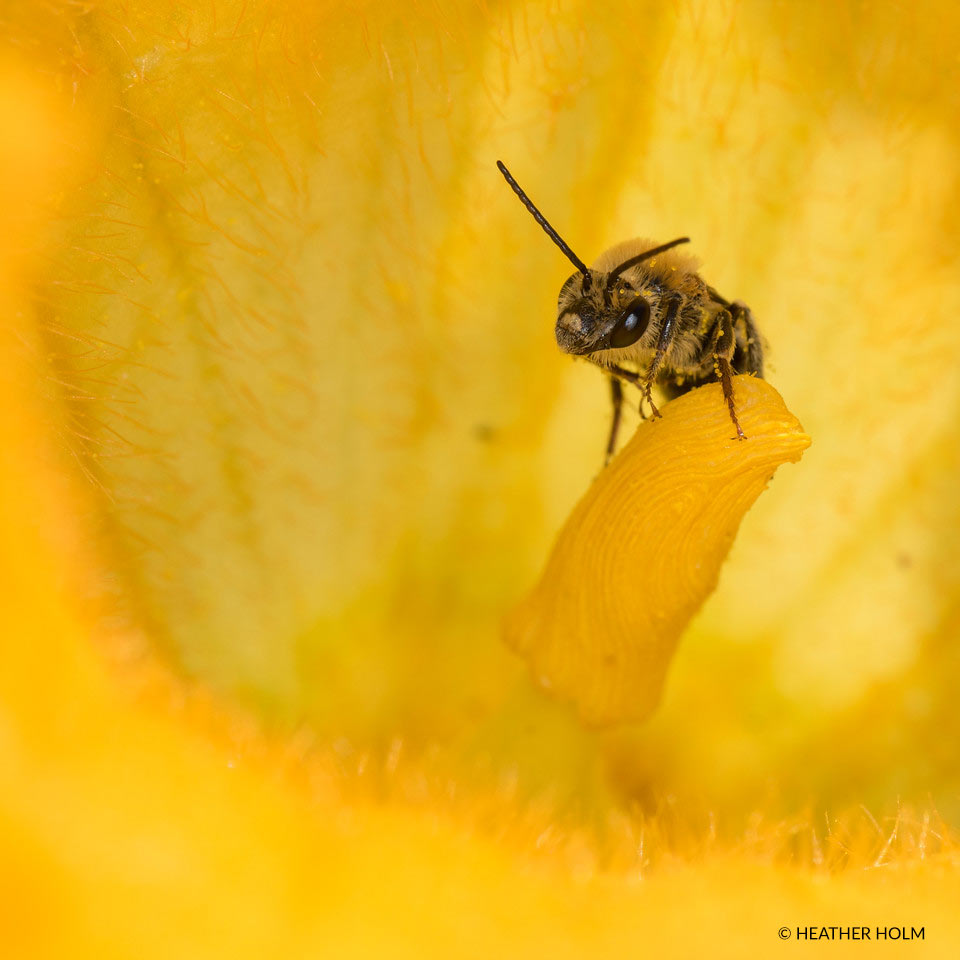
Squash bee males often sleep in squash flowers! They usually stay in flowers hoping to mate with a female.
Eucera (Peponapis) pruinosa have migrated along with their host plants. As humans spread Cucurbita crop cultivation from Central America to the east coast of North America, all the way up to Canada; squash bees have followed and adapted, also expanding their geographical range. Most of the other squash bee species are located in Mexico.


