

SCIENTIFIC NAME
Andrena
DESCRIPTION
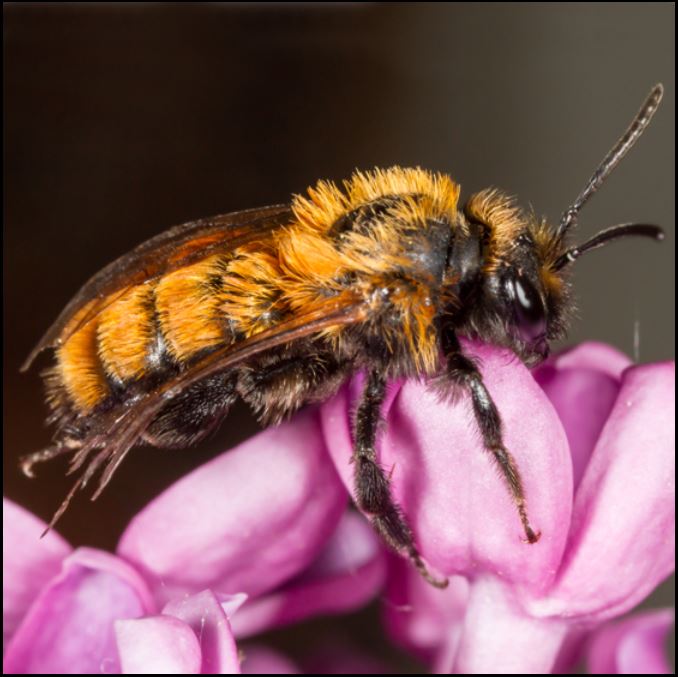
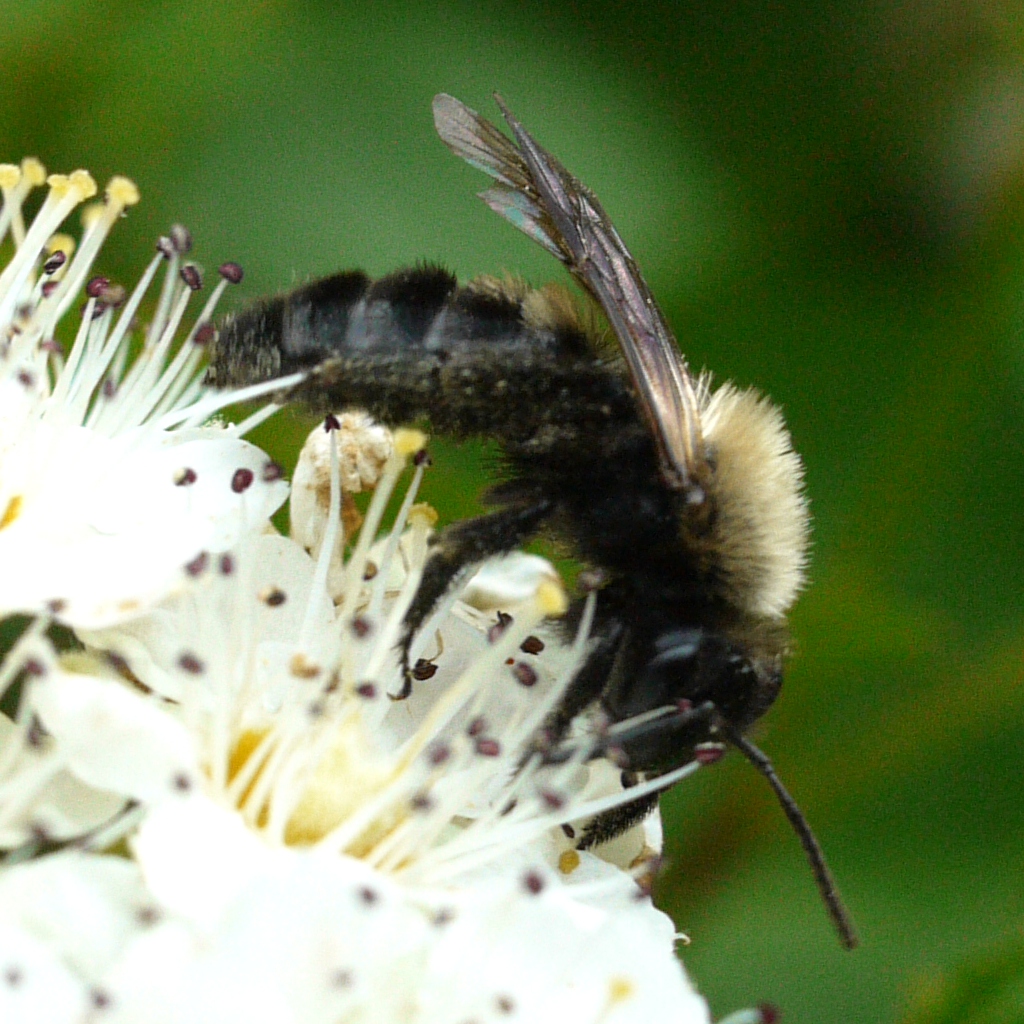
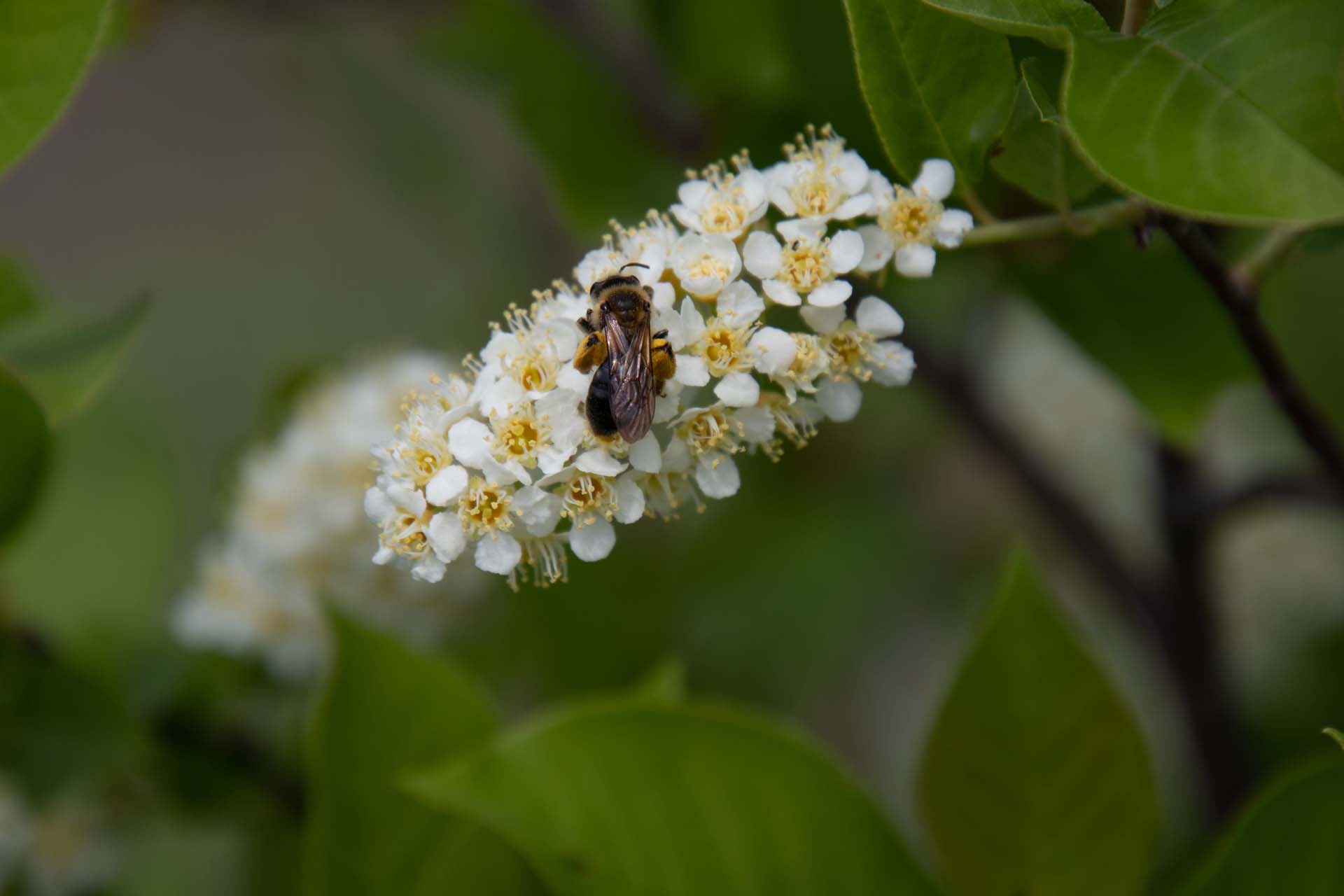
Mining bees are small to medium sized bees (six to 14 mm). Andrena is one of the largest bee genera and approximately 100 species thrive in Canada. They have a furry head and thorax with varying colors, from orange to whitish. All Andrena females have a patch of velvety hairs on their faces near their eyes, called facial foveae, but it’s usually hard to see it without a microscope. Different species show various hair patterns on their abdomen, with or without stripes.
PHOTO GALLERY
 |  |  |
|  |
Feeding Habits
Mining bees are seen from early spring (they are sometimes the first bees to emerge) to fall depending on species. They can be observed visiting many native plants include willows, serviceberries, hawthorns, wild roses, Red Maples, Wild Geraniums, violets, Bloodroot, bellworts, Common Yarrow, perennial sunflowers, asters and goldenrods. Mining bees are also very good pollinators of apple and other fruit crops as their blossom happens early in the spring when these bees are out. Some Andrena are broad generalists and can be seen on any plant family, but many others are specialist of certain types of flowers.
Nesting Habits
Mining bees are solitary ground-nesting bees, sometimes they can be communal (sharing a nest entrance) or nest in aggregations. Because of the diversity of this genus, they show a wide array of soil requirements as their nesting habitat, from sandy soils to more clayey. Some prefer bare ground whereas others like to nest in the vegetation, under plant leaves—maybe to conceal their nest against predators or to mark it. They can be found in any landscape, from agricultural fields (under apple trees) to urban cities.
Neat Fact
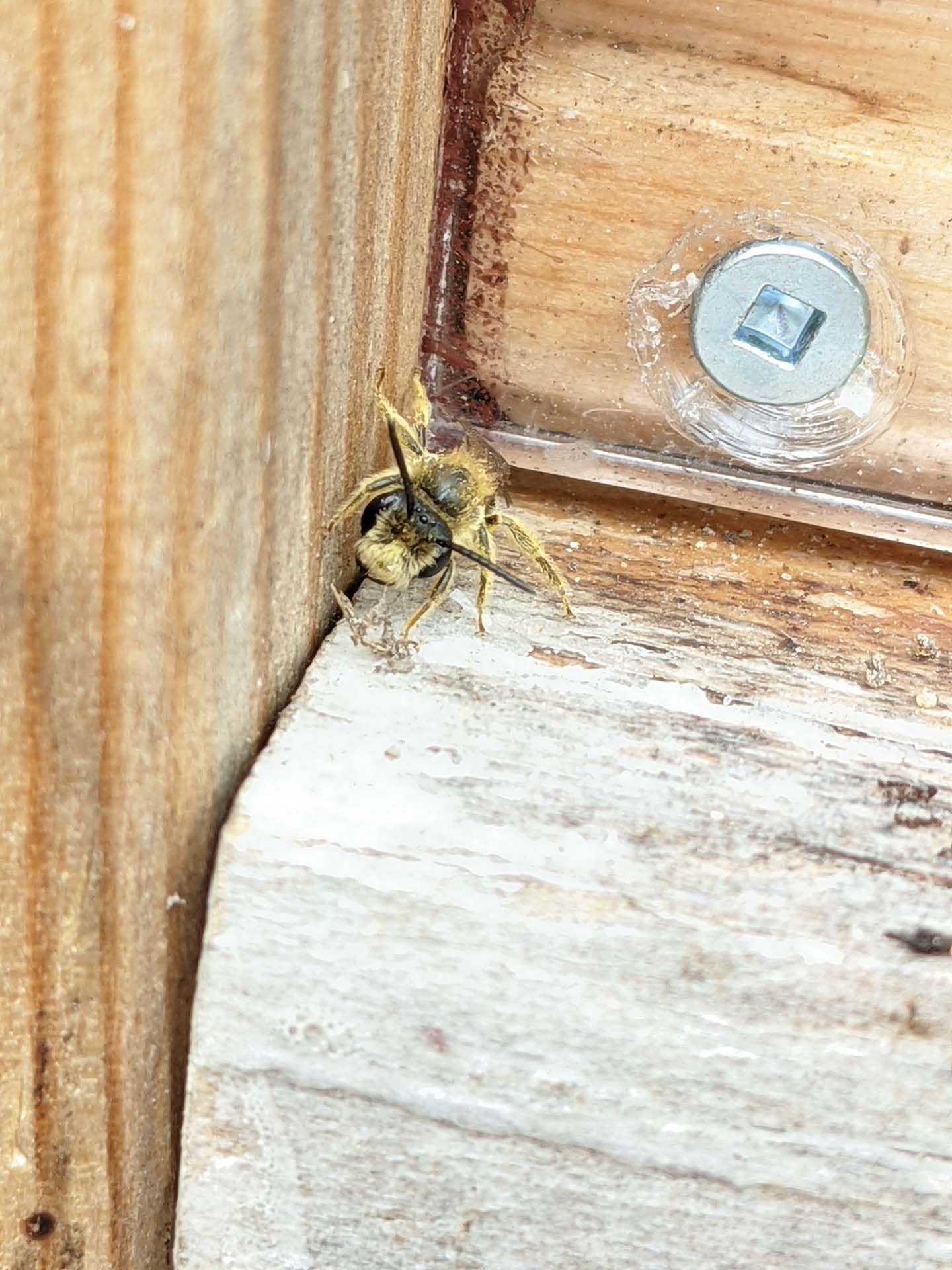
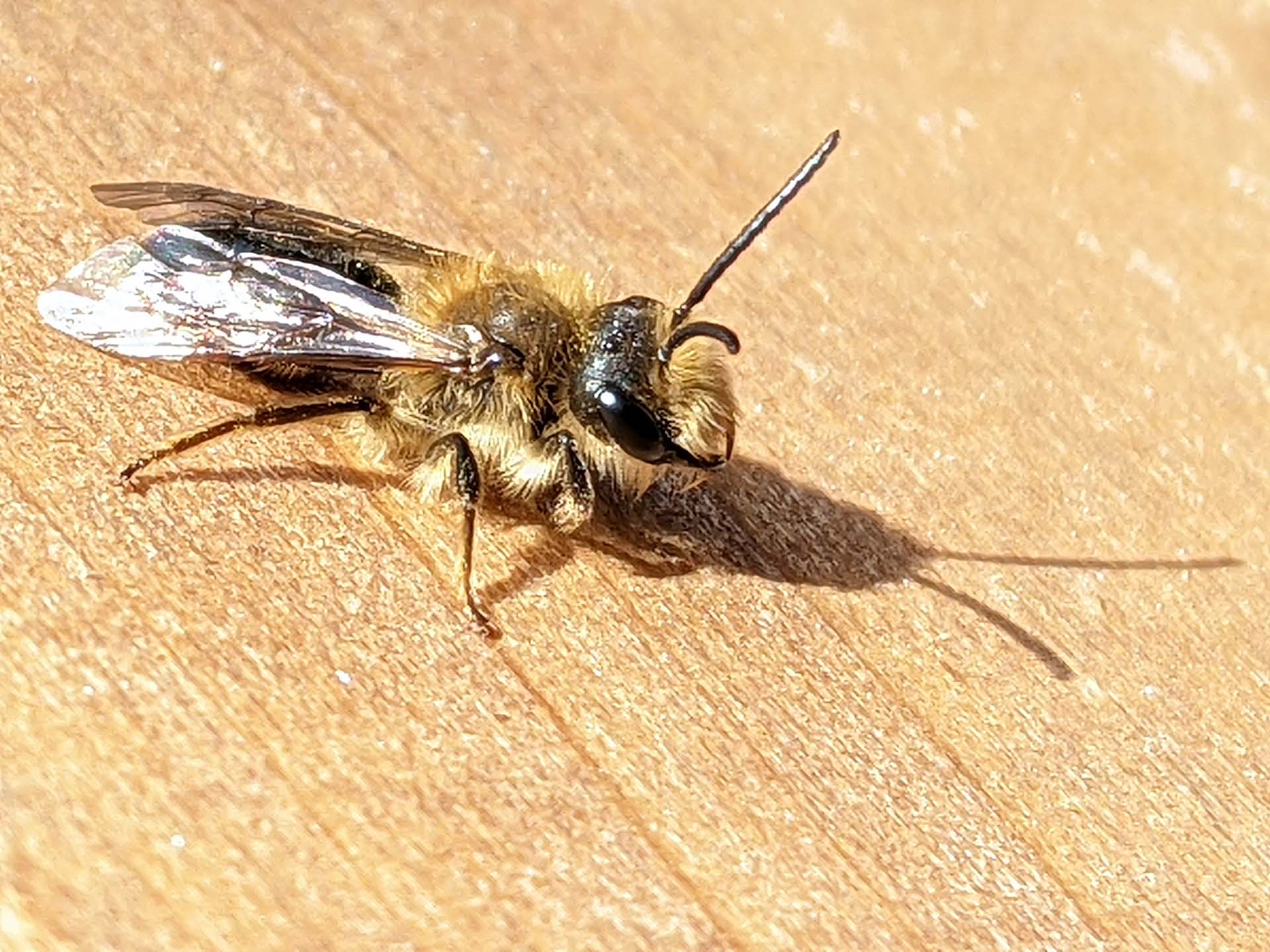
Scopae are usually located on the hind legs of bees but in most Andrena species, scopal hairs go all the way to the side of the thorax or at least the upper portion of the leg. As in mason bees, male Andrena have light hair on their head that look like a moustache!


