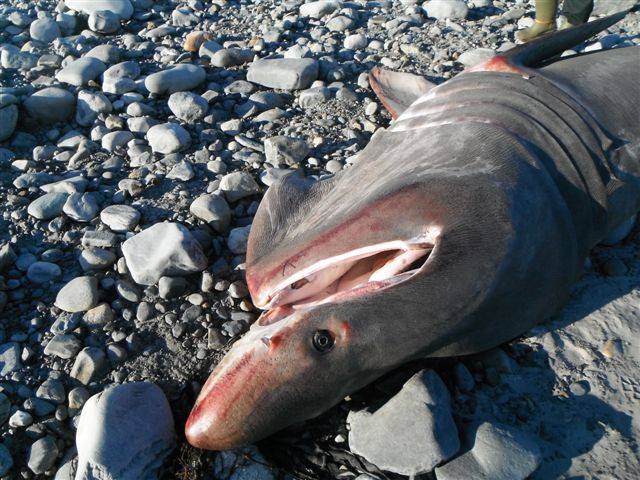
- Up to 10 metres in length.
-
Up to five tons in weight.
- Found in temperate waters of the world.
- Large conical snout.
- First dorsal fin is rounded on top, set further back on body and at a 45°
degree angle.
- Five massive gill slits that almost encircle the head.
- The second largest fish in the world (second to the whale shark), but
eats plankton as a filter feeder.
-
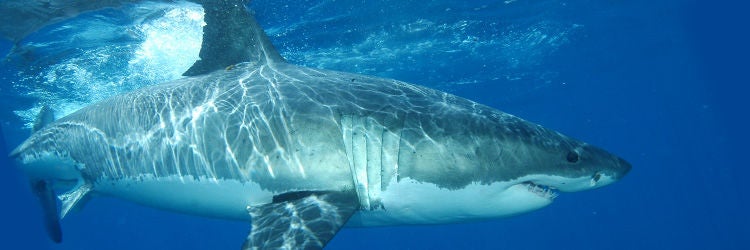
Up to eight metres in length.
- Circumglobal distribution, up to sub-polar regions.
- Lead grey, brown/grey and black in colour.
- Large triangular-shaped first dorsal fin.
- Trailing edge of the first dorsal has unique markings or serrated edge.
- Large, triangular shaped teeth with serrated edge.
- Although popularly feared as the Great white shark, scientific research
is reducing their status of mindless killing machines.
- Endangered in Canada under the Species at Risk Act
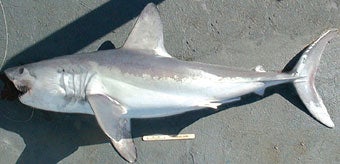
- Up to 2.5 metres in length.
- Up to 135 kilograms.
- Found in the northern temperate oceans of the world.
- Blue-grey in colour, with a distinctive white patch on the trailing edge
of the first dorsal fin.
- Caudal (tail) fin has both primary and secondary keel.
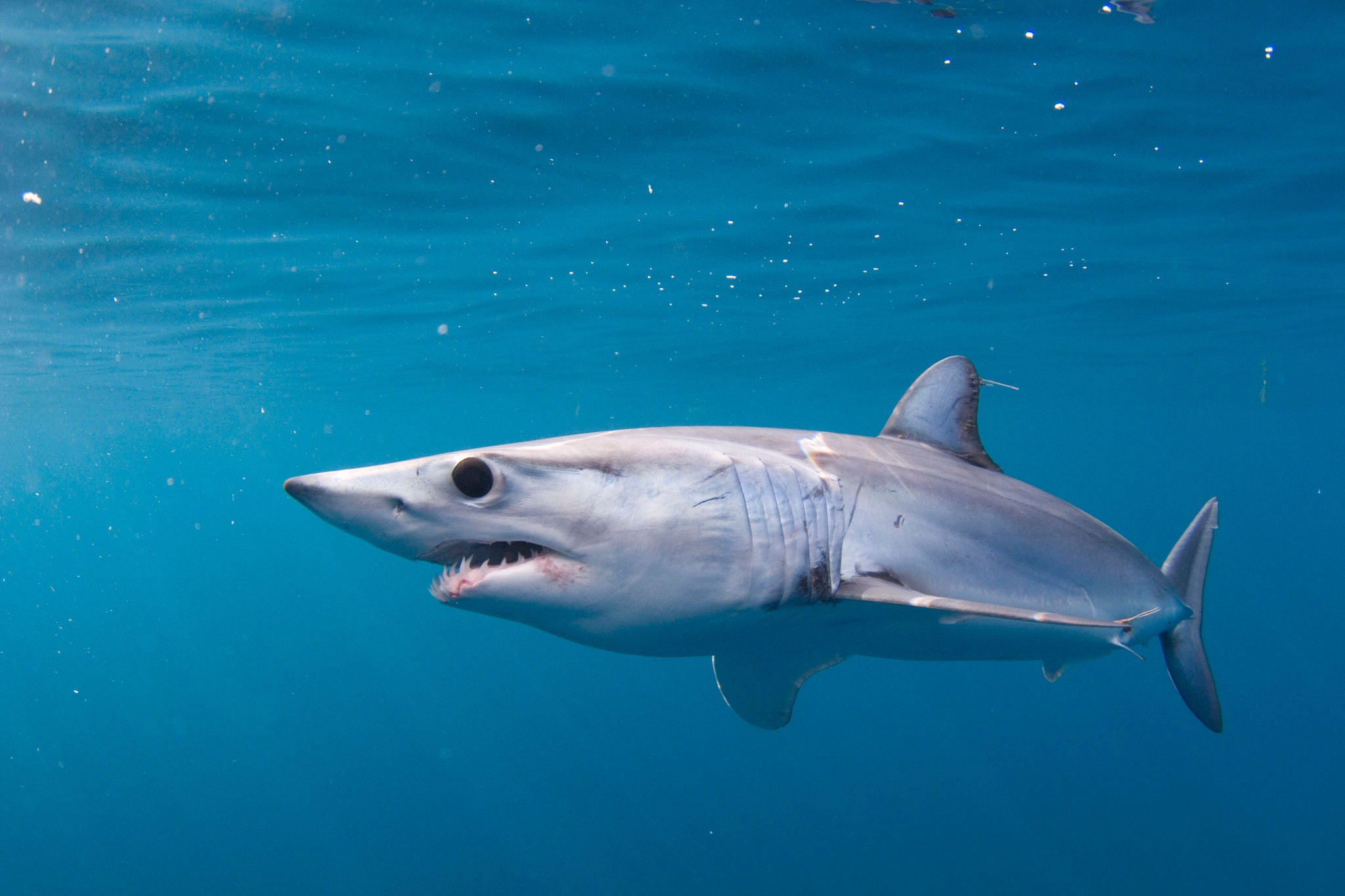
- Up to 3.9 metres in length.
- Found in tropical to warm temperate waters.
- Metallic indigo blue in colour.
- Distinct primary keel.
- Second dorsal is much smaller than the first dorsal; First dorsal is
rounded in juveniles.
- Shortfin makos are the fastest of all shark species, reaching speeds of
74 kilometres an hour.
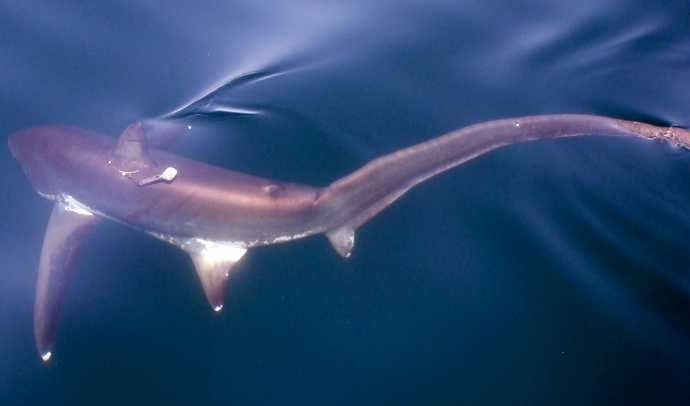
- Up to six metres in length.
- Found in temperate oceans of the world.
- Brown, gray, blue-gray or black in colour.
- Extremely large upper lobe of the caudal fin.
- Short stubby snout.
- Second dorsal fin is much smaller than the first dorsal fin.
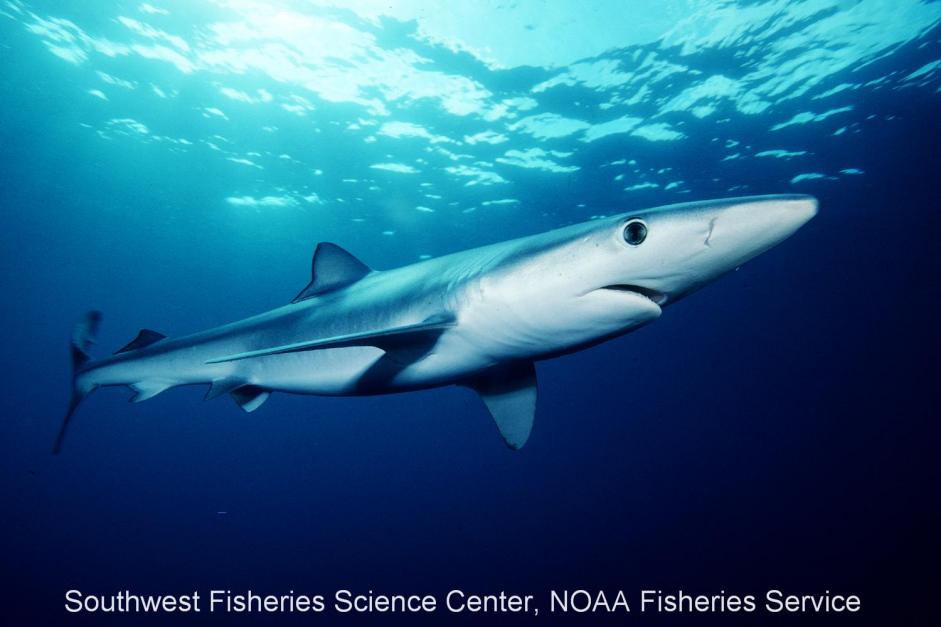
- Up to 3.8 metres in length.
- Found in tropical to warm temperate waters.
- Deep indigo blue colour with distinct countershading; dark blue on top,
bright blue on the sides and white underneath.
- Long slender body with long pectoral fins.